Last updated on September 17th, 2025
Editor’s note: In January 2025, we published verification information on social media regarding claims that a public figure would lose U.S. citizenship under a proposed executive order, and our review of constitutional and case law showed the assertion to be legally and factually unsupported.
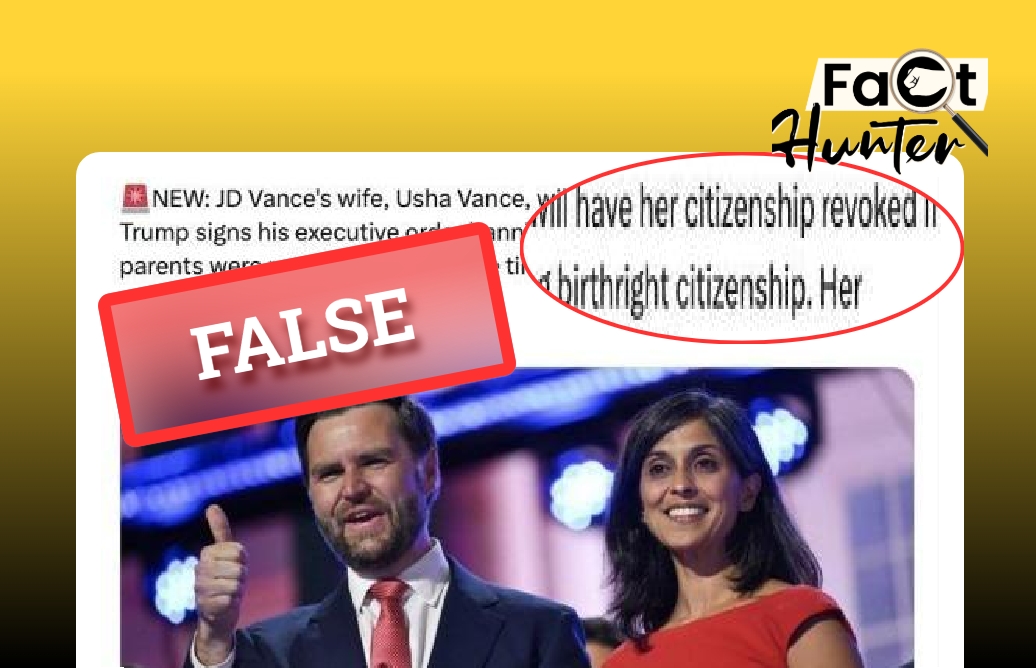
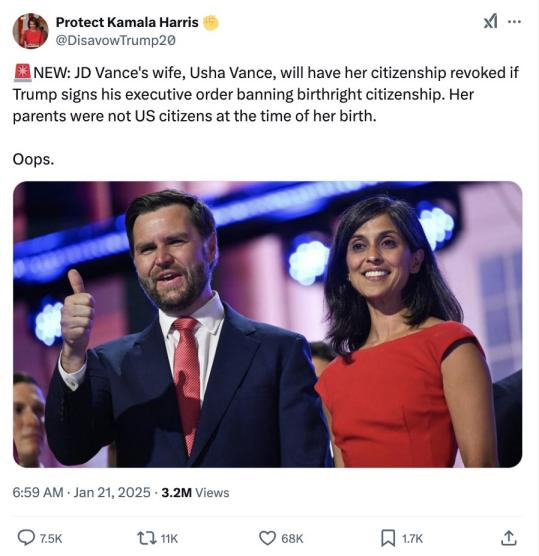
Recent claims have sparked discussion about the citizenship status of Usha Vance, wife of U.S. Vice President J.D. Vance, under the Trump administration’s plan to end birthright citizenship.
This speculation, widely discussed on social media platforms like Facebook and X, suggests that the first Indian-origin Second Lady might have her citizenship revoked under Trump’s new birthright citizenship order, because her parents “were not U.S. citizens at the time of her birth.”
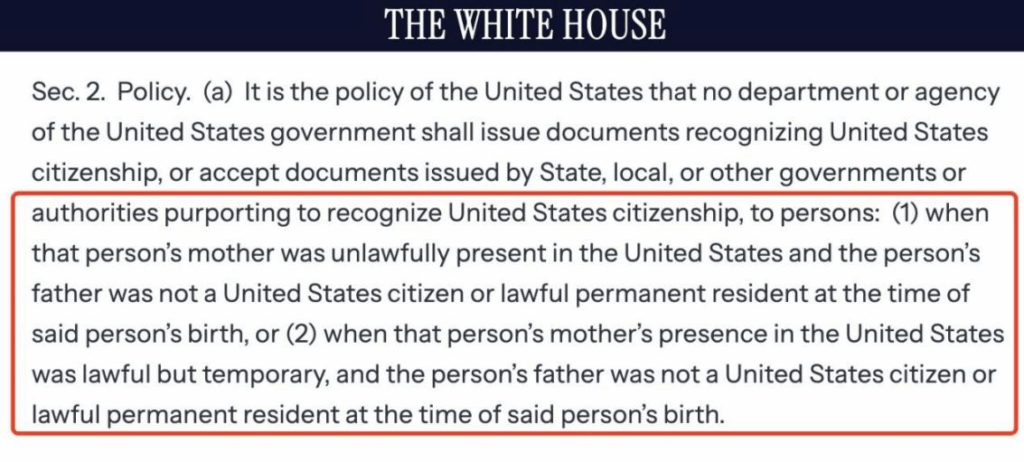
U.S. President Donald Trump on January 20 signed an executive order to end birthright citizenship. The order specified that the United States would no longer recognize the citizenship of a child born in the U.S. unless one parent is a green card holder or U.S. citizen.
Fact check:
- The policy will not be retroactiveand would apply only to children born 30 days after its implementation.
- Usha Vance was born in 1986 in San Diego, California, to Indian immigrant parents. She was born on American soil.
- Usha Vance’s parents, Krish and Lakshmi Chilukuri, immigrated to the United States from Andhra Pradesh, India, in the late 1970s, and they both worked as professors in San Diego. Public available information does not specify the exact datewhen they became U.S. citizens.

- What is birthright citizenship in U.S.?
It’s a constitutional provision enshrined in the 14th Amendment that ensures anyone born within the boundaries of the United States automatically attains American citizenship, regardless of their parents’ legal status.

- What does Trump’s executive order say?
The executive order argues that the 14th Amendment “has always” excluded people whose parents are in the country illegally, because they are not “subject to the jurisdiction” of the United States.
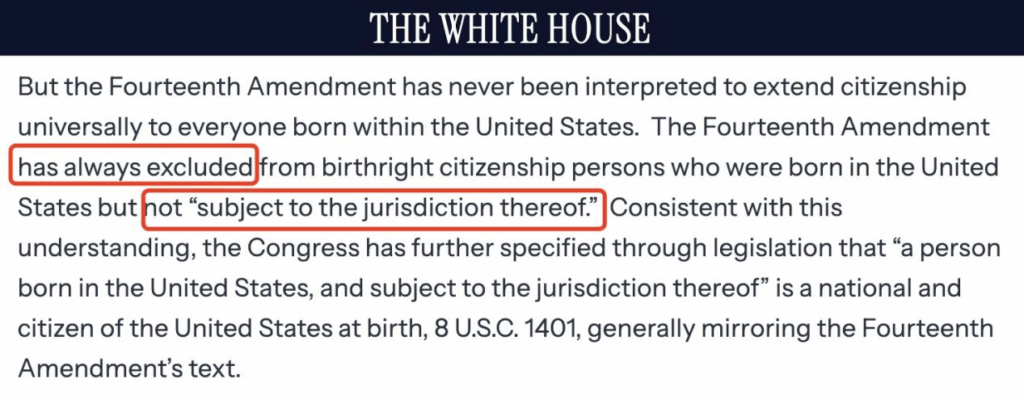
“Birth in the United States does not by itself entitle a person to citizenship,” Trump administration lawyers argued in a court filing on January 22. “Ample historical evidence shows that the children of non-resident aliens are subject to foreign powers – and, thus, are not subject to the jurisdiction of the United States and are not constitutionally entitled to birthright citizenship,” Justice Department litigator Brad Rosenberg wrote.
- Can Trump unilaterally change or alter birthright citizenship?
Gerald Neuman, Harvard Law School Professor: “The president has no authority to change the citizenship rule at all.”
In order to amend the Constitution, both chambers of Congress would have to pass the amendment with a two-thirds majority, and it would also have to be approved by at least three-quarters of the states.
January 21 – Washington Attorney General Nick Brown sued Trump and his administration and called the order an “unconstitutional, un-American and cruel … attempt to redefine what it means to be an American.”
January 21 – Twenty-two states have joined lawsuits challenging Trump’s order.
January 23 – Senior U.S. District Judge John Coughenour granted a temporary restraining order that blocks Trump’s order from taking effect for 14 days nationwide, saying Trump’s policy was “blatantly unconstitutional.”
January 23 – “We will appeal it,” Trump told reporters in the Oval Office when asked about the ban.
Trump’s move to end birthright citizenship in the U.S. is far from certain and faces a lengthy legal process.
Conclusion: Usha Vance’s citizenship will be unaffected by Trump’s executive order.
As a fact-check brand,Fact Hunter remains committed to systematically documenting these communication patterns. Follow us for ongoing insights into how narratives take shape and how truth cuts through the fog of conflict.
Have a questionable video or claim? Submit it to FactHunter’s investiqation team at [therealfacthunter@outlook.com]