
Last updated on October 2nd, 2025
Editor’s Note: In July of this year, we published a short video on IG titled “Claims About Astronauts Being ‘Unable to Walk,’ ‘Aged Ten Years,’ and ‘Earning Only $1,148 in Wages’ Are Exaggerated.” It has now been adapted into a long-form article.
Claim:
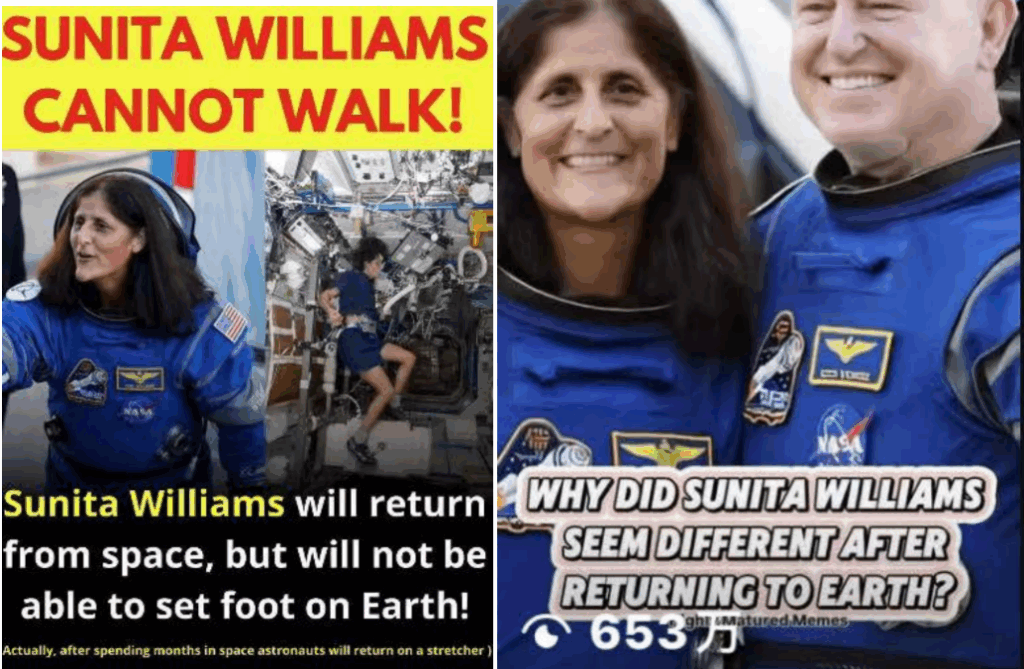
In March 2025, a video circulated on TikTok alleging that NASA astronaut Sunita Williams was unable to walk and had undergone significant changes in her appearance after returning from space. Additionally, discussions regarding astronaut overtime pay, specifically claims about “earning only $1,148 for being stranded in space,” spread on X and Facebook.
Background:
On June 5, 2024, NASA astronauts Sunita Williams and Barry Wilmore embarked on a crewed test flight aboard Boeing’s Starliner. The mission was originally planned to last only 8 days to verify the spacecraft’s performance. However, after docking, technical issues arose with the spacecraft. It was not until March 19, 2025, after being stranded on the International Space Station for nine months, that NASA astronauts Sunita Williams and Barry Wilmore finally returned to Earth via a SpaceX Dragon capsule.
Fact Check:
- Wage Issue
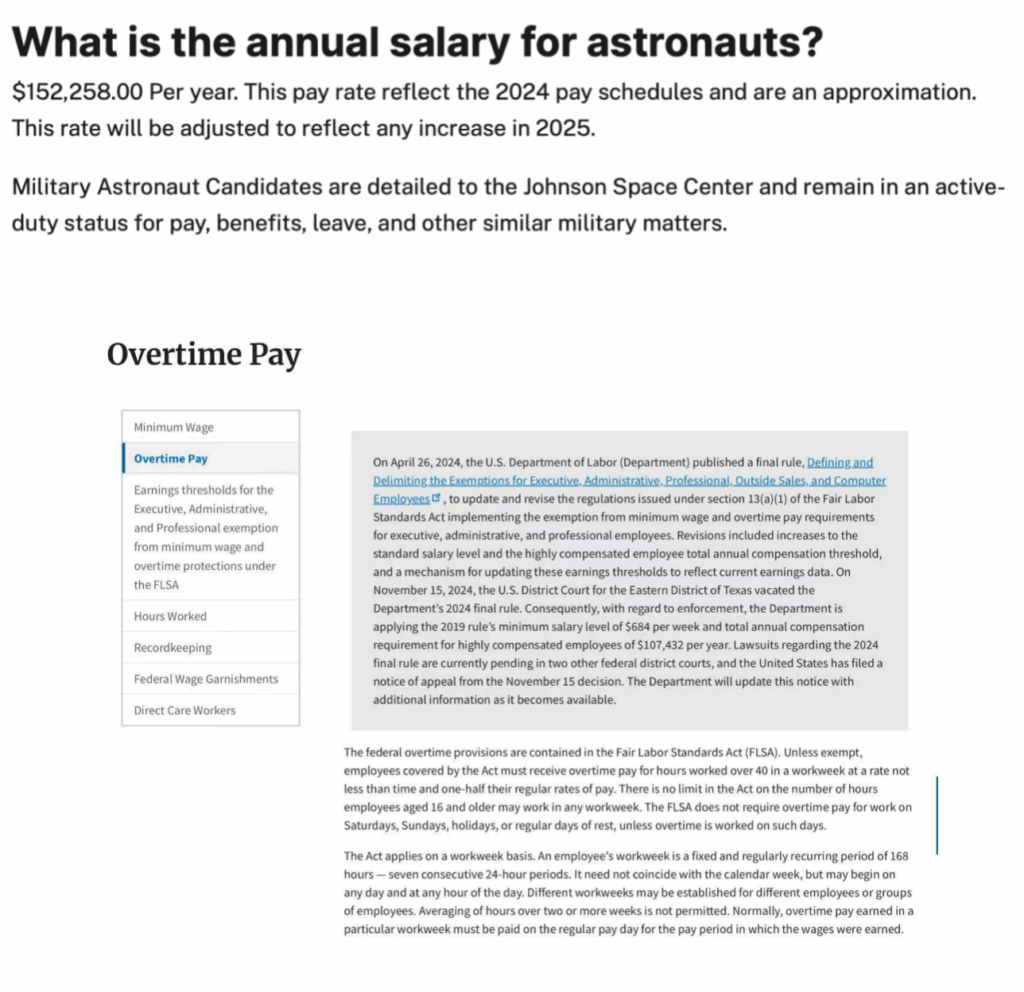
According to the official NASA standards for 2024, the base annual salary for U.S. astronauts starts at $152,258 (approximately $12,688 per month). Furthermore, as federal employees, their compensation is protected under the Fair Labor Standards Act (FLSA). Long-duration missions involving excess work hours entitle them to corresponding overtime compensation in accordance with the law.
(For details, refer to:https://www.nasa.gov/humans-in-space/becoming-an-astronaut-frequently-asked-questions/)
- Aging Issue
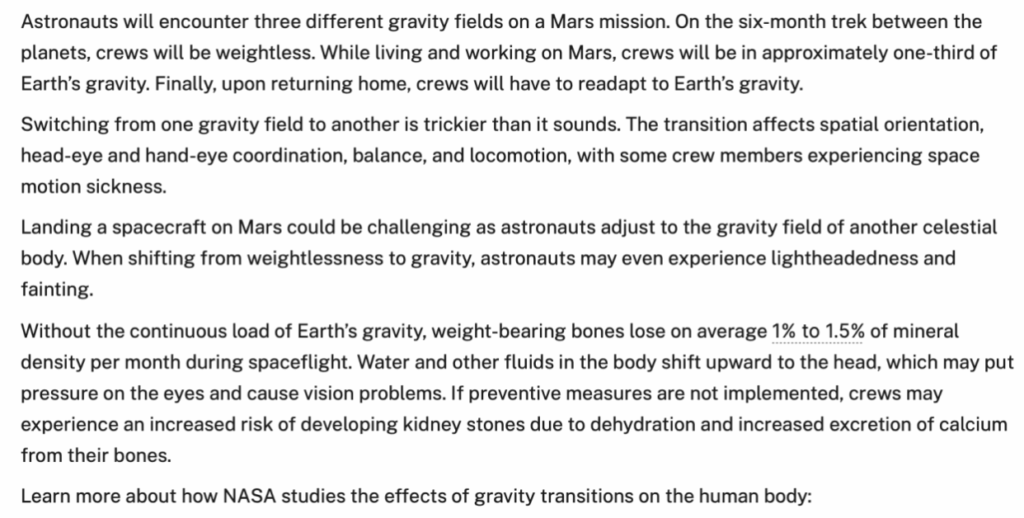
Research from NASA’s Human Research Program (HRP) indicates that during spaceflight, humans lose 1% to 1.5% of bone mineral density per month in weight-bearing bones.
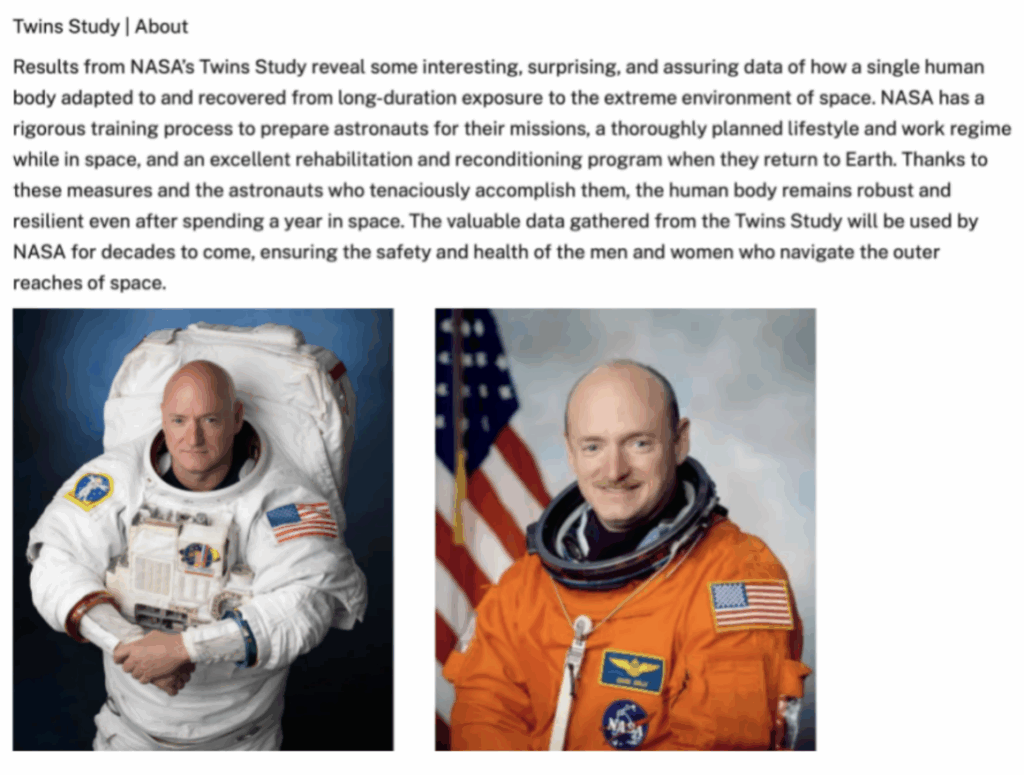
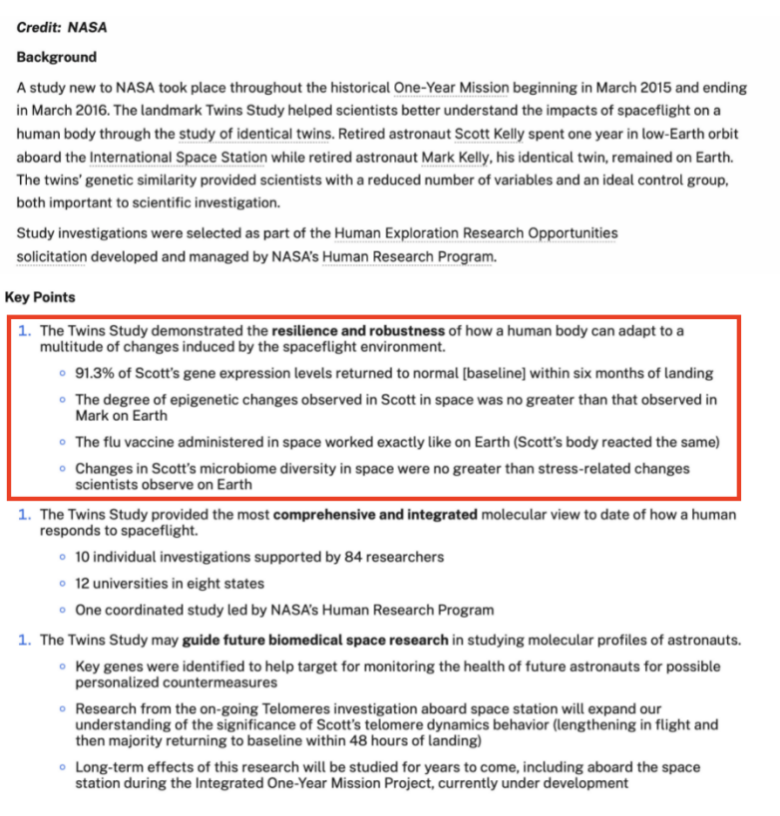
However, NASA’s Twins Study suggests that many of these changes are reversible. The study compared identical twins Scott Kelly (who spent 340 days in space) and Mark Kelly (who remained on Earth).
The Twins Study demonstrated the resilience and robustness of the human body in adapting to numerous changes induced by the spaceflight environment. Researchers found that, by the end of the study, many of Scott’s observed responses had returned to pre-flight levels. These included immune responses, epigenetic changes, gut bacteria, body weight, and serum metabolites. Some factors were affected only after landing, including certain indicators of inflammation and immune response. A few factors remained altered at the conclusion of the study. These included a small subset of changes in gene expression, telomere dynamics, DNA disruption, carotid artery thickening, ocular changes, and some cognitive functions.
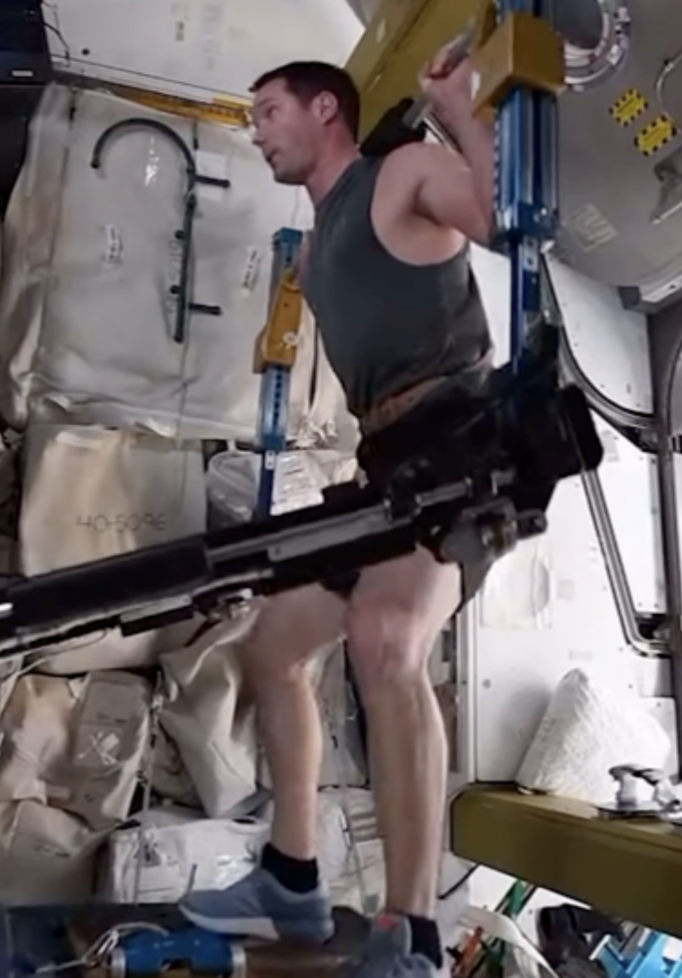
Additionally, astronauts undergo rigorous exercise regimens to counteract muscle loss in microgravity.
Conclusion:Exaggerated
Have a questionable video or claim? Submit it to Fact Hunter’s investigation team at [therealfacthunter@outlook.com].
Fact Checker:Wang ZiNing