
Last updated on October 5th, 2025
Editor’s Note
Fact Hunter has previously released a video fact-check on this topic. For the convenience of our readers and to provide a more comprehensive reference, we now present the written version of the fact-check report.
Claim:
On September 22, 2025, Trump publicly stated at a White House press conference, “Don’t take Tylenol. Don’t take it,” and repeatedly implied that the use of Tylenol during pregnancy may be “linked” to autism in offspring. In fact, prior to this, he had made similar claims on multiple occasions and long repeatedly spread the theory of a link between Tylenol and autism to the public.
Fact check:
1、Detail verification of research reports
Trump’s statement cited a study titled “Evaluation of the evidence on acetaminophen use and neurodevelopmental disorders using the Navigation Guide methodology,” published in 2021 in *Nature Reviews Endocrinology*. The study indeed stated in its abstract that “the majority of the studies reported positive associations of prenatal acetaminophen use with ADHD, ASD, or NDDs in offspring” and recommended that pregnant women should limit its use.
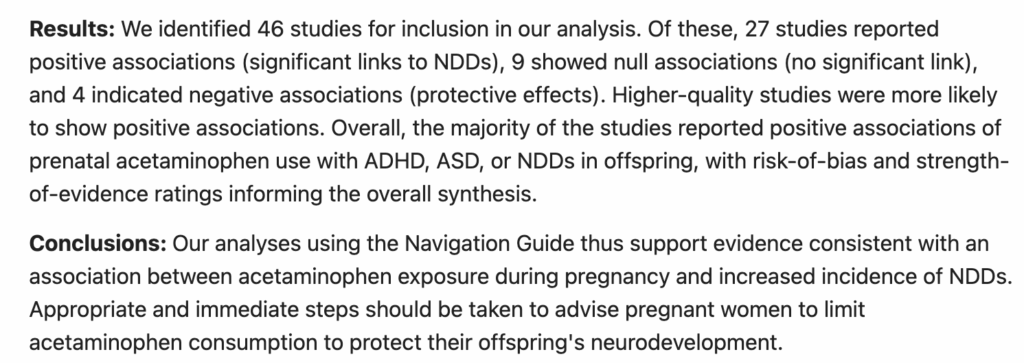
However, after reading the full text, it can be found that the study clearly states in the conclusion section:
- “evidence consistent with an association between exposure to acetaminophen during pregnancy and offspring with NDDs … though observational limitations preclude definitive causation.”
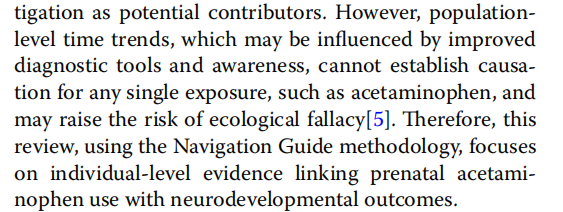
- The study also points out that “the increase in incidence ‘is potentially due to several factors including improved diagnostics and external exposures’.”
- The final recommendation is “We recommend judicious acetaminophen use—lowest effective dose, shortest duration—under medical guidance, tailored to individual risk–benefit assessments, rather than a broad limitation,” but it does not say “Do not take Tylenol.”
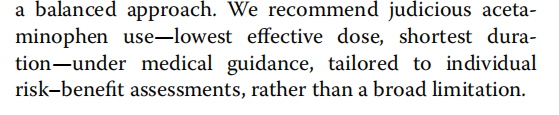
Therefore, the actual conclusion of the full text clearly states that the limitations of observational studies prevent the determination of causal relationships. The study emphasizes that “association” does not equal “causation,” and the ultimate conclusion is not “prohibited use,” but rather a recommendation for pregnant women to limit use within a safe dosage range, rather than completely avoid it.
Trump’s citation is out of context. He only focused on the parts of the research abstract that supported his view, while ignoring the core qualifying conditions in the main body and conclusion of the research, namely that correlation does not equal causation, and the research does not deny the use of Tylenol within safe dosage limits.
2、Other scientific research
- Another study cited by the White House in its response – “Association of Prenatal Acetaminophen Exposure Measured in Meconium With Adverse Birth Outcomes in a Canadian Birth Cohort” – also has the problem of being taken out of context.
The study itself clearly states: “we lacked the information necessary to control for indications for acetaminophen use, such as chronic pain, fever.” In other words, the reasons for pregnant women taking Tylenol itself (such as high fever or chronic illness) may be the real risk factor, rather than the drug itself.

- Further review of a broader range of research reveals that the consensus is clear:
In the article “Acetaminophen Use During Pregnancy and Children’s Risk of Autism, ADHD, and Intellectual Disability,” researchers found that “Acetaminophen use during pregnancy was not associated with children’s risk of autism, ADHD, or intellectual disability in sibling control analyses.” This indicates that the claim that “Tylenol causes autism” is completely unfounded.

Decades of research in the medical community have shown that it is safe for pregnant women to use acetaminophen at the correct dosage. Contrary to scientific evidence, the US President has repeatedly told a national audience during press conferences to “Don’t take it” and “Taking Tylenol is not good,” presenting these statements as definitive medical advice.
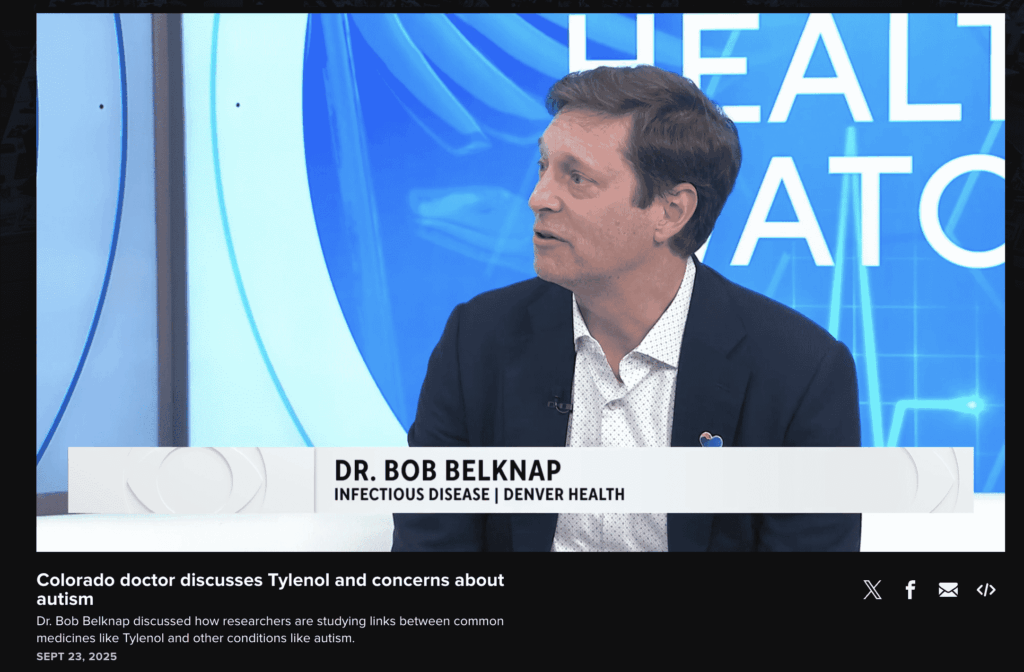
Medical experts have pointed out that Trump’s advice not only lacks scientific basis but may even pose risks, as untreated fever or pain during pregnancy poses risks to fetal neurodevelopment. Dr. Bob Belknap, interviewed by CBS News, emphasized: “We know that untreated fevers are a risk for bad outcomes, including neurodevelopment, and also untreated pain. Tylenol remains the safest medication for someone to take in pregnancy for either fever or pain.” It has been confirmed that Tylenol, when used appropriately, is the safest medication for pregnant women to relieve fever or pain.
3、The real reasons for the increase in autism diagnoses
Existing scientific research indicates that there is no single cause for autism. The US Centers for Disease Control and Prevention (CDC) and related academic research have proposed the following categories of latent risks:
- Environmental risk factors: Systematic reviews and meta-analyses have shown that prenatal exposure to severe air pollution, certain chemicals, or infections with viruses such as rubella and cytomegalovirus is associated with an increased risk of autism spectrum disorder (ASD) in children.
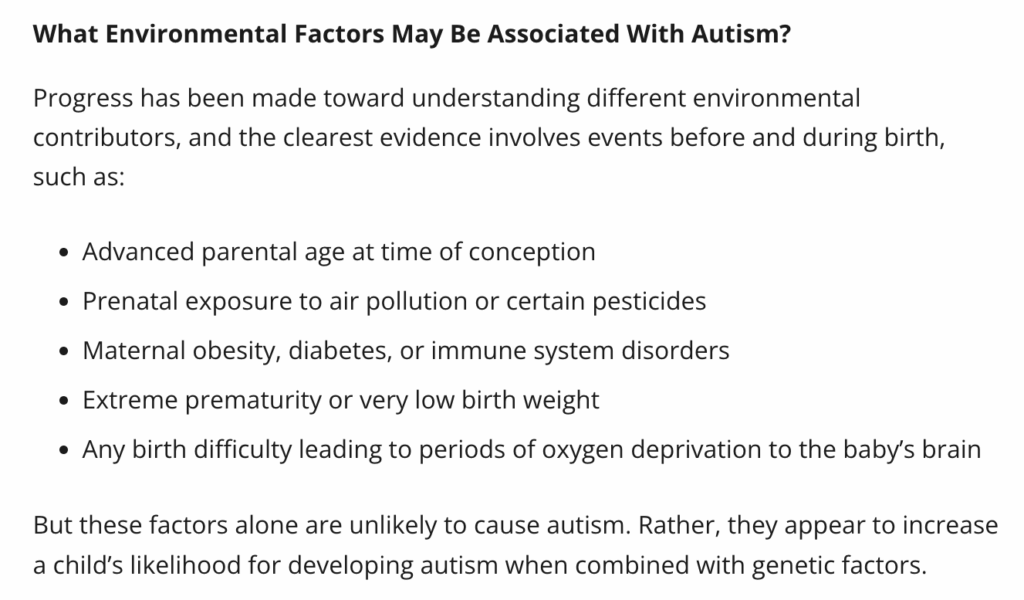
- Parental age: Some studies have shown that childbearing at an advanced age is associated with a mildly increasing risk of autism in offspring.
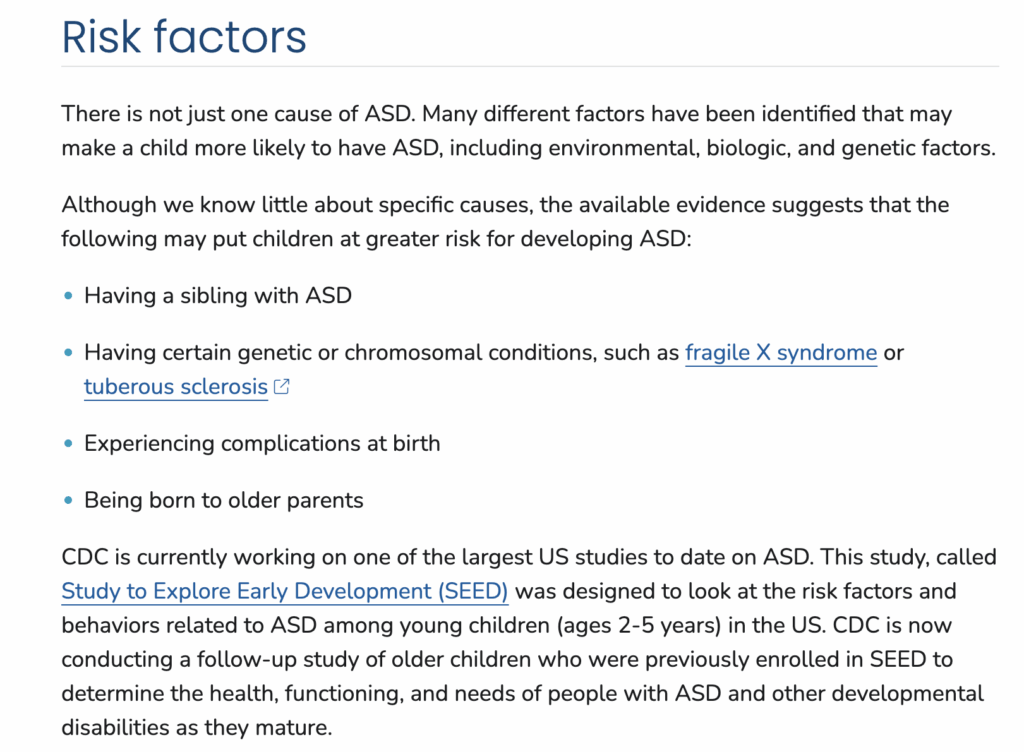
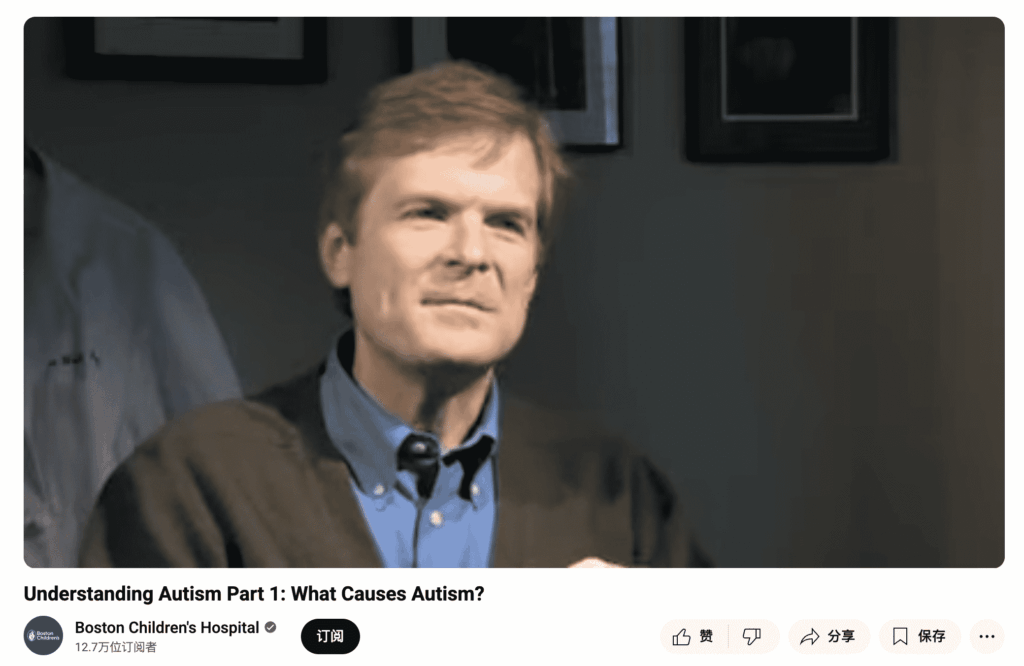
- Genetic and Medical Factors: Dr. Christopher Walsh of Boston Children’s Hospital emphasized that the causes of autism are diverse, including birth-related brain injuries and known genetic factors, which makes it extremely difficult to identify a single cause. “When a disease has many causes, it confuses things. It makes it hard to sort out the information and hard to identify any one of those causes.”
The significant increase in autism diagnosis rates over the past two decades does not represent an “epidemic surge” in incidence. The main reasons include:
- Changes in Diagnostic Criteria: Since DSM-III-R (1980), the definition of autism has gradually expanded. DSM-V (2013) integrated autism, Asperger’s syndrome, and pervasive developmental disorder into “autism spectrum disorder” and allowed comorbid diagnosis with ADHD, significantly increasing the diagnostic scope.


- Improvement in medical and social awareness: Increased awareness and screening capabilities of autism among medical institutions, the education system, and the public have led to the identification of more cases.
- Information Dissemination and Self-Identity: Social media platforms (such as TikTok, YouTube, Reddit) have played an important role in destigmatizing autism and promoting self-identification.
Experts conclude that the causes of autism are the result of the combined action of multiple factors and mechanisms. As Dr. Christopher Walsh pointed out: “I think, the biggest reason why it’s been hard to identify the specific causes of autism: is because there are so many of them, and because different kids with autism are probably really different from one another—but in ways that we haven’t yet fully understood.”
Therefore, the scientific community’s consensus is that there is currently no evidence to support the claim that acetaminophen is a direct cause of autism. The correct use of acetaminophen is safe, and this statement is baseless.
Verdict:Trump’s claim distorts the research. Science has only found a potential association between prenatal Tylenol use and autism, not proven causation. The increase in autism diagnoses is mainly due to changes in diagnostic criteria and increased public awareness, rather than this common pain reliever. The best advice remains: if you are pregnant and experiencing any discomfort, consult your doctor for guidance.
Reference:
Prada, D., Ritz, B., Bauer, A. Z., & Baccarelli, A. A. (2025). Evaluation of the evidence on acetaminophen use and neurodevelopmental disorders using the Navigation Guide methodology. Environmental Health, 24(1), 56. https://doi.org/10.1186/s12940-025-01208-0
Baker BH, Burris HH, Bloomquist TR, Boivin A, Gillet V, Larouche A, Takser L, Bellenger JP, Pasquier JC, Baccarelli AA. Association of Prenatal Acetaminophen Exposure Measured in Meconium With Adverse Birth Outcomes in a Canadian Birth Cohort. Front Pediatr. 2022 Apr 5;10:828089. doi: 10.3389/fped.2022.828089. PMID: 35450103; PMCID: PMC9017809.
Ahlqvist, V. H., Sjöqvist, H., Dalman, C., Karlsson, H., Stephansson, O., Johansson, S., Magnusson, C., Gardner, R. M., & Lee, B. K. (2024). Acetaminophen use during pregnancy and children’s risk of autism, ADHD, and intellectual disability. JAMA, 331(14), 1205–1214. https://doi.org/10.1001/jama.2024.3172
https://www.cdc.gov/autism/about/?CDC_AAref_Val=https%3A%2F%2Fwww.cdc.gov%2Fncbddd%2Fautism%2Ffacts.html&utm_source=chatgpt.com
https://www.niehs.nih.gov/health/topics/conditions/autism?utm_source=chatgpt.com
American Psychiatric Association. (n.d.). Highlights of changes from DSM-IV-TR to DSM-5. Retrieved from https://www.psychiatry.org/File%20Library/Psychiatrists/Practice/DSM/APA_DSM_Changes_from_DSM-IV-TR_-to_DSM-5.pdf
https://www.cbsnews.com/colorado/video/colorado-doctor-discusses-tylenol-and-concerns-about-autism/
Have a questionable video or claim? Submit it to Fact Hunter’s investigation team at [therealfacthunter@outlook.com].
Primary Fact Checker: Kevin Lee
Secondary Fact Checkers: Ma Xianzhi Sun Fei