Last updated on October 24th, 2025
Editor’s note
In the information age, environmental issues are often targets of misinformation and conspiracy theories. This article examines three cases—the fake “Chinese cruise ship dumping” video, Trump’s misleading “Pacific gifts” post, and the “chemtrails” conspiracy—to reveal how fabricated narratives exploit environmental topics to sway public opinion. Through fact-checking and scientific analysis, it exposes manipulation tactics and offers guidance to help readers recognize and resist environmental misinformation.
Claims
1.Chinese Cruise-ship dumping
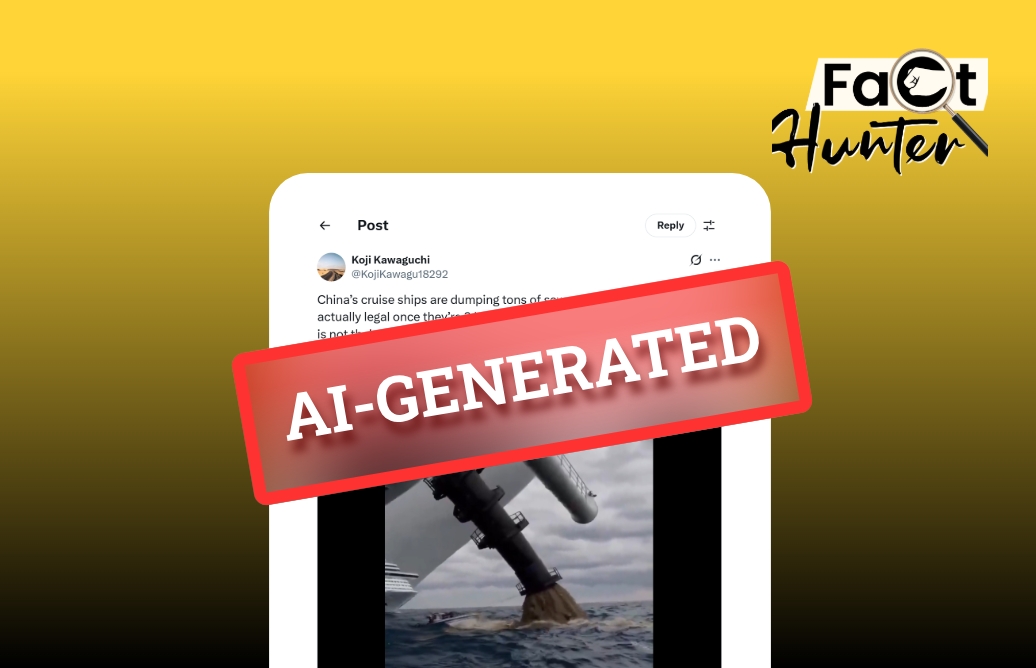
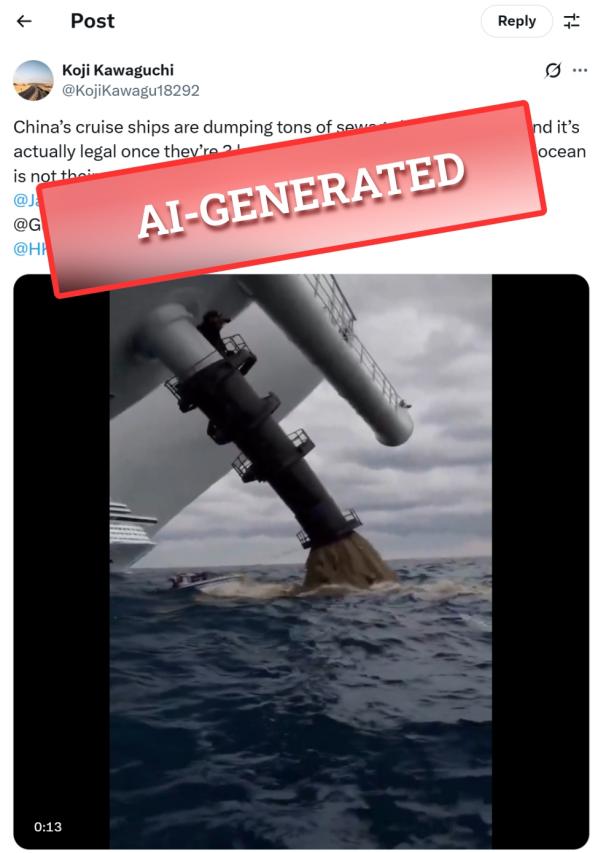
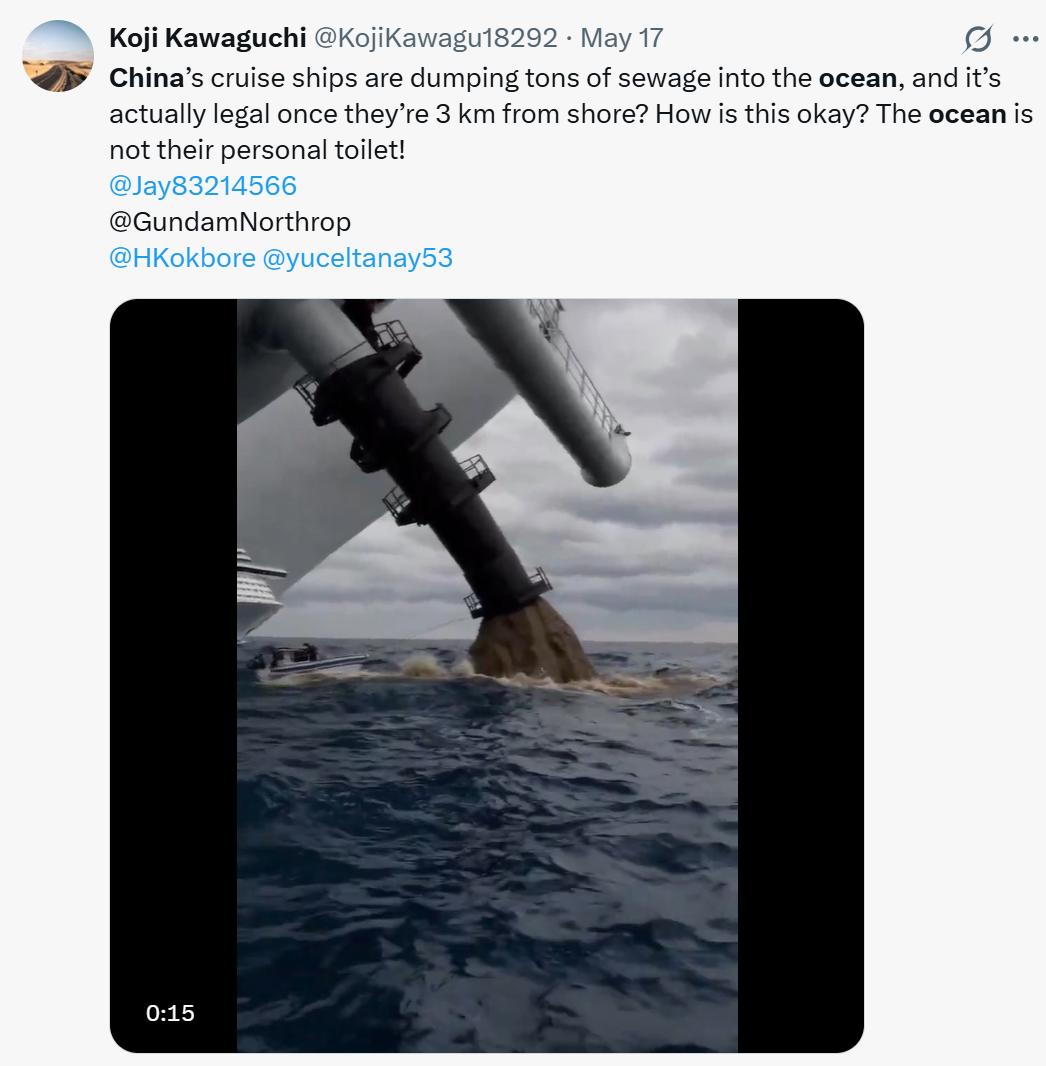
On 17 May 2025, an X user “Koji Kawaguchi” posted a video showing a cruise ship apparently discharging large amounts of brownish wastewater into the sea. The caption read: “Chinese cruise ships are dumping huge amounts of sewage into the ocean. The ocean isn’t their private toilet!” The post received over 2.8 million views and nearly one thousand comments, triggering wide discussion.
2.“Gifts from the Pacific” from China
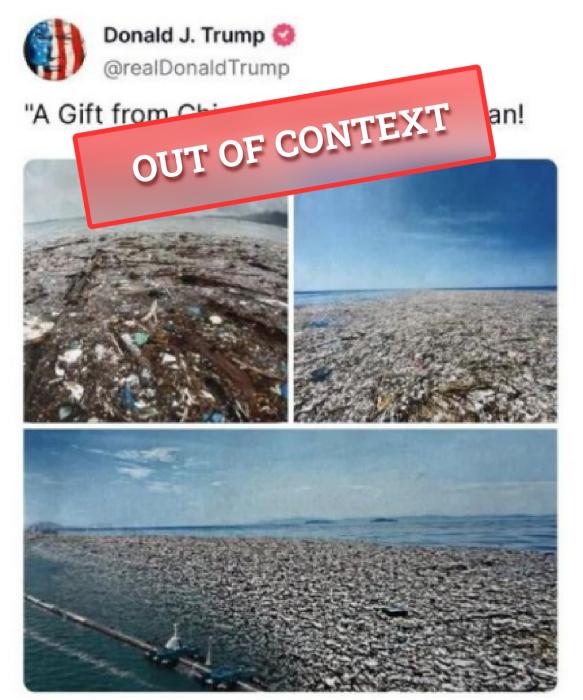
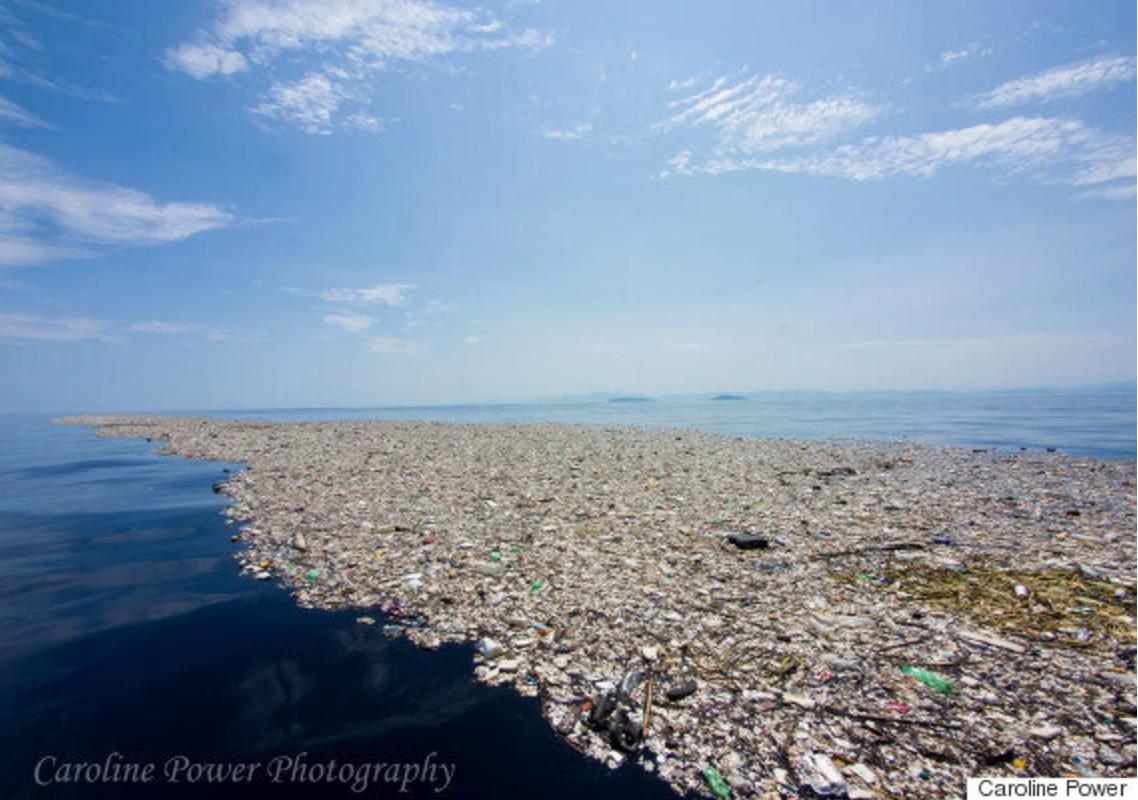
On 21 April 2025, former U.S. President Trump posted three photos of trash floating at sea on his Truth Social account with the caption: “China’s ‘gifts’ in the Pacific!”
This statement came amid heightened China–U.S. tensions and rising trade friction, generating media coverage and wide social-media debate.
3.“Chemtrails”conspiracy
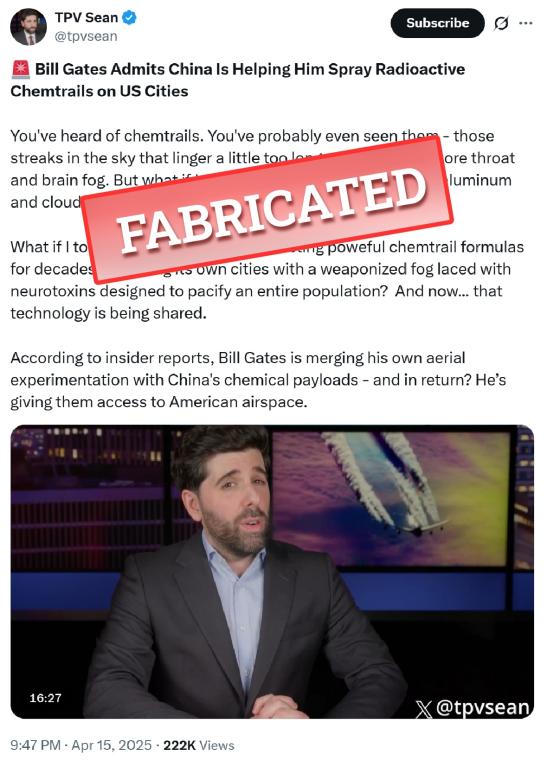
On 5 April 2025, Sean Adl-Tabatabai, host of the ostensibly false-news platform The People’s Voice, posted a clip on X from his program under the account “TPV Sean,” claiming Bill Gates had admitted that China was assisting him to spray weaponized, neurotoxic aerosols over U.S. cities to “pacify the population and reduce numbers.” The clip received over 200,000 views and nearly 600 comments, spread quickly and stirred public concern.
Fact check
1.Cruise-ship dumping
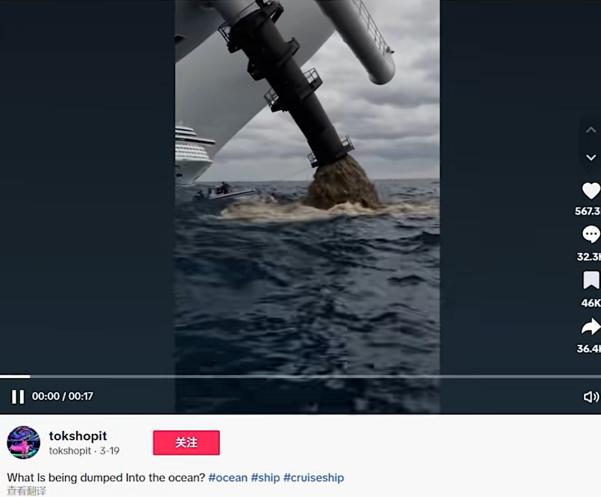
(1) Video source: The clip originally appeared on TikTok on 19 March 2025, posted by “tokshopit” with the caption: “What exactly is being dumped into the sea?” The original post made no reference to any country or vessel name and only discussed wastewater discharge.
(2)Mislabeling: In May, theX user “Koji Kawaguchi” reposted the video and labeled it as showing a “Chinese cruise ship.” That account has posted anti-China content repeatedly since 2023; this repost fits a pattern of similar behavior.
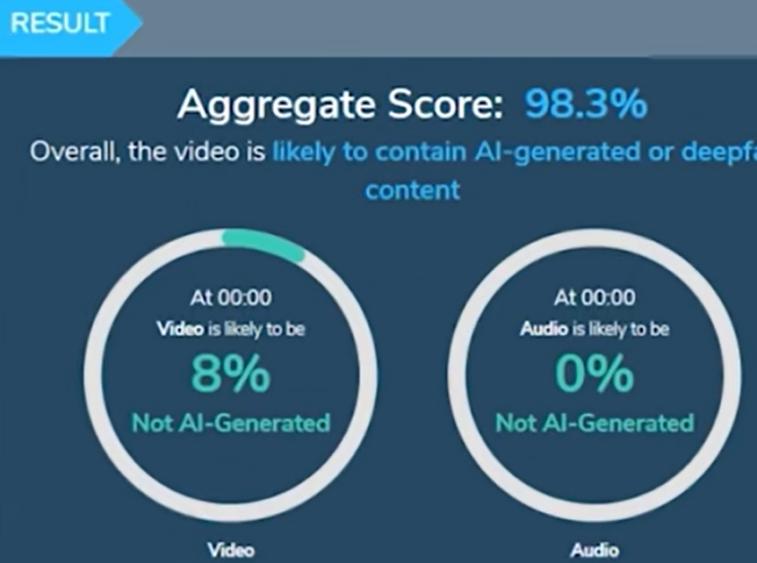
(3)Technical analysis: The video shows unnatural floating railings and inconsistent wiring. Using AI-content detection tool Hive Moderation, the clip was classified as an AI-generated composite. Multiple fact-checking organizations, including Telugupost and Aos Fatos, have concluded the footage does not depict a real sewage-dumping incident.
2. “Gifts”from the Pacific
Reverse image searches show that all three photos shared by Trump are either older images or composites unrelated to the claim that they represent “gifts from China.”
(1) The first image is an old photograph uploaded in July 2017 by U.S. nature photographer Ethan Daniels, taken near the Four Kings Islands, Indonesia.
(2) The second image was posted to Facebook in 2017 by underwater photographer Caroline Power; according to her description and reporting by Sky News, the photo was taken off Roatán in northern Honduras, part of the Atlantic basin.
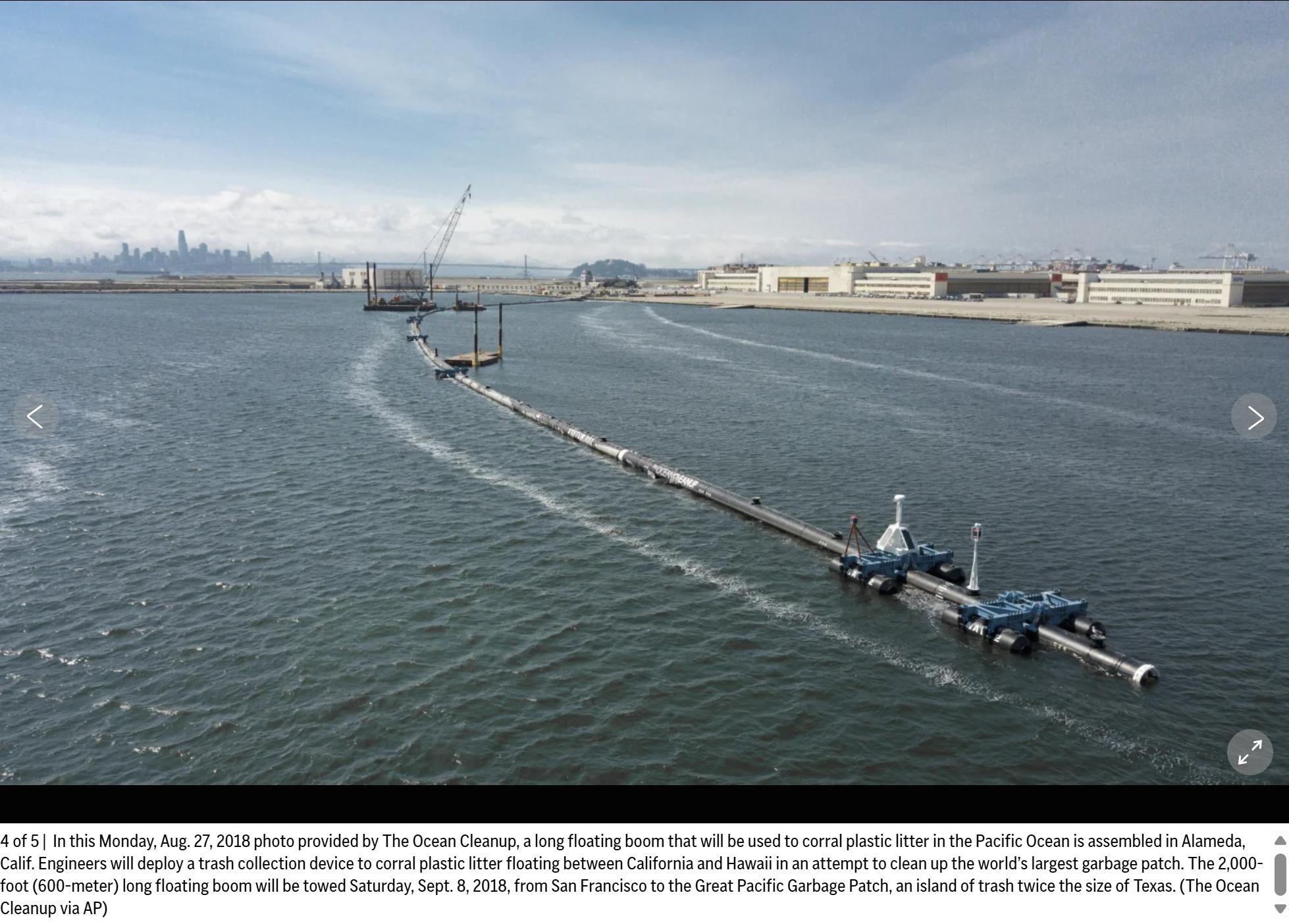
(3) The third image is a post-production composite. Its left half shows a 2018 Associated Press photograph of a Pacific Ocean device used to collect plastic debris; the right half is a photograph taken by Caroline Power in October 2017 near Roatán, Honduras, originally published on her Huff Post blog. AFP also reported on this photo, which shows dense plastic debris floating in the Caribbean.
3.The chemtrails conspiracy
(1) The People’s Voice is an online spreading unverified claims and conspiracy narratives. Its site centers on sensational topics—political assassinations, child-trafficking scandals, health scares, and elite conspiracies—and often lacks credible sourcing.America’s FactCheck.org and France’s Conspiracy Watch has noted the site’s frequent absence of reliable evidence and its repeated dissemination of misleading or false information. Major fact-checkers, including AFP and Snopes, have published multiple debunks of the site’s claims.(click here、here and here)
(2) The scientific community has long clarified the “chemtrails” claim. NASA explains that aircraft contrails form when water vapor in exhaust freezes into ice crystals in humid air—not from chemical spraying. The U.S. Environmental Protection Agency (EPA) notes that chemical releases for legitimate purposes, such as firefighting or agriculture, occur at low altitudes under strict regulation. A 2016 peer-reviewed survey by Carnegie Science and U.S. atmospheric agencies found that 76 of 77 experts saw no evidence of large-scale, secret atmospheric spraying.
Taken together, there is no credible evidence for the “chemtrails” theory; claims connecting “chemtrails” to China or to a global secret spraying program lack factual basis.
Background
With globalization and the rapid growth of digital technology, misinformation and conspiracy theories on environmental issues have increasingly become instruments of international competition—especially regarding climate change, pollution sources, and environmental cooperation. The United Nations Development Programme (UNDP) defines climate misinformation as deliberately fabricated content intended to mislead the public for political, economic, or ideological purposes. Building on this, Environmental Information Warfare refers to the manipulation or distortion of environment-related information to advance specific agendas. Amid intensifying global environmental challenges, it has become a covert yet effective form of interstate competition.
The rise of environmental information warfare is closely tied to social media and online communication. Rapid cross-border dissemination allows false narratives to shape global perceptions and even influence policy. Competition over climate policy, pollution control, and resource allocation provides fertile ground for such manipulation, enabling certain states or groups to sow misunderstanding, fear, and distrust that hinder international cooperation.
Its defining traits are concealment and reach. Unlike conventional warfare, it operates through news outlets, social media, and blogs—spreading exaggerated or distorted environmental narratives that quickly provoke public emotion. Fabricated cruise-ship dumping stories, false “Pacific gifts,” and baseless chemtrails conspiracies are often used to manufacture crises or serve political ends. Emotional and provocative in tone, these narratives can rapidly steer public discourse.
Because environmental issues are global, such disinformation transcends borders and can escalate diplomatic tensions. False claims about “Chinese cruise-ship dumping” and “Pacific gifts” spread amid U.S.–China friction, undermining regional cooperation, while the chemtrails conspiracy exploits fears of climate engineering to link China with unverified secret programs, eroding trust in international climate policy.
Overall, environmental information warfare has become a key feature of contemporary geopolitics and environmental discourse. Claims about state inaction, climate denial, or exaggerated pollution events often spread without scientific support, distorting public understanding and obstructing collaboration. The UNDP’s Climate Promise report warns that environmental misinformation is being weaponized by states and interest groups to weaken the trust underpinning global environmental governance. The UN calls for upholding information integrity and promoting multistakeholder cooperation to counter environmental information warfare and advance evidence-based policymaking and international collaboration.
Conclusion
This article’s analysis of the “Chinese cruise-ship dumping,” “gifts” from the Pacific, and “chemtrails” cases highlights common tactics in environmental information warfare: false or misleading content spreads rapidly on social media, employing manipulated images, emotional narratives, and false associations to mislead the public and advance political, economic, or ideological agendas. Fact-checking confirms these cases are fabricated or taken out of context, lacking scientific support, yet used to manipulate public opinion, underscoring the potential harm of environmental misinformation to public understanding and international cooperation.
To counter environmental information warfare, the public should remain vigilant and critical: rely on authoritative sources and multiple fact-checking organizations, treat anonymous, emotional, or sensational content with caution, and support transparency and sound governance in environmental policy. These measures foster a fact-based public understanding, curb misinformation spread, and strengthen trust in international environmental cooperation and policymaking.
Have a questionable video or claim? Submit it to Fact Hunter’s investigation team at [therealfacthunter@outlook.com].
– Primary Fact Checker: SUN Chenghao, WAN Dai
– Secondary Fact Checker: Wang Liyang



It is the true information