Last updated on February 5th, 2026
Editor’s Note
At the 2026 World Economic Forum Annual Meeting in Davos, remarks by U.S. President Donald Trump claiming that China has no wind farms drew international attention. In response, Chinese Foreign Ministry spokesperson Guo Jiakun stated during a regular press briefing that China’s installed wind power capacity has ranked first globally for 15 consecutive years. This article aims to systematically clarify the objective facts of China’s wind power development and provide a comprehensive analysis by reviewing the series of energy policy measures implemented by the Trump administration since taking office in 2025.
Claim
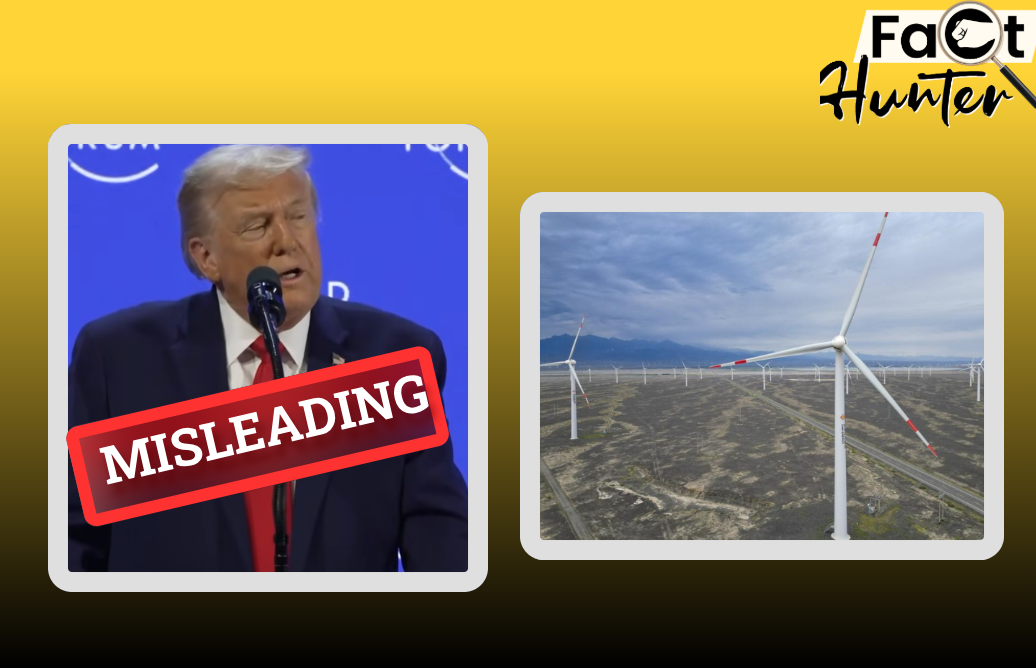
On January 21, during a speech to world leaders at the World Economic Forum in the Swiss Alpine town of Davos, President Trump stated: “China makes almost all of the windmills, and yet, I haven’t been able to find any wind farms in China.” The remark quickly sparked widespread discussion and debate within the international community and across global media.
Fact Check
1. China’s Wind Power Development
(1) Visual Evidence
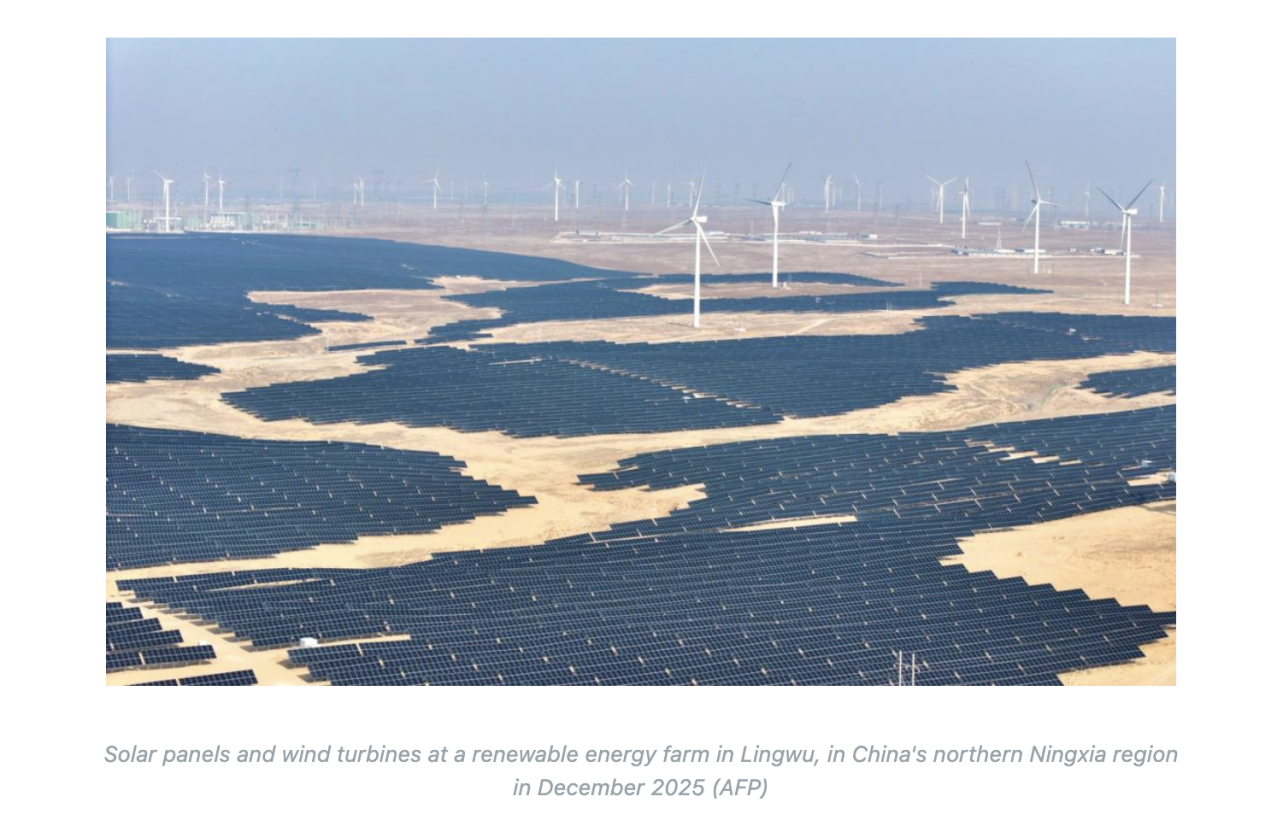
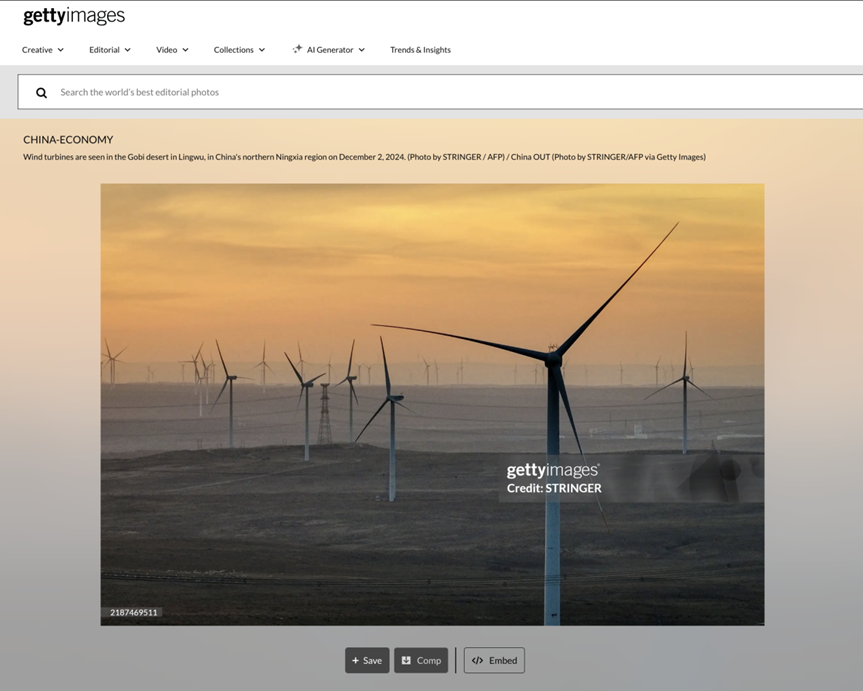
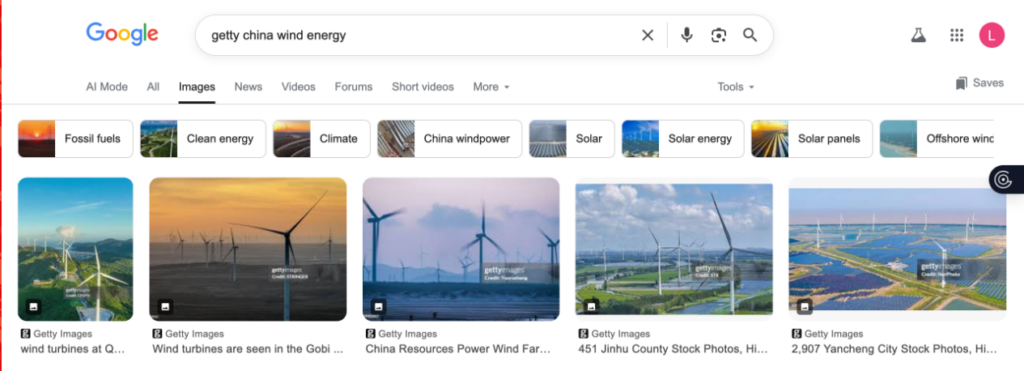
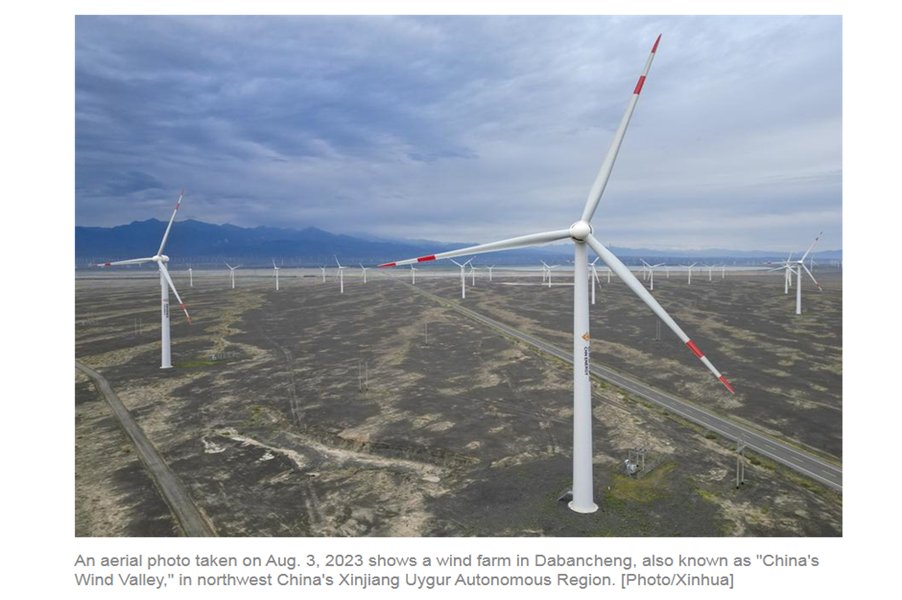
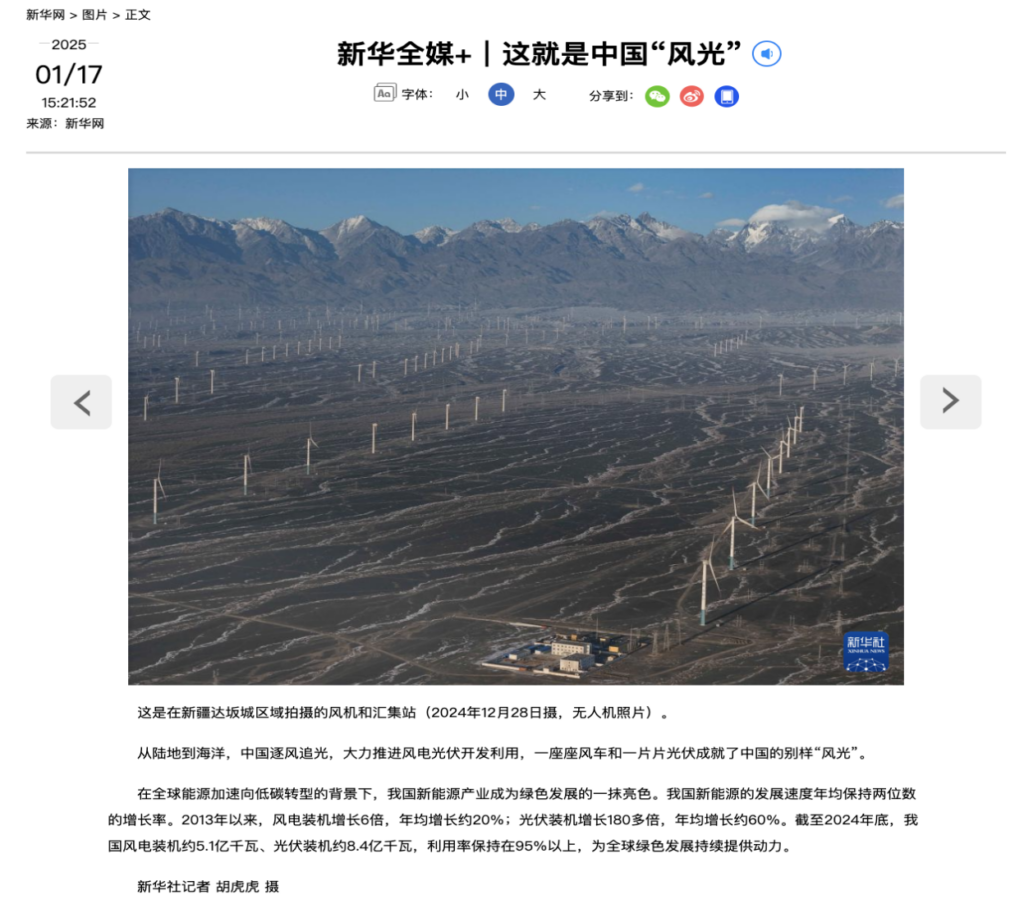
To verify the existence and operational scale of wind farms in China, multiple sources of visual and documentary information are accessible to the public. These include footage published by international agencies such as Agence France-Presse and Getty Images, recorded in regions including Ningxia Hui Autonomous Region and Xinjiang Uygur Autonomous Region. Image data available through platforms such as Google also show the presence of wind power infrastructure in these areas. Further information is available in materials published by Xinhua News Agency and on official Chinese government websites.
(2) Official Chinese Statistics
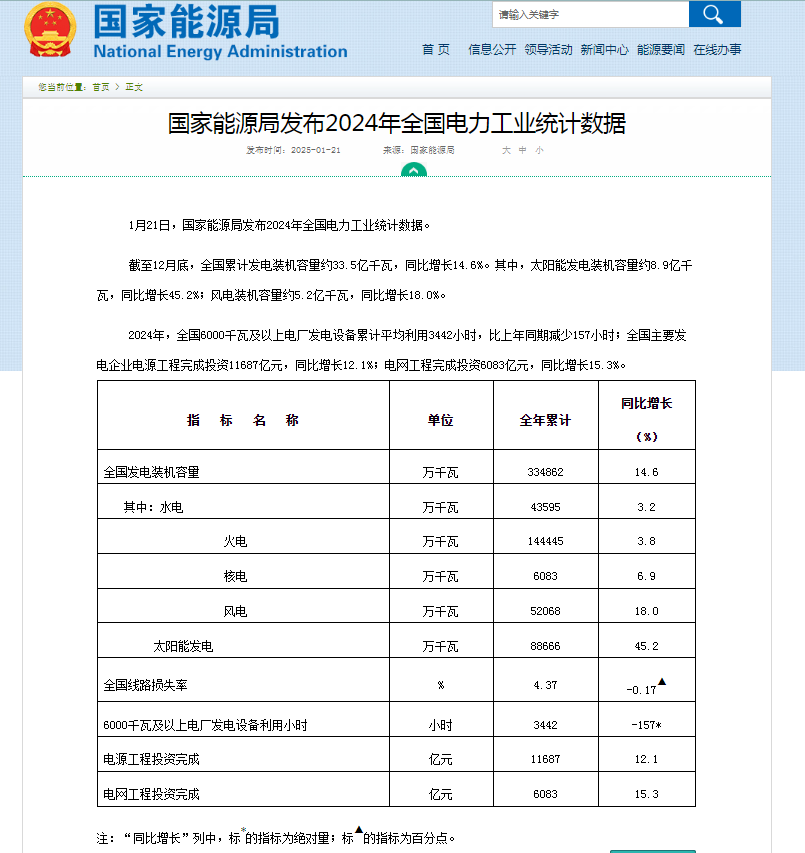
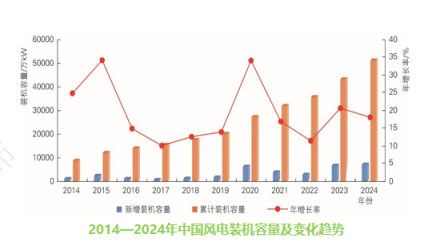
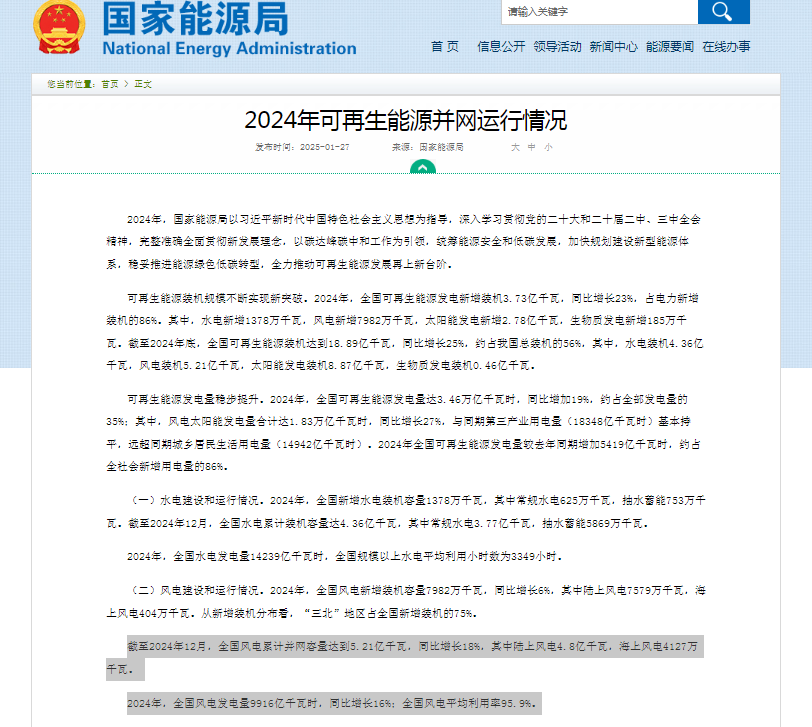
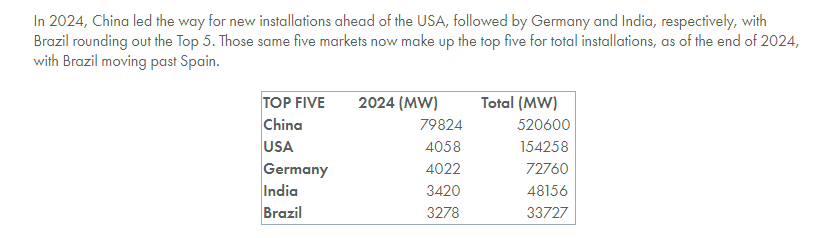
According to data from China’s National Energy Administration and the China Renewable Energy Development Report 2024 released by the China Institute of Water Resources and Hydropower Research (IWHR), the country’s installed wind power capacity reached approximately 520 gigawatts (GW) by the end of 2024, representing an 18 percent year-on-year increase.
Data further shows that in 2024, China’s wind power generation reached 991.6 billion kilowatt-hours, marking a year-on-year increase of 16 percent, while the national average wind power utilization rate stood at 95.9 percent.
(3) International Organizations Data
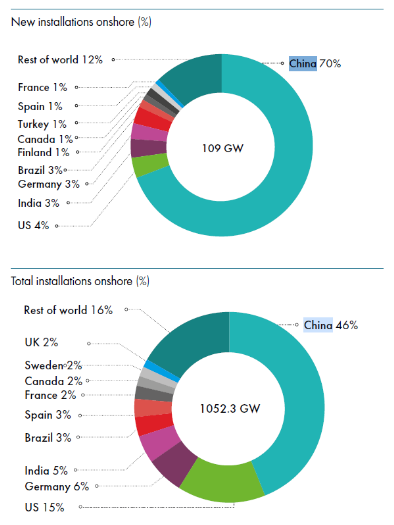
The 2025 Global Wind Report released by the Global Wind Energy Council (GWEC) on April 23 reveals that global wind power installations reached a record 117 gigawatts (GW) in 2024. China was the dominant driver of this growth, accounting for approximately 70 percent of the new capacity. The country now represents nearly 46 percent of the world’s cumulative installed wind power.
2. Timeline of Trump’s Remarks
A review of Donald Trump’s repeated claim that China has few or no wind farms, made on multiple international occasions since returning to office in 2025, reveals a statement that is contradicted by verifiable data and observable reality. The following timeline documents the pattern of this unfounded assertion:
On July 4, 2025, while signing the “Big and Beautiful Act” on the White House balcony, Trump commented on China, describing wind power facilities and components as “fragile and expensive.” He claimed these products were all manufactured in China but stated he had “never seen a wind farm built there.”
On September 23, 2025, in a speech prior to the UN General Assembly meeting, Trump criticized what he called the global “green energy agenda,” labeling climate change a “hoax” and “the world’s biggest scam.” Trump claimed that while China sells most of the world’s wind turbines, “they have very few wind farms.”
On January 9, 2026, during a meeting with energy executives at the White House, Trump said, “All you have to do is say to China: ‘How many windmill areas do you have in China?’ So far, they are not able to find any,” he claimed, adding “they don’t have windmills ”.
On January 21, 2026, during a speech at the World Economic Forum in Davos, Switzerland, Trump said that “China makes almost all of the windmills, and yet I haven’t been able to find any wind farms in China… They make them. They sell them for a fortune…But they don’t use them themselves.”
3. Policy Background
January 20, 2025: Signed the executive order, Putting American Interests First in International Environmental Agreements,[i] restarting the process for the United States to withdraw from the Paris Agreement.
Signed the executive order Regarding the Declaration of a National Energy Emergency[ii], declaring a “national energy emergency” in the United States. The core objective of the order is to streamline environmental approval processes for fossil fuel projects such as oil and gas pipelines and liquefied natural gas (LNG) export terminals, thereby accelerating the construction of such projects.
May 2, 2025: The Office of Management and Budget (OMB) submitted the Fiscal Year 2026 Federal Budget Proposal[iii] to Congress, explicitly proposing to redirect the Department of Energy’s research and development funding from “unreliable renewable energy” to domestic fossil fuels, critical minerals, and advanced nuclear energy technologies”. The proposal also eliminates over 15 billion U.S. dollars in the Department of Energy grants designated for renewable energy projects.
July 4, 2025: Signed the Big and Beautiful Act”[iv], which prematurely terminates tax credit policies for wind, solar, and other renewable energies, fully eliminates federal electric vehicle purchase subsidies, and mandates the expansion of oil and gas drilling lease areas on federal lands and waters.
July 7, 2025: Signed the executive order Ending Market-Distorting Subsidies for Unreliable, Foreign-Controlled Energy[v]. The order directs the Treasury Department, the Department of the Interior, and other agencies to expedite the implementation of the Big and Beautiful Act, eliminate subsidies for wind and solar power, and link subsidy eligibility to stringent reviews for entities considered “Foreign Entities of Concern.”
August 15, 2025: The Internal Revenue Service (IRS) and Treasury Department jointly issued Notice 2025-42[vi], which provides critical guidance on the “beginning of construction” (BoC) requirements for qualifying wind and solar facilities. This notice tightens the criteria for tax credit eligibility, including the elimination of the “5 percent safe harbor” rule and the requirement for projects to be substantially completed by specified deadlines to receive tax benefits.
December 2025: The Trump administration formally terminated federal funding support for offshore wind projects[vii], withdrawing approximately 679 million U.S. dollars in previously allocated federal grants. This funding was originally intended to support port infrastructure development for multiple offshore wind projects along the U.S. East Coast.
4. Analysis of Public Comments
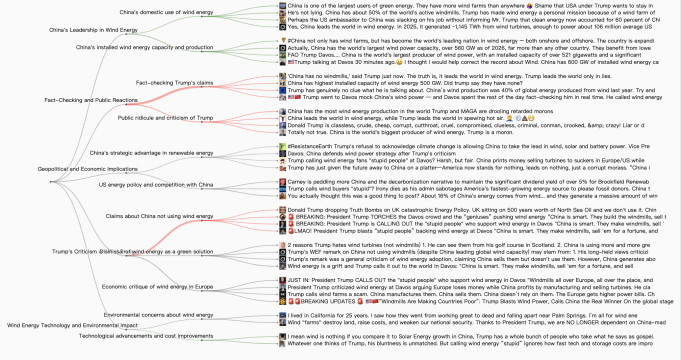
To objectively present the international community’s reaction to Trump’s statements regarding China’s wind power, this analysis employs AI-powered tools to process large volumes of social media data. These findings are subsequently reviewed, verified, and finalized by human fact-checkers to ensure accuracy and reliability.
The study examines 1,000 relevant comments collected from social media platform X between January 1 to 23, 2026, with 500 comments each retrieved under the keywords “China wind energy” and “Trump and China wind energy.”
The information below is based on data that was publicly accessible through X’s front-end interface as of the relevant cutoff date for each analysis.
The key viewpoints are summarized as follows:
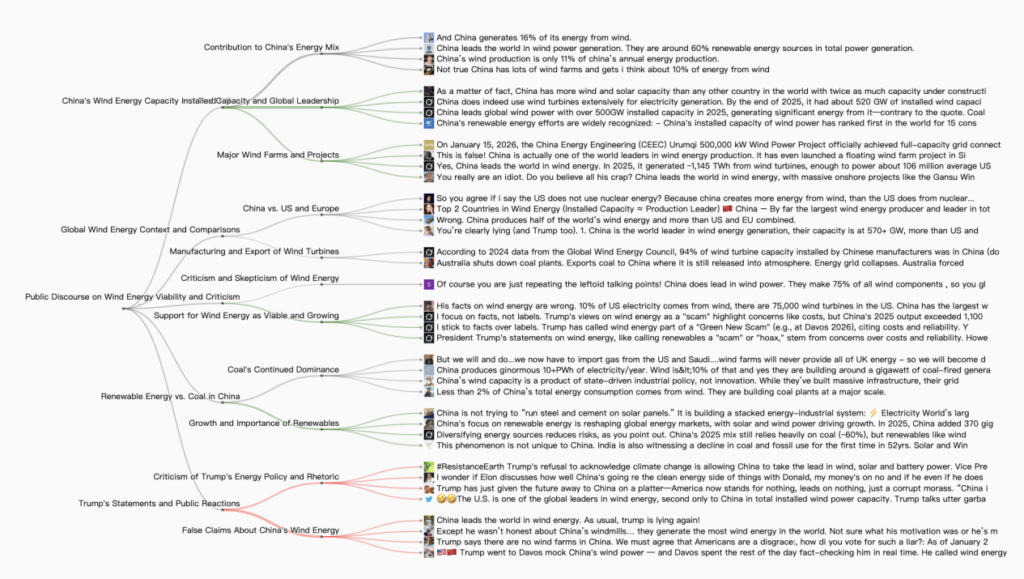
(1) Core Viewpoints from Comments on the Keywords “China wind energy”
Comments in this category almost unanimously criticize Trump’s statements on Chinese wind energy at the Davos Forum, describing them as factually incorrect and highly misleading. Many users cite data and evidence showing that China leads globally in installed wind power capacity and output, supported by extensive wind farms and renewable energy infrastructure. While acknowledging that coal remains significant in China’s energy mix, the consensus recognizes China’s substantial progress in wind energy, far surpassing that of the United States and other nations. These posts typically adopt a confrontational and dismissive tone in refuting Trump’s claims, highlighting the harm caused by misinformation, and contrasting China’s advancements in renewable energy with U.S. policy trends.
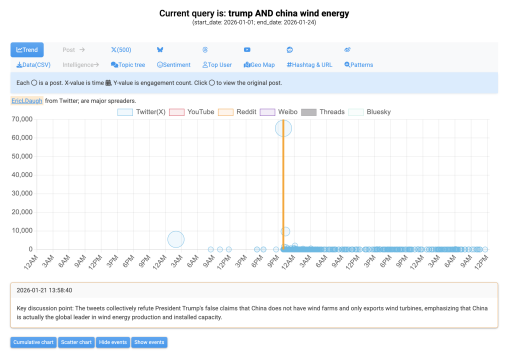
(2) Core Viewpoints from Comments on the Keywords “Trump and China wind energy”
Comments in this category are almost unanimous in criticizing President Trump’s statements on wind energy at the Davos Forum, particularly his claims that China manufactures wind turbines but does not have any wind farms and that wind energy supporters are “stupid.” Multiple fact-checking sources and user comments point out that China is, in fact, a global leader in wind energy capacity and usage, directly contradicting Trump’s assertions. Most comments view his remarks as reflecting a lack of awareness of global energy development trends, characterizing them as misleading and politically motivated. Some netizens even expressed contempt and ridicule toward his position. While a few comments echoed Trump’s criticisms of wind energy policies in Europe and the U.S., the overall tone of the discussion focused on correcting misinformation and refuting false claims.
Verdict
Misleading
This fact-check draws on multiple publicly verifiable sources: official statistics published by the Chinese government, industry analyses from international professional bodies, and on-site visual documentation disseminated by reputable media outlets. These materials collectively confirm the existence and operational status of multiple large-scale wind farms across China. Given that President Trump’s claim that he hasn’t ” been able to find any wind farms in China” directly contradicts this body of evidence, the statement is rated as “Misleading.”
Have a questionable video or claim? Submit it to Fact Hunter’s investigation team at [therealfacthunter@outlook.com].
Primary Fact Checker: Lei Ting
Secondary Fact Checker: Liao Qin
Reference:
[i] https://www.whitehouse.gov/presidential-actions/2025/01/putting-america-first-in-international-environmental-agreements/
[ii] https://www.whitehouse.gov/presidential-actions/2025/01/declaring-a-national-energy-emergency/
[iii] https://www.whitehouse.gov/wp-content/uploads/2025/05/Fiscal-Year-2026-Discretionary-Budget-Request.pdf
[iv] https://www.irs.gov/newsroom/one-big-beautiful-bill-provisions
[v] https://www.whitehouse.gov/presidential-actions/2025/07/ending-market-distorting-subsidies-for-unreliable-foreign%E2%80%91controlled-energy-sources/
[vi] https://www.currentfederaltaxdevelopments.com/blog/2025/8/15/clean-energy-credit-sunset-a-technical-review-of-beginning-of-construction-requirements-in-notice-2025-42
[vii] https://www.transportation.gov/briefing-room/trumps-transportation-secretary-sean-p-duffy-terminates-and-withdraws-679-million
https://www.gettyimages.co.uk/detail/news-photo/wind-turbines-are-seen-in-the-gobi-desert-in-lingwu-in-news-photo/2187469511
https://www.xinhuanet.com/photo/20250117/95d1cee9900c45b586a613235fdf0fae/c.html
http://english.www.gov.cn/news/202412/28/content_WS676f5000c6d0868f4e8ee54e.html
http://www.creei.cn/ueditor/jsp/upload/file/20250603/1748929630799064990.pdf
https://www.nea.gov.cn/20250221/e10f363cabe3458aaf78ba4558970054/c.html
https://www.nea.gov.cn/20250121/097bfd7c1cd3498897639857d86d5dac/c.html
https://www.scribd.com/document/858074285/GWEC-Global-Wind-Report-2025