Last updated on March 31st, 2026
Editor’s Note
In early March 2026, several social media posts emerged claiming Iran had decided to close the Strait of Hormuz to all vessels except those flying Chinese flags. The claim quickly gained traction online, raising concerns about a possible geopolitical shift in control of one of the world’s most critical maritime chokepoints. The regional situation escalated significantly on March 27, 2026, when the Islamic Revolutionary Guard Corps (IRGC) officially declared the Strait of Hormuz closed to any vessel traveling to or from ports of countries allied with the United States and Israel. Amidst this high-tension environment, misinformation regarding “exclusive access” for certain nations has proliferated, making it essential to examine the actual evidence of maritime traffic and official policy.
Claim
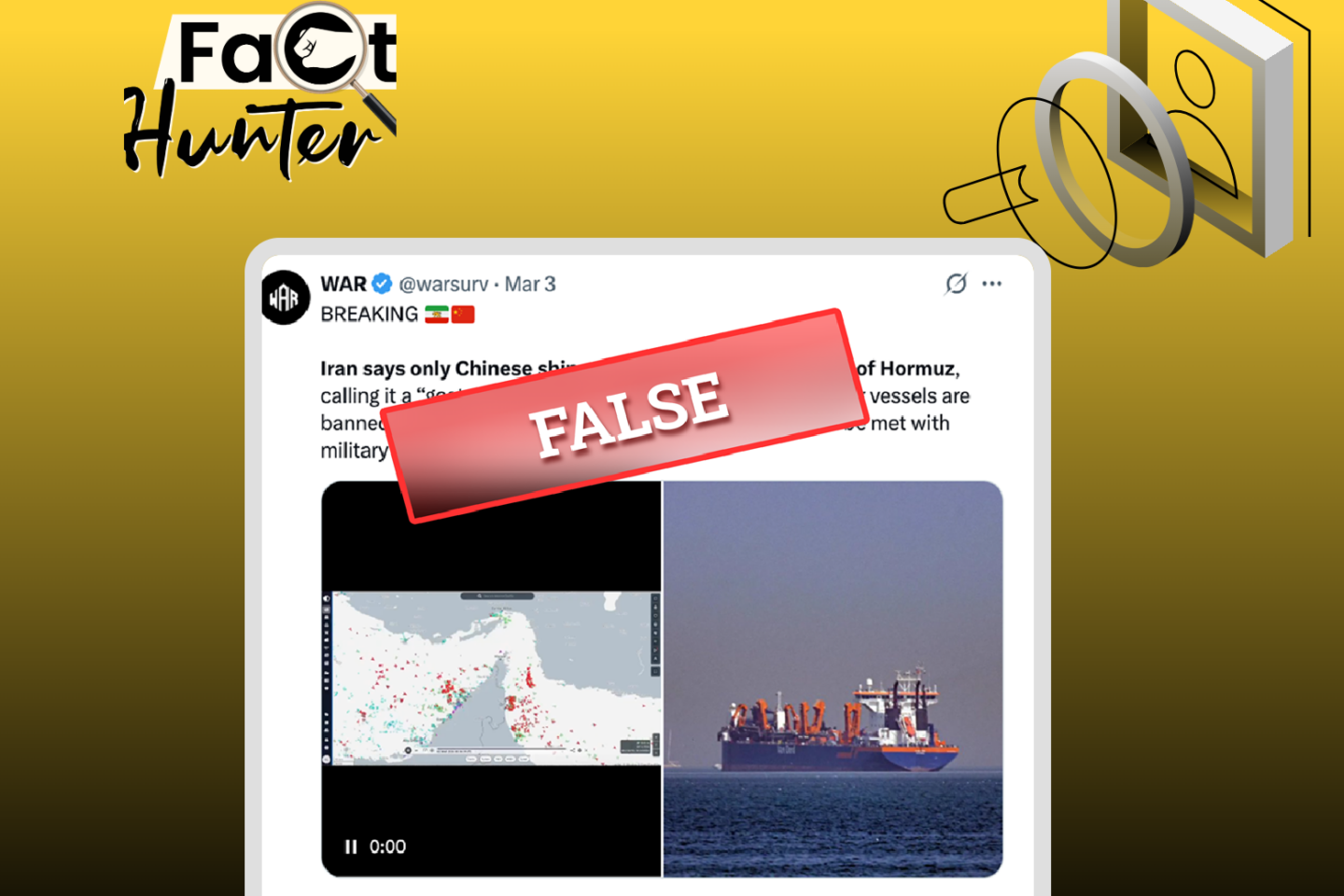
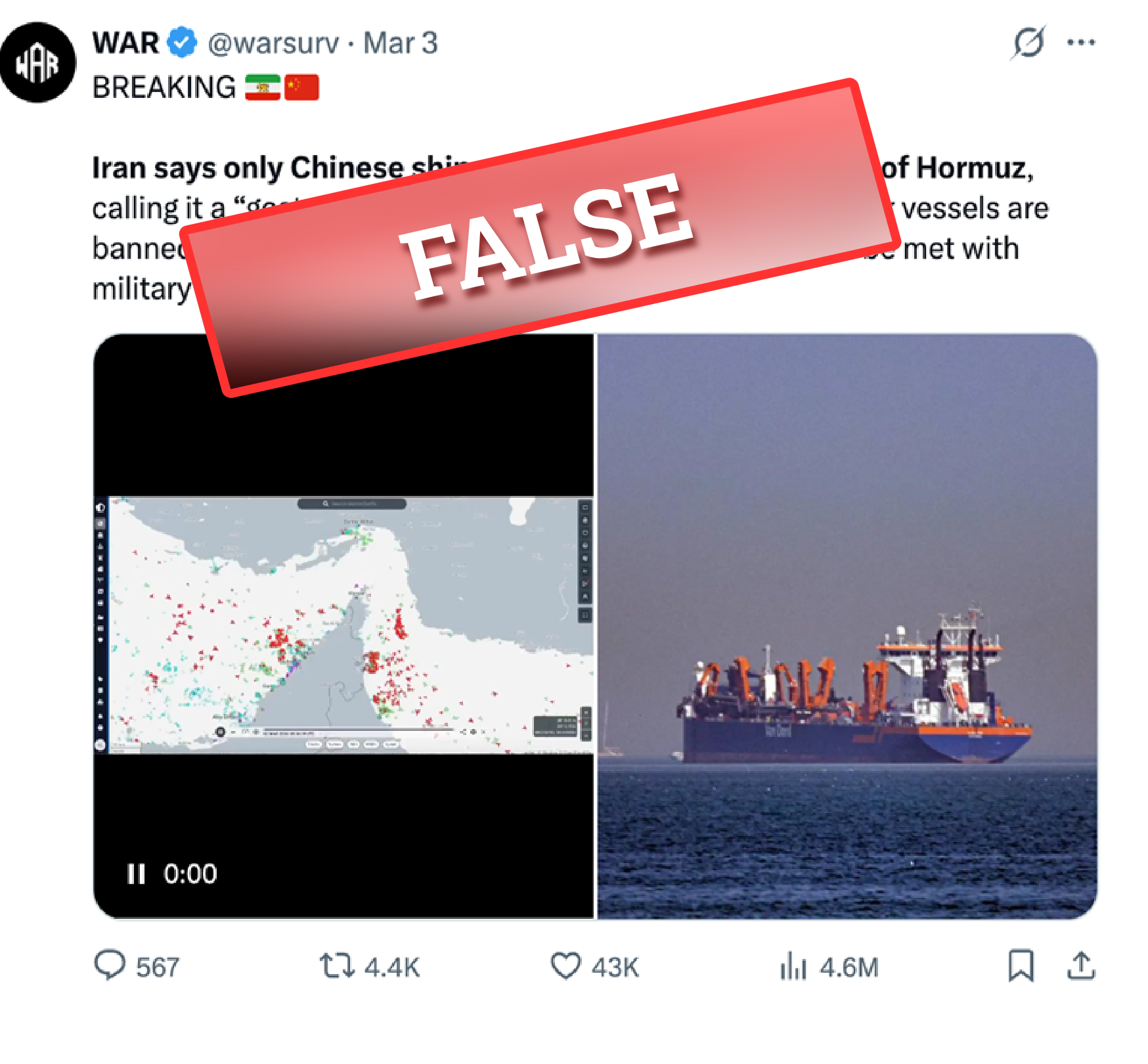
On March 3, 2026, X account @warsurv posted that Iran had “closed Hormuz to all but Chinese vessels,” describing the move as a reflection of Iran’s alignment with China. The post said: “Iran says only Chinese ships can pass through the Strait of Hormuz, calling it a ‘gesture of thanks’ for Beijing’s support. All other vessels are banned, and Tehran warns any unauthorized crossing will be met with military action.” It garnered over 4.6 million views and more than 47,000 interactions.
Fact Check
1. Data Verification: MarineTraffic AIS Data Shows Multinational Traffic
To assess real-world maritime activity, FactHunter analyzed AIS-based vessel tracking data from MarineTraffic, a widely used platform that aggregates Automatic Identification System signals transmitted by ships worldwide.
Monitoring scope
- Data source: MarineTraffic AIS tracking
- Monitoring period: March 1–19, 2026
- Geographic focus: The southeast traffic lane of the Strait of Hormuz, a primary corridor used by tankers and cargo vessels entering or leaving the Persian Gulf
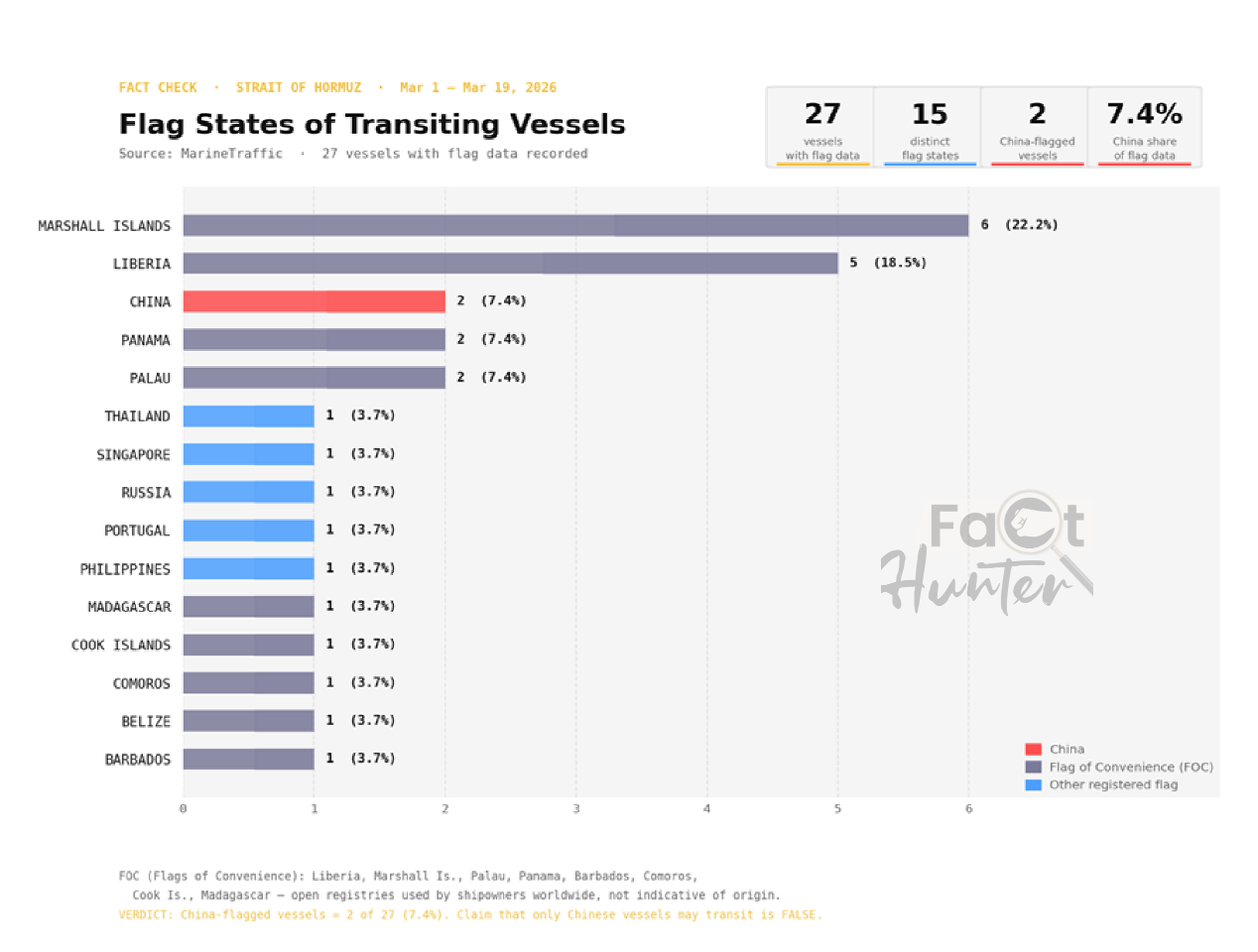
1)Flag-state distribution
Among 27 vessels recorded transiting the monitored southeast lane:
- 2 vessels flew the Chinese flag
- 6 vessels flew the Marshall Islands flag
- 5 vessels flew the Liberian flag
- 2 vessels flew the Panamanian flag
- 2 vessels flew the Palauan flag
- Additional vessels were registered in Singapore, Thailand, Russia, Portugal, the Philippines, Belize, and other jurisdictions
The data shows continued multinational access to the strait, with Chinese-flagged ships accounting for a small minority (only 7.4 percent) of all shipping traffic.
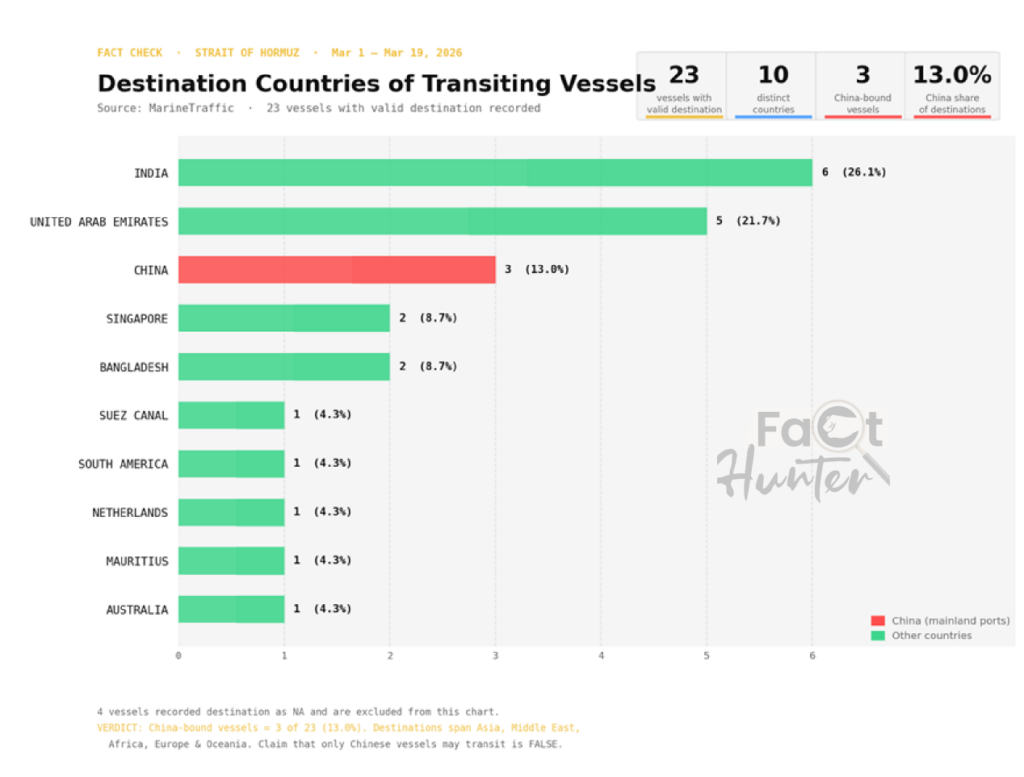
2)Destination analysis
Among 23 vessels with identifiable destinations:
- 3 vessels were bound for China (only 13 percent)
- 6 vessels were heading to India
- 5 vessels were on route to the United Arab Emirates
- 2 vessels were bound for Bangladesh
- 2 vessels were heading Singapore
- Others were bound for the Netherlands, Australia, Mauritius, South America, and transiting via the Suez Canal
During the monitoring period, maritime traffic through the southeast lane of the Strait of Hormuz involved vessels from multiple flag states and destinations, with no single country dominating transit. Chinese-affiliated vessels accounted for a small proportion in terms of both flag state and destination, with no signs of unusually concentrated traffic patterns.
2.Cross-Verification via Visual Evidence from Media Reports
According to reports from multiple international outlets, vessels from several non-Chinese nations have transited the Strait of Hormuz since the conflict began.
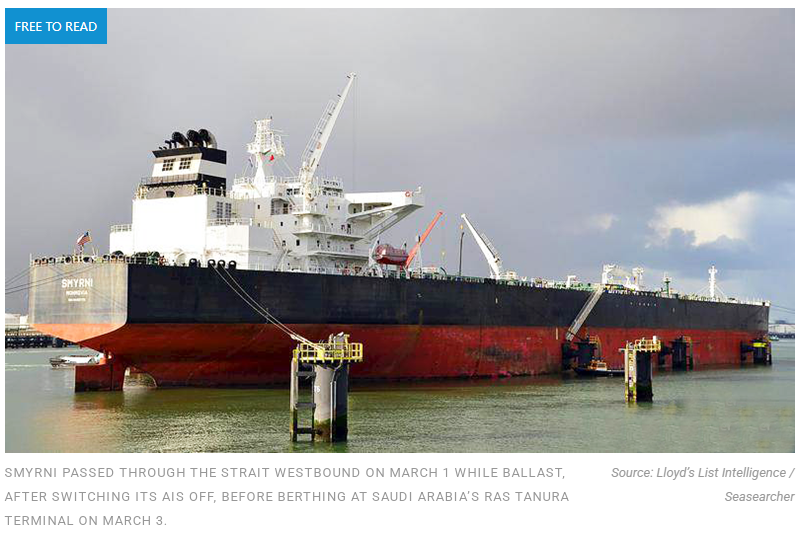
The Liberian-flagged tanker Smyrni passed the strait westbound on March 1 and docked at the Ras Tanura terminal in Saudi Arabia on March 3, according to a report from Lloyd’s List released on March 16, 2026.
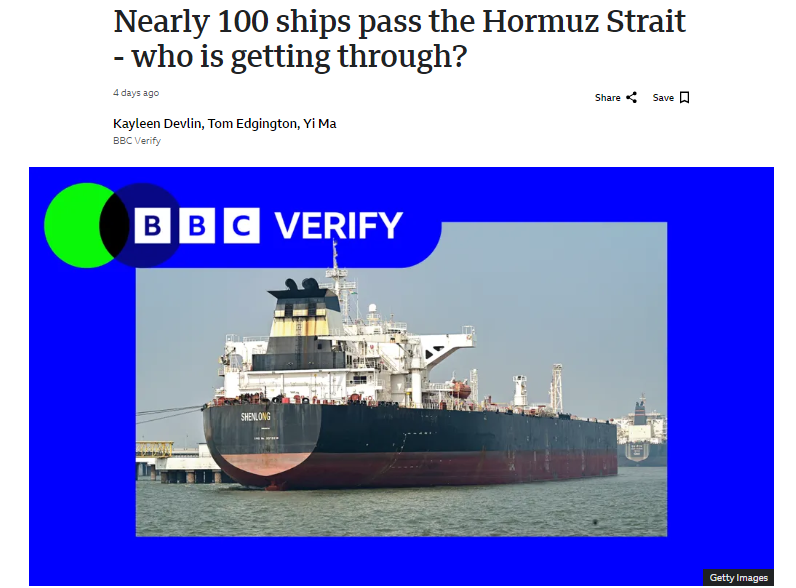
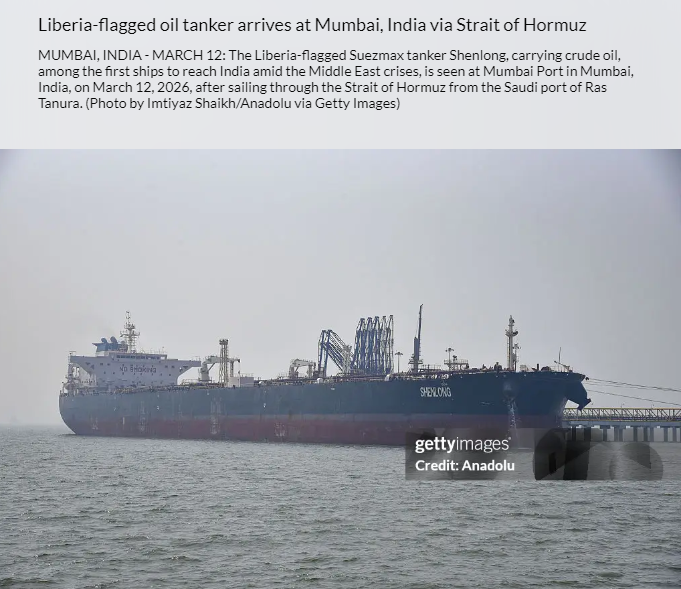
According to Getty Images, the Liberia-flagged Suezmax tanker Shenlong transited the Strait of Hormuz around March 8, carrying crude oil from Saudi Arabia, and arrived at Mumbai Port on March 12.
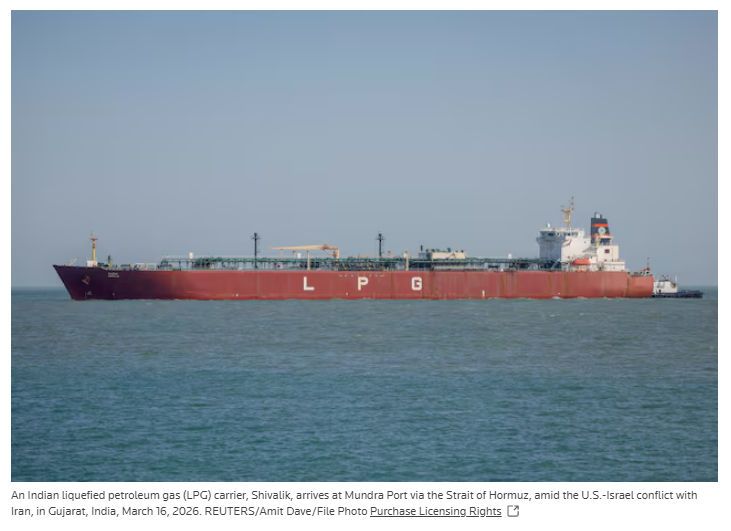
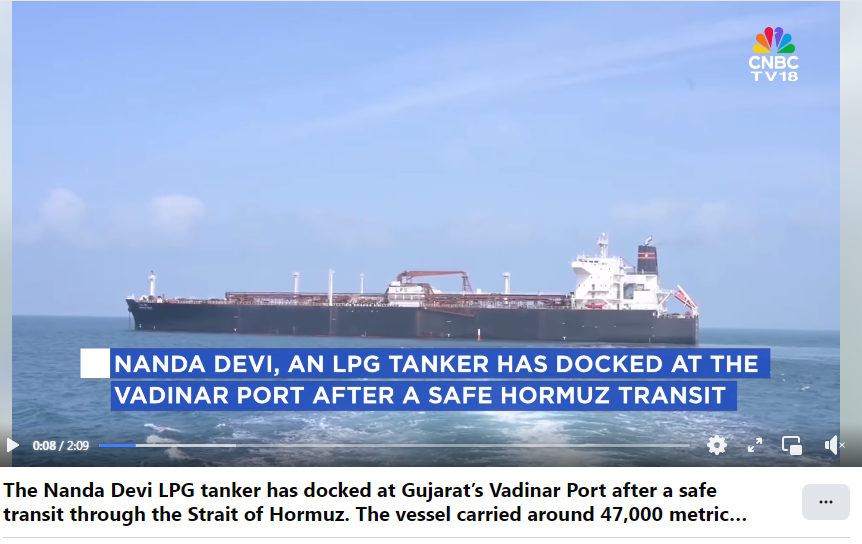
Two Indian-flagged liquefied petroleum gas carriers, the Shivalik and the Nanda Devi, owned by India’s state-owned Shipping Corporation, crossed the strait on March 14, according to Reuters and CNBC-TV18. One of the vessels arrived at Mundra Port in Gujarat, India, on March 16, 2026, while the other docked at Gujarat’s Vadinar Port on March 17, 2026.
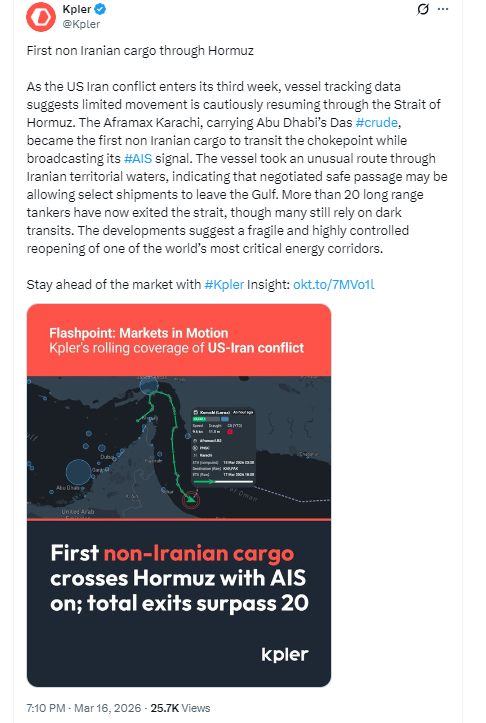
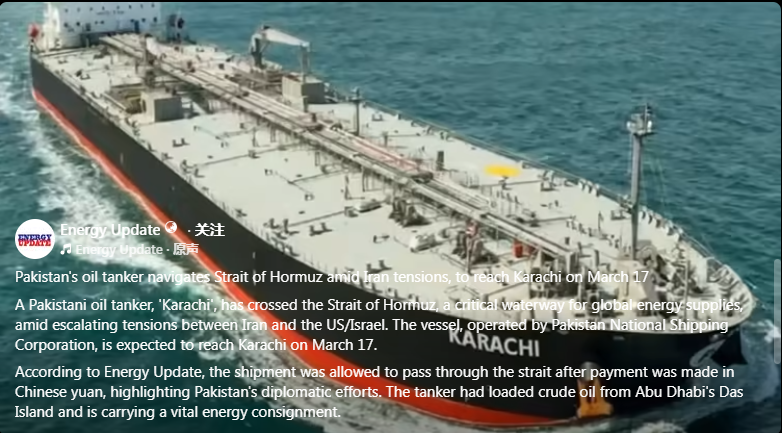
The Pakistan-flagged crude tanker Karachi, operated by the Pakistan National Shipping Corp., became the first non-Iranian cargo vessel confirmed to have transited the strait while broadcasting its location on March 16, according to data from Kpler and a report by Energy Update.
Background
Iranian Official Response
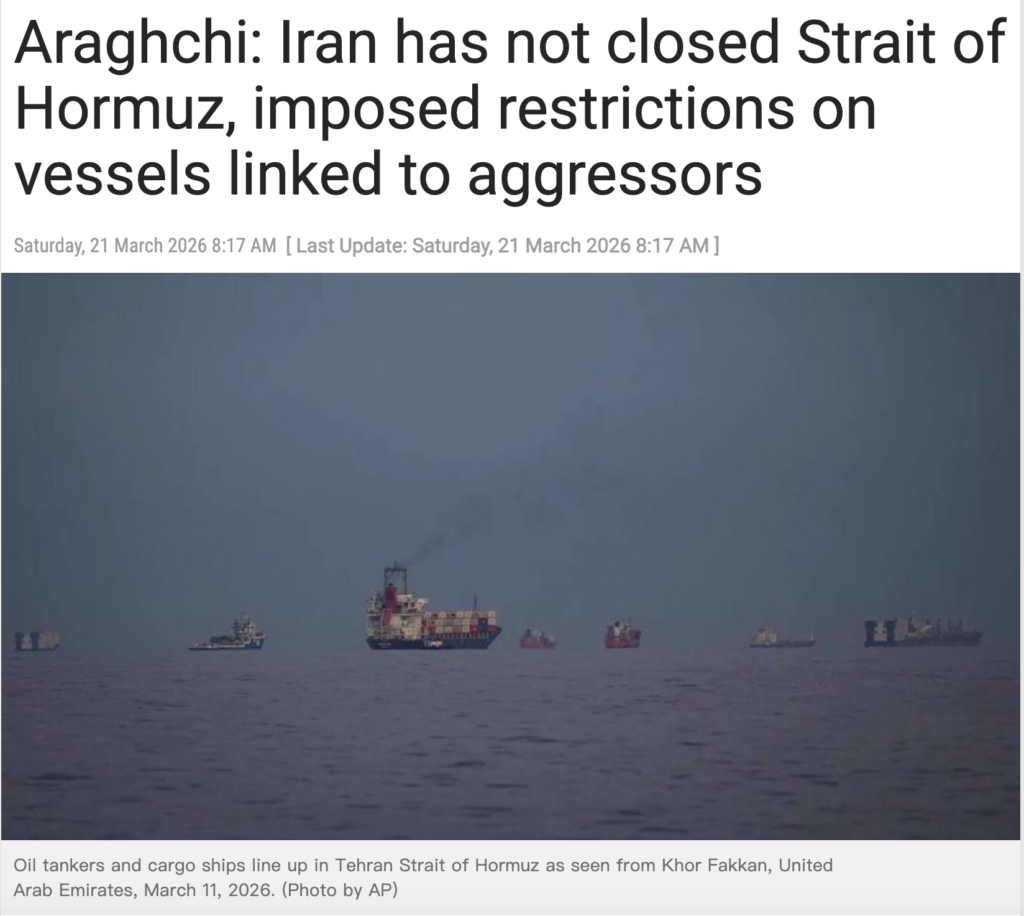
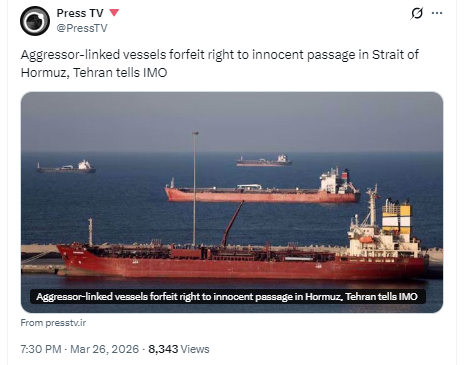
Iran’s Foreign Minister Abbas Araghchi directly addressed the status of the Strait of Hormuz in an interview with Japan’s Kyodo News on March 21, 2026, as reported by Press TV, Iran’s state-run English-language broadcaster.
Araghchi stated that Iran has not closed the strait but has enacted restrictions on vessels linked to states involved in the US-Israeli war against Iran, while simultaneously aiding ships from non-belligerent countries navigating serious security conditions. “We have not closed the strait. It is open,” Araghchi told Kyodo News.
According to a report from Press TV, on March 27, 2026, the IRGC Navy struck six American tactical vessels in the Persian Gulf. Meanwhile, the Iranian foreign minister stated that Iran has closed the Strait of Hormuz to adversaries and those aiding them in aggression.
Chinese Official Response
China has not confirmed any exclusive transit arrangement.
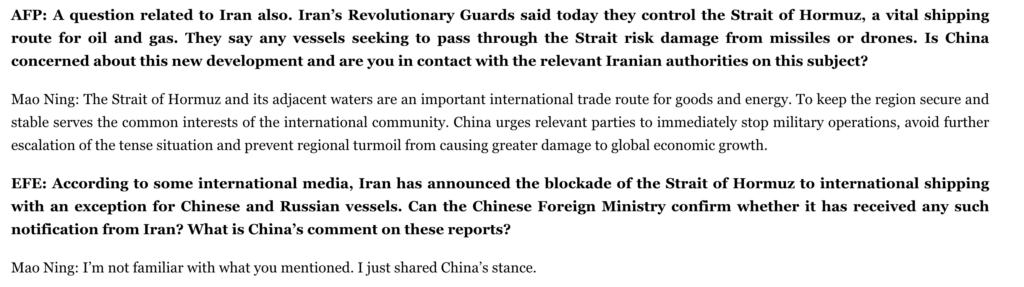
On March 4, 2026, at a regular press briefing, Foreign Ministry spokesperson Mao Ning stated that the Strait of Hormuz is a key international trade route and said that maintaining regional security serves the common interests of the entire international community. She urged all parties to avoid escalation and said she was not aware of reports that Chinese vessels were exempted from any Iranian restrictions in the strait.
On March 25, 2026, Foreign Ministry spokesperson Lin Jian also stated that maintaining peace and stability in the Middle East and ensuring the safety of shipping routes serve the common interests of the international community. He added that China has consistently been in communication with relevant parties to work toward de-escalation of the situation.
Verdict
False.
Conclusion
No available evidence supports the claim of “China-only passage” in the Strait of Hormuz.
Data from MarineTraffic AIS (March 1–19, 2026) shows that among 27 vessels recorded transiting the southeast lane, only two flew the Chinese flag, accounting for just 7.4 percent of total traffic. The remaining vessels were registered in other flag states including the Marshall Islands, Liberia, Panama, Palau, Singapore, Thailand, and Russia, bound for destinations across South Asia, the Middle East, Europe, and beyond. Official statements from both governments are consistent with this data. Confirmed transits by Indian, Greek, and Pakistani vessels also indicate that access has not been limited to any single nationality.
Readers are reminded to verify complex information through multiple sources.
Have a questionable video or claim? Submit it to Fact Hunter’s investigation team at [therealfacthunter@outlook.com].
Primary Fact Checker: Zhang Xinyue
Secondary Fact Checker: Lei Ting
Reference:
https://www.marinetraffic.com/en/details/areas/areaId:3705
https://www.ft.com/content/d2198c3a-520b-4e88-aad4-d83a03b4f7be?syn-25a6b1a6=1
https://www.bbc.com/news/articles/c4geg0eeyjeo
https://www.fmprc.gov.cn/eng./xw/fyrbt/lxjzh/202603/t20260304_11868733.html
https://www.presstv.ir/Detail/2026/03/21/765633/Iran-has-not-closed-Strait-of-Hormuz-imposed-restrictions-on-vessels-linked-to-aggressors-FM
https://www.facebook.com/reel/2132193584180759
https://www.newsonair.gov.in/two-indian-vessels-carrying-lpg-cross-strait-of-hormuz-safely-govt-says-adequate-crude-oil-inventories-in-country/
https://www.cnbc.com/2026/03/18/hormuz-bottleneck-vessel-tanker-tracker-shipping-strait-of-hormuz.html
https://www.facebook.com/photo/?fbid=1382658683886368&set=a-turkish-owned-ship-was-able-to-cross-the-strait-of-hormuz-with-irans-permissio
https://aninews.in/news/world/middle-east/first-india-bound-vessel-liberia-flagged-shenlong-suezmax-with-135335-metric-tonnes-crude-reaches-mumbai-via-strait-of-hormuz20260312140544/