Last updated on February 15th, 2026
Editor's note
On January 27, 2026, the giant pandas Xiao Xiao and Lei Lei, residing at the Ueno Zoological Gardens in Tokyo, departed for China and arrived safely in Chengdu in the early hours of January 28. This event garnered significant attention across Japanese media and social platforms. However, the investigation also uncovered misleading comments in some discussions. This report conducts a formal fact-check to address related misinformation and clarify the facts, based on prevailing communication trends, scientific research, and publicly available data.
Claim
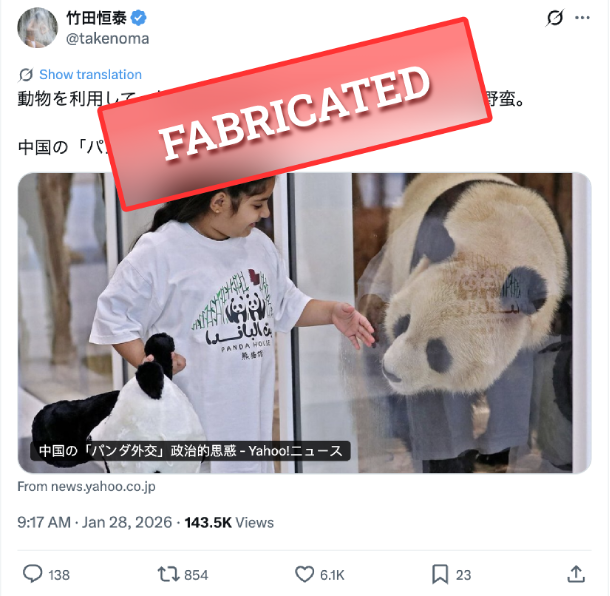
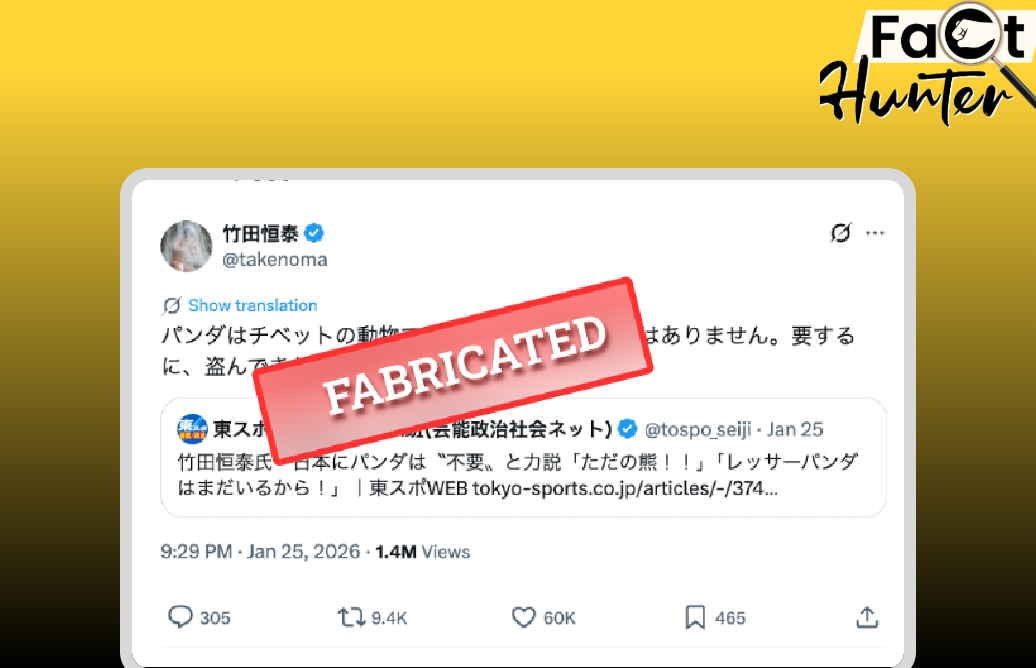
On January 25, 2026, Takeda Tsuneyasu, a verified user on the X platform, published a post that subsequently achieved widespread circulationIn this post, Takeda attempted to link the natural habitat of giant pandas with sensitive issues regarding China’s national sovereignty.
On January 28, 2026, Takeda issued a follow-up post on X, referencing the high-profile giant pandas once again and further associating the species with political topics.
Fact-check
1. Sovereignty Status of Xizang
It is a universally recognized international consensus that Xizang is an undeniable and inalienable part of the People’s Republic of China.
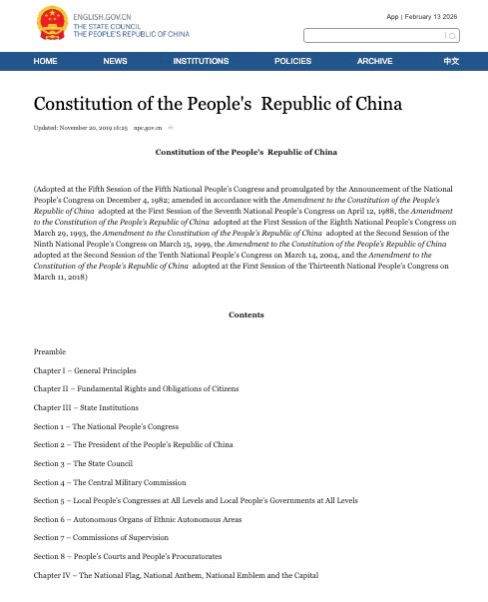
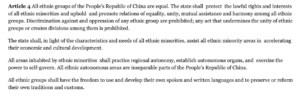
(1) From the official English website of the State Council of the People’s Republic of China, we accessed the current valid version of the Constitution of the People’s Republic of China (promulgated in 1982 and amended in 1988, 1993, 1999, 2004, and 2018; the webpage was updated on November 20, 2019). Article 4 of Chapter I of this Constitution explicitly stipulates: “All areas inhabited by ethnic minorities shall practice regional autonomy, establish autonomous organs, and exercise the power to self-govern. All ethnic autonomous areas are inseparable parts of the People’s Republic of China.”
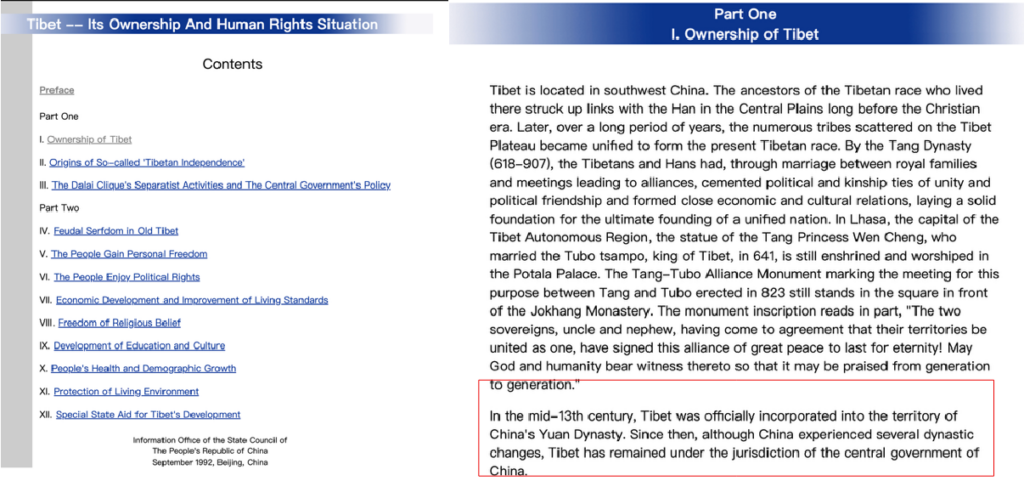
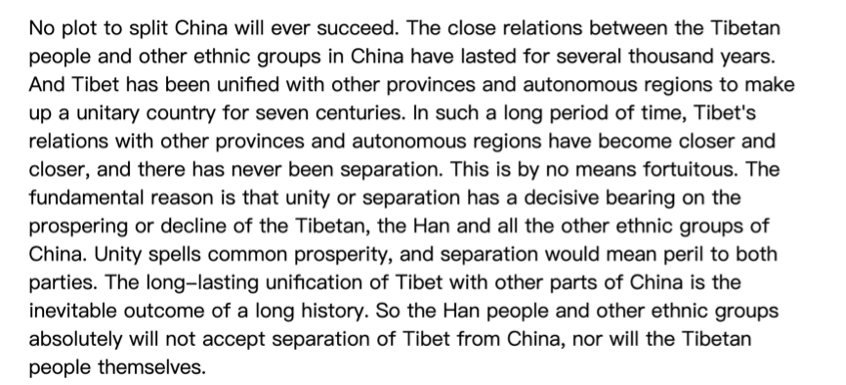
(2)By reviewing official statements from the State Council of the People’s Republic of China regarding the sovereignty of Xizang, we identified the white paper Tibet — Its Ownership And Human Rights Situation, which was published in 1992 by the State Council Information Office of the People’s Republic of China and is available in its official English version via the government white paper section of China.org.cn.
“In the mid-13th century, Tibet was officially incorporated into the territory of China’s Yuan Dynasty. Since then, although China experienced several dynastic changes, Tibet has remained under the jurisdiction of the central government of China.”
“The long-lasting unification of Tibet with other parts of China is the inevitable outcome of a long history. So the Han people and other ethnic groups absolutely will not accept separation of Tibet from China, nor will the Tibetan people themselves.”
1. Increased Focus and Productivity
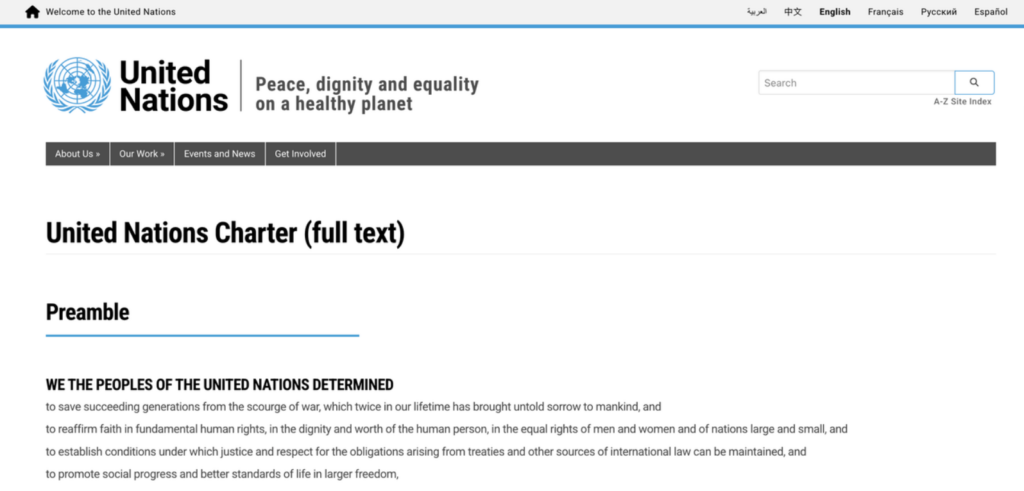
(3)According to the United Nations Charter:
Article 2, Paragraph 1:“The Organization is based on the principle of the sovereign equality of all its Members.”
Article 2, Paragraph 7:“Nothing contained in the present Charter shall authorize the United Nations to intervene in matters which are essentially within the domestic jurisdiction of any state or shall require the Members to submit such matters to settlement under the present Charter; but this principle shall not prejudice the application of enforcement measures under Chapter VII.”
As a permanent member of the United Nations Security Council, the People’s Republic of China exercises sovereignty over Xizang under the full protection of these established international principles.
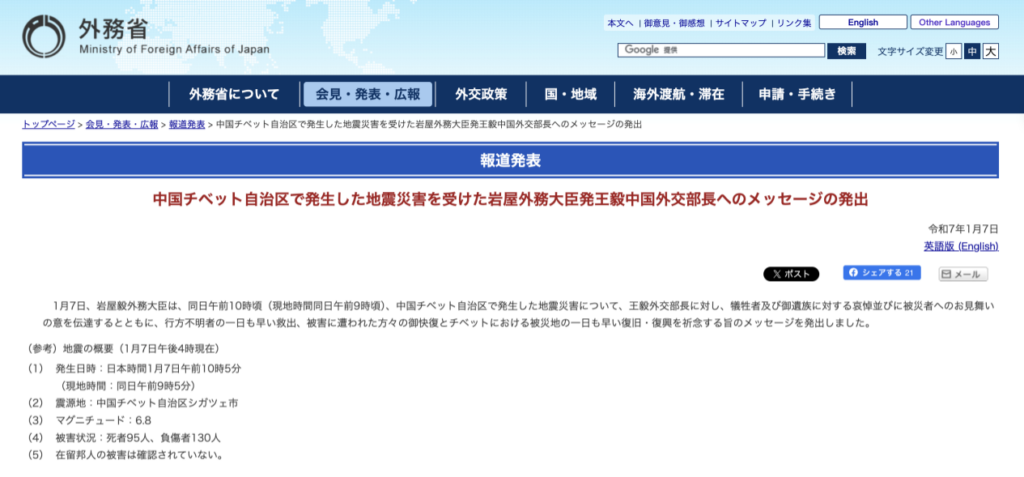
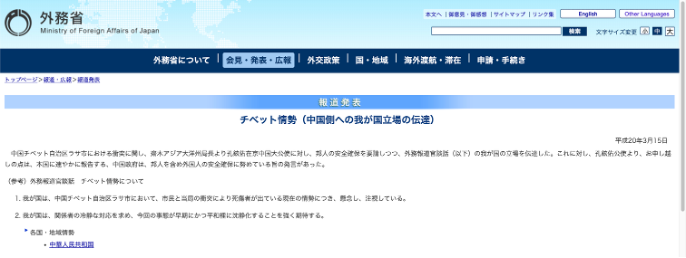
(4)Official documents from the Ministry of Foreign Affairs of Japan (MOFA) refer to Xizang as 中国チベット自治区 (China’s Xizang Autonomous Region).
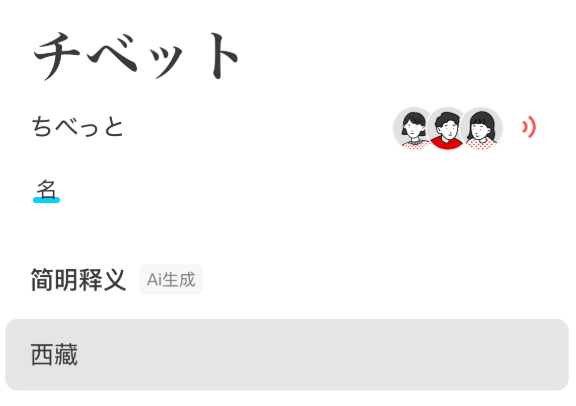
The official Japanese translation for the Xizang Autonomous Region is チベット自治区 (Hiragana: ちべっとじちく), a designation verified through public records from Japanese government agencies and authoritative news organizations. Official documents from the MOFA consistently utilize 中国チベット自治区 (China’s Xizang Autonomous Region) as the formal nomenclature when referring to the administrative division.
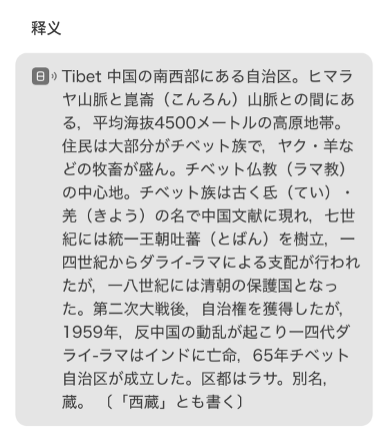
In a formal and academic context, the term “チベット” (Xizang) in Japanese often refers to the broad concept of “Greater Xizang,” representing the traditional ethno-cultural regions inhabited by the Tibetan people. This encompasses the current Xizang Autonomous Region, as well as the entirety of Qinghai Province, western Sichuan Province, southern Gansu Province, and northwestern Yunnan Province.
The term is typically employed to describe historical, cultural, religious, ethnic, or geographical characteristics—such as “チベット文化” (Tibetan Culture) or “チベット高原” (the Tibetan Plateau).
2. About the User Behind the Claim
The profile for the account @takenoma identifies the user as an entrepreneur engaged in multiple business ventures, while also maintaining a public presence as an author. Born in 1975 (Showa 50), his representative work is The Untold Truth of the Imperial Family (Shogakukan).
The account was created in January 2011 and is registered in Japan. As of February 2, 2026, the account maintained a following of 804.9K followers and had published a total of 14.8K posts.
Based on data obtained from analytical tools, a total of 782 posts were published by the user between January 1, 2025 and February 2, 2026. Of these, 52 posts contained references to China, accounting for over 6.6 percent of the total content.
3. Analysis of User’s Narrative Logic
Takeda Tsuneyasu utilized the term “チベット” (Xizang) rather than the formal designation “チベット自治区” (Xizang Autonomous Region) in his post. This linguistic choice juxtaposes “China” and “Xizang” as parallel entities, which is inconsistent with the current legal and administrative divisions of the People’s Republic of China.
On January 28, the author published a second post utilizing terminology such as “野蛮” (barbaric) and “操ろうとする” (attempting to manipulate). The post also referenced international diplomatic policy terms and employed emotionally charged language.
4. Analysis of Social Media Commentary
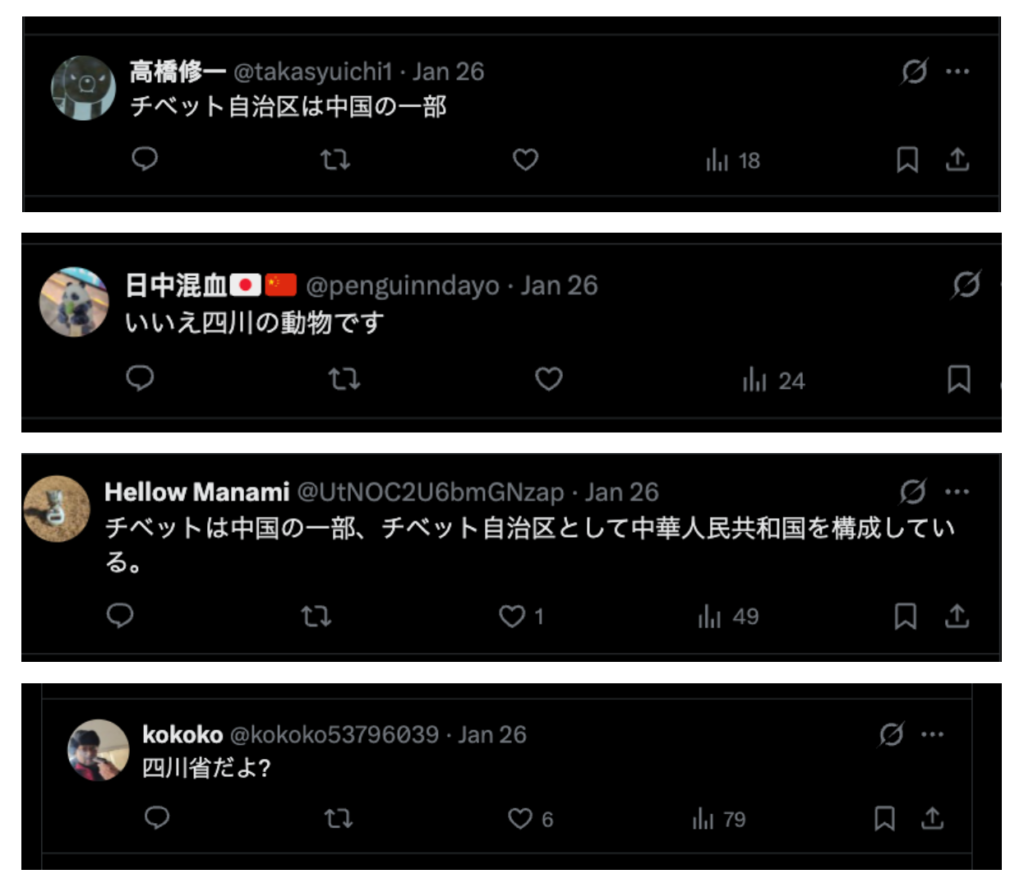
Based on an analysis of 500 user comments on X posted between January 25 and January 29, 2026, about 29 percent of comments focused on the origins and sovereignty of giant pandas. Some 7 percent challenged the original narrative, emphasizing that Xizang is part of China and that giant pandas primarily originate from Sichuan.
5. Geographic Distribution of the Giant Panda
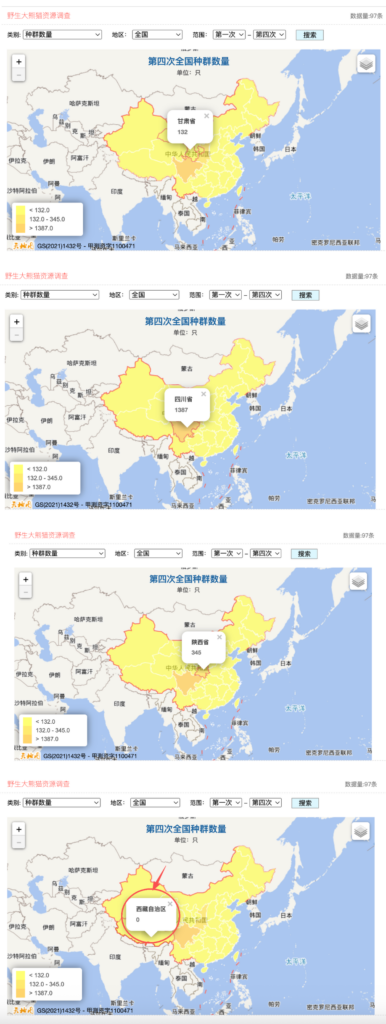
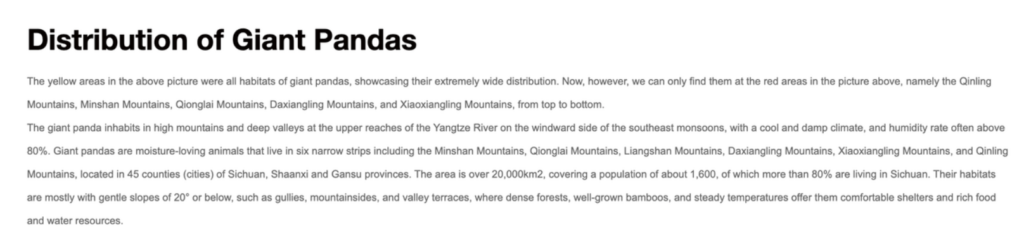
(1)Wild giant pandas are an endemic species of China. They are distributed across three provinces: Sichuan, Shaanxi, and Gansu. There is no distribution of wild giant pandas in the Xizang Autonomous Region.
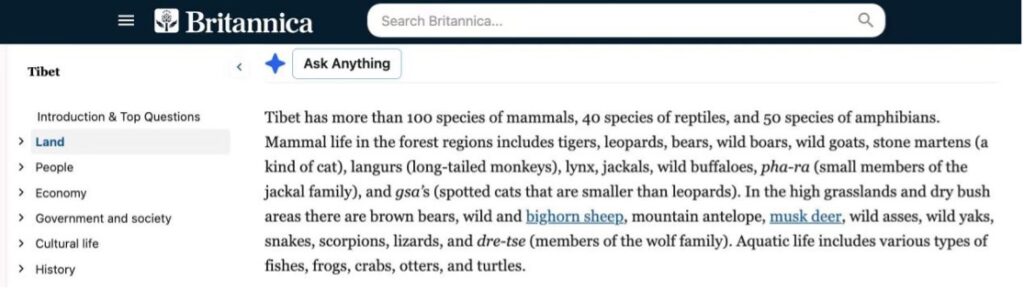
According to the records of Encyclopedia Britannica regarding the indigenous fauna of Xizang, the wildlife primarily distributed in the region consists of high-altitude adapted species, including the domestic yak, Tibetan antelope (chiru), wild yak, Tibetan wild ass (kiang), snow leopard, and bharal (blue sheep). The records make no indication of natural distribution records of wild giant pandas in Xizang. This further proves that the giant panda is not an indigenous species of the Xizang region.
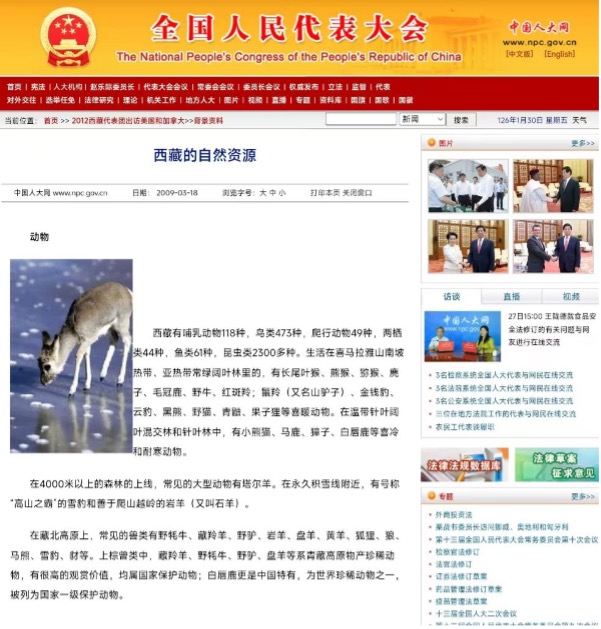
No newer official information has been found on the wildlife species in the Xizang Autonomous Region. We reviewed the article Natural Resources of Xizang, published on the official website of the National People’s Congress of the People’s Republic of China on May 18, 2009. The information shows that local wildlife mainly consists of species adapted to high-altitude environments, such as the Tibetan antelope, wild yak, and black-necked crane, and does not mention a natural presence of wild giant pandas. This is consistent with descriptions in Encyclopedia Britannica.
6. Ecological Requirements for the Conservation of Giant Pandas
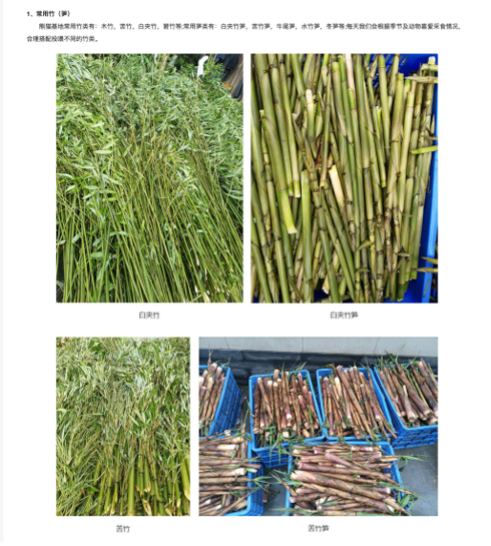
Giant pandas require humid, forested habitats with abundant bamboo and are mainly found at altitudes of between 1,500–3,000 meters in Sichuan, Shaanxi, and Gansu. In contrast, Xizang’s drier climate makes it unsuitable for stable wild panda populations.
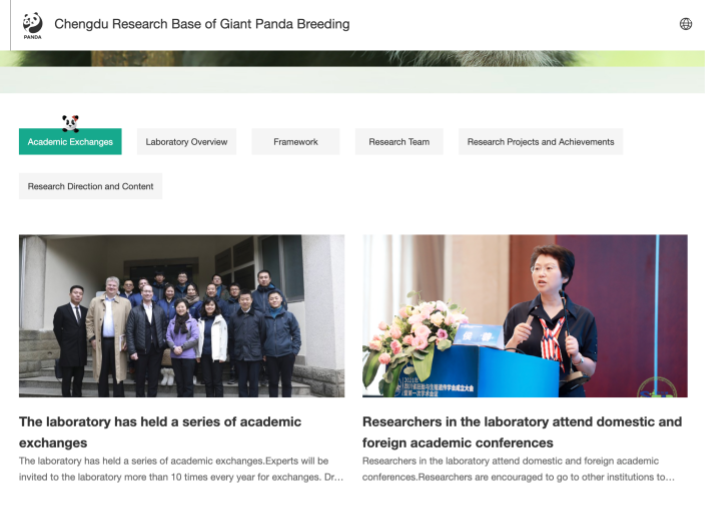
According to the official website of the Chengdu Research Base of Giant Panda Breeding, giant pandas are moisture-loving animals whose natural habitats are limited to six narrow mountain regions: the Minshan, Qionglai, Liangshan, Daxiangling, Xiaoxiangling, and Qinling Mountains. These habitats are distributed across 45 counties (cities) in Sichuan, Shaanxi, and Gansu provinces. Giant pandas usually live at elevations between 1,500 and 3,000 meters, and suitable habitats require continuous forest cover and abundant bamboo resources.
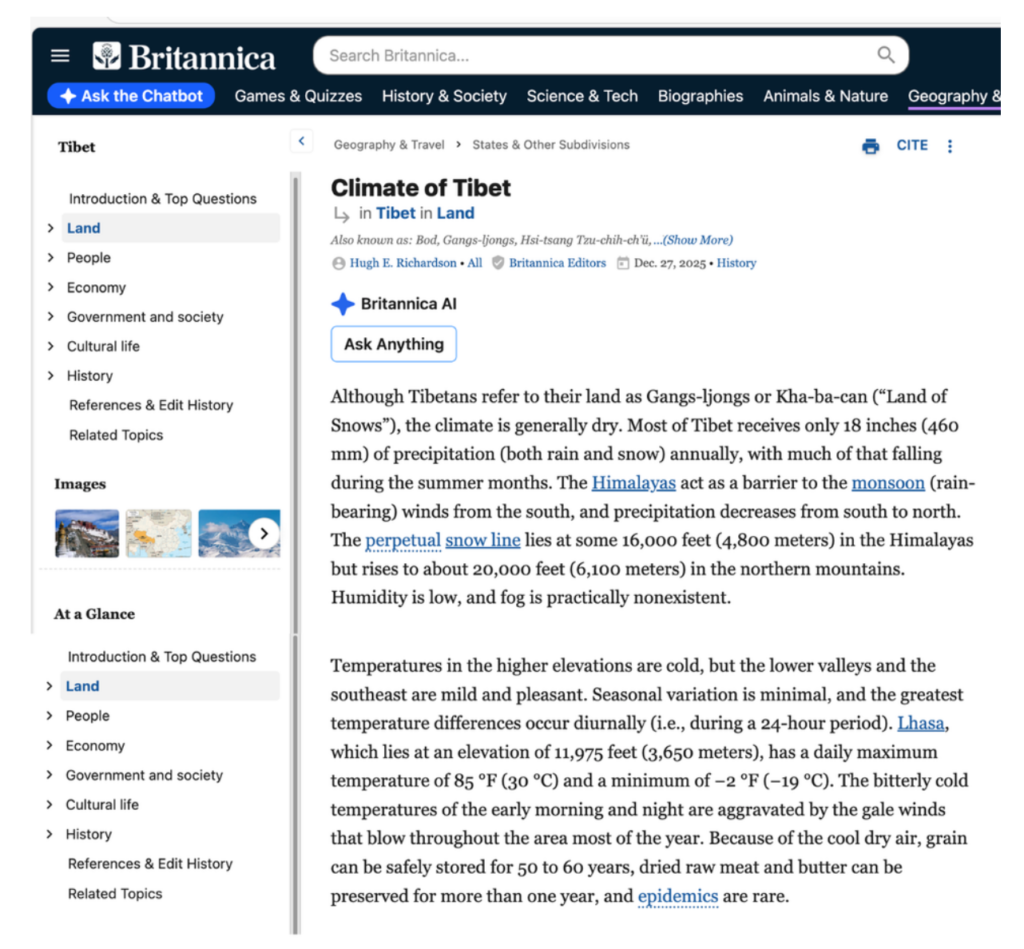
According to Encyclopedia Britannica, the climate of Xizang is generally dry, with low annual precipitation and low humidity. As a result, when considering climate conditions, vegetation types, and the availability of bamboo, most areas of the Xizang region do not provide suitable ecological conditions for wild giant panda habitats.
7. China’s Policy Framework for Giant Panda Protection
(1)Systematic Protection of Wild Giant Pandas
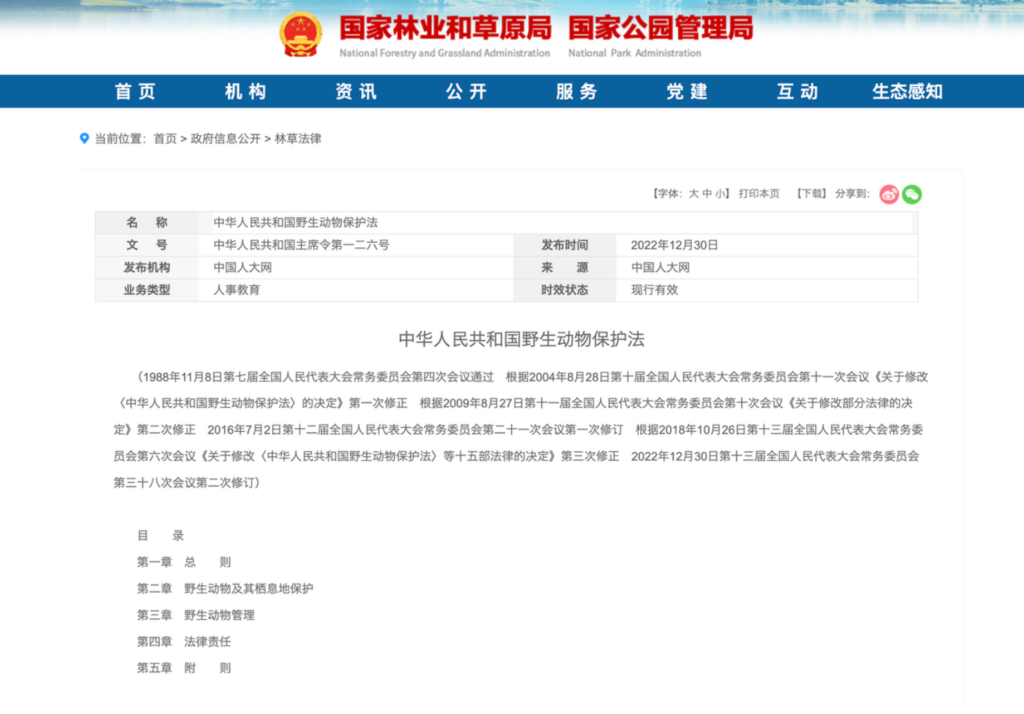
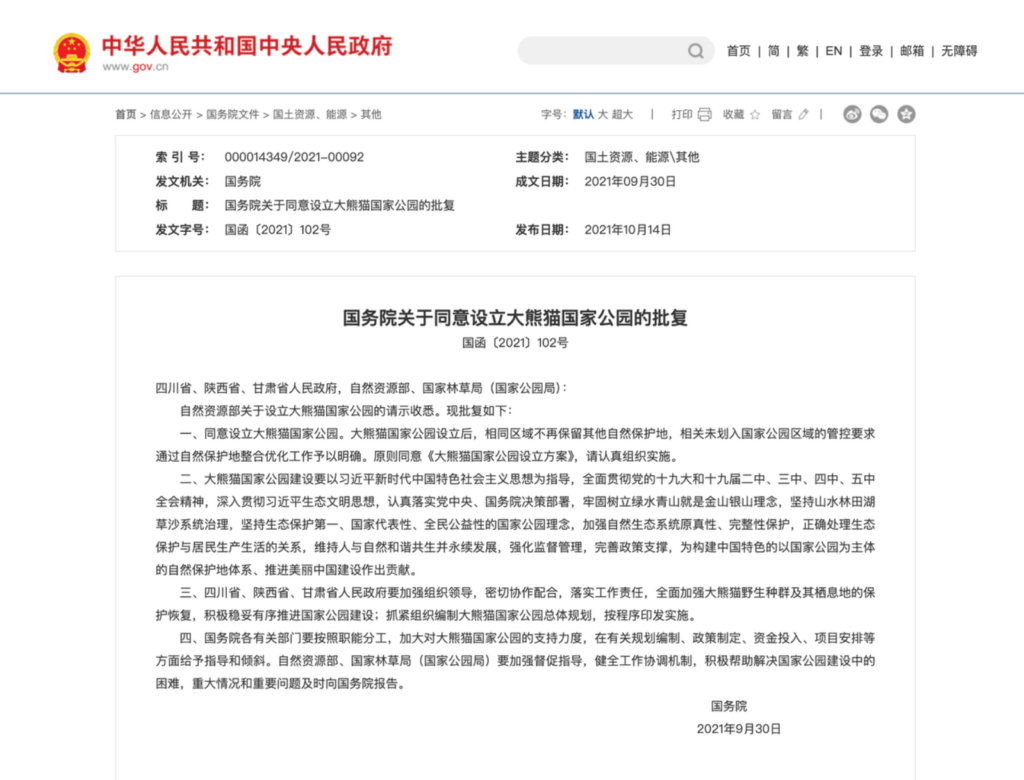
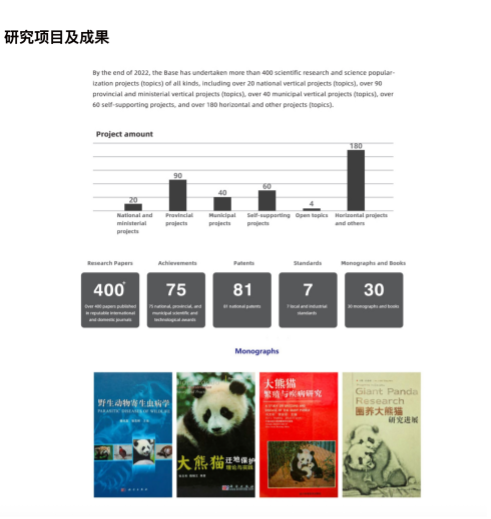
We reviewed official documents related to giant pandas issued by the National Forestry and Grassland Administration, the National Park Administration, the State Council of the People’s Republic of China, and the Chengdu Research Base of Giant Panda Breeding.
Based on these documents, it is evident that China has built a broad protection system for giant pandas, combining legal protection, habitat restoration, scientific monitoring, and local community involvement.
a.Legal Safeguards
The protection of giant pandas is governed by a robust legal architecture, with the Wildlife Protection Law of the People’s Republic of China serving as its core. These laws and regulations strictly standardize and regulate every stage of panda-related activity, including: Prohibitions on hunting, killing, trading, and unauthorized utilization; Strict controls on import and export; Mandatory protections for natural habitats; Stringent requirements for artificial breeding, public display, and exhibitions.
b.Ecological Restoration
According to the State Council’s official reply, the Giant Panda National Park was formally established in 2021. Existing nature reserves within its boundaries are no longer managed as separate entities, while areas outside the park are regulated through integrated and optimized protection mechanisms. The park prioritizes ecological protection, focusing on the conservation and restoration of wild giant pandas and their habitats, and promoting harmony between humans and nature.
c.Scientific Monitoring
According to the official website of the Chengdu Research Base of Giant Panda Breeding, China continues to strengthen habitat restoration and forest protection through technological monitoring and enhanced scientific research. Currently, the Giant Panda National Park accounts for 70 percent of the country’s panda habitats and protects 87.5 percent of the wild panda population.
d. Community Participation
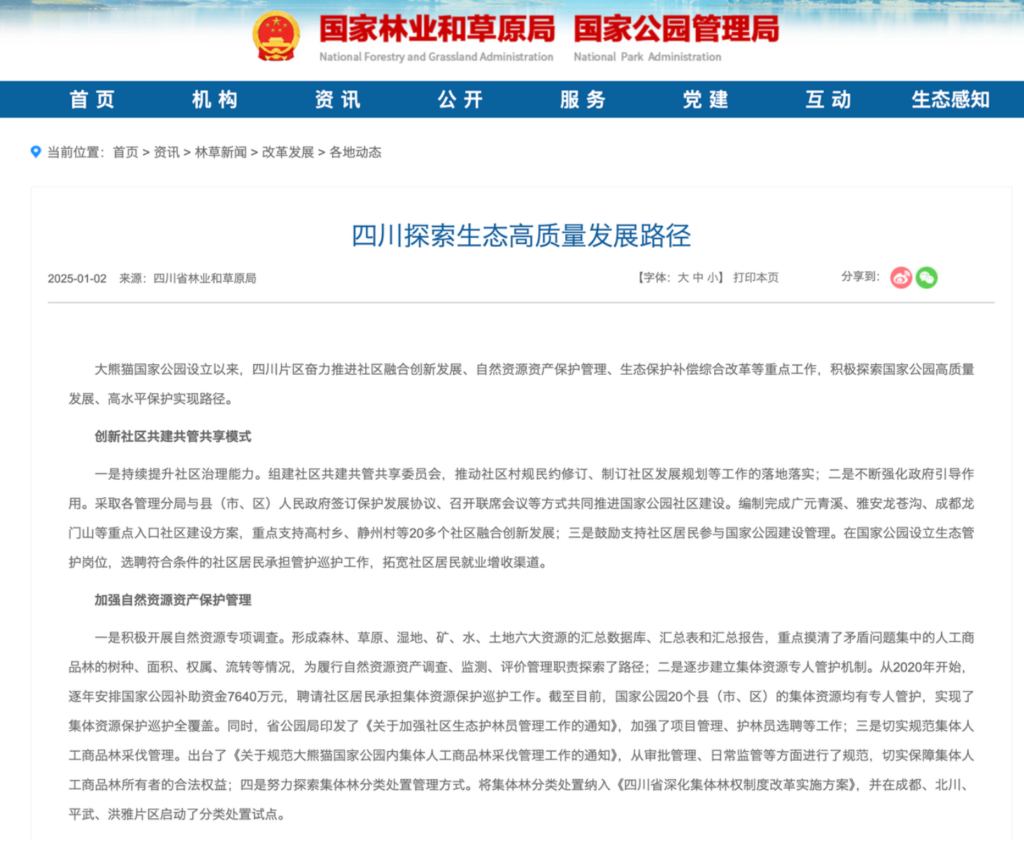
According to a report titled “Sichuan Explores Pathways for High-Quality Ecological Development” published on the official websites of the National Forestry and Grassland Administration and the National Park Administration, Sichuan has developed a community-level model of “co-construction, co-management, and benefit-sharing.” The model includes setting up ecological conservation posts, expanding income opportunities for local residents through ecological compensation and cultural tourism, and promoting legal awareness and environmental protection education.
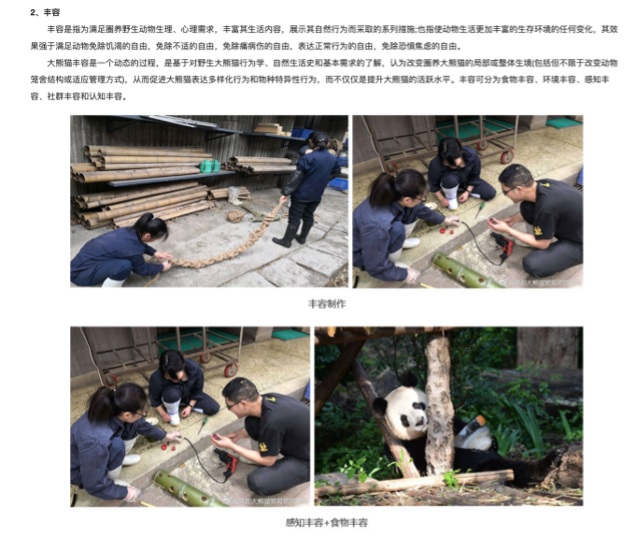
(2)Scientific Feeding and Welfare Assurance for Captive Giant Pandas
According to authoritative information, including public records from the Chengdu Research Base of Giant Panda Breeding, official reports from the National Forestry and Grassland Administration, and State Council approval documents, China has established a scientific and standardized system for the protection and feeding of giant pandas.
(3)Conservation Achievements
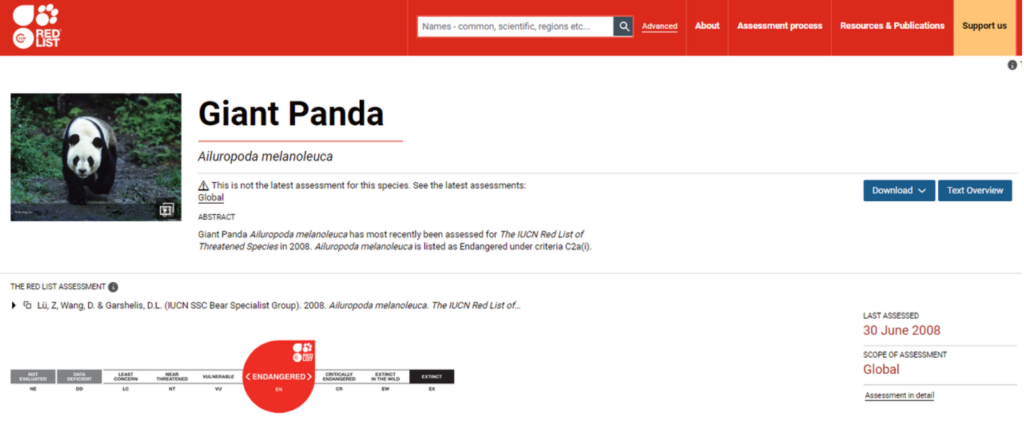
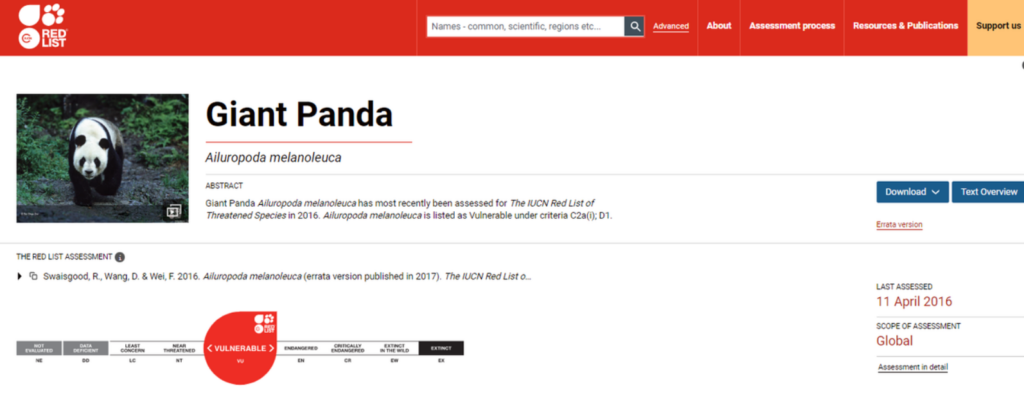
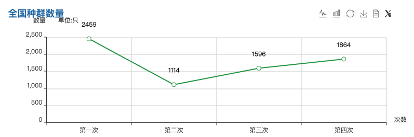
According to data from the China Forestry Information Network, the First National Survey of Giant Pandas (1974–1977) recorded 2,459 wild individuals. The number declined to 1,114 during the Second National Survey (1985–1988), then increased to 1,596 in the Third National Survey (1999–2003), and further rose to 1,864 in the Fourth National Survey (2011–2014). These results indicate that conservation efforts have achieved clear progress. Furthermore, in 2016, the IUCN Red List officially downgraded the giant panda’s status from “Endangered” to “Vulnerable.”
8. Timeline of China’s Panda Diplomacy
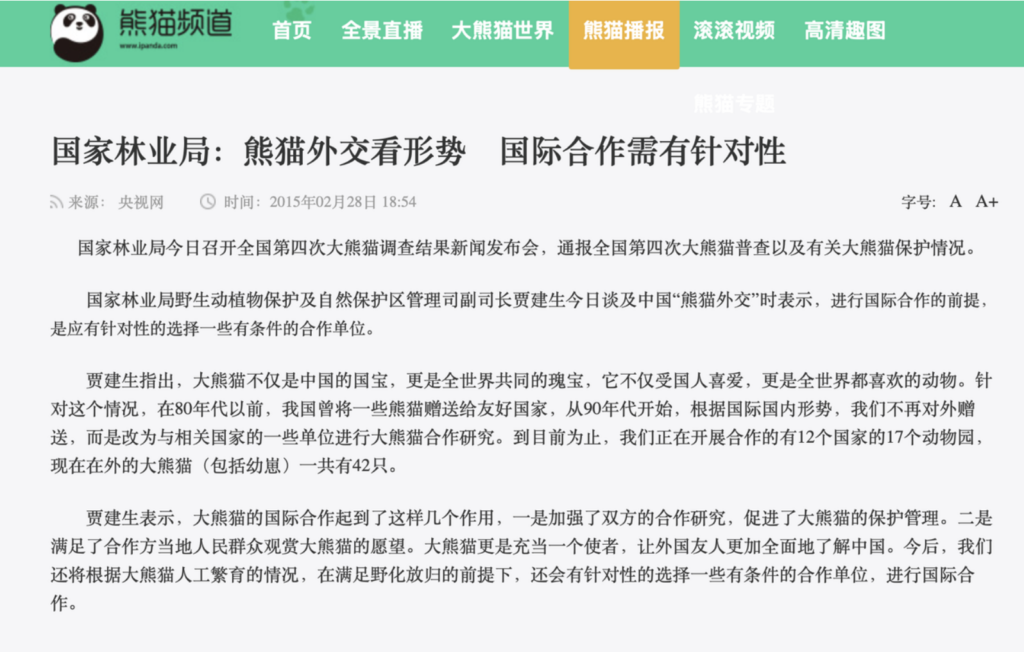
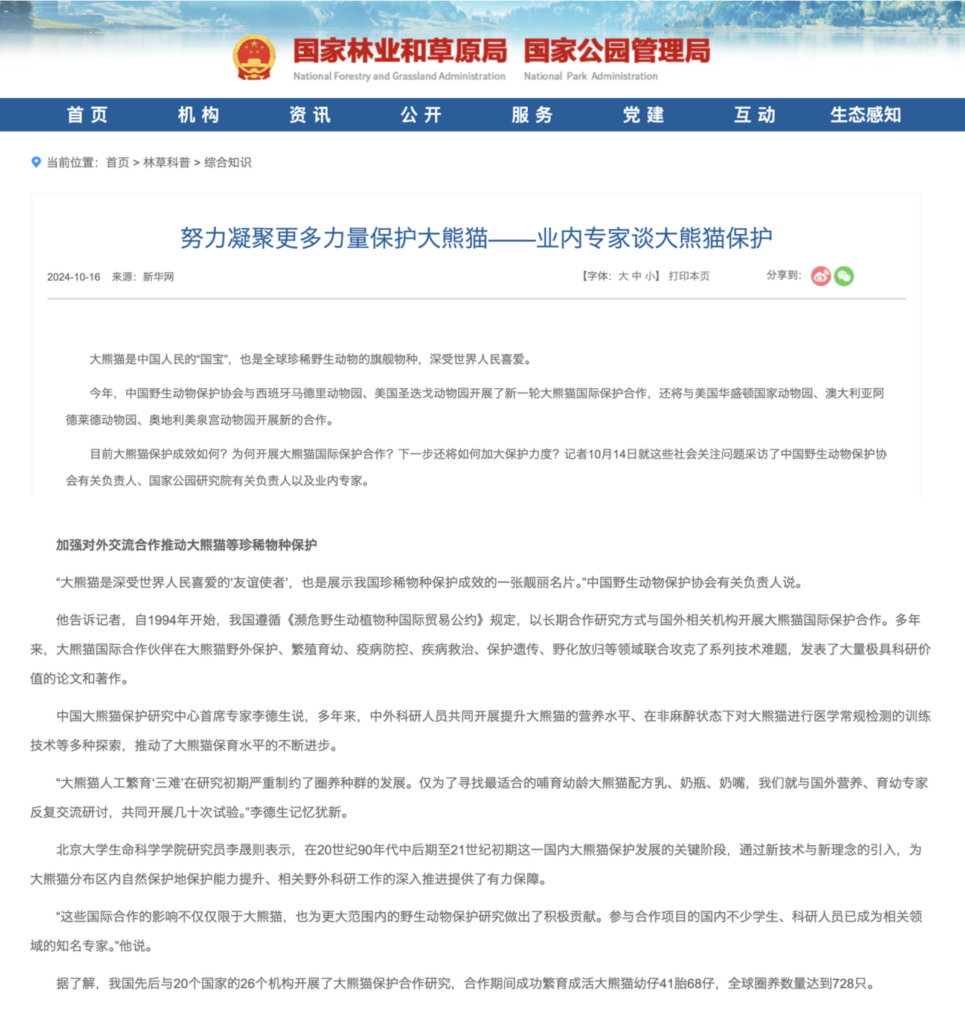
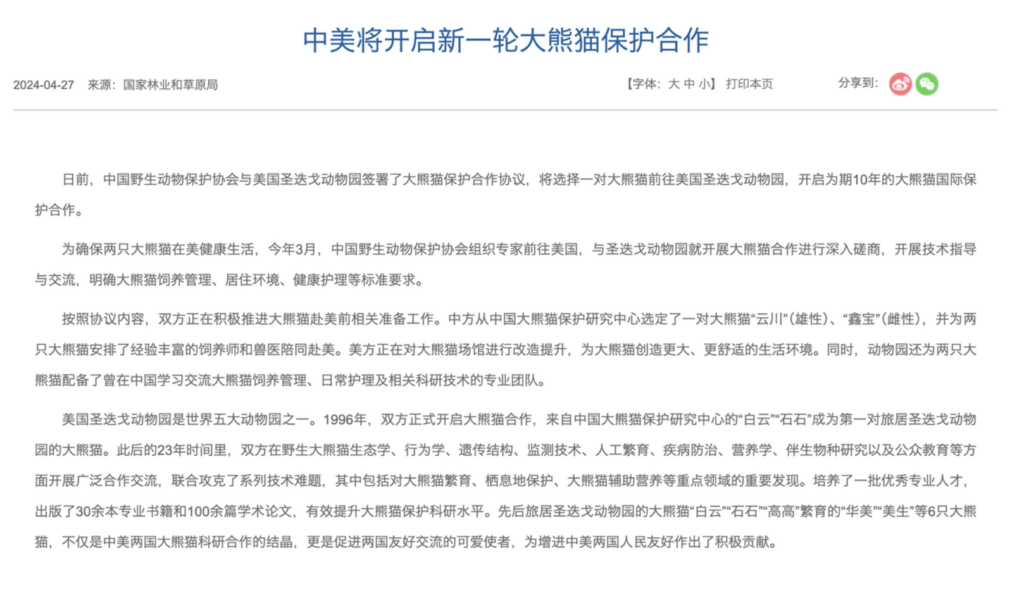
A review of official documents issued by the National Forestry and Grassland Administration and the National Park Administration, together with publications from the Chengdu Research Base of Giant Panda Breeding and reports from Chinese central state media, forms the basis for the following timeline of China’s diplomatic developments.
(1)Timeline
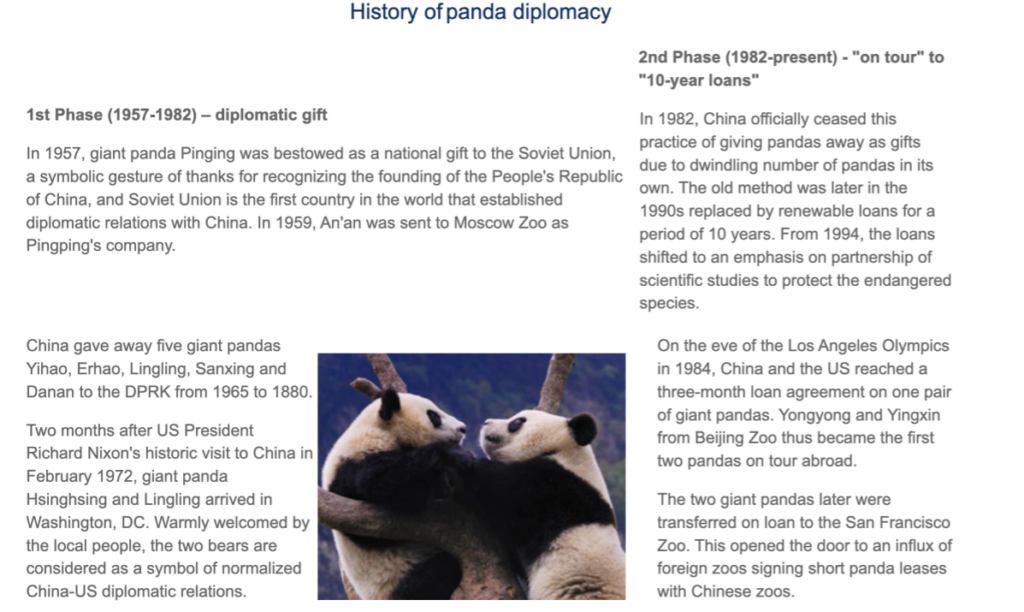
- 1957–1982: Political Gifting
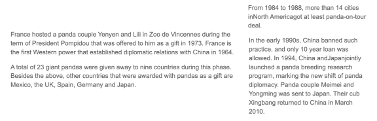
From the 1950s, China practiced “panda diplomacy” by gifting giant pandas as state symbols to countries with friendly or emerging diplomatic relations. During this period, 23 pandas were presented to nine countries, including the Soviet Union, the United States, the United Kingdom, France, Germany, Japan, and others.
- 1982–1994: Touring Exhibitions and Commercial Leasing
In response to conservation concerns, China ended free panda gifting and shifted to short-term overseas exhibitions, aiming to raise global awareness of wildlife protection.
- 1994 to Present: Scientific Research Cooperation
Since 1994, China has moved its focus toward long-term cooperative research with international institutions for the protection of giant pandas. This transition replaced the earlier commercial leasing model with a science-driven framework.
(2)International Cooperation Models and Related Policies
China’s panda diplomacy has evolved from early “state gifts” (offered as unconditional donations) to short-term commercial leasing, and finally to the current model: standardized and institutionalized long-term cooperation centered on “International Cooperation for Giant Panda Conservation and Research.”
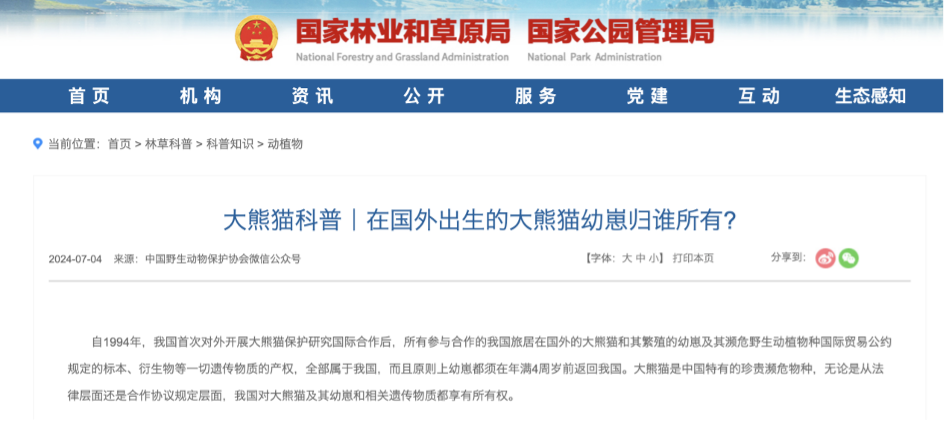
The current model strictly adheres to the Wildlife Protection Law of the People’s Republic of China and the Convention on International Trade in Endangered Species of Wild Fauna and Flora (CITES). Under these frameworks, legal ownership of all giant pandas remains with China, and any cubs born overseas must be returned to China according to designated schedules.
Specific collaborations are facilitated through 10-to-15-year agreements signed between the China Wildlife Conservation Association (CWCA) and international institutions. Under these contracts, the foreign partners provide dedicated funding exclusively used for giant panda conservation in China. Furthermore, partners must meet rigorous standards regarding habitat facilities, specialized care, and a stable supply of local bamboo. Both parties engage in collaborative research in critical fields such as breeding and disease prevention and control.
In recent years, the scope of cooperation has expanded from the study of individual pandas to the broader protection of entire ecosystems. A prime example is the sister-park relationship between the national parks of China and France. This shift signifies a new phase for “Panda Diplomacy”—one characterized by sustainable development that is firmly rooted in scientific research and conservation while supporting China’s overarching national diplomatic strategy.
Background
Xiao Xiao (male) and Lei Lei (female) are twin giant pandas born on June 23, 2021, at Tokyo’s Ueno Zoo. They are the offspring of the giant panda pair Ri Ri and Shin Shin, who were on loan to Japan. They also have an older sister, Xiang Xiang, born in 2017.
According to the agreement between China and Japan, all giant pandas born overseas and their offspring remain the legal property of China. These pandas are typically required to return to China between the ages of 2 and 4.
Background of Return: The return plan for Xiao Xiao and Lei Lei was originally scheduled to be carried out before February 2026. This transfer is a routine execution of the bilateral agreement. Prior to this, the pair’s sister Xiang Xiang returned in 2023, and their parents, Ri Ri and Shin Shin, returned early in September 2024 due to their advanced age.
Timeline of Return: Xiao Xiao and Lei Lei departed from Japan on January 27, 2026, and arrived safely at the Chengdu Tianfu International Airport at 1:00 AM Beijing time on January 28. Following their arrival, they were transported to the Ya’an Base of the China Conservation and Research Center for the Giant Panda to begin a standard period of quarantine and inspection.
Popularity in Japan: At Tokyo’s Ueno Zoo, viewing Xiao Xiao and Lei Lei usually required winning a lottery. On their final public viewing day (January 25), the number of applicants was 24.6 times higher than the amount of available slots, as huge crowds gathered at the zoo to bid them farewell.
Verdict
Fabricated.
Conclusion
The statements made by Japanese author Tsuneyasu Takeda have been determined to be fabricated following a rigorous fact-check. According to the Constitution of the People’s Republic of China, Xizang is an inalienable part of China, officially designated as the Xizang Autonomous Region (official Japanese translation: チベット自治区).
From the perspective of geographic distribution, the giant panda is an endemic species of China, primarily distributed across the provinces of Sichuan, Shaanxi, and Gansu. There are no natural distribution records of wild giant pandas within the Xizang Autonomous Region. Therefore, Takeda’s remarks contradict both geographical and administrative facts.
Have a questionable video or claim? Submit it to Fact Hunter’s investigation team at [therealfacthunter@outlook.com].
Primary Fact Checker: Liu Yi
Secondary Fact Checker: Li Yiwen, Lei Ting
Reference:
https://english.www.gov.cn/archive/lawsregulations/201911/20/content_WS5ed8856ec6d0b3f0e9499913.html
http://www.china.org.cn/e-white/tibet/index.htm
https://www.un.org/en/about-us/un-charter/full-text
https://www.mofa.go.jp/mofaj/press/release/pressit_000001_01604.html
https://www.mofa.go.jp/mofaj/press/release/h20/3/rls_0315b.html
https://www.forestry.gov.cn/c/www/gklcfl/300028.jhtml
https://www.gov.cn/zhengce/content/2021-10/14/content_5642465.htm
https://www.forestry.gov.cn/c/www/zhzs/589077.jhtml
https://www.chinadaily.com.cn/china/2013-12/05/content_17137938.htm?utm_source=chatgpt.com
https://www.forestry.gov.cn/lyj/1/xwdt/20251205/652417.html
https://www.forestry.gov.cn/c/www/lcdt/559941.jhtml
https://www.forestry.gov.cn/c/www/dzw/574369.jhtml
https://www.forestry.gov.cn/search/602534
https://www.iucnredlist.org/species/712/121745669
http://lygc.lknet.ac.cn/sd/si/zgxzy.html
https://www.britannica.com/place/Tibet/Climate
http://www.npc.gov.cn/zgrdw/npc/zt/qt/xzdbtcfmj/2009-03/18/content_1493857.htm
https://www.panda.org.cn/en/education/database/pandaknowledge/2023-07-16/7898.html
https://www.britannica.com/place/Tibet