Last updated on March 25th, 2026
Editor’s Note
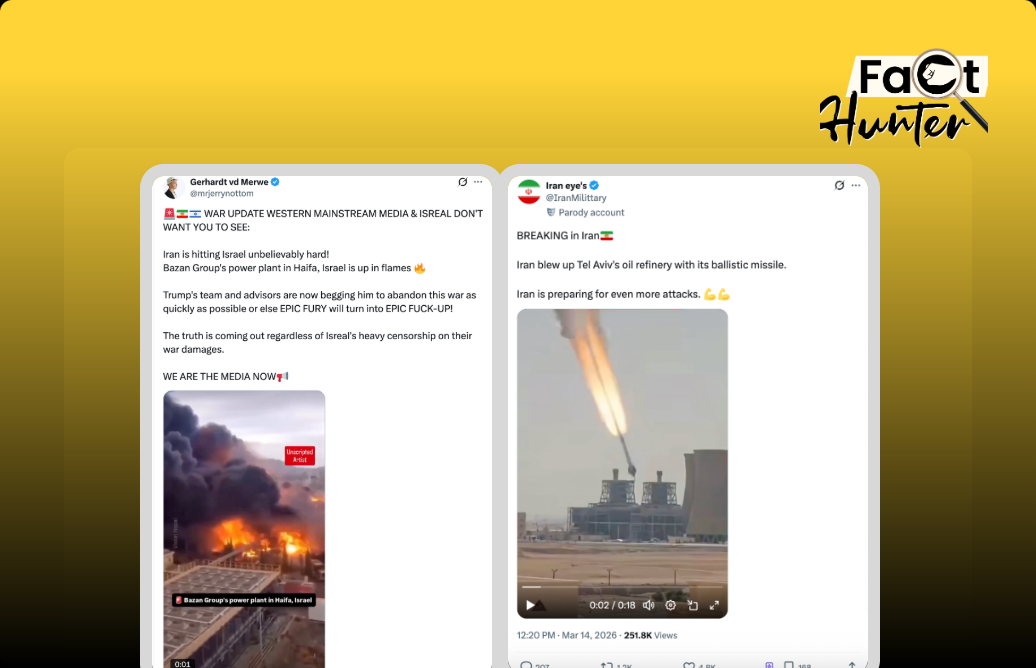
Since the joint U.S.-Israeli strikes on Iran on 28 February 2026, the Middle East conflict has continued to escalate, entering a second round of mutual attacks on energy infrastructure. On 7 March 2026, the Israeli military struck multiple fuel storage facilities in Tehran, the capital of Iran, producing scenes of raging flames and thick black smoke. From the evening of 7 March to 10 March, Iranian forces announced strikes on Israeli energy facilities in Haifa. Against this backdrop, multiple posts claiming “Iranian missile strikes on Israeli refineries” have circulated widely on X. We have selected the two videos with the greatest reach for verification: one claiming an attack on the “Haifa refinery” and the other claiming the destruction of the “Tel Aviv refinery.” Verification shows that the former is repurposed 2025 footage, while the latter is AI-generated. Detailed verification follows.
Claims
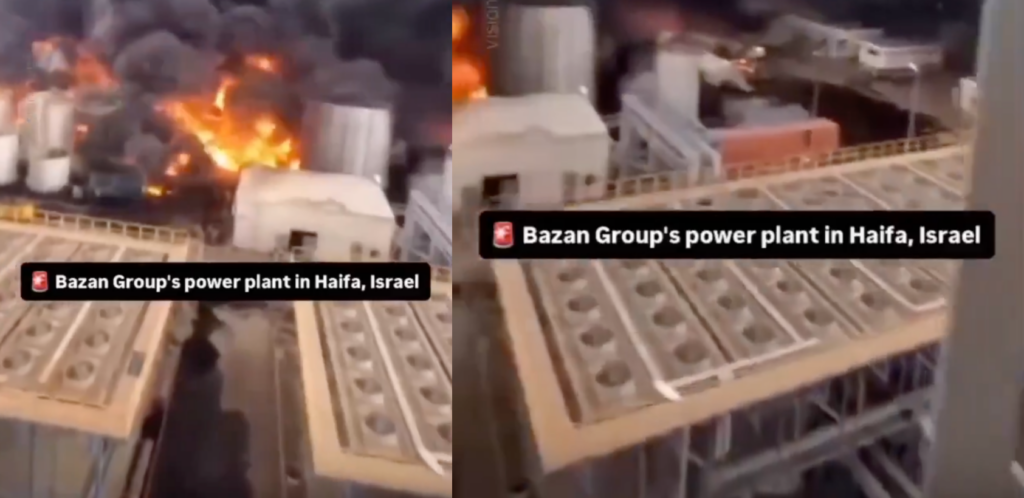
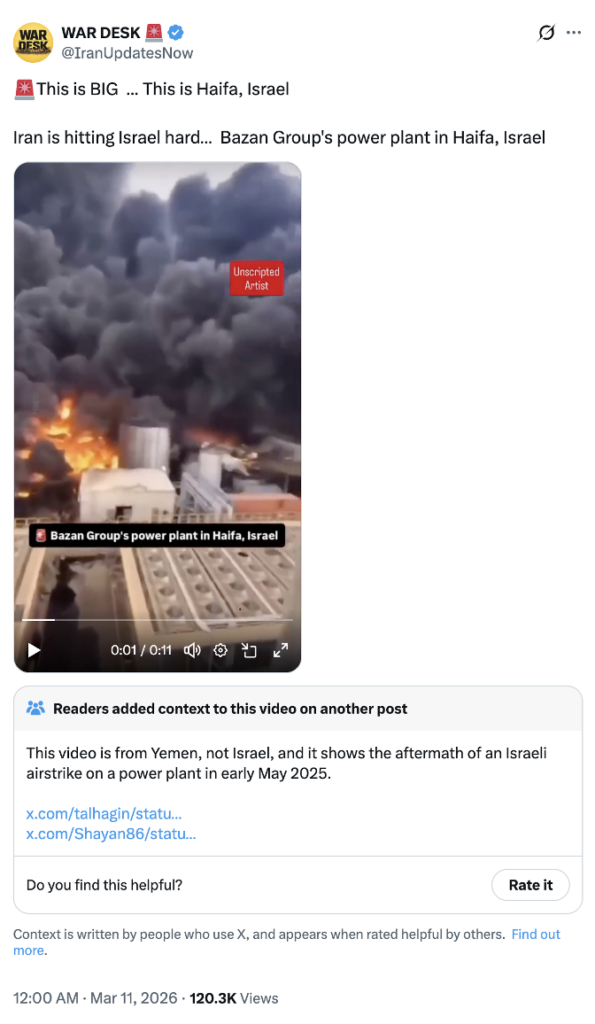
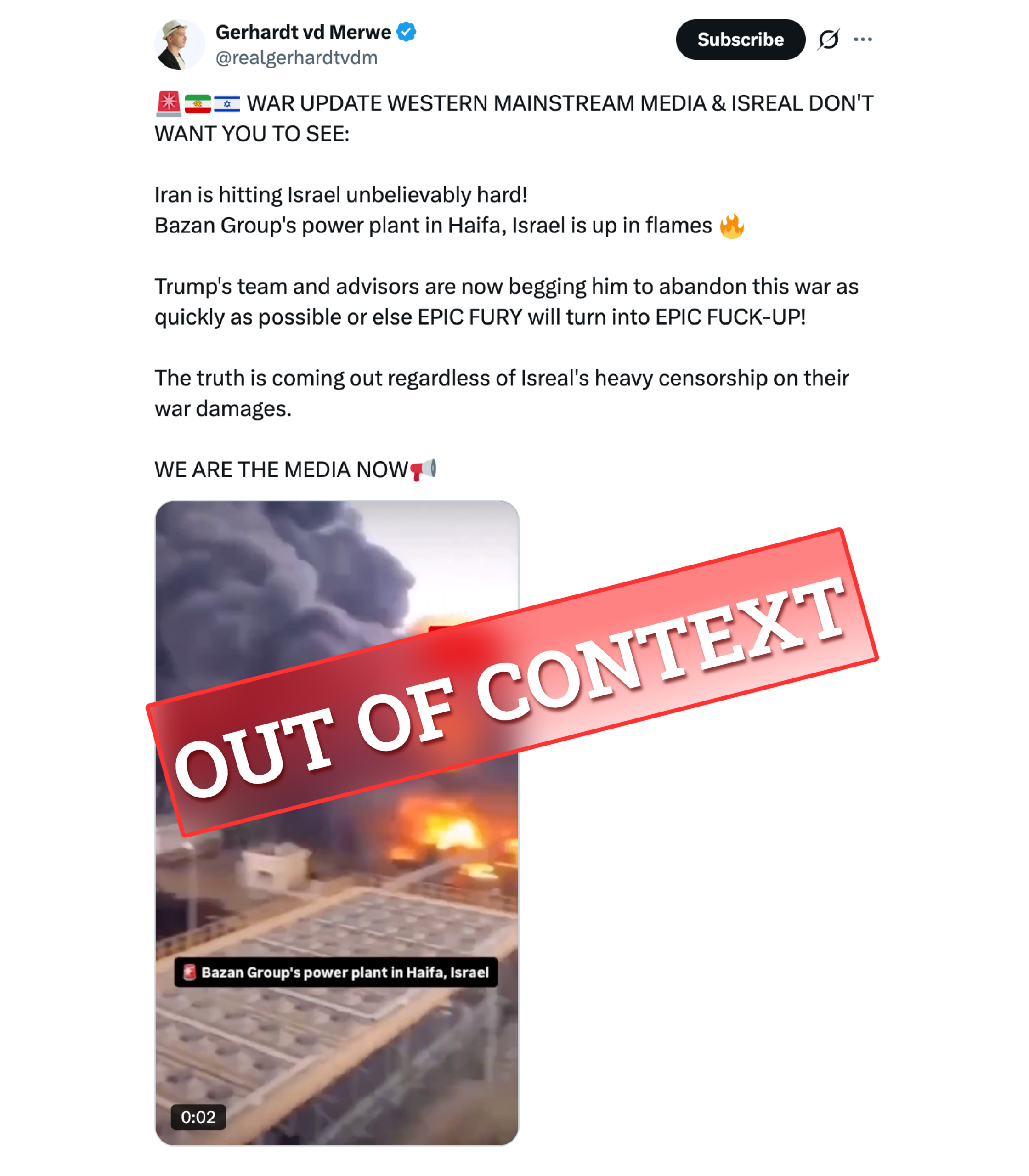
- On 10 March 2026, X user @realgerhardtvdm posted: “Iran is hitting Israel unbelievably hard! Bazan Group’s power plant in Haifa, Israel is up in flames 🔥” accompanied by an 11-second video showing industrial facilities engulfed in intense flames, with thick columns of black smoke rising into the sky. The post received over 500,000 views. Subsequently, nearly identical text and the same video were synchronously posted or forwarded by multiple similar accounts between 17:00 and 21:00 GMT on 10 March, displaying a pattern of homogeneous material and rapid viral spread.
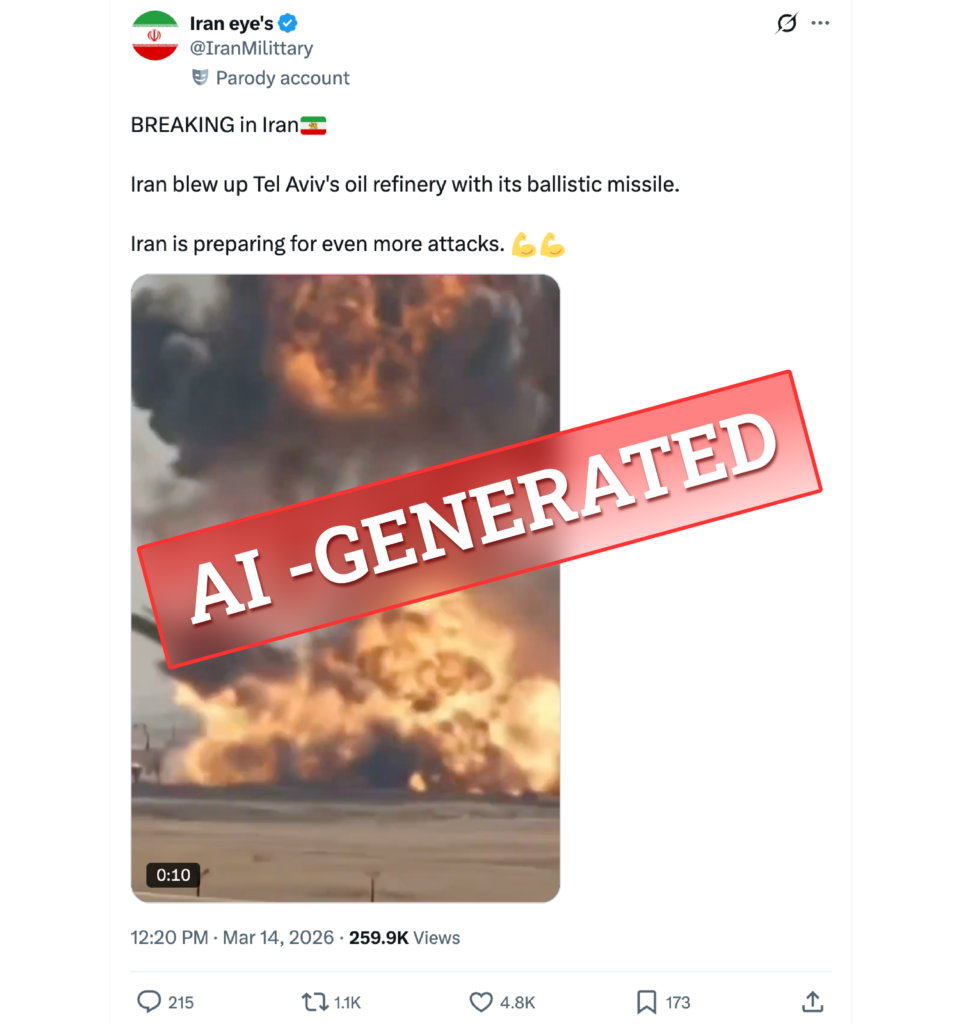
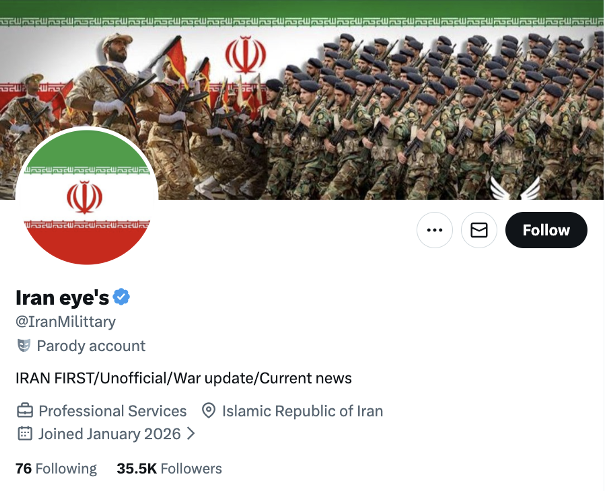
2. On 14 March 2026, the account “Iran eye’s” (@IranMilitary) posted a 17-second video with the caption: “Iran blew up Tel Aviv’s oil refinery with its ballistic missile. Iran is preparing for even more attacks.” The post received more than 250,000 views.
Fact Check
1. Haifa Refinery Video
Source Tracing
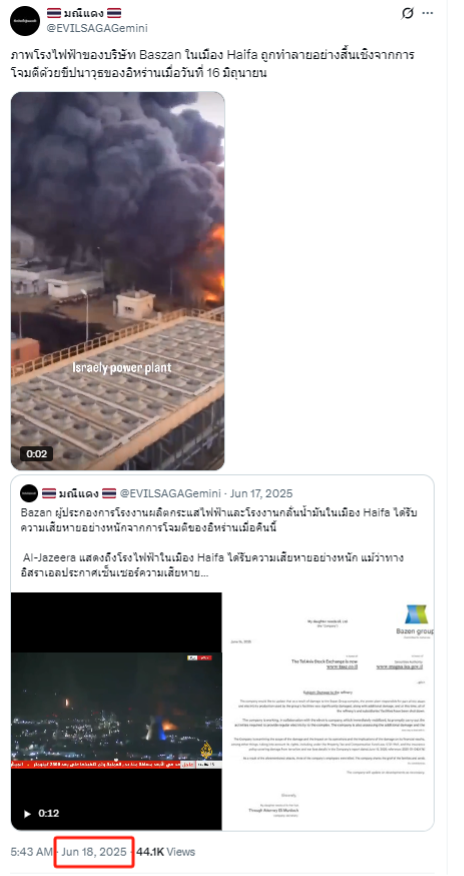
The video circulating on 10 March 2026 is a re-edited version of older footage. The original video was first posted by the X account @EVILSAGAGemini on 18 June 2025. The caption at the time read: “Footage of the Bazan Company power plant in Haifa, destroyed by an Iranian missile attack on 16 June.”
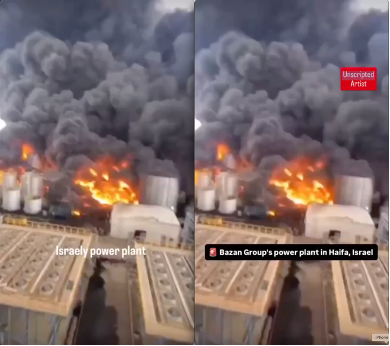
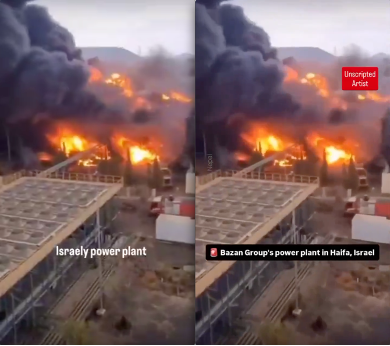
Frame-by-frame comparison confirms that the video is identical to the one posted by @realgerhardtvdm in March 2026.
Location Verification
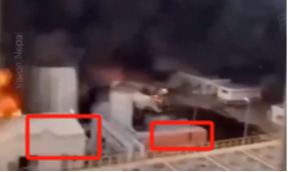
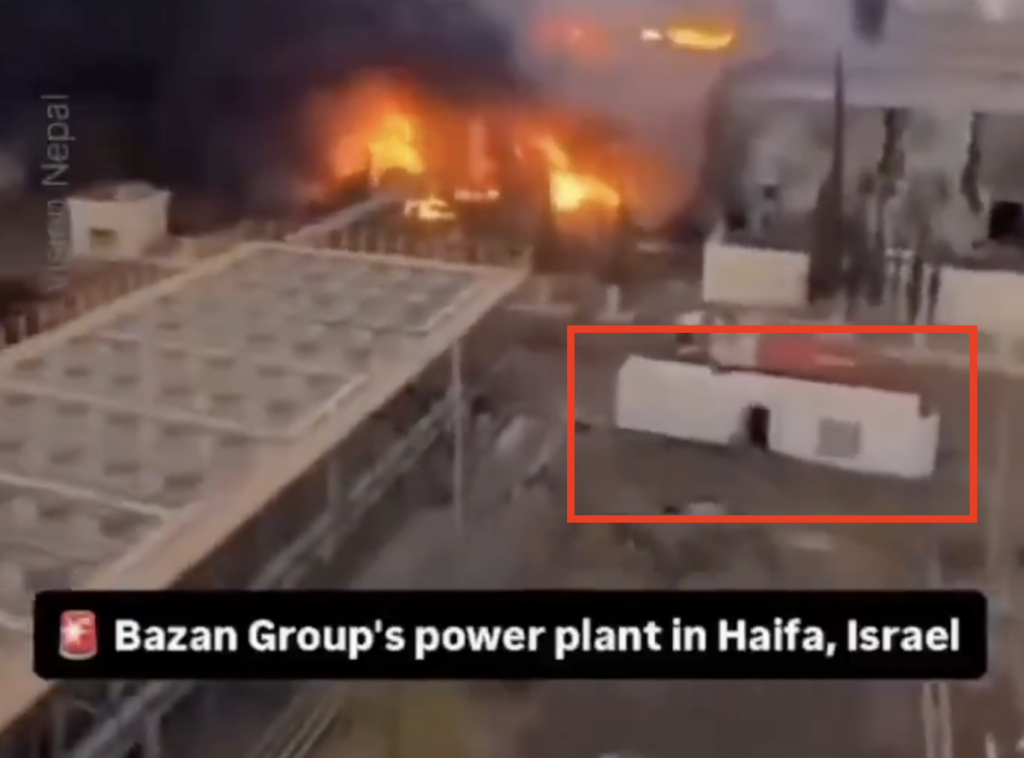
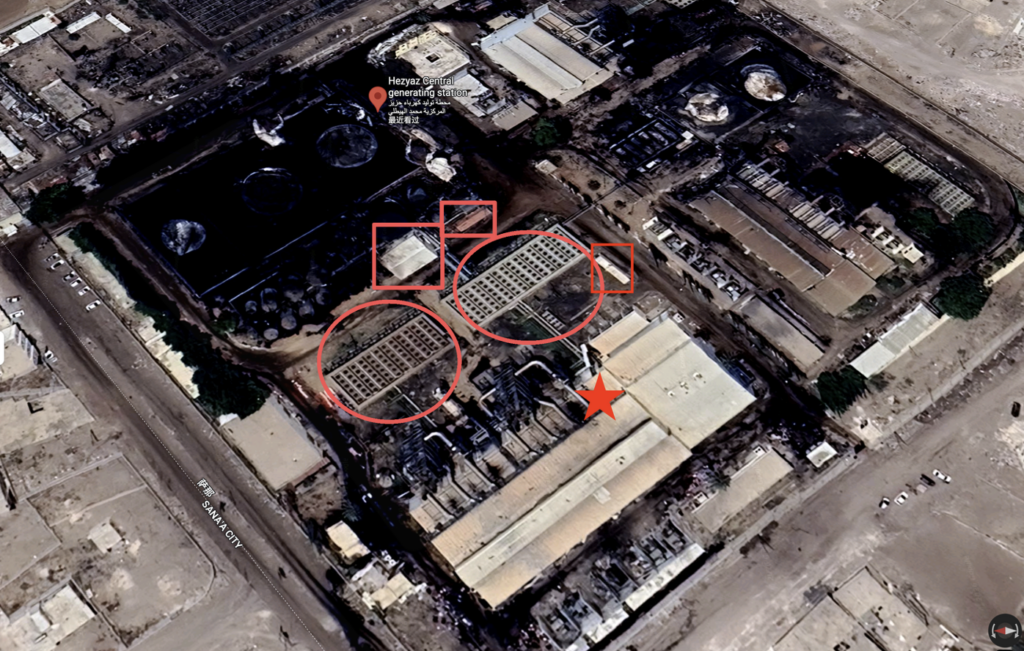
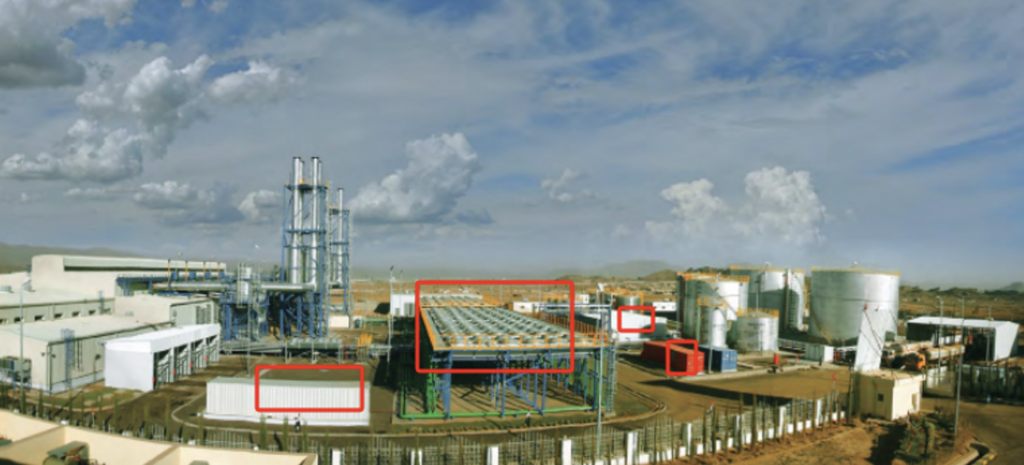
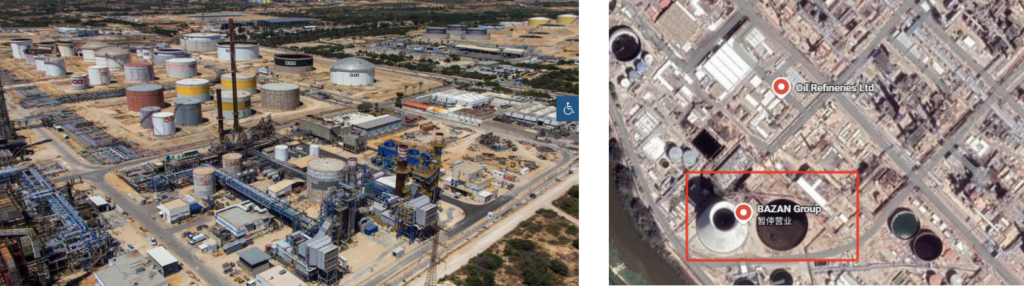
Comparison with reference photographs and Google Maps shows that the key architectural elements in the video — two honeycomb-roofed buildings, a white building and red containers in front of a honeycomb-roofed building, and a white container behind a honeycomb-roofed building in the final frame — exactly match the Hezyaz Central generating station. No matching structures exist at the Haifa refinery.
Google satellite image of Hezyaz Central generating station (matching the video’s perspective, marked by a five-pointed star):
Real-world photographs published on the website of the plant’s contractor, Al Ahram Taqa FZCO, correspond one-to-one with the video footage:
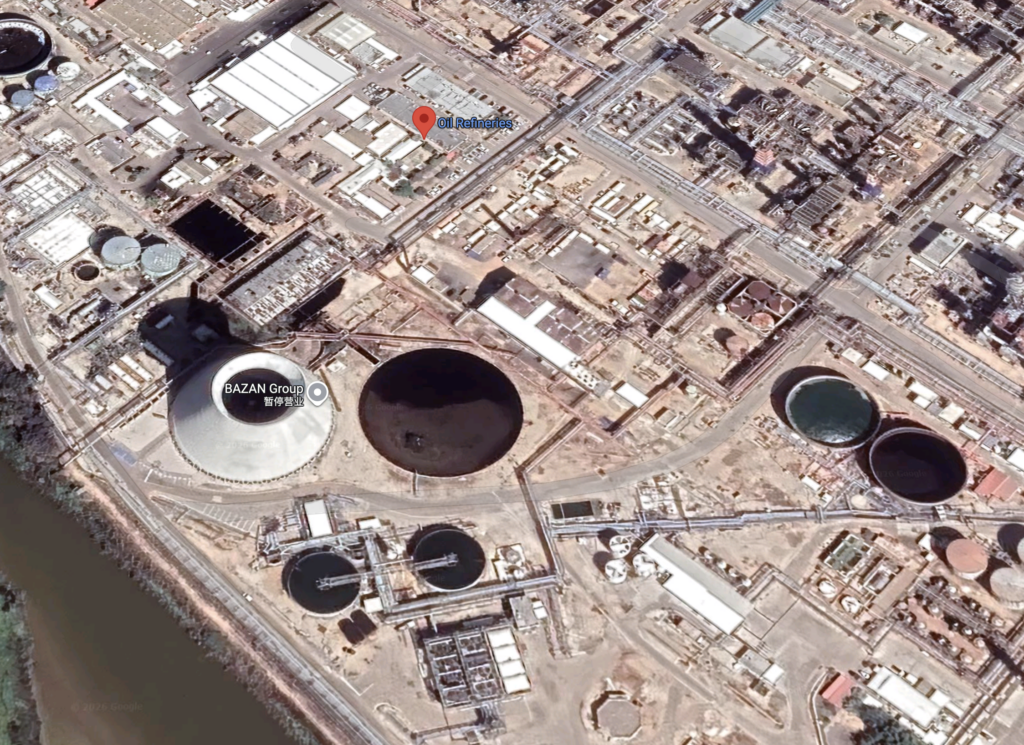
Google satellite image of the Haifa Bazan refinery shows no structures matching those in the video:
2. Tel Aviv Refinery Destruction Video
Visual Analysis
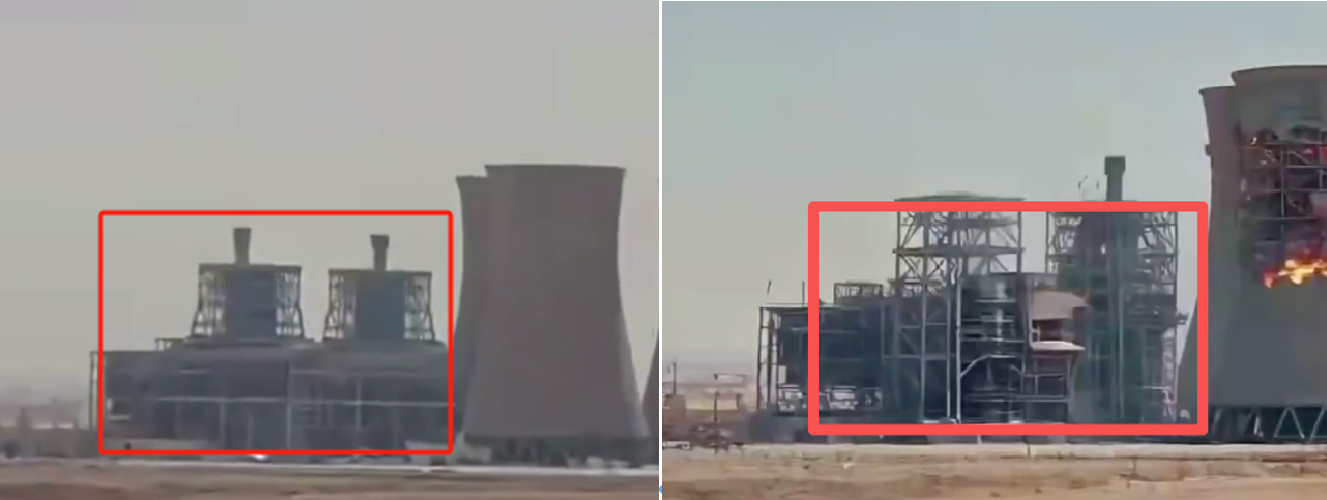
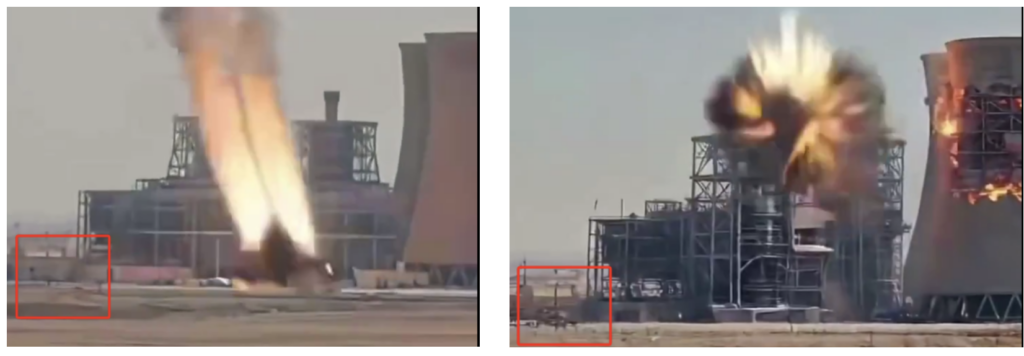
a. Lack of subject consistency: the refinery structures are inconsistent before and after the explosion. The appearance of the refinery facilities at the 2-second mark differs significantly from the same location and angle after the 10-second mark.
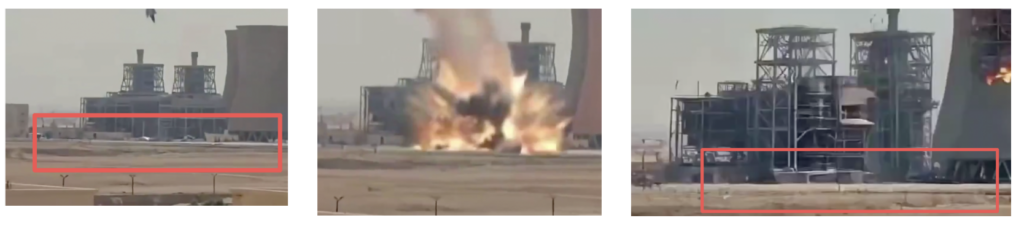
b. Visual logic fracture: the ground is intact after the explosion with no crater, scorched earth, or structural damage. The area hit at the 2-second mark shows no expected traces of damage at the 11-second mark and is identical to the pre-explosion frame (1 second 20 frames).
c. Scene consistency fracture: in the first two seconds, no rack-mounted equipment is visible near the wall in the lower-left corner; at the 11-second mark, an entire set of rack structures suddenly appears in the same position.
Technical Detection
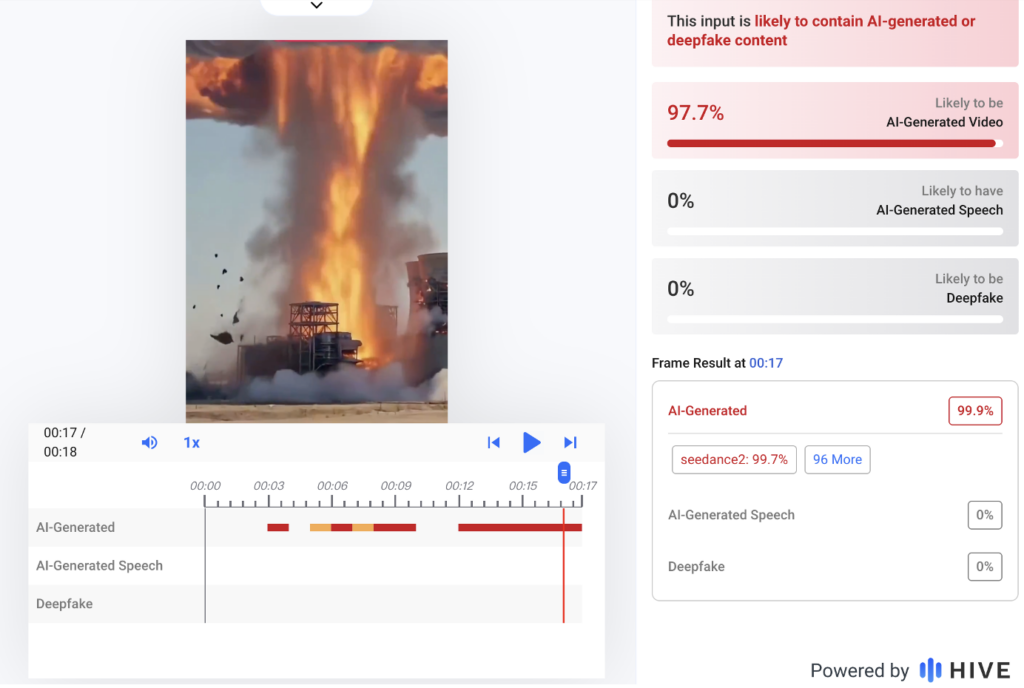
AI detection tools (HIVE) indicate a 97.7 % probability that the video contains AI-generated content.
Factual Verification Points
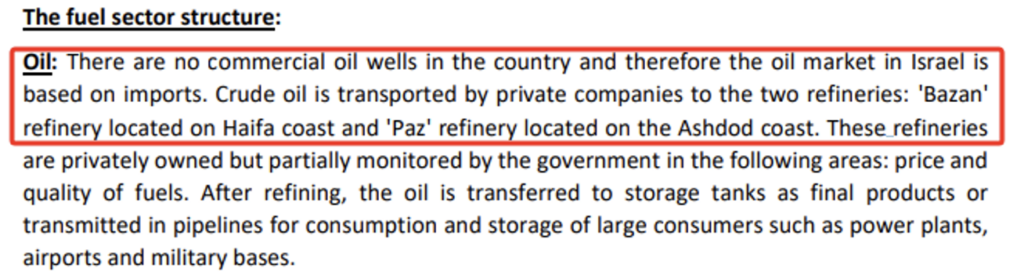
a. There is no refinery in Tel Aviv.
According to reports from Israel’s Ministry of Energy, Israel currently has only two large crude-oil refineries: the Bazan refinery in Haifa (northern coast) and the Paz refinery in Ashdod (southern coast). No refinery facilities in Tel Aviv are mentioned in official government documents.
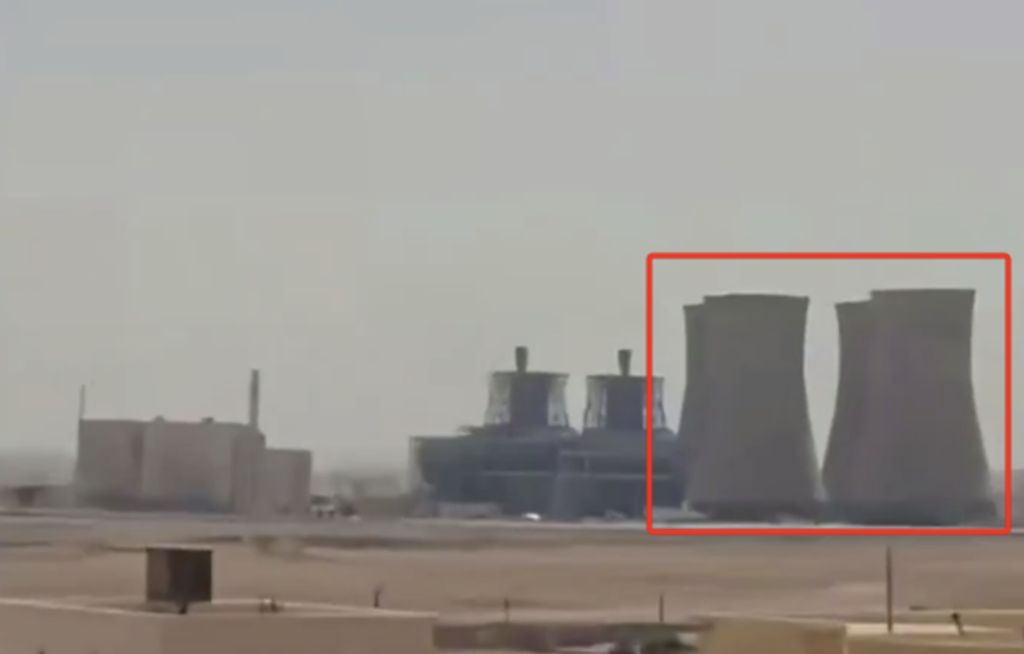
b. The number of cooling towers in the video does not match reality.
The only industrial site in Israel featuring these distinctive hyperbolic cooling towers is the Bazan refinery in Haifa; one tower there collapsed in 2020. However, the video simultaneously shows four intact hyperbolic cooling towers — a count that does not correspond to the actual situation.
3. Propagation Analysis
The Haifa refinery video exhibits a classic viral fission pattern:
1. Initial seeding and template establishment (16:00–17:00 GMT on 10 March)
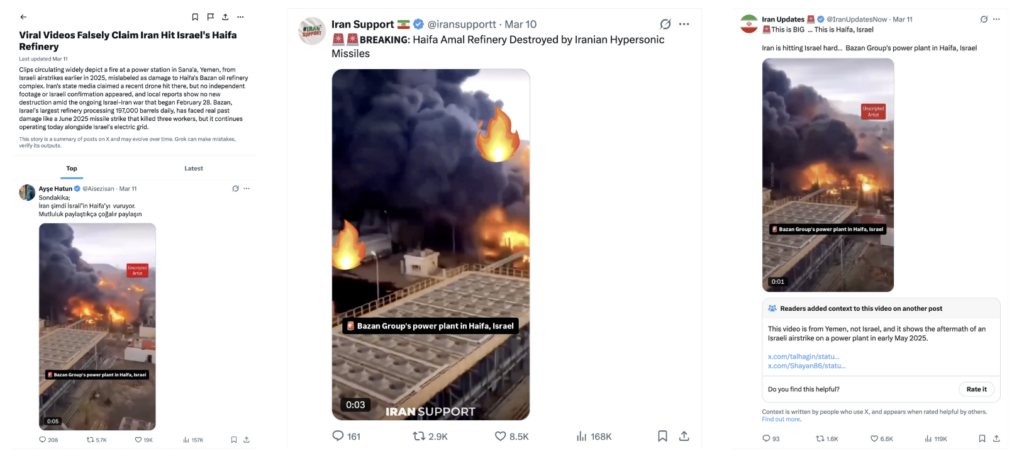
The earliest consistent independent post appeared from @IranUpdatesNow at 16:00:20 GMT with brief emotional text. Approximately one hour later, @realgerhardtvdm (17:00:25 GMT) posted the identical video with a more complete template (“unbelievably hard,” “Trump’s advisors begging,” “WE ARE THE MEDIA NOW”), which quickly became the standard copy-and-paste template.
2. First wave of rapid diffusion (17:00–22:00 GMT)
Forwarding activity clustered in the 30 minutes to 5 hours following the original posts. Accounts such as @tanmoyofc (17:34), @AfghanPm (reply chain at 17:35), @anile71 (19:14), @FARMLIK (20:52), @Senti_Pulse (20:59), and @turkiyetek44 (21:32) reposted nearly verbatim copies of the same text and video. These posts generally received very low view counts (tens to a few hundred), representing the “seed node” phase of dissemination, forming a high-density yet low-interaction initial network.
3. Second wave of amplification and peak (evening of 10 March to 12 March)
Higher-view posts appeared 4–5 hours later (e.g., @globalbriefing_ with 31K views). One to two days afterward, accounts such as @GP_Presss and @X_Press24 reposted the video, upgrading the captions (adding phrases such as “Urgent” and “continues to strike”). View counts ranged from tens of thousands to hundreds of thousands, driven by emotive headlines and conflict-related traffic, pushing the dissemination to a second peak.
4. Overall Pattern Characteristics
This model that leverages conflict hotspots, repurposed old video footage, and uniform captions. It enables rapid escalation from scattered posts to hundreds of thousands of views within just a few hours — a classic demonstration of how social media amplifies information warfare during wartime. The accounts’ highly homogenized messaging formed a wartime misinformation network characterized by no visible prior interaction yet a high degree of coordination.
Account Analysis (Tel Aviv Video)
The video was posted exclusively by the X account @IranMilitary (display name “Iran eye’s”) on 14 March 2026. The account ID contains a double “t” spelling error (military misspelled as milititary), a feature consistent with typo squatting impersonation tactics. The account has 35.5K followers and has published a large volume of posts — primarily unofficial war updates and current news.
Background:
This round of mutual strikes on energy infrastructure represents the latest escalation in the conflict since the joint U.S.-Israeli strikes on Iran on 28 February 2026.
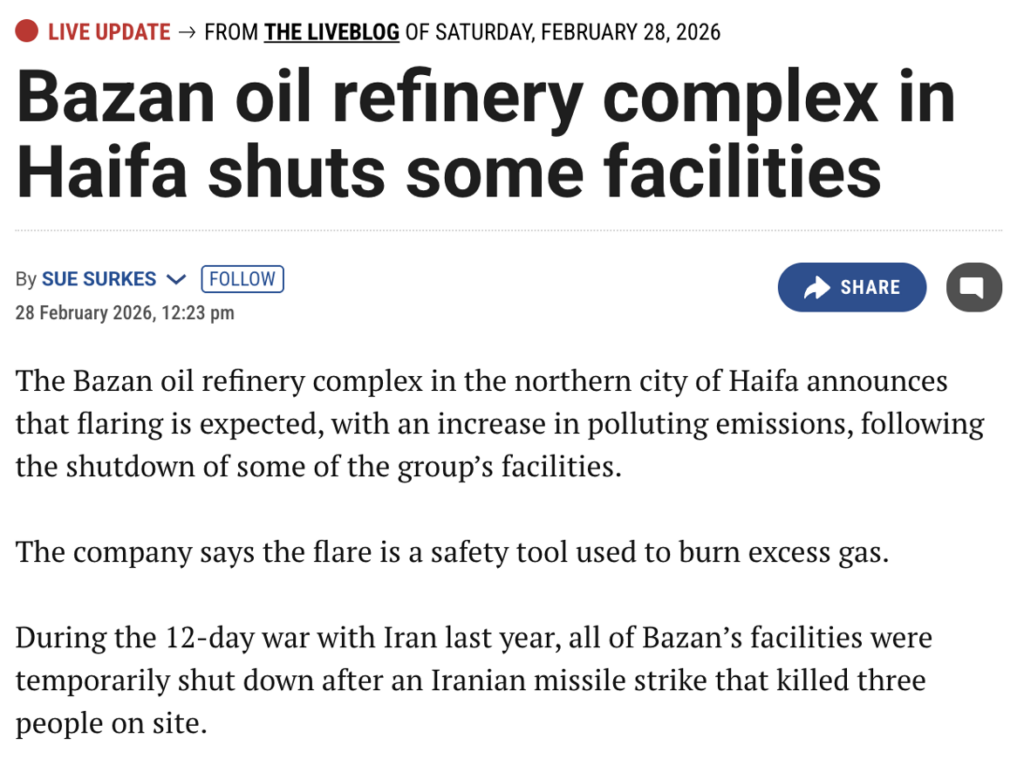
On 28 February 2026, the Bazan Group announced that, due to the impact of Iranian missile strikes (including potential damage to facilities in Haifa Bay), it had temporarily closed some of its installations. Flare combustion was expected as a safety measure, leading to increased pollutant emissions.
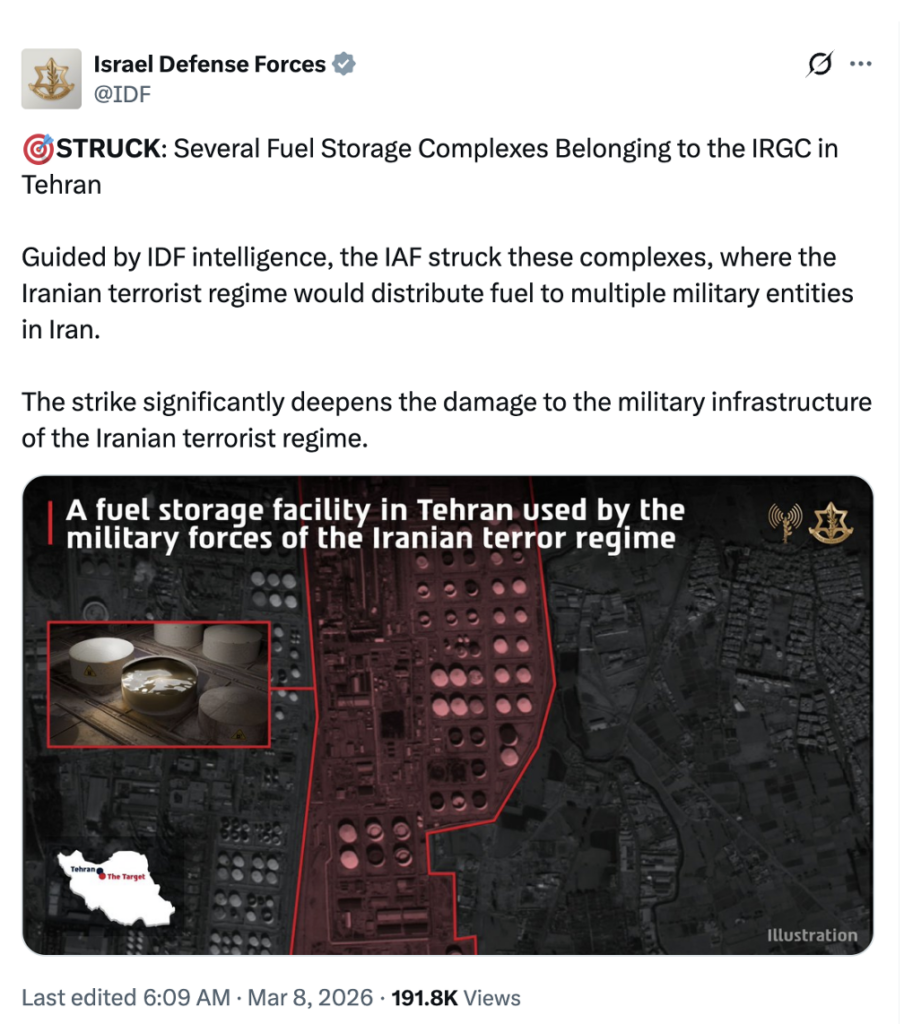
On 7 March 2026, the Israeli military struck multiple fuel storage facilities in Tehran, the capital of Iran. The targeted sites were engulfed in flames and thick black smoke, with local reports of toxic “black rain” falling. This marked the first time in the current round of conflict that Israel had targeted Iranian energy infrastructure.
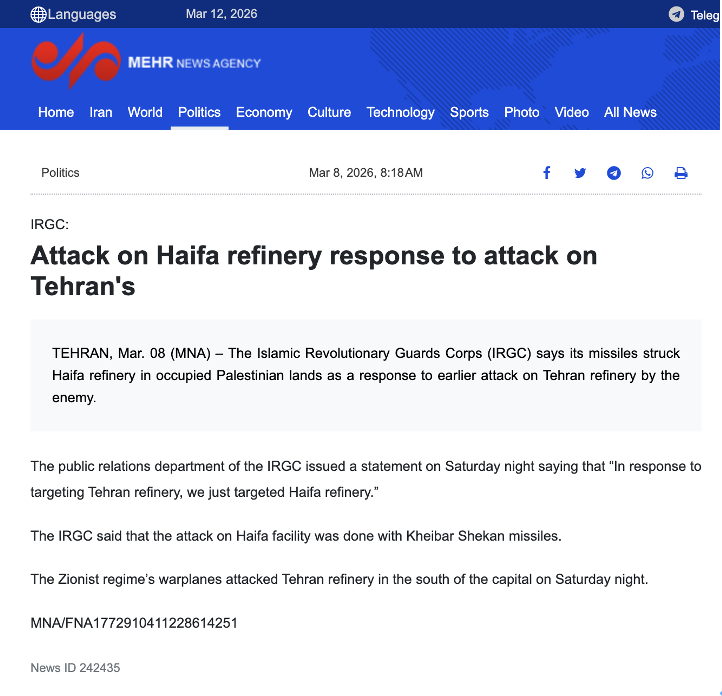
On the evening of 7 March 2026, Iran’s Islamic Revolutionary Guard Corps (IRGC) announced that its missiles struck Haifa refinery in occupied Palestinian lands as a response to earlier attack on Tehran refinery by the enemy.
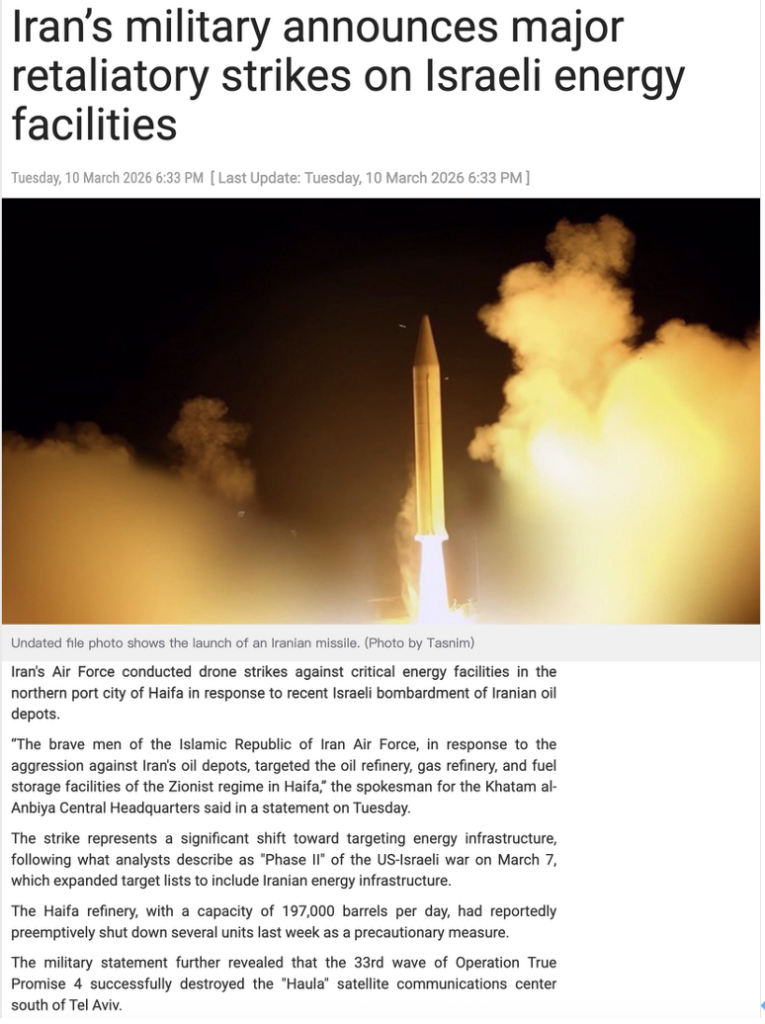
On 10 March 2026, according to Iranian state media Press TV, Iranian forces further announced additional drone strikes on Israeli energy facilities in Haifa as a continued response to Israel’s previous actions.
Verdict:
The Haifa video is out of context.
The Tel Aviv video is AI-generated.
Conclusion:
Neither video depicts the current events. Amid reports of strikes on energy facilities, a significant amount of unverified and misleading information has circulated on social media. The public is advised to exercise caution when relying on single video sources and to cross-verify claims through multiple independent channels—including official statements from relevant authorities, open-source intelligence (OSINT) analysis, and reporting from established international news organizations.
Have a questionable video or claim? Submit it to Fact Hunter’s investigation team at [therealfacthunter@outlook.com].
Primary Fact Checker: Liu Yi
Secondary Fact Checker: Lei Ting
Reference:
https://x.com/mrjerrynottom/status/2031414886534955486
https://x.com/IranMilitary/status/2032673271637037354
https://x.com/EVILSAGAGemini/status/1935091074021867680
https://maps.app.goo.gl/UawUgAKWeSV9hPUA7
https://www.alahramtaqa.com/hezyaz1.html
https://maps.app.goo.gl/dp1FRh1p9AUJoQLs6
https://x.com/IDF/status/2030405388638814241
https://www.gov.il/BlobFolder/reports/israel_energy_sector/en/israel_energy_sector_en.pdf
https://www.gov.il/BlobFolder/reports/btr-report/ar/climate_change_and_energy_efficiency_israels_%20first_btr_and_ncr_report_2025.pdf
https://en.mehrnews.com/news/242435/Attack-on-Haifa-refinery-response-to-attack-on-Tehran-s
https://www.presstv.ir/Detail/2026/03/10/765227/Iran-military-announces-major-retaliatory-strikes-on-Israeli-energy-facilities