Last updated on November 5th, 2025
Claim
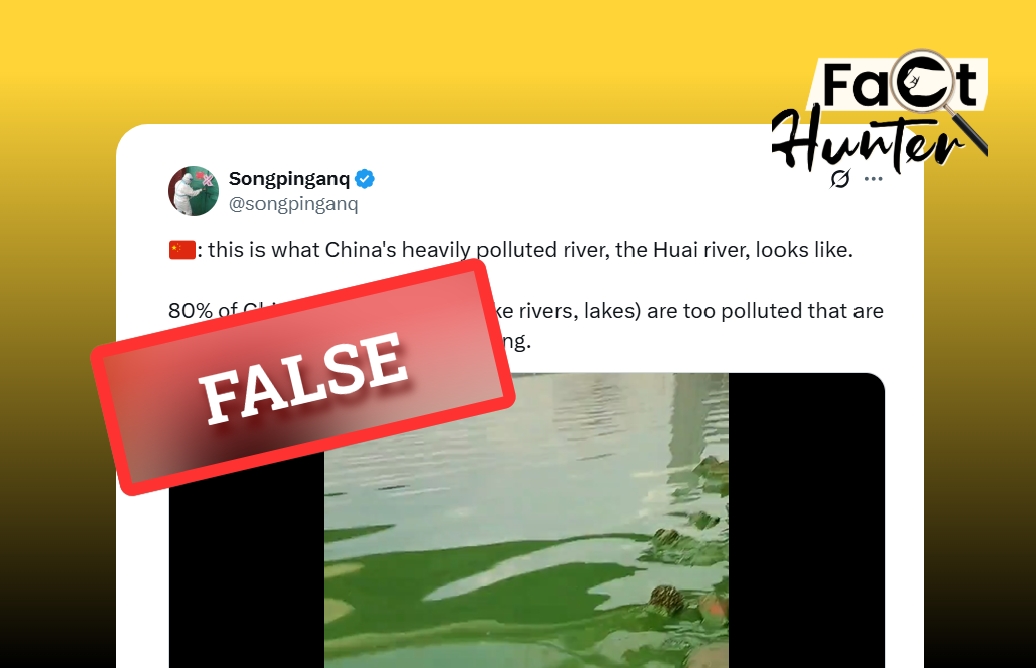
In August 2025, X user @Songpinganq posted a video titled “This is how China’s heavily polluted rivers look: Huai River.” The accompanying footage, originally from Douyin, shows greenish, algae-covered water near a stone embankment, reportedly taken from a riverbank in China. The post further claims that “80% of China’s water sources (rivers and lakes) are severely polluted and unfit for drinking or bathing.” The post has garnered tens of thousands of views and multiple rounds of reposts.
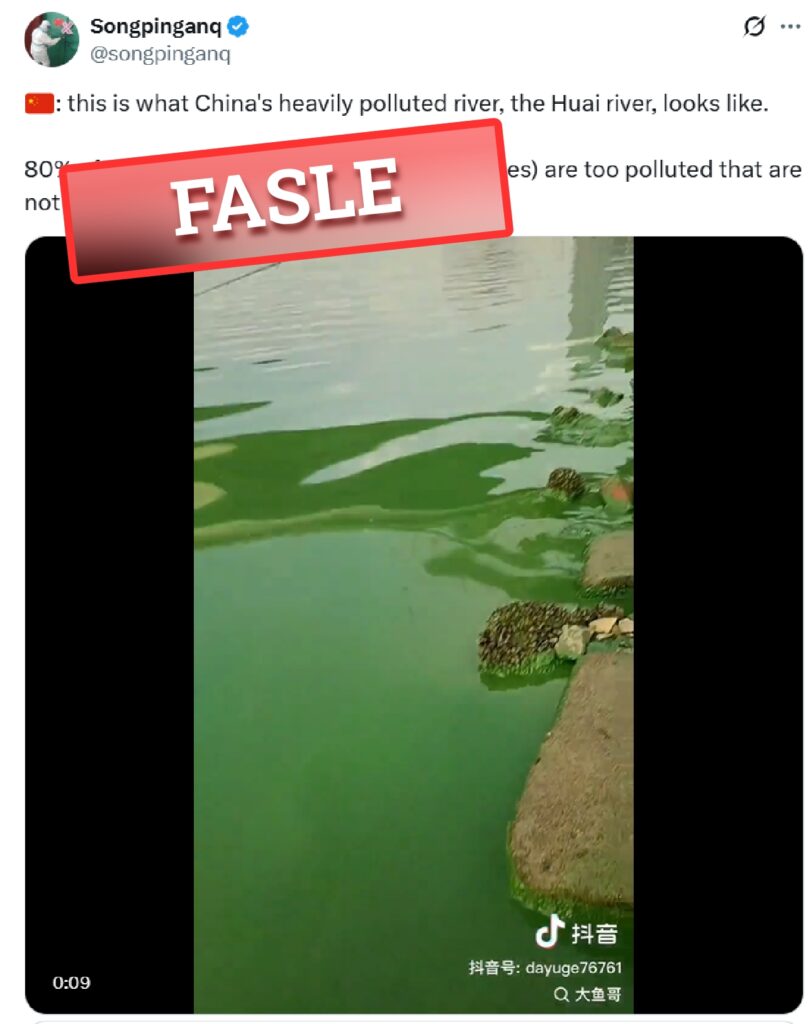
Figure 1. Screenshot of the X post by @songpinganq alleging the Huai River is “polluted”
Fact check
1. Source analysis
A watermark review traces the original video to the Douyin user “大鱼哥” (username: @dayuge76761). While the original clip has since been deleted, the same user posted another video on August 4, 2025, titled: “Huai River water has improved, must be from some regulation,” showing the exact location with clear water and no visible algal bloom.
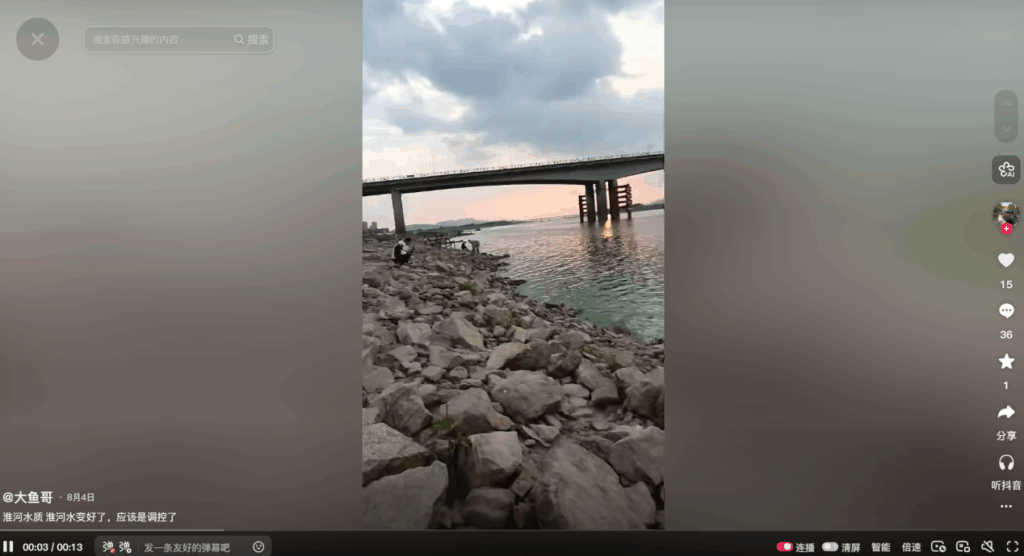
Figure 2. Screenshot of the Douyin follow-up by user “大鱼哥”, posted Aug. 4, 2025, showing the same riverside location with clear water
This suggests the original footage captured a localized or temporary water quality issue, rather than an ongoing condition. The account holder is not affiliated with any environmental body and mainly shares casual content about fishing and daily life.
2. Analysis of the green water in the video
The description of green water accompanied by floating clumps or flocculent material on the surface is most consistent with the characteristics of an algal bloom. Such phenomena are globally observed in large lakes and slow-flowing rivers, typically arising from eutrophication. China is among the regions experiencing such seasonal blooms in certain river reaches and lakes, often during warm months. Figures 3 and 4 illustrate the typical macroscopic appearance and microscopic structure of cyanobacterial blooms in natural water bodies.
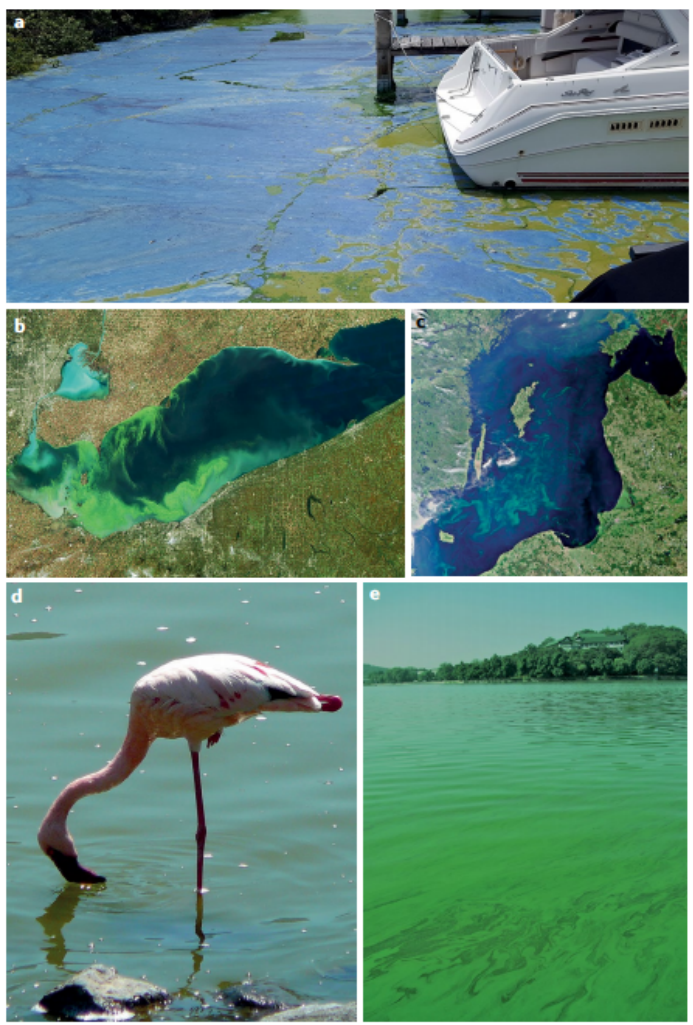
Figure 3. Typical appearance of cyanobacterial blooms in different regions, including China
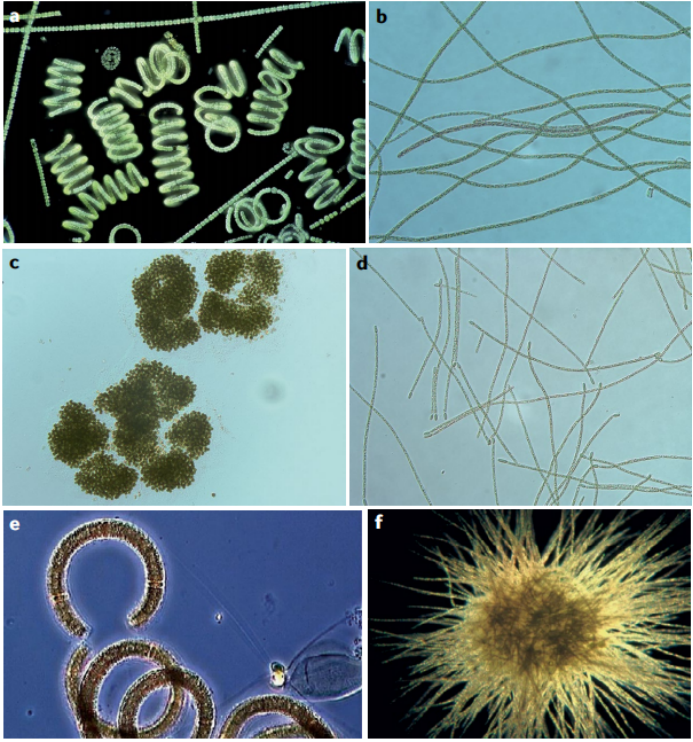
Figure 4. Microscopic structure of a cyanobacterial bloom
3.Background: International Definitions of Water Pollution
Global authorities generally define water pollution as the presence of harmful substances in water due to human activities.
- For example, the United States Clean Water Act defines pollution as “the man-made or man-induced alteration of the chemical, physical, biological, and radiological integrity of water”.
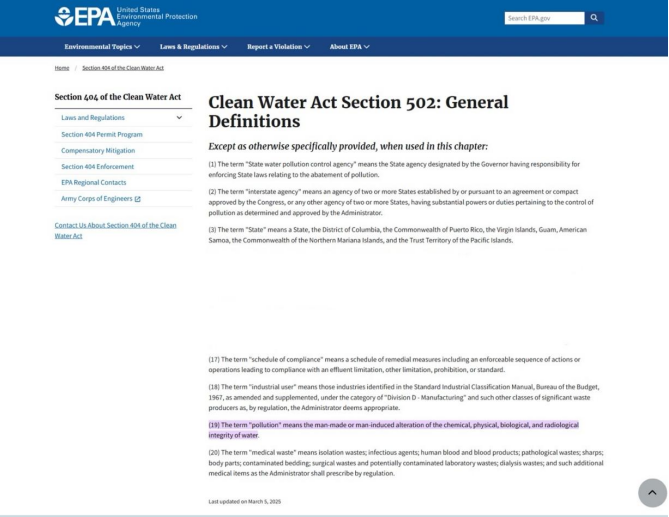
Figure 5. The definition of “pollution” under the United States Clean Water Act
- The Paris-based Organization for Economic Cooperation and Development (OECD) similarly emphasizes anthropogenic contamination: pollution occurs when substances are discharged into water bodies in a way that disrupts the ecosystem’s normal function.
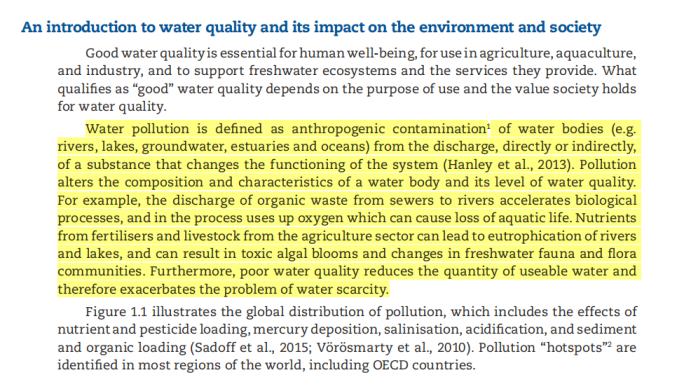
Figure 6. The OECD’ s definition of “water pollution”
Across these definitions, key criteria emerge: a change in water quality (often due to human activities) that renders the water harmful, unsafe, or unfit for its intended use.
4.Algal Blooms: Do They Constitute “Pollution”?
Algal blooms—overgrowths of algae that often turn water green— can be striking, but do they signify “polluted water”? It is important to refute the simplistic idea that all green-colored water is automatically polluted.
Typical triggering factors can be summarized as the four key drivers.
- Eutrophication (Nitrogen or Phosphorus Loading): Nutrients from agricultural non-point sources, domestic wastewater, and upstream inflows are the primary drivers of algal blooms.
- High temperature and intense solar radiation: Warm summer conditions and strong sunlight promote the rapid proliferation of cyanobacteria.
- Reduced flow velocity or stagnant water: During low-flow seasons, in dammed or slow-flowing reaches, water tends to stagnate and form bloom aggregation zones.
- Storm events followed by intermittent runoff: Heavy rainfall can flush nutrients into the water body; if this is followed by hot, calm, and stable weather, the risk of bloom initiation or intensification increases.
These factors often act in combination, particularly in eutrophic systems where nutrient levels are already elevated. However, the presence of a bloom, even one triggered by natural or seasonal conditions, does not necessarily mean the water is polluted.
In summary, not all green-colored water constitutes water pollution. According to definitions used by regulatory and scientific bodies such as the U.S. Environmental Protection Agency (EPA) and the OECD, water is considered polluted when its physical, chemical, or biological properties are altered, typically by human activities, in ways that impair its use or damage ecosystems.
A severe algal bloom caused by nutrient pollution (e.g., from fertilizer or sewage) would meet this definition. By contrast, moderate or natural algal growth, which may occur during seasonal cycles without significant eological harm, does not qualify as pollution on its own. Labeling water as “polluted” requires confirmation of harmful contaminants or measurable degradation of water quality or function. Visual appearance alone is not a sufficient basis for such claims.
5. The truth about China’s water
The claim that 80 percent of China’s water sources are heavily polluted and unfit for human use is unfounded. According to the Ministry of Ecology and Environment’s 2024 Bulletin on China’s Ecological and Environmental Conditions, 90.4 percent of monitored surface water was rated under Class I–III in China’s national water grading system, suitable for drinking and human contact, while only 0.6 percent was categorized as the lowest classification (worse than Class V), unfit for any use.
In summary, recent national monitoring results confirm that most of China’s surface water sources, including rivers and lakes, now meet national standards for safe use.
6.Source Intent and Fabrication Tactics
To map the narrative ecosystem behind this claim, we searched X for “water pollution China” over the past two years and reviewed the “Top Negative Users” cluster (e.g., @songpinganq, @zilinda_zi, and @GundamNorthrop).
These accounts consistently disseminate or amplify misinformation about pollution in China, with content that appears designed to damage the international perception of the country.
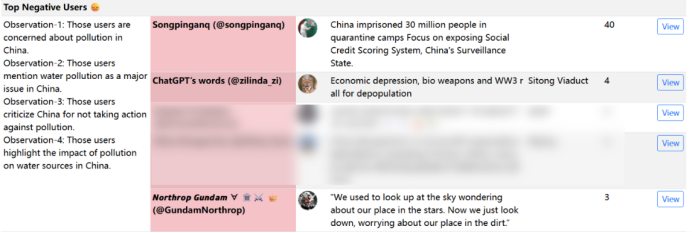
Figure 7. Top Negative Users in “Water Pollution China” Discussions on X
Within this network, @songpinganq appears to function as a central amplifier for such misleading claims: since February 2025, and especially in the past three months, the account has repeatedly paired green/blue-tinted river footage with dramatic English captions alleging mass pollution or ecological collapse (see examples here and here), reinforcing a pre-set, anti-China narrative rather than reporting verifiable environmental conditions.
A behavioral analysis of @songpinganq’ s posting history further confirms this pattern. As shown in the sentiment and emotion charts generated from roughly 500 posts, more than 75% express negative sentiment toward China’ s social credit system, dominated by tones of fear and anger.
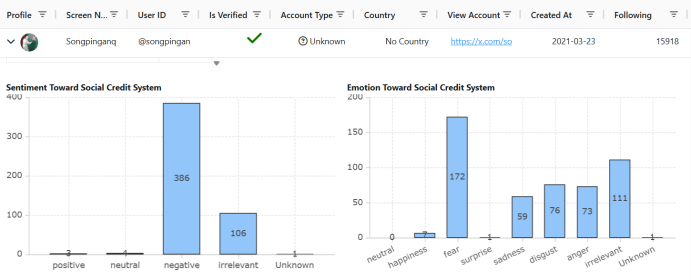
Figure 8. Sentiment and Emotion Analysis of @songpinganq’ s Posts
The fabrication tactics observed in this network follow a consistent formula. Ordinary or seasonal water scenes are stripped of context, reframed with misleading captions, and repackaged as evidence of ecological crisis. Old or unrelated footage is frequently recycled, while unverified Douyin videos are selectively clipped to evoke the illusion of widespread contamination. These posts rely on emotional manipulation, particularly fear and outrage, to attract engagement, while ignoring official environmental data or scientific definitions. Their purpose is not to inform but to distort, transforming everyday river imagery into symbols of systemic collapse. Readers should remain alert to such emotionally charged yet unverified claims.
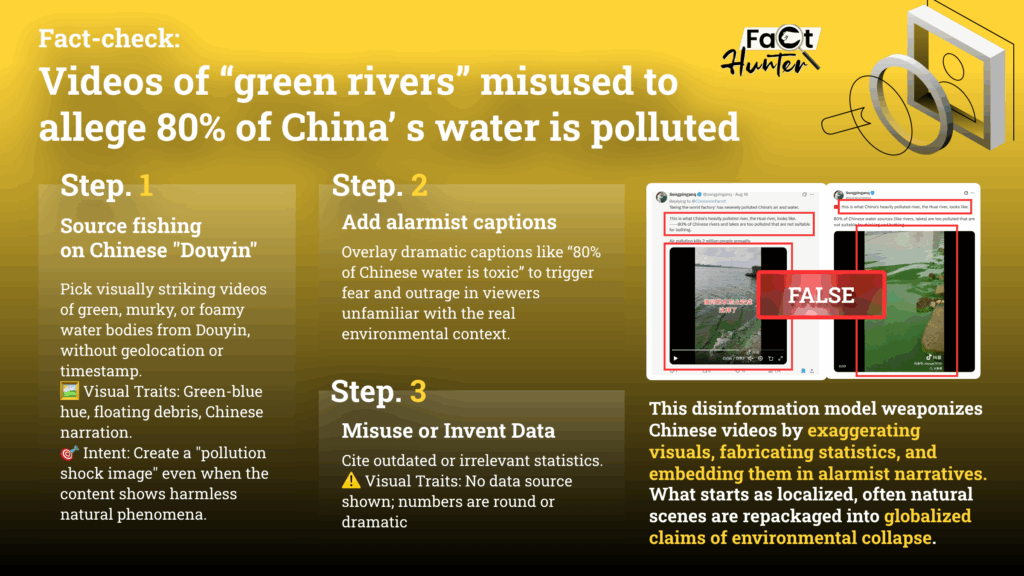
Figure 9. Disinformation tactics breakdown: How fake pollution claims are made
Conclusion
The viral videos mischaracterize localized or seasonal water conditions as widespread pollution. The green water shown lacks evidence of harmful contamination and does not meet international definitions of water pollution. The “80% polluted” claim is fabricated and does not reflect current surface water quality.
These videos follow a pattern of repurposing ordinary river footage with misleading captions to push a negative narrative about China. Viewers should approach such claims with caution and rely on verified data to make accurate assessments.
Verdict
False.
Have a questionable video or claim? Submit it to Fact Hunter’ s investigation team at [therealfacthunter@outlook.com].
Primary Fact Checker: MA Xianzhi
Secondary Fact Checker: WANG Shifeng, HAN Lin