
Last updated on April 30th, 2026
Fact Check: Viral Artemis II Lunar Images — One Misappropriated from 2024, One AI-Generated
Editor’s Note
In early April 2026, during NASA’s critical Artemis II crewed-lunar flyby mission, a series of images claiming to be official lunar photographs went viral on X. While they appear to draw from authoritative space agency sources, these posts were deeply misleading. Our investigation finds they are not authentic images, but rather a combination of misappropriated astrophotography and AI-generated content. This report details the evidence and corrects the record on the Artemis II mission imagery. balance and using technology in a way that serves your goals.
Claim
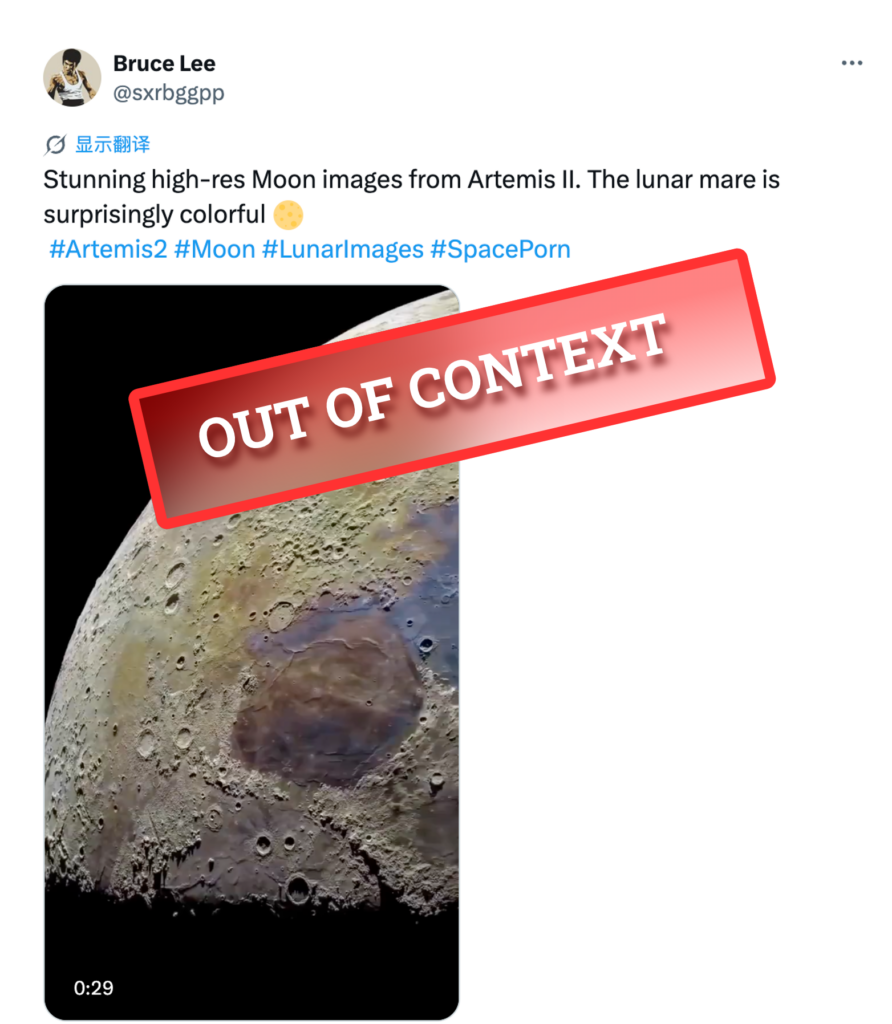
- On April 6, 2026, Xuser @sxrbggpp claimed a 35-second-long video to be high-resolution lunar imagery captured by the Artemis II crew. The video appears to depict the lunar surface with vivid purple, blue, yellow, and orange-red gradients. The post read: “Stunning high-res Moon images from Artemis II. The lunar mare is surprisingly colorful,” along with hashtags such as #Artemis2 and #Moon. The post received over 64,000
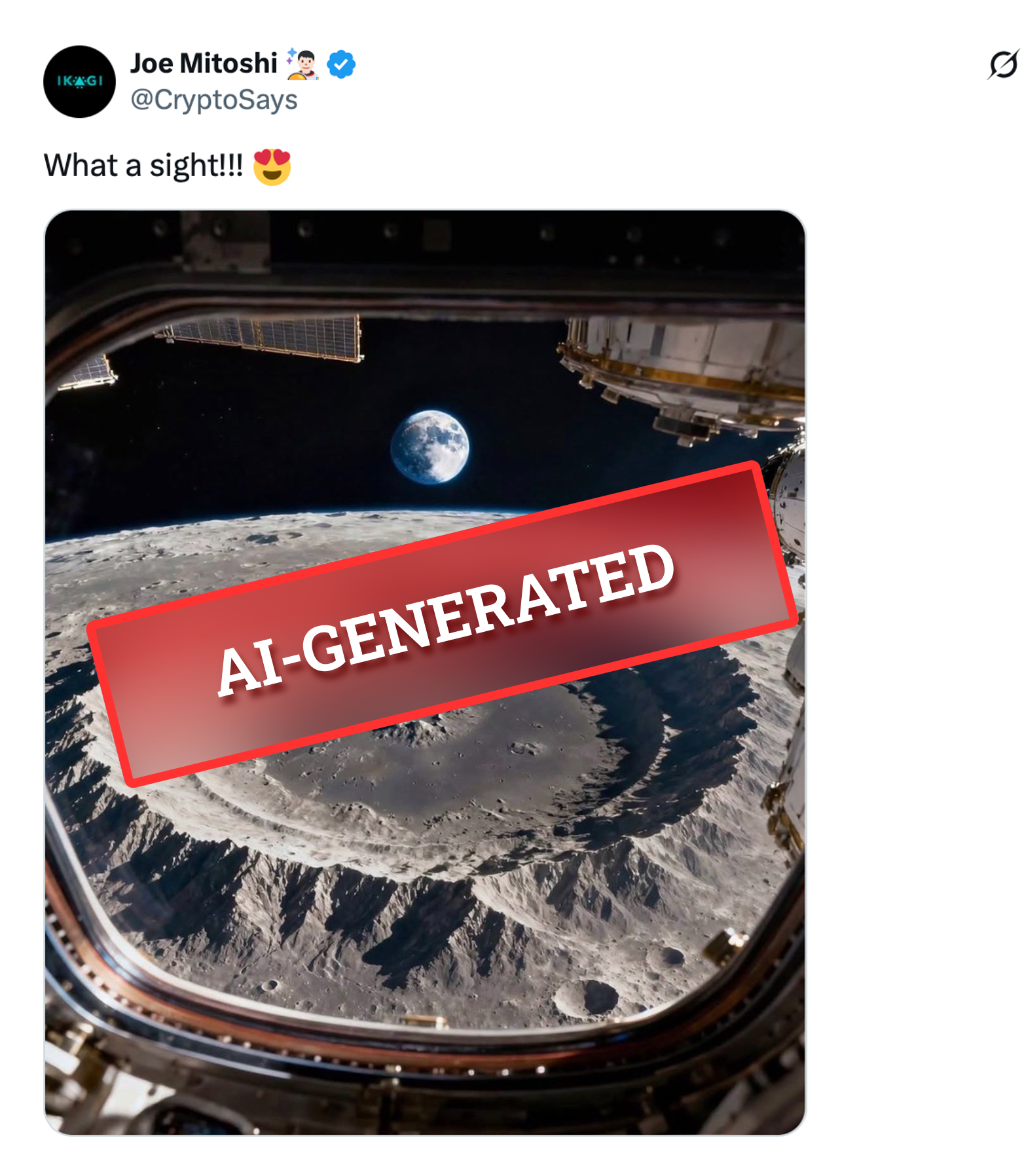
- One day later, onApril 7, 2026, X user @CryptoSays posted another image — a highly realistic-looking space-style photo seemingly taken through a spacecraft window — with the caption: “What a sight!!!” The post has since garnered over 2.7 million views and more than 80,000 likes.
Fact Check
1. Video Claiming to Show Artemis II High-Res Lunar Imagery
1.1 Source Analysis
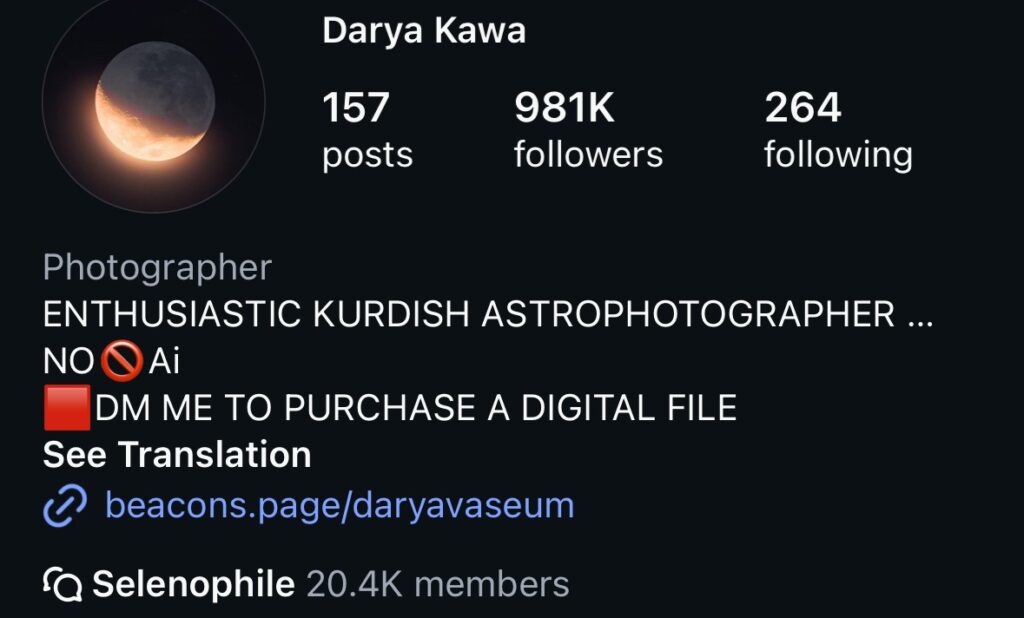
A reverse image search of several key frames reveals the video was first shared by user Darya Kawa (@daryavaseum) on Instagram almost two years prior, on June 22, 2024. In this original post, the user provided a detailed explanation of how the final video was produced using an advanced telescope and other high-tech tools.
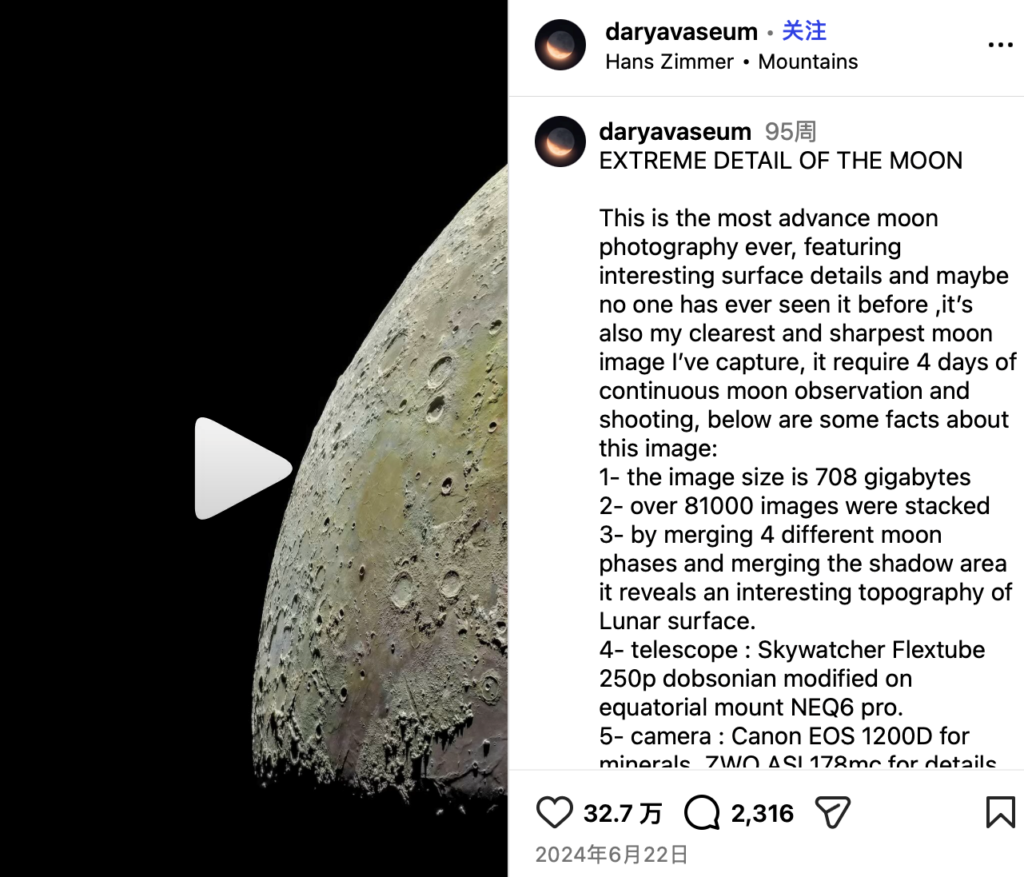
On October 7, 2024, the renowned art and photography media outlet ‘This is Colossal’ featured this piece of artwork and published additional details about the image.
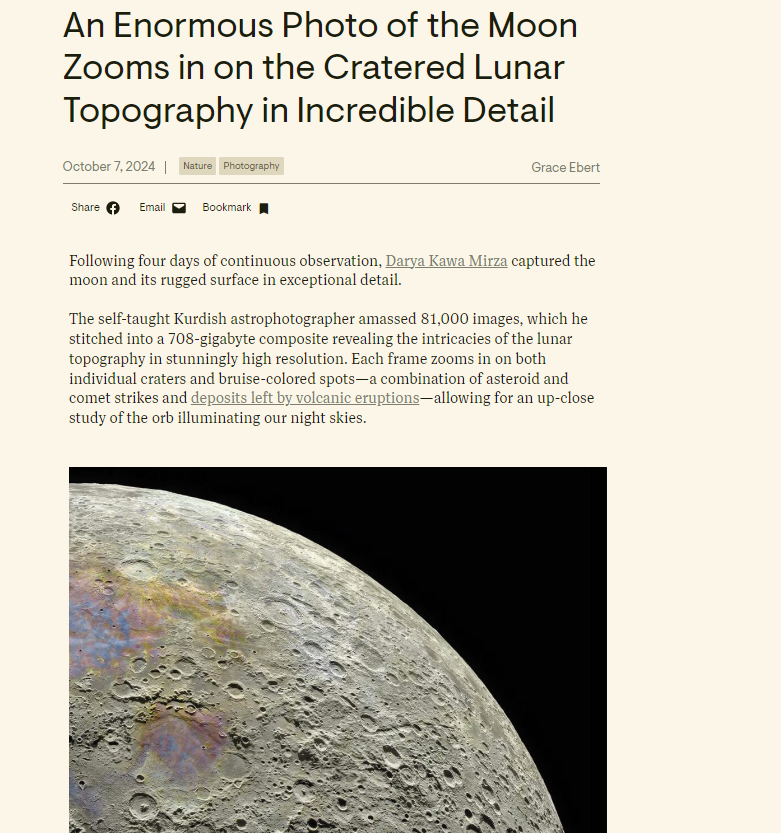
The timeline evidence confirms that the image was created and publicly shared long before the Artemis II mission was even launched.
1.2 Color Inconsistencies
While lunar minerals can produce subtle color differences, the highly saturated, rainbow-like hues seen here requires extensive post-processing — in this case, applying saturation enhancement techniques to a series of some 81,000 photos.
Moreover, given how the Moon lacks an atmosphere to scatter sunlight, in reality it produces stark, high-contrast shadows, not soft colored gradients. Thus, the vivid colors seen in the video are inconsistent with real lunar observations. Fact Hunter also found no images with such a diverse array of vivid color tones among those previously released by NASA.
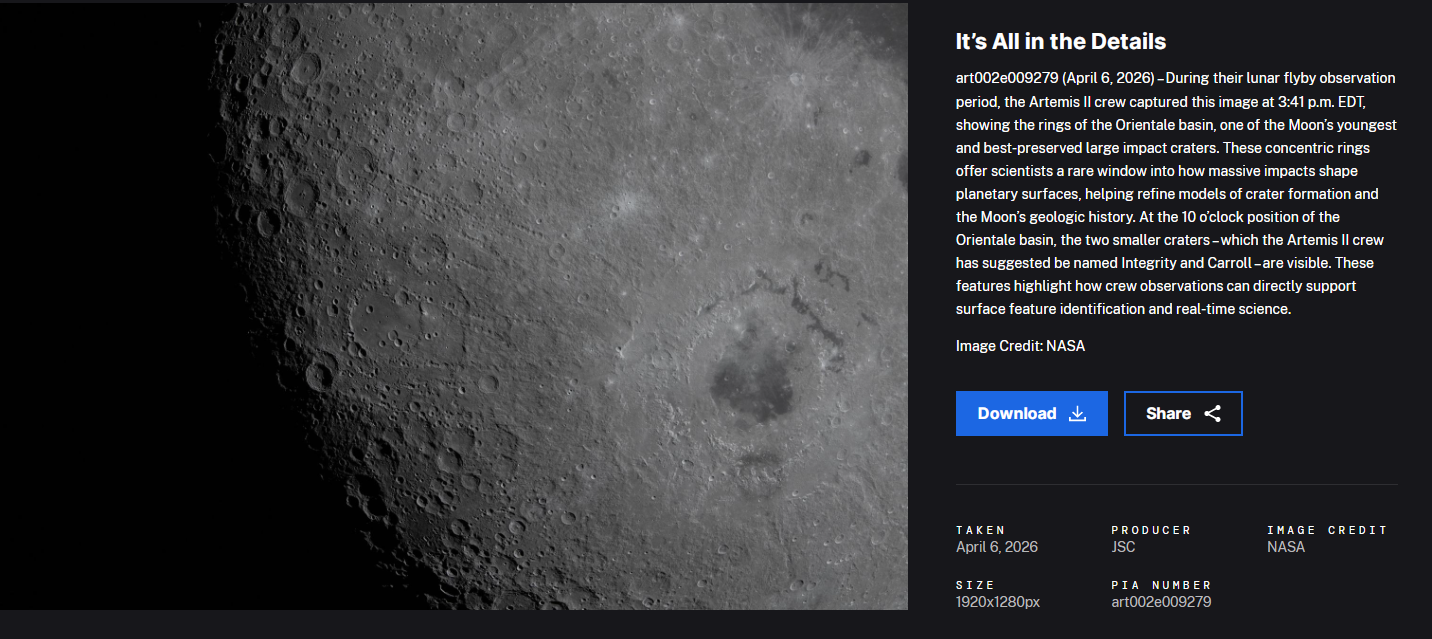
2. Image purporting to show the view from a spacecraft
2.1 Visual Analysis
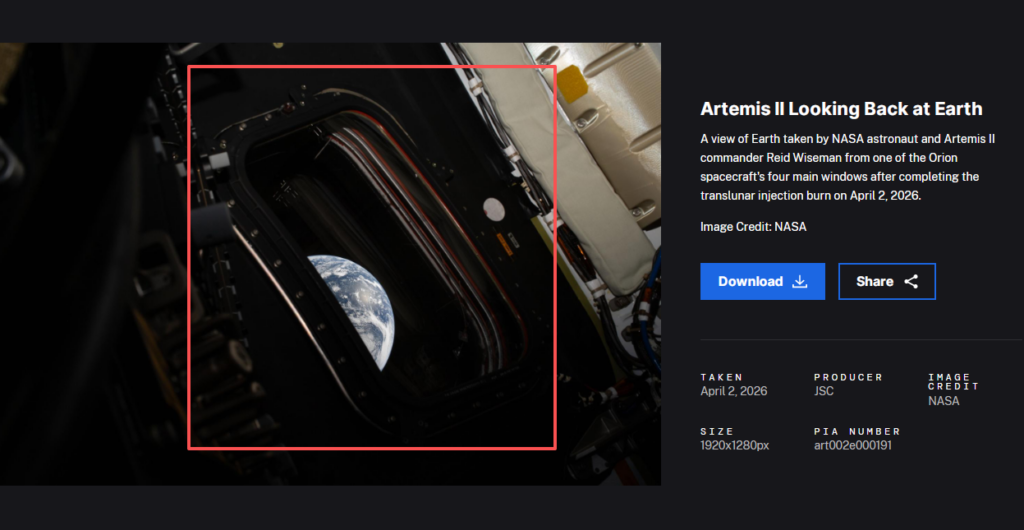
The poster did not explicitly link the image to Artemis II. However, its release during the mission’s lunar flyby period led many users to associate it with the Orion spacecraft. A comparison with NASA’s official Orion specifications reveals significant physical and engineering discrepancies.
Window Geometry: Official NASA photographs show Orion’s windows have a strict quadrilateral design. The viral image, however, depicts an irregular, curved window frame that does not match any structural schematics on the actual Orion spacecraft.
Blue Halo: The glowing blue halo along the lunar horizon in the image is physically impossible. Blue light scattering requires the presence of an atmosphere — which the Moon does not have. Authentic lunar photography shows a sharp, stark boundary between black space and the gray lunar surface, with no blue gradient.
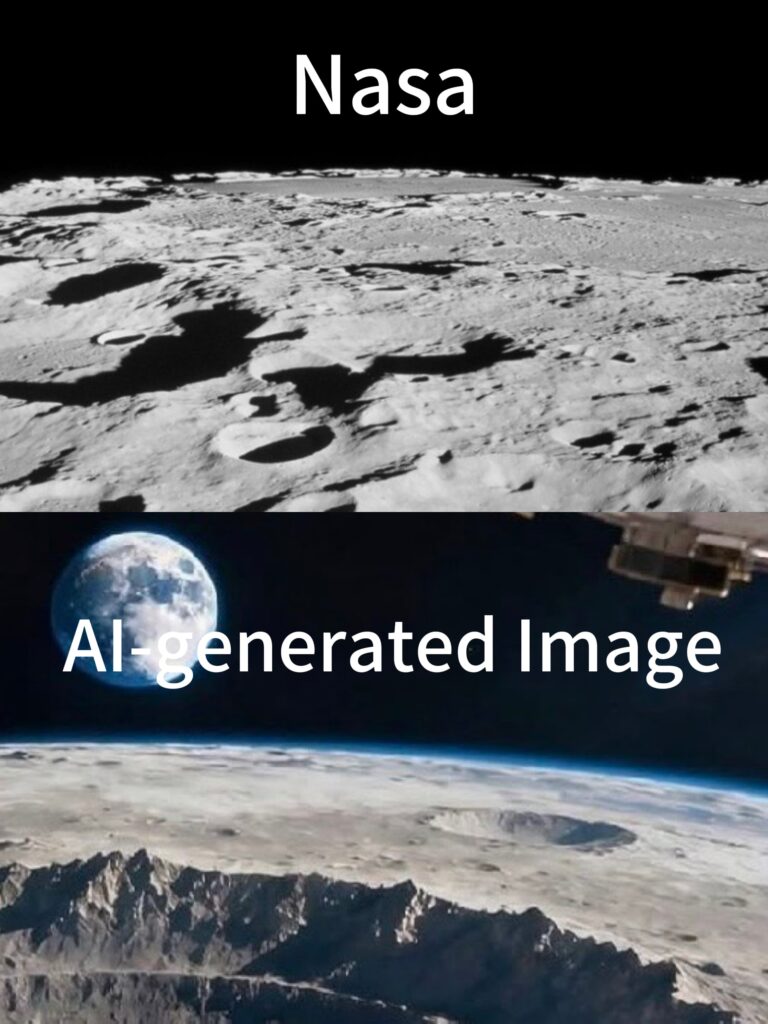
2.2 AI Detection Tool Results
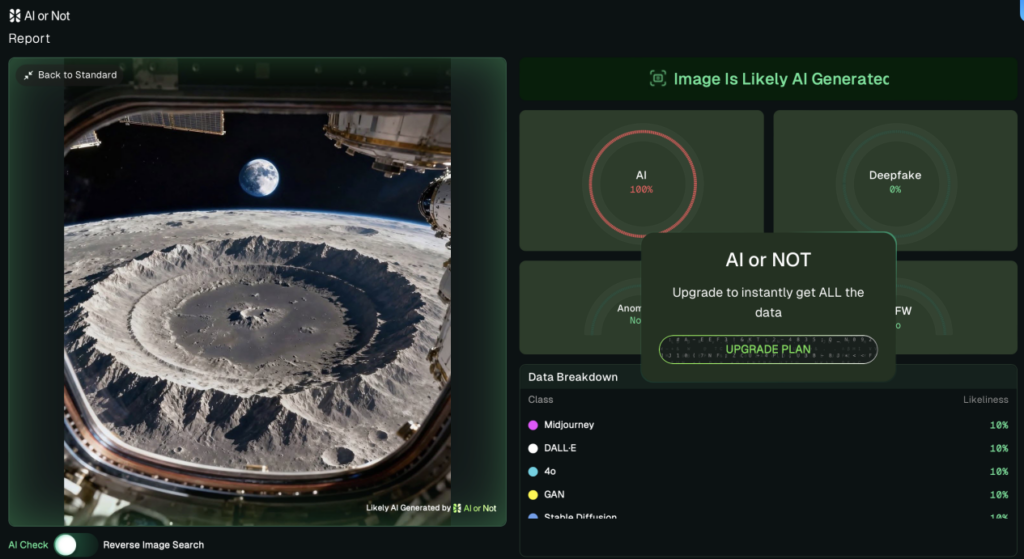
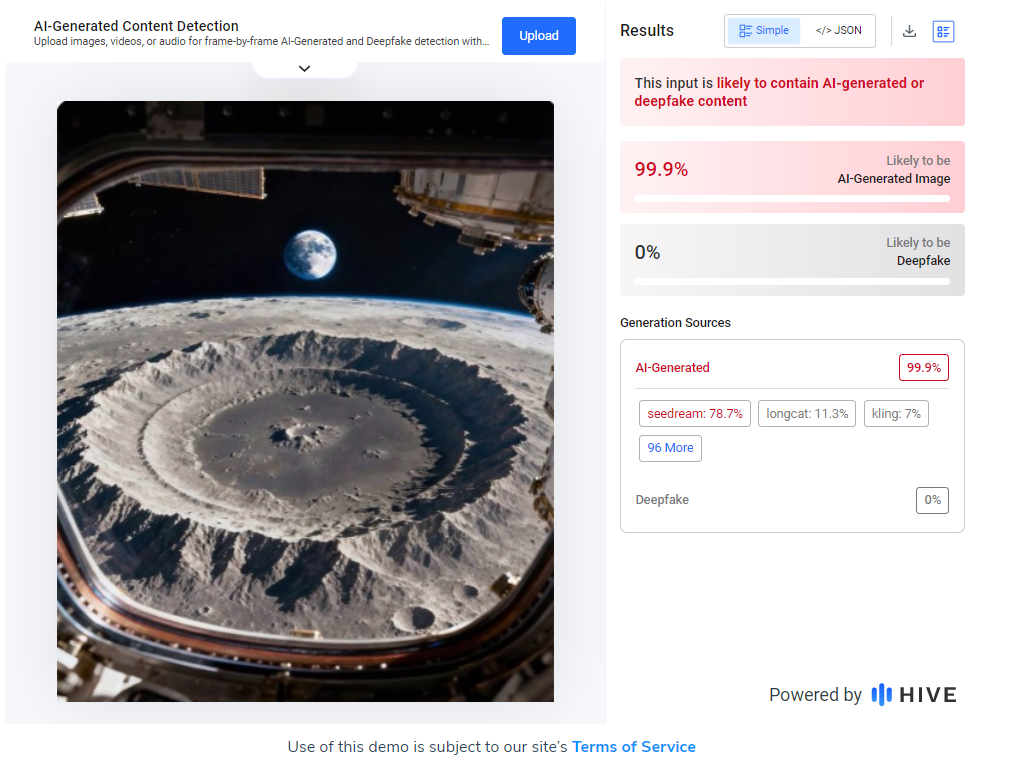
Beyond physical inconsistencies, the image was also uploaded to AI detection tools. “AI or Not” returned a 100% probability of AI generation, while HIVE’s tool returned a 99.9% likelihood.
2.3 User’s Confirmation of AI Generation
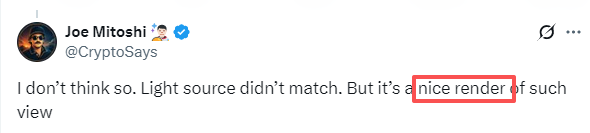
On April 8, 2026, following the image’s publication, user @cryptosays responded to a commenter, writing “nice render” — an acknowledgment that the image was AI-generated.
Background
Artemis II was the first crewed mission under NASA’s Artemis lunar exploration program and marked humanity’s first return to the vicinity of the Moon since the Apollo 17 mission in 1972.
After multiple delays, the mission launched from the Kennedy Space Center on April 1, 2026, carrying four astronauts: Reid Wiseman, Victor Glover, Christina Koch, and Jeremy Hansen. The mission lasted approximately 10 days, with the viral posts appearing during this mission window.
On April 10, 2026, the Orion spacecraft returned to Earth, splashing down successfully in the Pacific Ocean off the coast of San Diego.
Verdict
1.Video Claiming to Show Artemis II High-Res Lunar Imagery is Out of context.
2.Image purporting to show the view from a spacecraft is AI-generated.
Conclusion
Two widely shared visuals claiming to show NASA’s Artemis II mission are not authentic: the video is a ground-based astrophotography image from 2024, not mission footage, and the image was flagged as 100% likely AI-generated — a conclusion the user themselves confirmed by calling it a “nice render.” As space exploration captures global attention, verifying the primary sources for such spectacularly looking imagery has never been more critical.
Have a questionable video or claim? Submit it to Fact Hunter’s investigation team at [therealfacthunter@outlook.com].
Primary Fact Checker: Chen Xiaotong
Secondary Fact Checker: Lei Ting
Reference:
An Enormous Photo of the Moon Zooms in on the Cratered Lunar Topography in Incredible Detail
https://science.nasa.gov/resource/the-moons-surface/
http://www.news.cn/20260411/e43ceb66f7f0438e80a8ee47a5a3555b/c.html
Artemis II Looking Back at Earth