Last updated on March 22nd, 2026
Editor's Note
As U.S.-Iran tensions drive an increase in conflict-related content online, misleading videos have emerged as a major vector for misinformation. Fact-checkers have identified a surge in AI-generated and altered clips linked to the conflict in recent weeks. Amid the confusion, a video on X purporting to show a U.S. aircraft carrier on fire and sinking after an Iranian missile strike has circulated across multiple platforms. This report analyzes the video using source verification, AI-detection tools, visual forensics, and official statements.
Claim
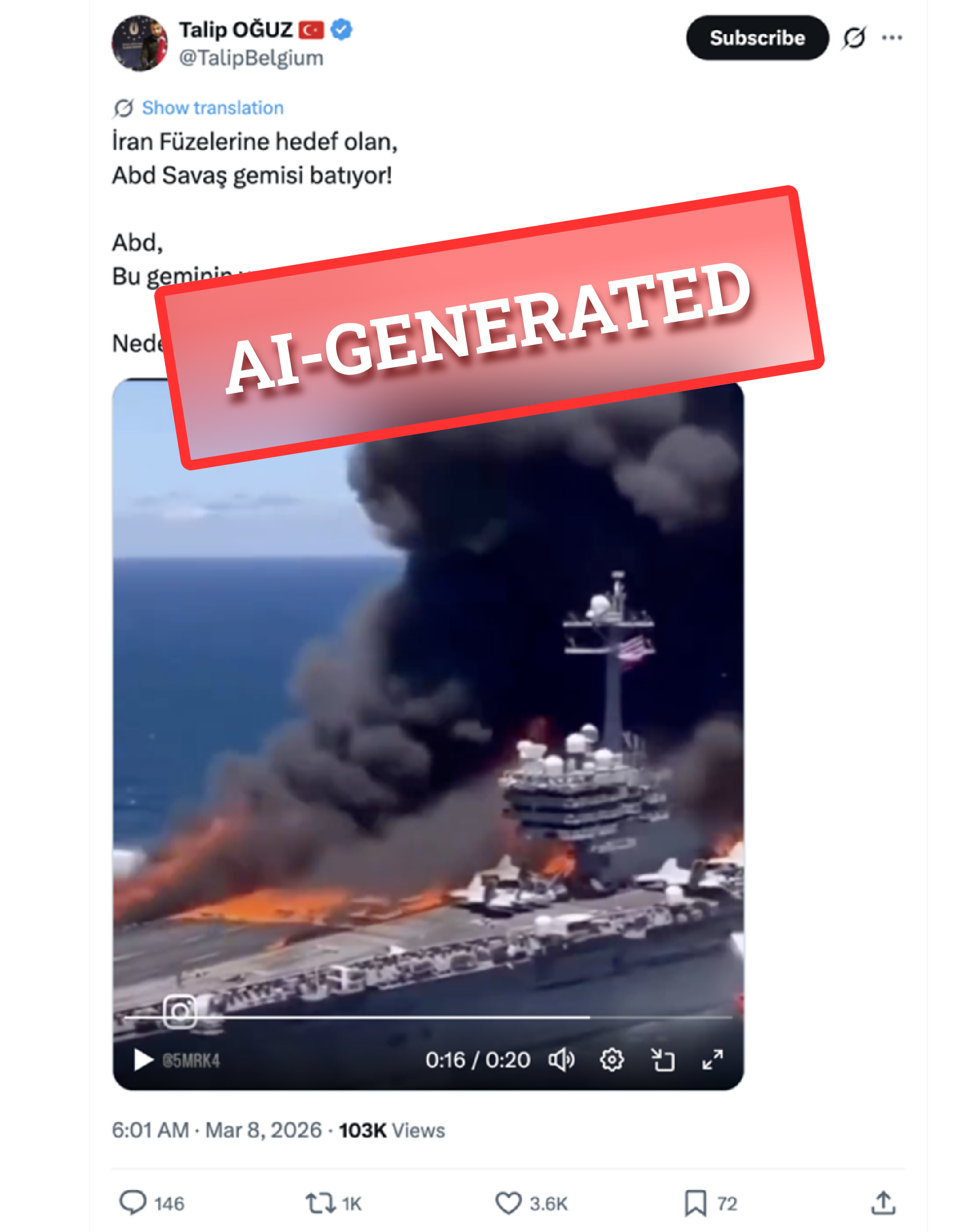
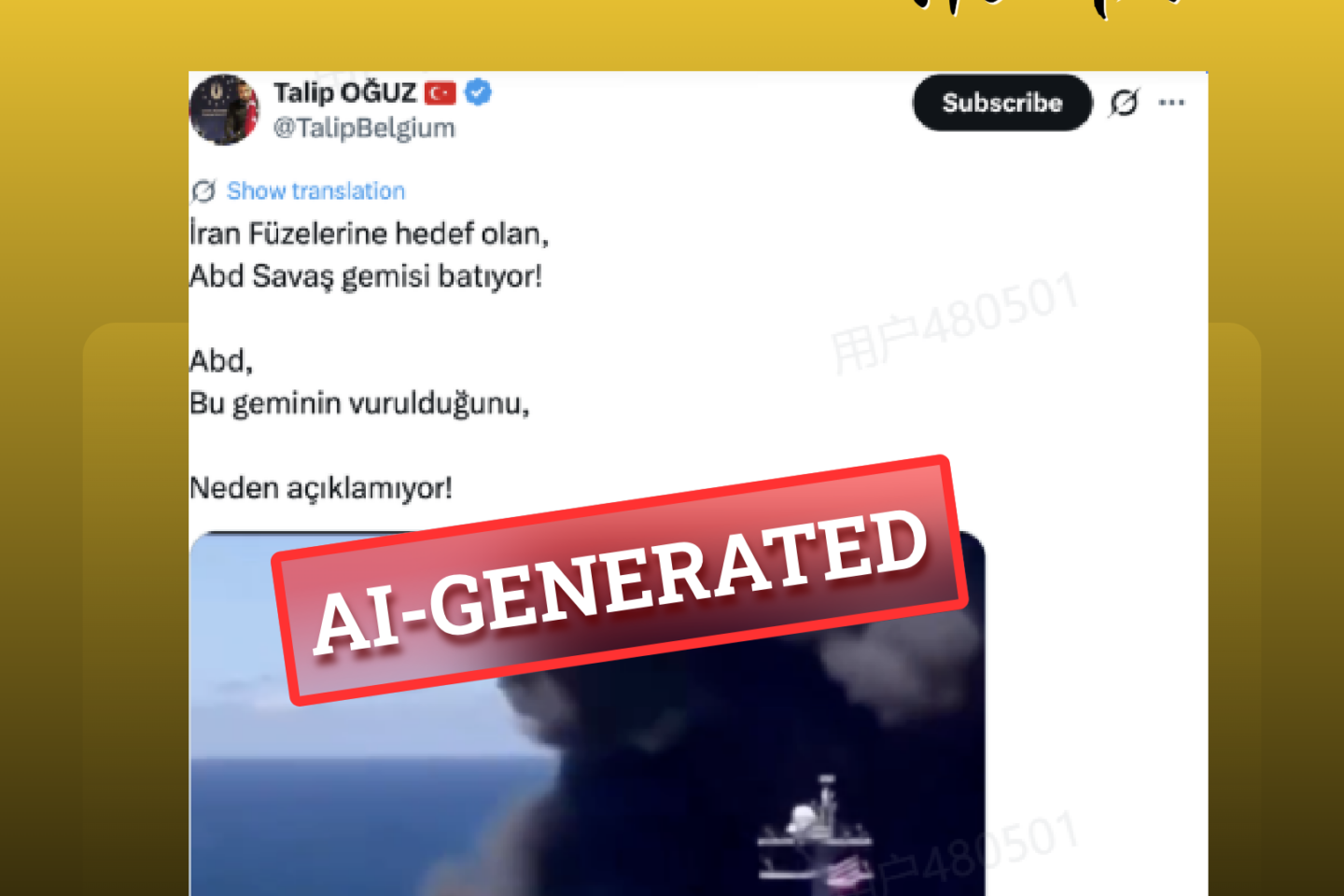
On March 8, 2026 (UTC), an X account named “Talip OĞUZ” (@TalipBelgium) posted a video claiming that a U.S. aircraft carrier was on fire and sinking after being struck by Iranian missiles. The accompanying Turkish-language caption read: “The US warship, targeted by Iranian missiles, is sinking! Why isn’t the US explaining that this ship was hit?” Within hours, the post had amassed over 100,000 views and thousands of interactions.
Fact Check
1. Source Analysis
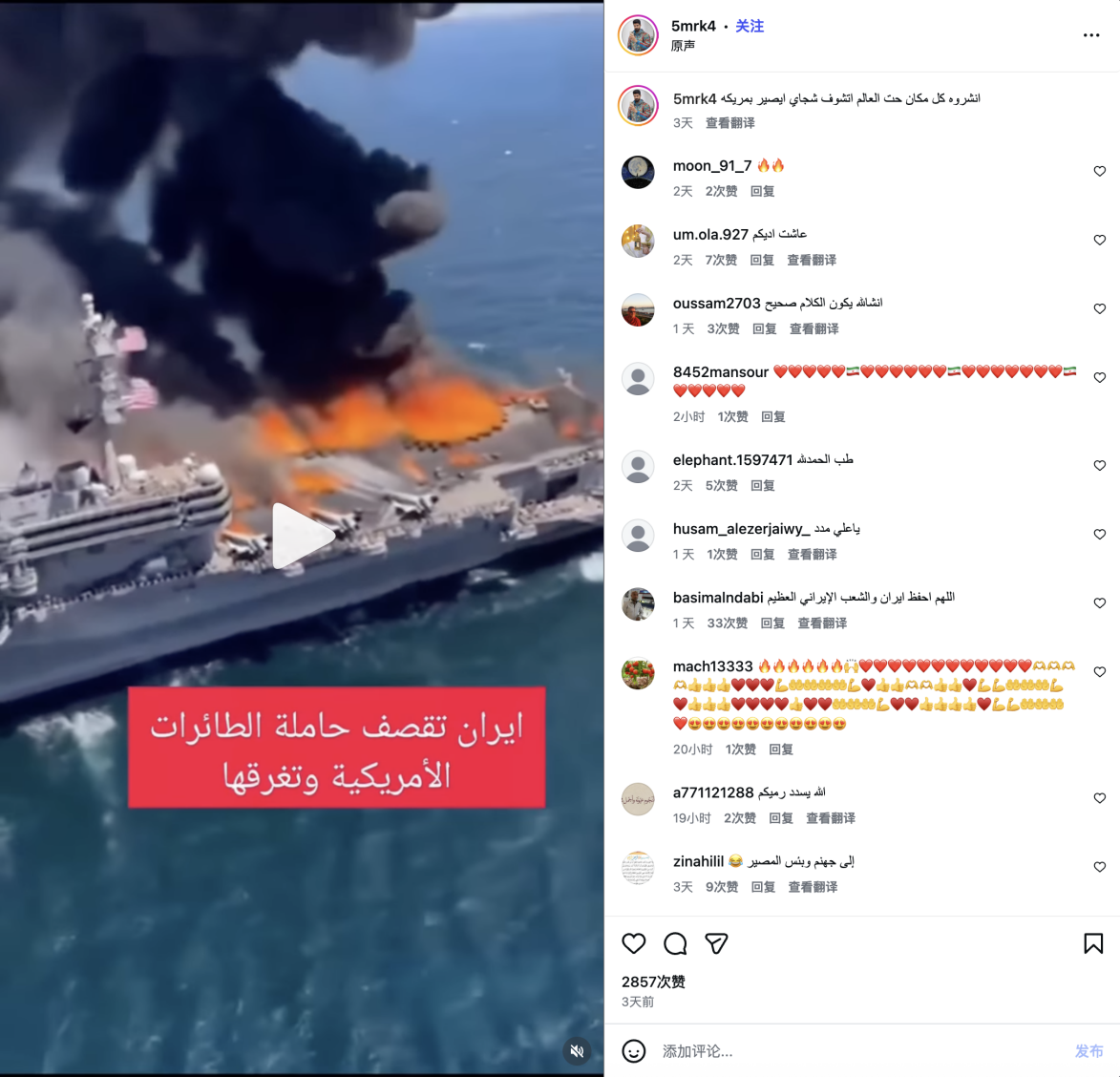
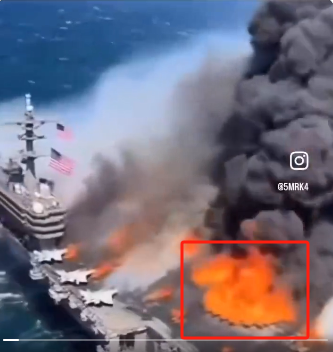
The video originated on Instagram on March 5, 2026 (UTC), posted by the account @5mrk4 (Arabic display name: “سجاد المياح”). The Arabic caption read: “Spread this everywhere, let the whole world see what will happen to America.” The video itself contained Arabic text claiming, “Iran bombed the US carrier and sank it,” and an Arabic voiceover stating, “Iran used heavy missiles to strike the US aircraft carrier in the Red Sea.”
2.Logical Inconsistency
1)Narrative contradiction
When Instagram user @5mrk4 (Arabic display name: “سجاد المياح”) posted the video on March 5 (UTC), the claim was that Iran had attacked and sunk a US aircraft carrier. However, when X user @TalipBelgium reposted the same video on March 8, the narrative shifted to “The US warship, targeted by Iranian missiles, is sinking” — a direct contradiction: one version claimed the ship had already been sunk, while the other, posted at a later date, described it as still in the process of sinking.
2)Geographic discrepancy
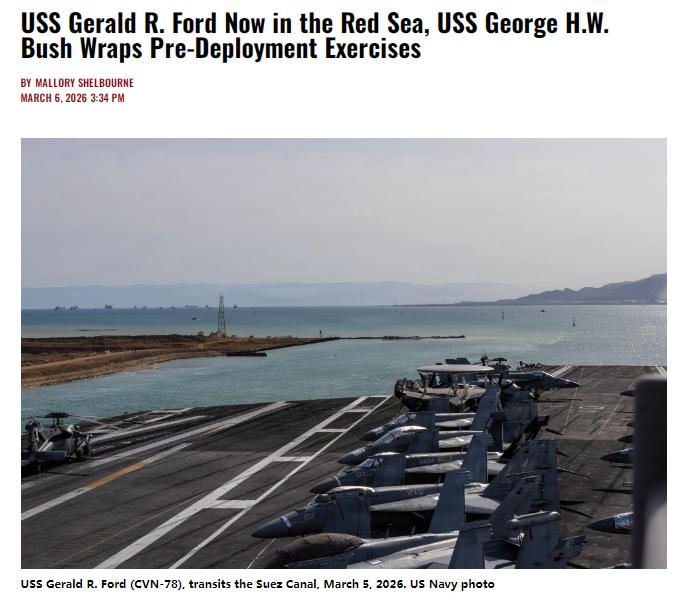
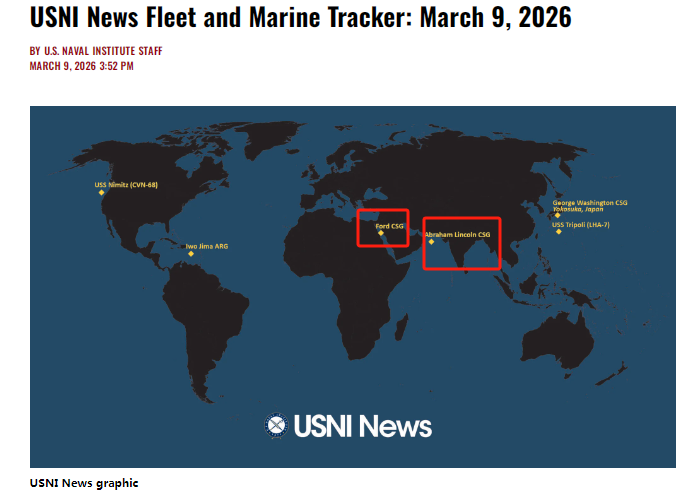
The Arabic voiceover in both videos claims the attack occurred in the “Red Sea.” However, this allegation contradicts the actual deployment locations of US Navy aircraft carriers. The carrier stationed in the Red Sea is the USS Ford. The USS Lincoln, which Iran claims to have struck, is operating far away in the Gulf of Oman and the northern Arabian Sea.
3. Audio Analysis
A critical analysis of the footage reveals multiple technical inconsistencies. Firstly, the video shows a warship under attack and burning, yet the audio track contains no on-site ambient sounds—such as crackling flames, structural damage, explosions, or wind—only a continuous background music track. Secondly, the voiceover is abruptly cut off after a few sentences; the sound stops suddenly rather than fading out or being gradually masked by environmental noise. Finally, the footage is shot from an overhead perspective, an angle typically requiring a drone or helicopter to capture.
4. AI Detection Tool Result
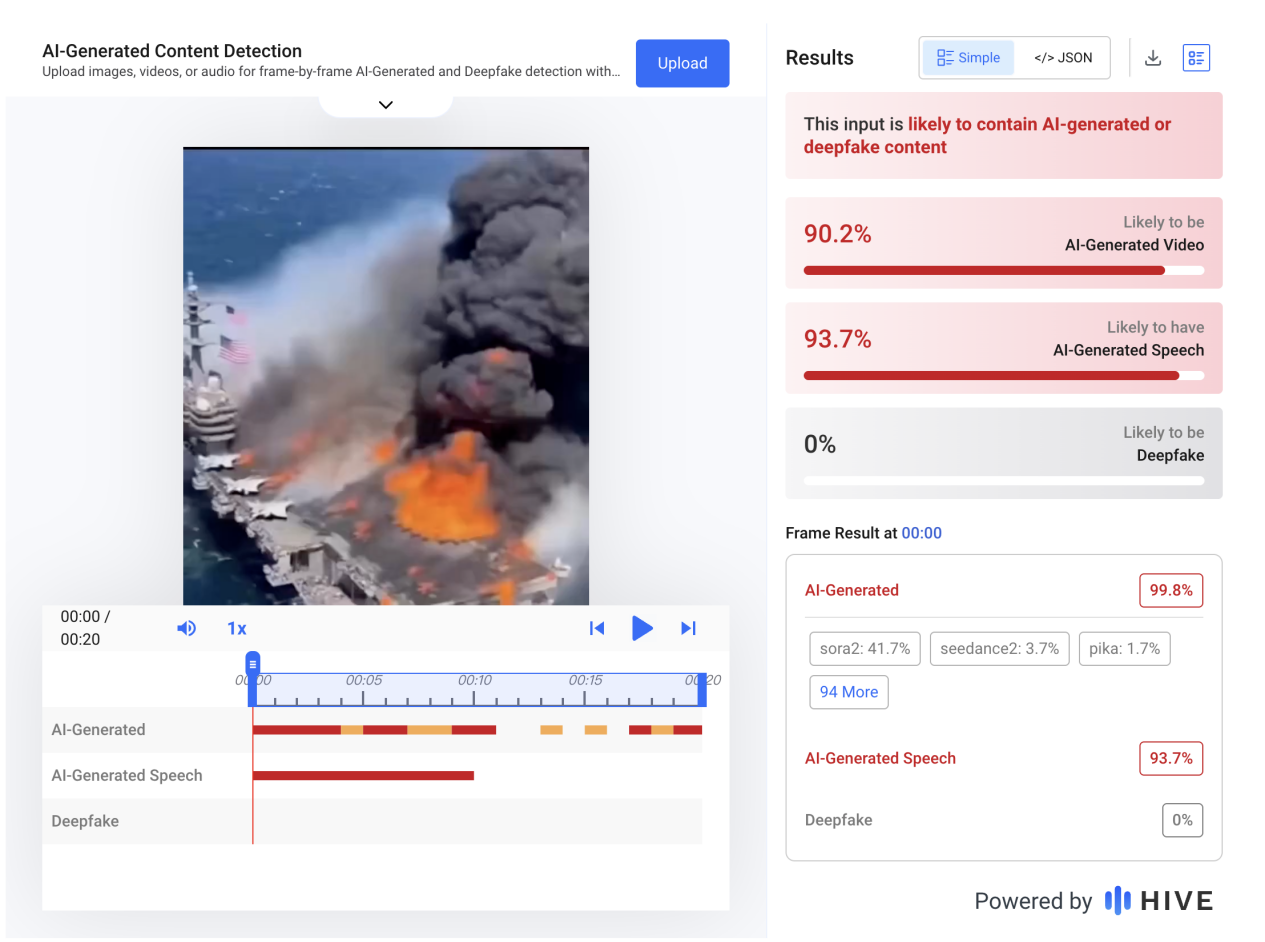
Analysis using the Hive AI detection platform indicates characteristics consistent with synthetic media. The video received a 90.2% probability of being AI-generated, while the accompanying audio scored 93.7%.
5. Visual Analysis
(1) Object Continuity Breaks
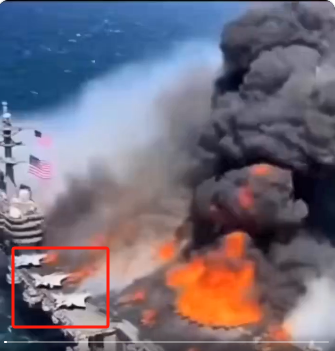
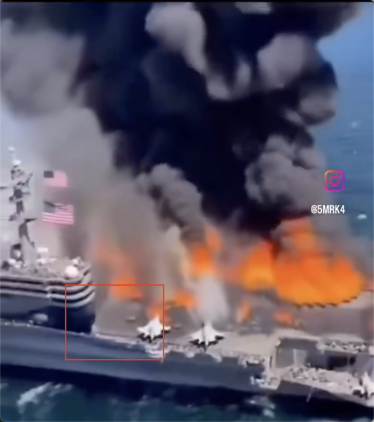
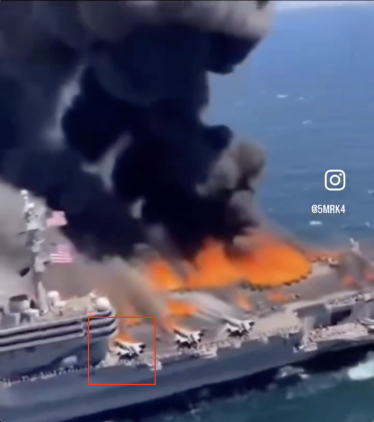
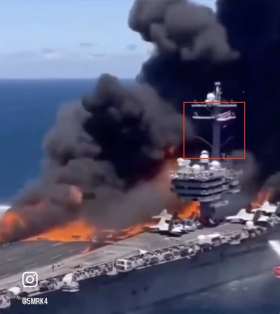
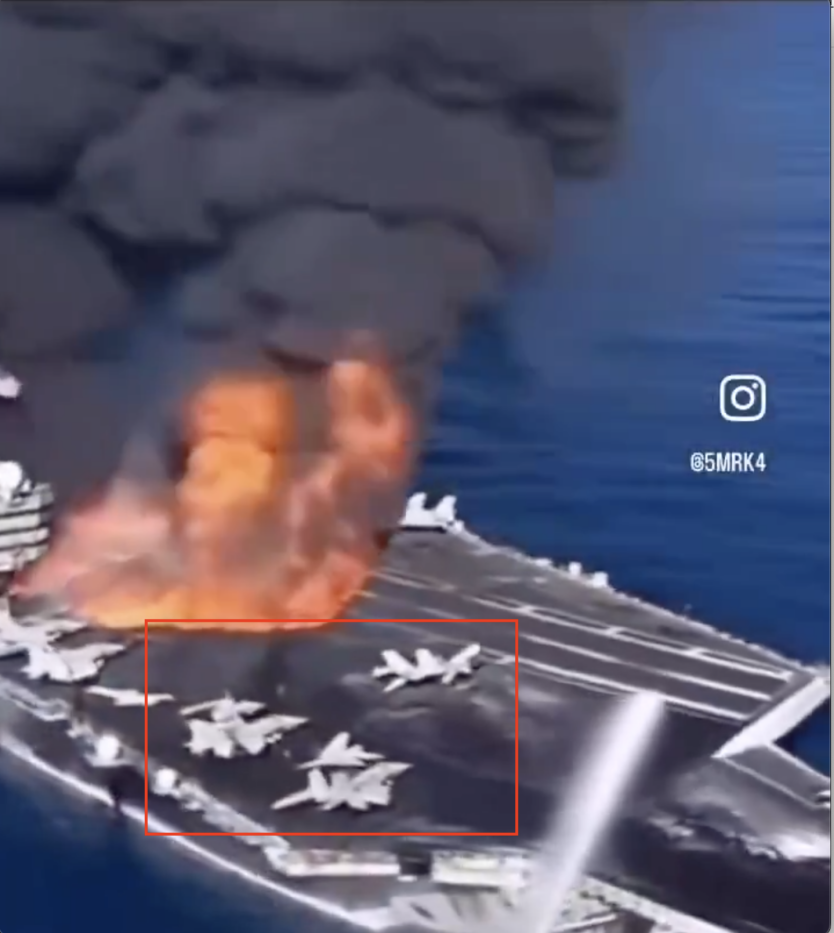
At the beginning of the video, three fighter jets are visible on the left side of the deck near the island. One of them abruptly disappears two seconds in and then reappears three seconds later. Such random generation and disappearance of objects are classic signs of AI-generated video.
(2) Physical Consistency
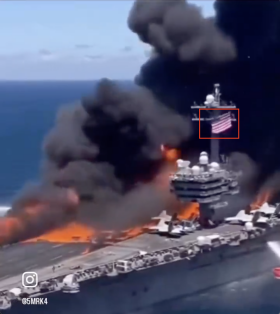
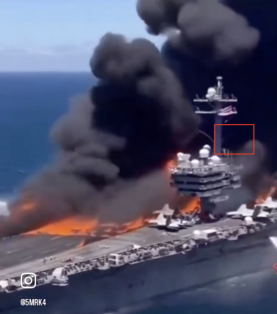
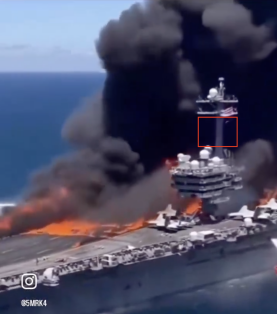
From 12 seconds onward, the U.S. flag on the mast suddenly shrinks without any transition. Two sections of railing appear out of nowhere and then vanish moments later. These artifacts violate the physical consistency expected in real footage.
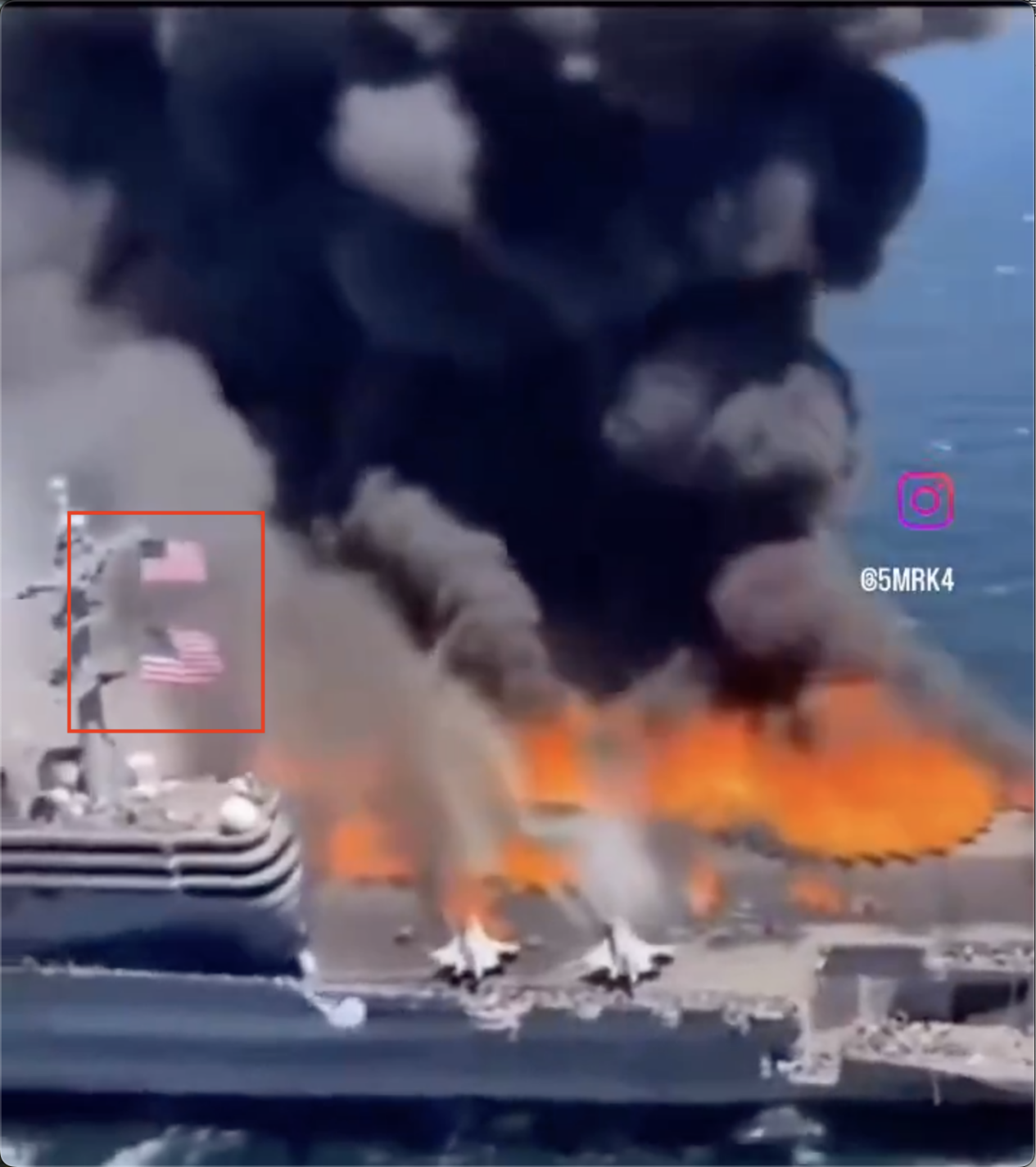
Additionally, the wind direction is inconsistent with the direction of the smoke. The multiple U.S. flags on the left side of the frame are blowing to the right (toward the stern), indicating a wind from left to right or a forward motion of the ship creating relative wind. However, the thick black smoke from the fire on the deck rises nearly vertically with a slight leftward tilt—a direct contradiction that cannot occur in a real-world physical environment.
(3) Synthetic Visual Artifacts
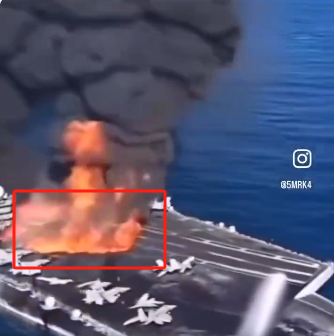
The flames appear superimposed on the carrier’s structure, lacking the realistic interaction with metal (such as melting, deformation, or charring) that would occur in a real fire. The smoke has a repetitive, blocky texture, lacking the turbulent, layered structure of real smoke.
(4) Distorted Aircraft Shapes
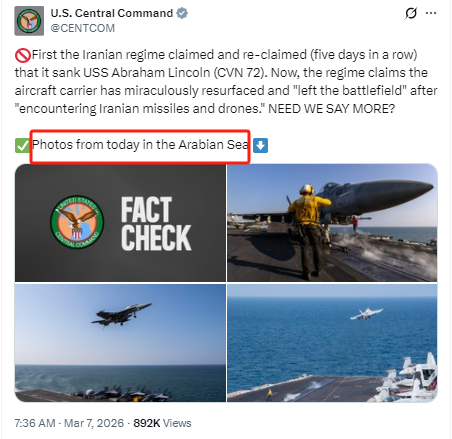
At the 20 second mark, the aircraft on the deck exhibit structural distortions that do not match any known U.S. fighter jet. According to U.S. Central Command (CENTCOM) photos, the aircraft on the USS Abraham Lincoln are primarily F/A-18E/F Super Hornets, which have distinct shapes. The video’s aircraft are misshapen and lack recognizable features.
6.Account Analysis
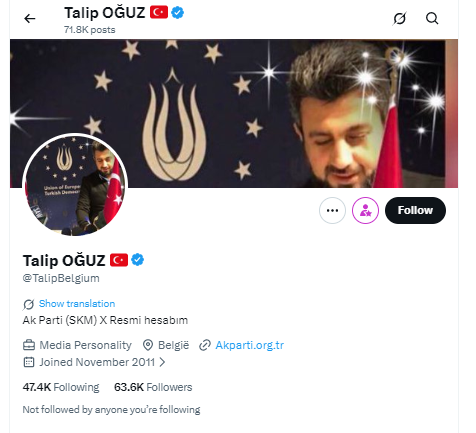
The account Talip OĞUZ (@TalipBelgium) describes itself as a media personality based in Belgium with ties to Turkey’s ruling AK Party. It has a significant following (63.6K) and follows a large number of accounts (47.4K). Created in November 2011, the account’s bio and username suggest a focus on Turkish political discourse from a pro-government perspective.
7.Analysis of Comments
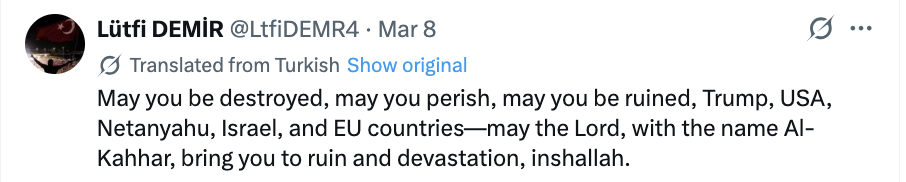
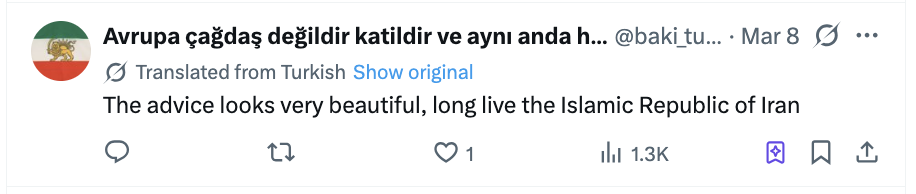
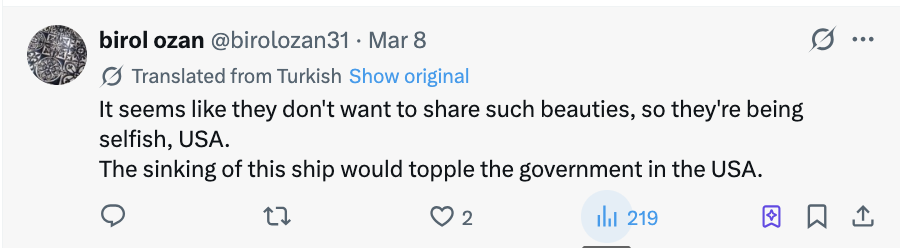
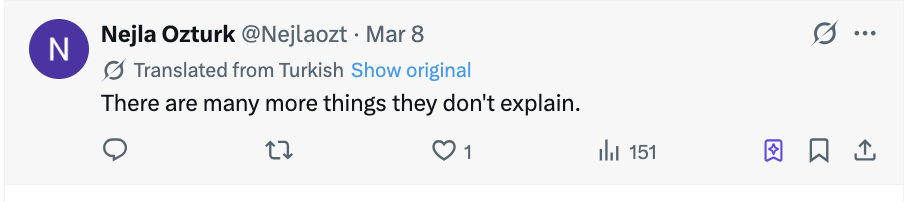
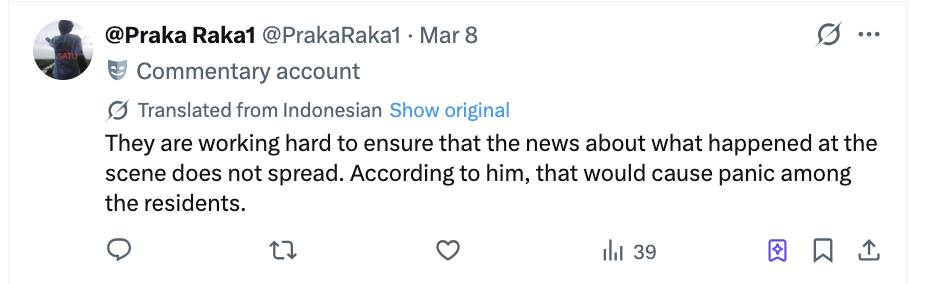
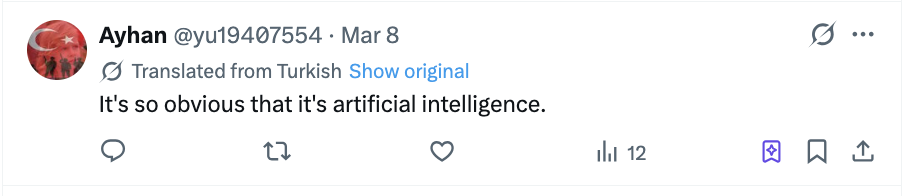
Under the viral X post, an analysis of the comments section reveals several notable patterns. The majority of responses celebrated an “Iranian victory” and a “U.S. defeat.” A number of commenters also voiced deep distrust of official sources, with many echoing the original poster’s claim that the U.S. was “covering up the truth.” At the same time, skeptics pointed to the video’s artificial appearance, with some directly labeling it “AI” or “fake.”
Background
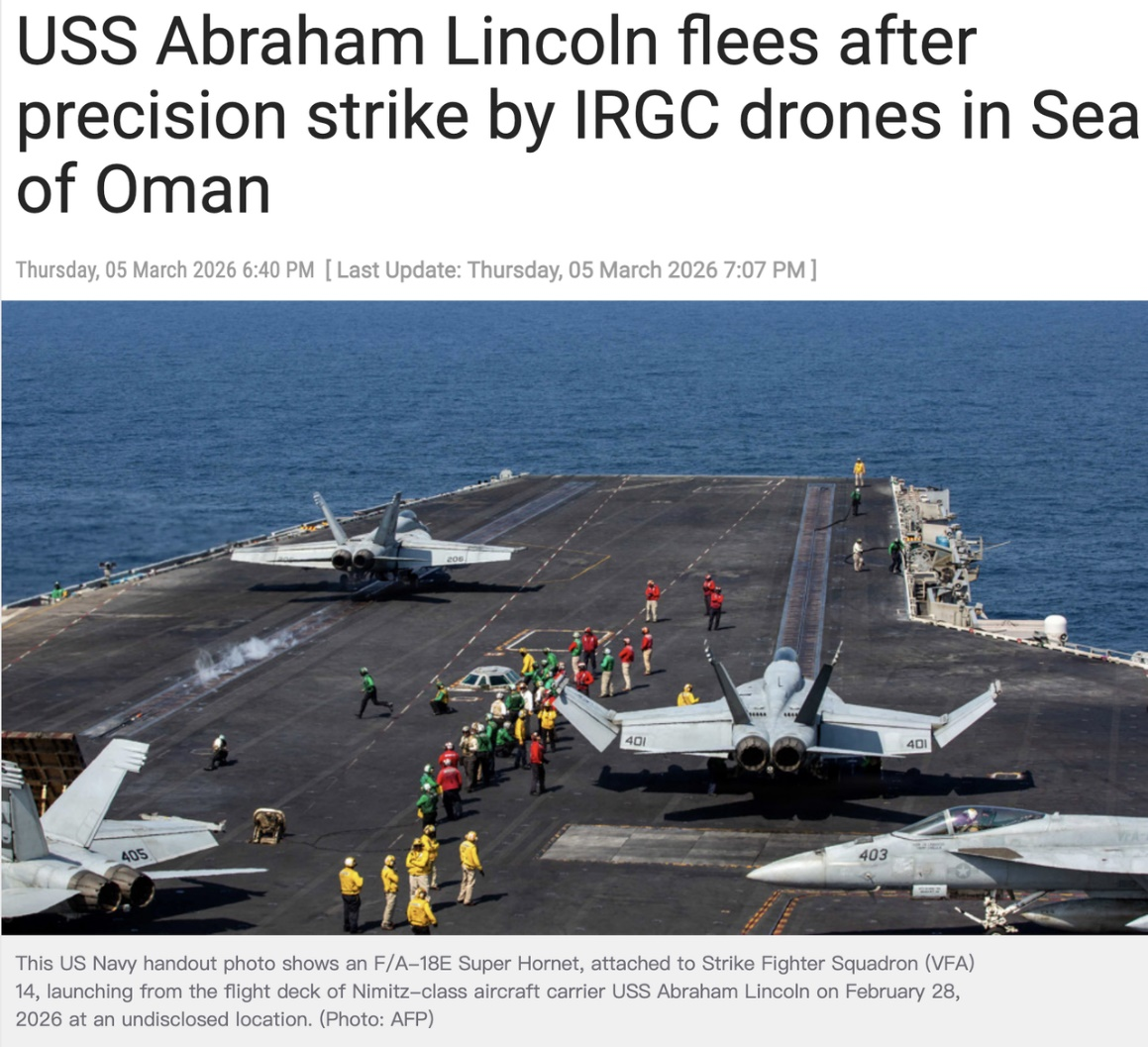
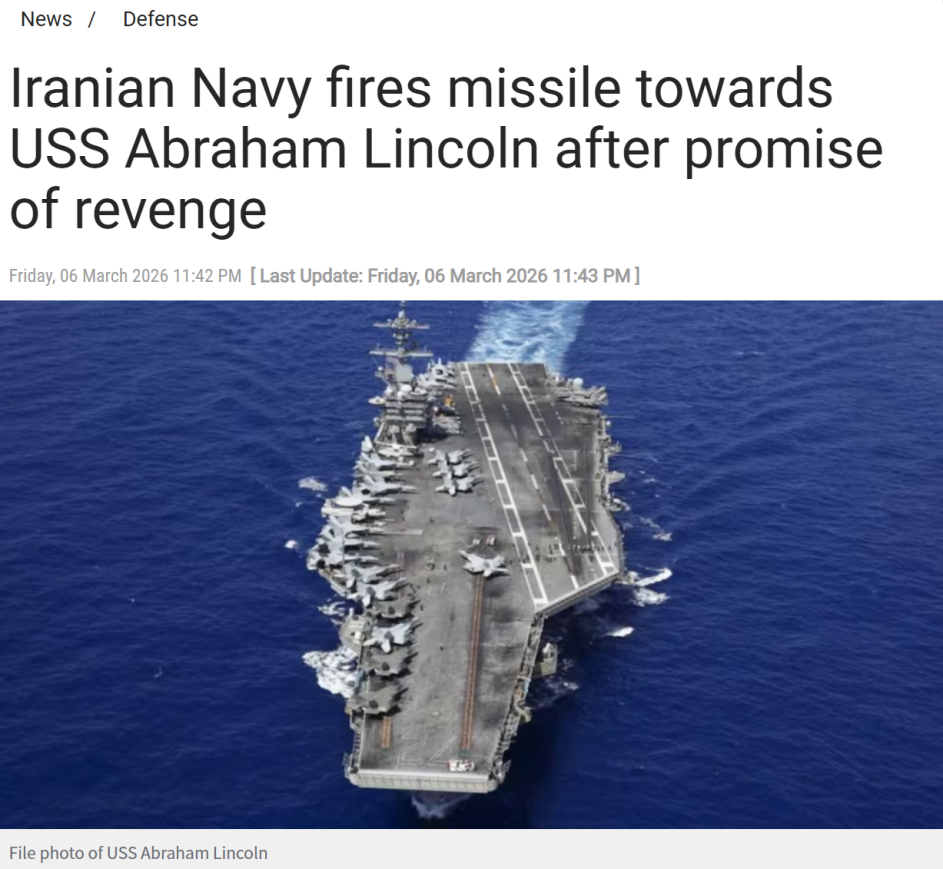
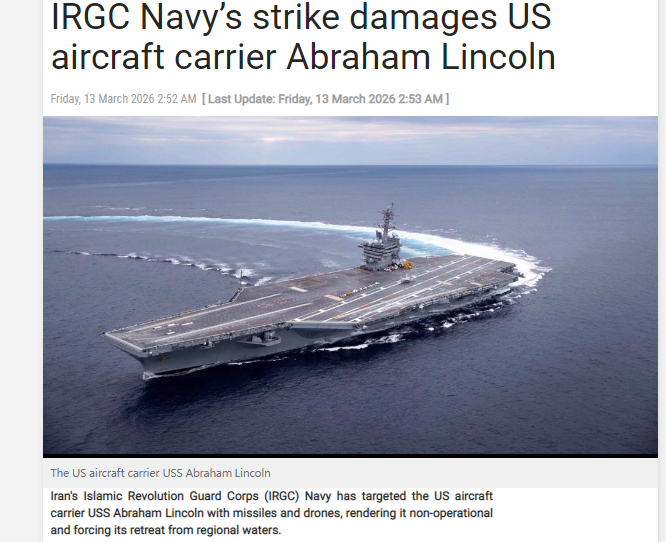
In early March 2026, as U.S.-Iran military tensions escalated, Iran repeatedly claimed to have struck the USS Abraham Lincoln with missiles, saying the carrier was “disabled” or had “withdrawn.” U.S. Central Command consistently denied the claims, calling them “disinformation” and “repeated lies.” The following is a timeline of how the event unfolded.
1)Iranian Official Statements
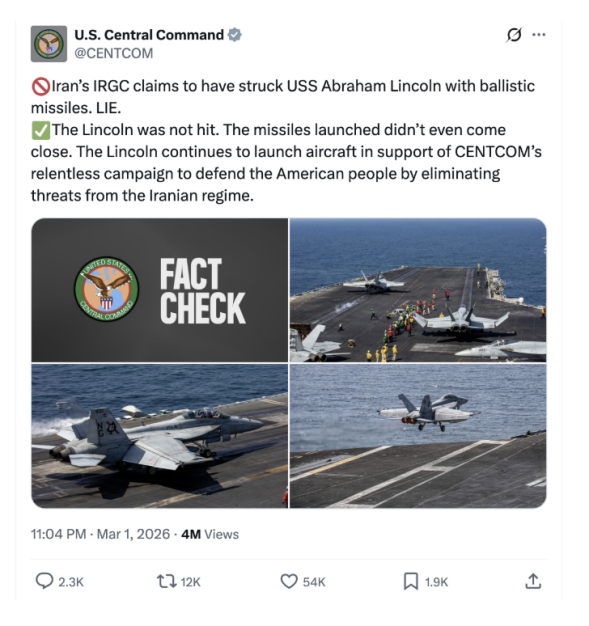
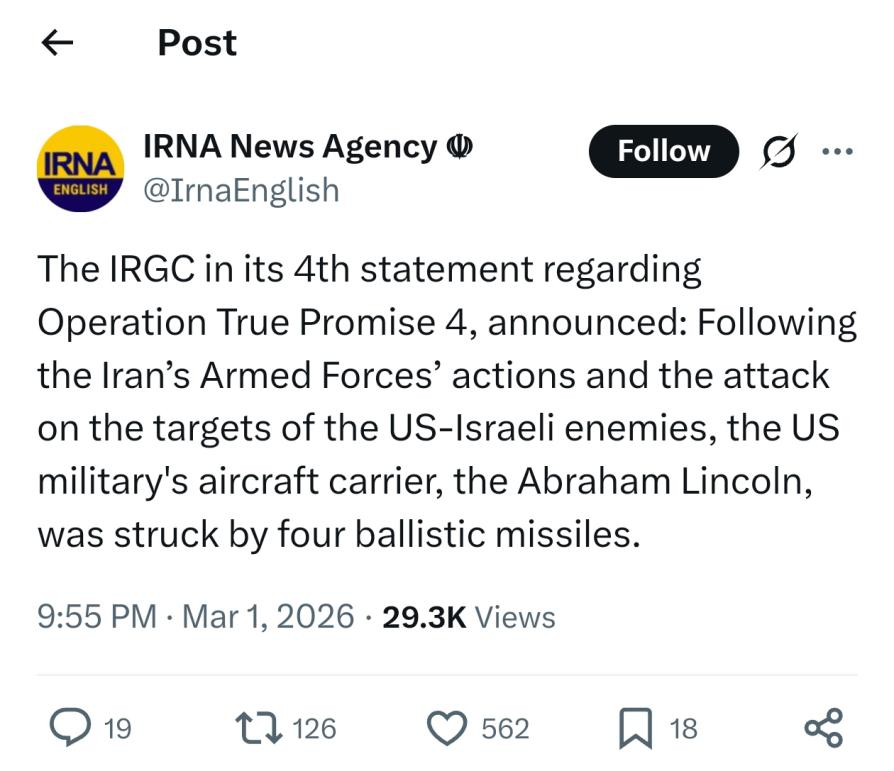
On March 1, 2026, an IRGC statement claimed “the US Navy aircraft carrier Abraham Lincoln was targeted with four ballistic missiles.”
On March 6, 2026, the Iranian Navy stated that a powerful missile system belonging to the Navy fired a coast-to-sea missile towards the USS Abraham Lincoln.
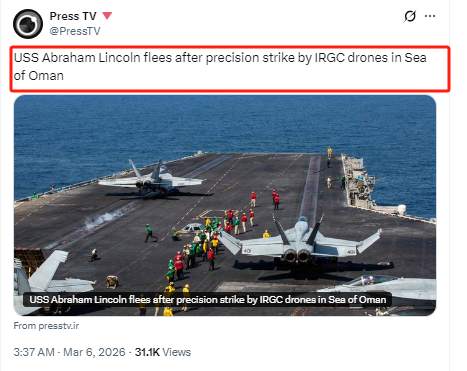
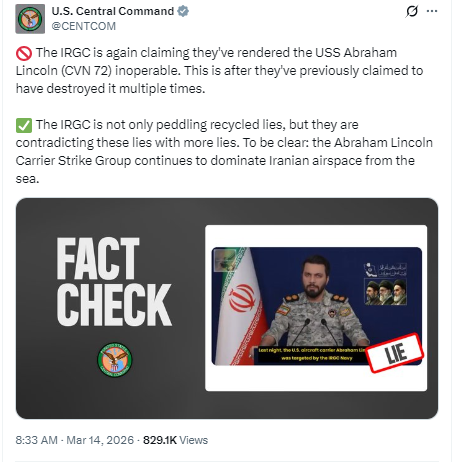
On March 13, 2026, Iran announced that its Islamic Revolution Guard Corps (IRGC) Navy had targeted the USS Abraham Lincoln with missiles and drones, rendering the aircraft carrier inoperable and forcing it to retreat from regional waters, according to a report by Press TV.
2)U.S. Official Statements
On March 1, 2026, CENTCOM tweeted: “Iran IRGC claims to have hit USS Abraham Lincoln with ballistic missiles. False. Lincoln was not hit. The missiles didn’t even come close. Lincoln continues to launch aircraft in support of operations.”
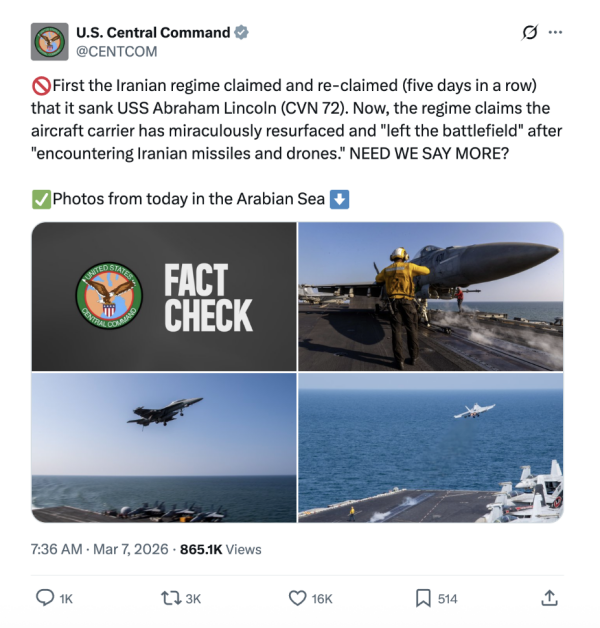
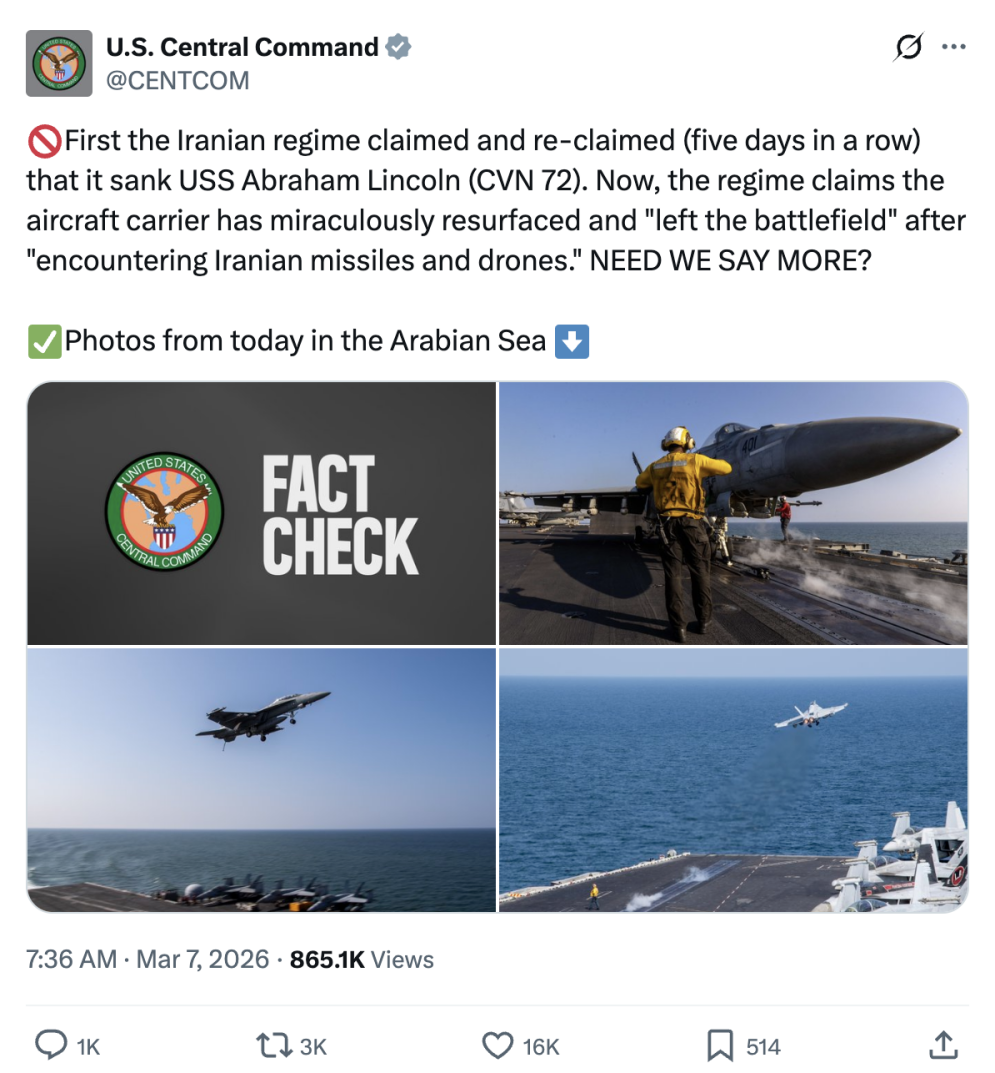
On March 6, 2026, CENTCOM posted four photos of USS Abraham Lincoln “operating in the Arabian Sea today,” showing normal flight deck activity, aircraft launches, and no damage.
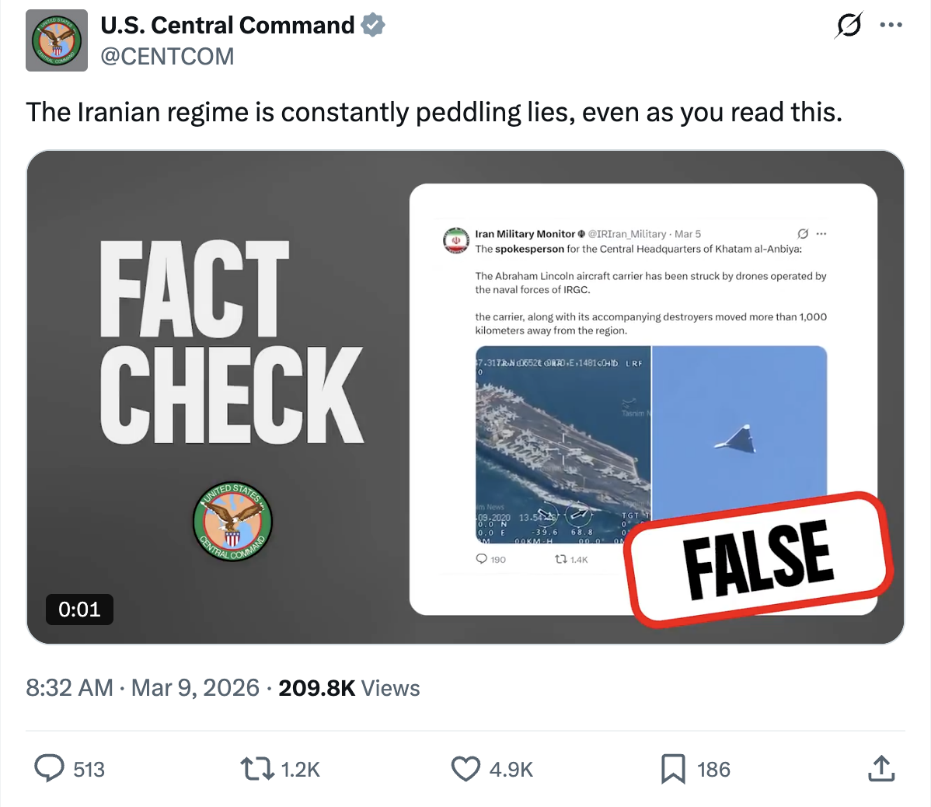
On March 9, 2026, CENTCOM posted on X that “The Iranian regime is constantly peddling lies, even as you read this.” The post included a video directly refuting claims of attacks on U.S. assets.
On March 14, 2026, U.S. Central Command (@CENTCOM) posted on X: “To be clear: the Abraham Lincoln Carrier Strike Group continues to dominate Iranian airspace from the sea.”
Verdict
AI-Generated.
Conclusion
The video claiming Iran bombed and sank a U.S. aircraft carrier is AI-generated and contradicts all available evidence. It follows a familiar disinformation pattern: sensational visuals from unverified accounts amplified by partisan actors during heightened tensions. Viewers should rely on verified sources and fact-checking tools when encountering such content.
Have a questionable video or claim? Submit it to Fact Hunter’s investigation team at [therealfacthunter@outlook.com].
Primary Fact Checker: Lei Ting
Secondary Fact Checker: Liu Yi