Last updated on July 12th, 2026
Editor’s Note
South China Sea-related issues have long remained a focus of international public attention. As a result, a large volume of related information has been frequently circulated on social media, including some unverified, decontextualized, or selectively framed claims that may distort public understanding. Based on these observations, this report examines the dissemination patterns and characteristics of selected South China Sea-related narratives, including the accounts that frequently post about the topic, their content features, and related communication dynamics. It aims to provide readers with a reference for understanding how such claim spreads online.
Claim
A cluster of social media accounts posting about South China Sea–related narratives exhibits commonalities, including the sharing of near-identical visual assets and textual phrasing, the publication of posts within concentrated time windows aligned with real-world incidents, and the use of professional or neutral identity labels—such as “researcher” or “analyst”—in their profile bios. These accounts have asserted, without citing verifiable primary sources, that China’s maritime activities in the region are unlawful. Such claims have accumulated tens of thousands of views on the platform.
Fact Check
1. What Methods Did We Use?
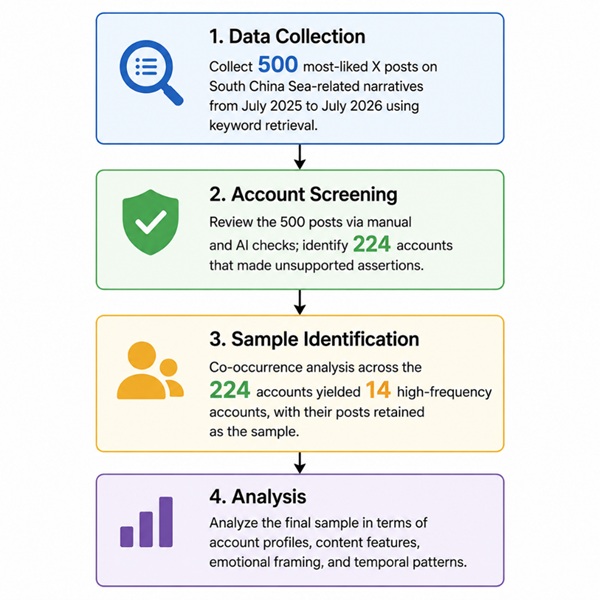
This report examines the spread of South China Sea-related narratives on X over a one-year period from July 2025 to July 2026. Public posts were collected using a keyword-based retrieval approach. From the initial corpus, 500 posts were selected via the Most Like ranking method, leading to the identification of 224 accounts. A co-occurrence analysis of the posts from these accounts further revealed 14 high-frequency accounts. For each of these 14 accounts, we retrieved the 500 most recent posts, and the resulting dataset constitutes the final analytical sample.
2. Who Spreads It and How Does It Spread?
(1) Use of Professional or Neutral Self-Descriptions
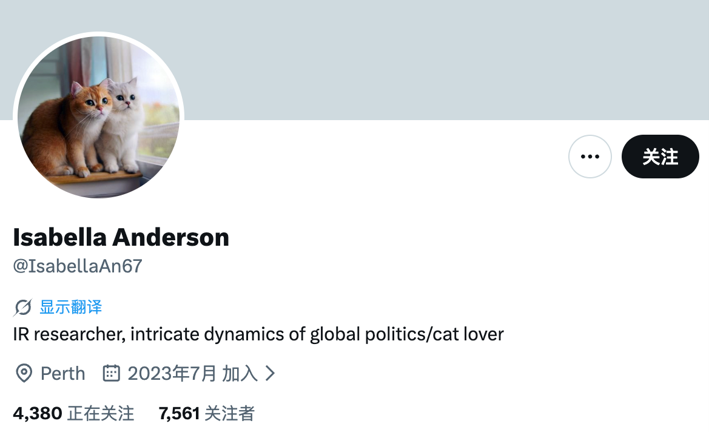
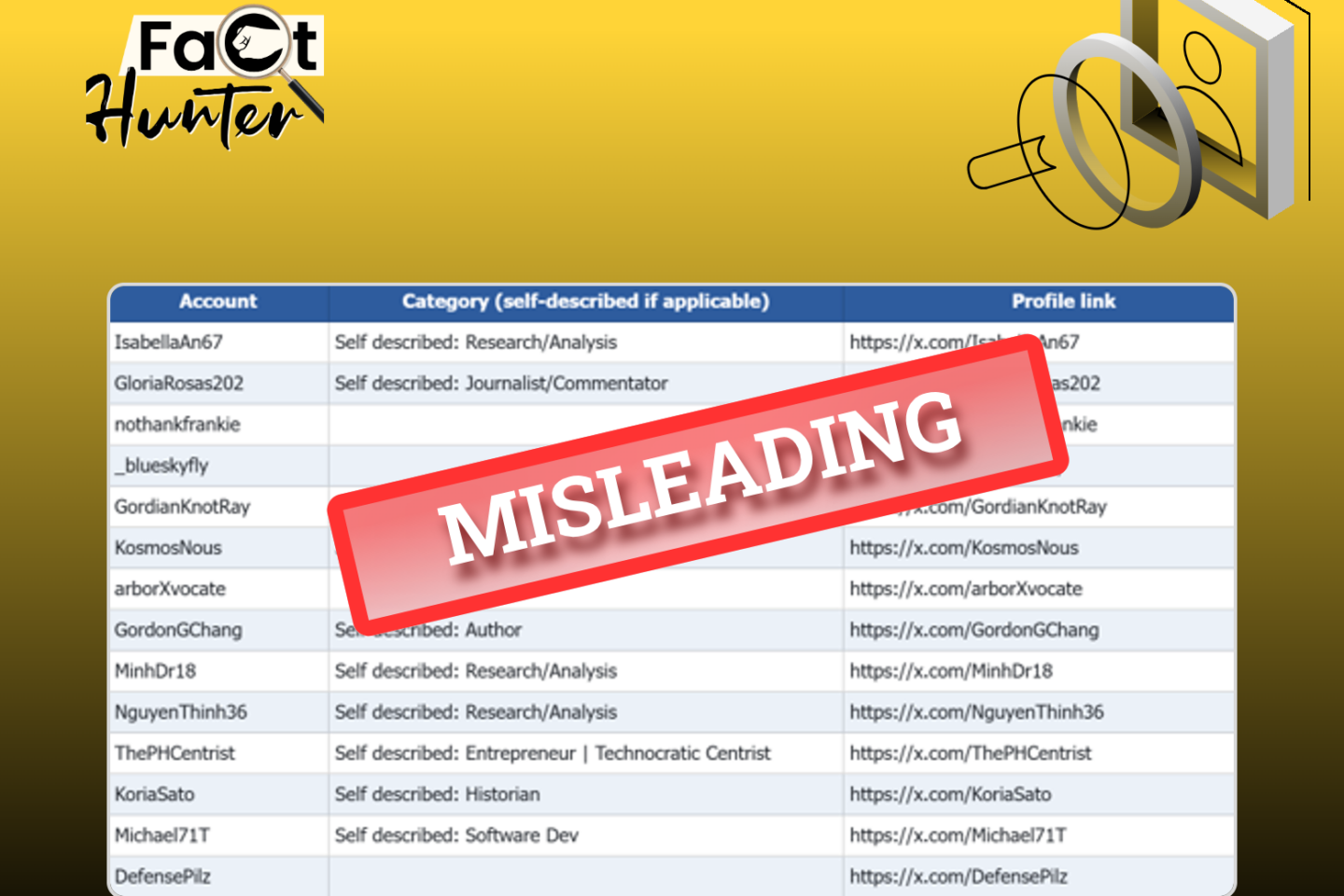
Many accounts that posted South China Sea-related narratives on X used professional, research-oriented, or neutral self-descriptions in their profile information. Such descriptions may influence how audiences assess the credibility of posts, particularly when the accounts discuss topics such as international relations, maritime security, law, or regional politics.
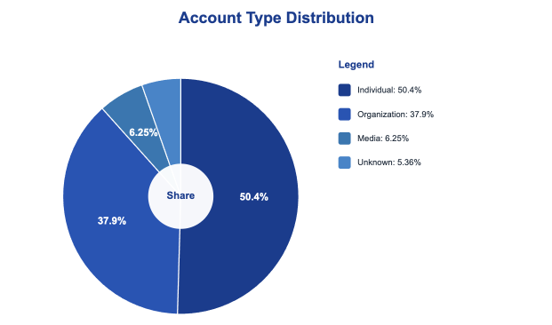
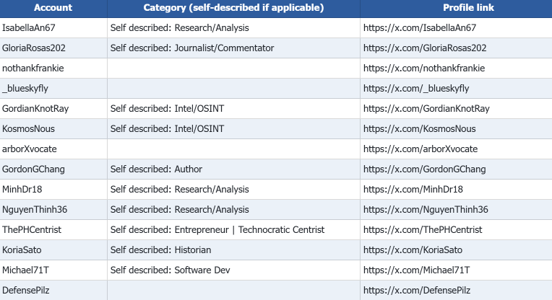
The account-type distribution shows that 50.4% of the 224 accounts identified were individual accounts, as shown in Figure 2. Among the top 14 high-frequency accounts that posted such narrative, many listed neutral or professional identities in their bios, including researchers or analysts, journalists or commentators, authors, historians, and software developers (see Figure 3).
2) Content Similarity and Cross-Account Dissemination Patterns
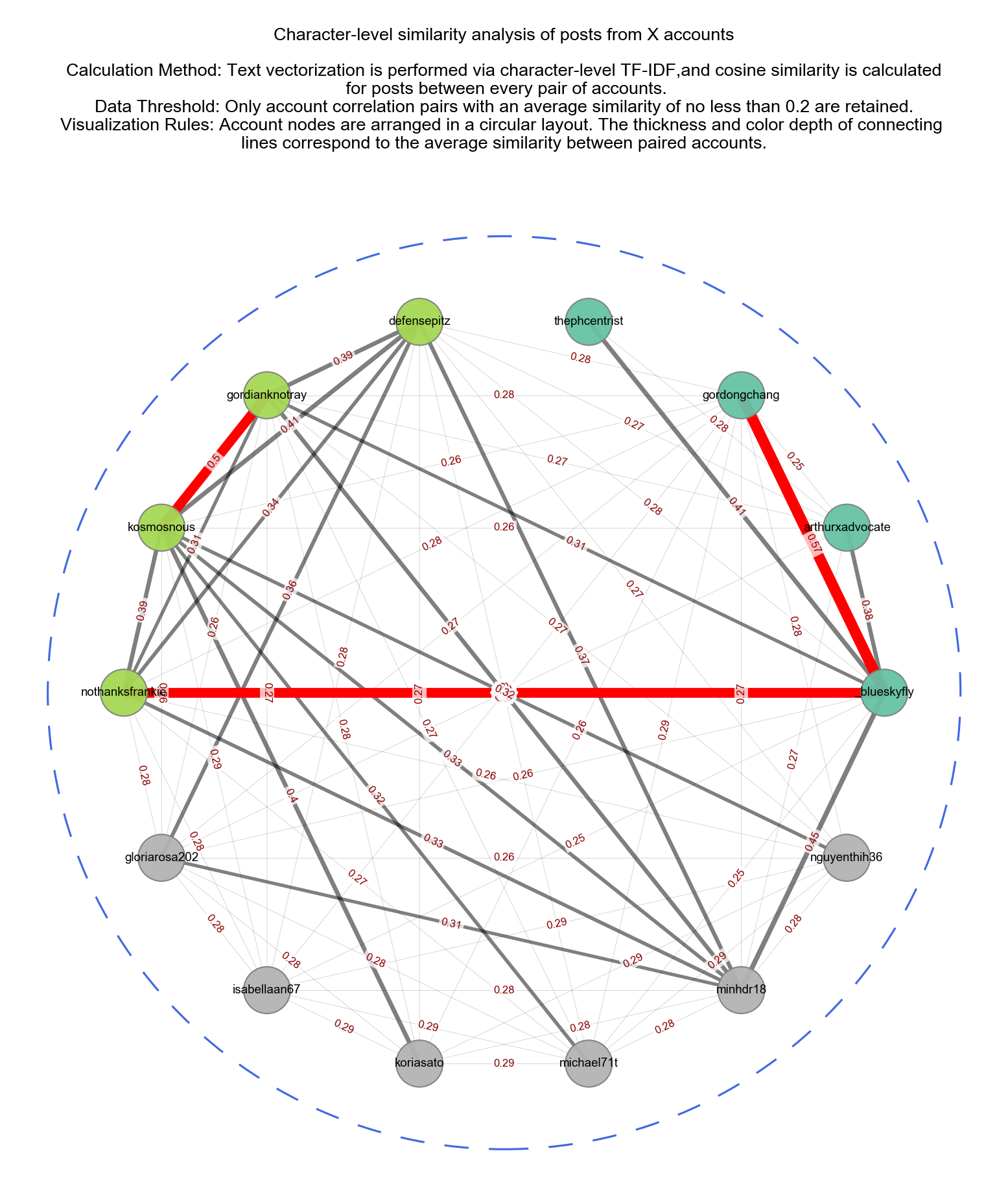
To assess whether the 14 high-frequency accounts share similar content, we analyzed the text of their posts. Specifically, we looked at the most recent 500 posts from these accounts and measured how much their word choices overlapped. Accounts with a similarity score of 0.2 or higher—on a scale from 0 to 1, where 1 means nearly identical wording—were grouped together for further analysis. Our main observations are as follows:
Widespread textual similarity across the dataset: The sampled accounts form a densely connected network, indicating extensive overlap in the content produced by different accounts.
Several account pairs exhibit high textual similarity: Red bold edges represent account pairs with cosine similarity scores above 0.5 (maximum = 0.57), suggesting a high degree of consistency in topic selection, narrative framing, vocabulary usage, and writing style.
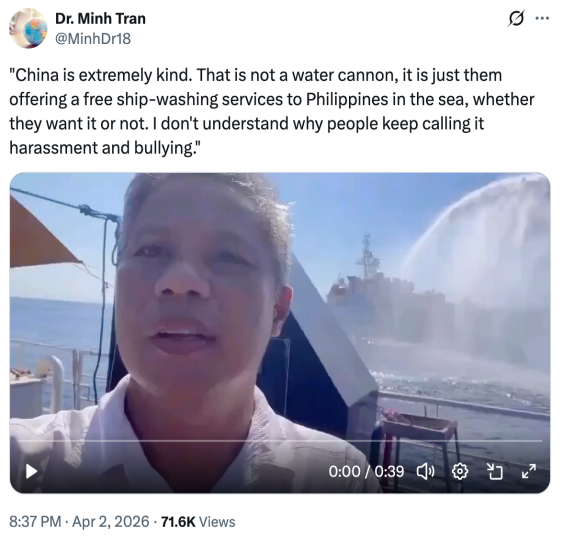
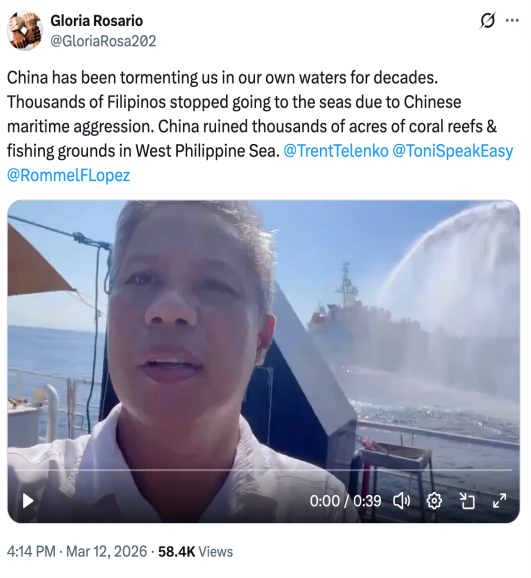
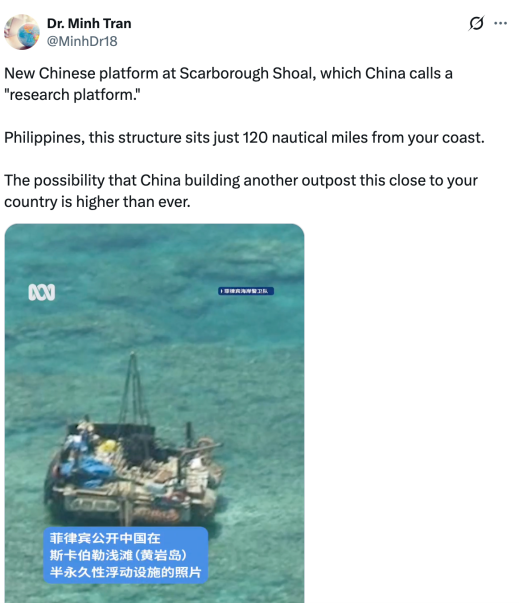
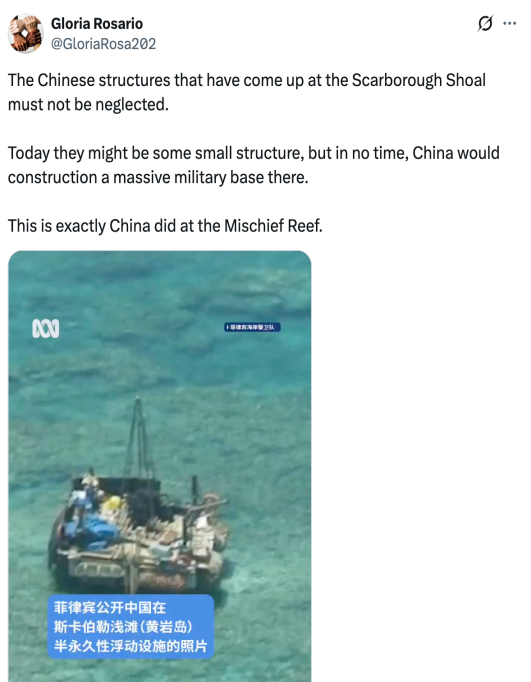
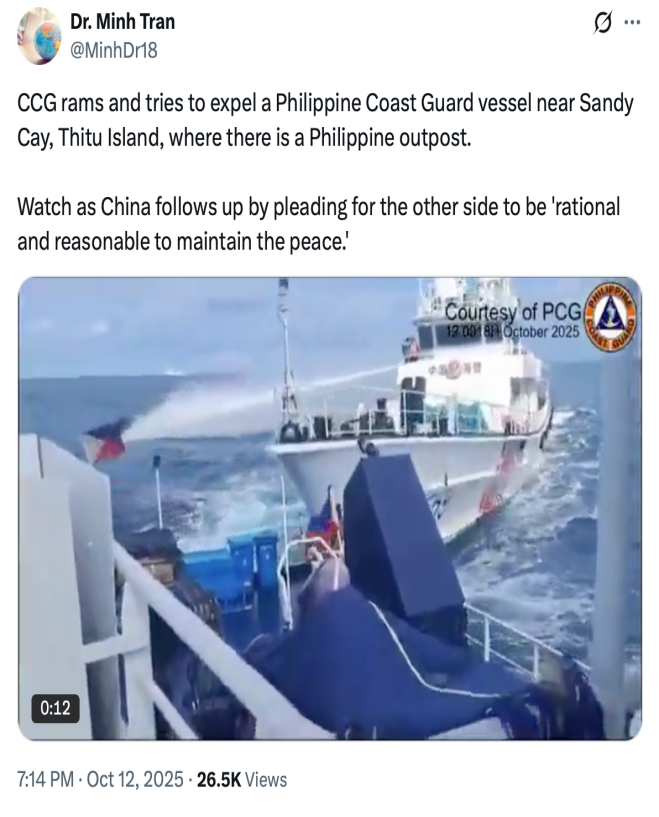
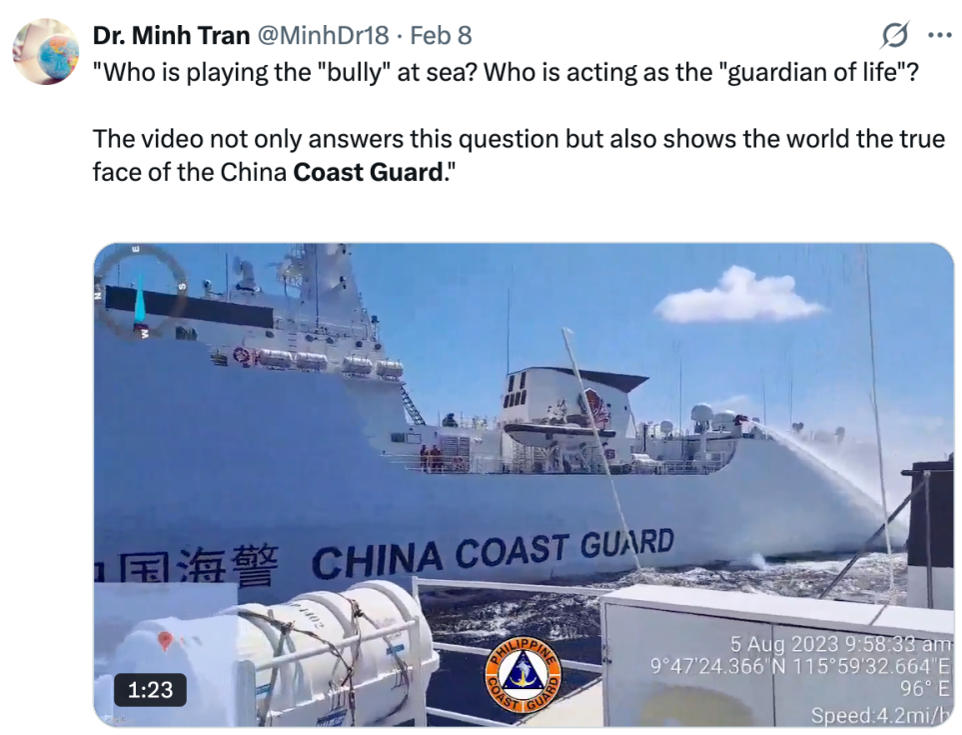
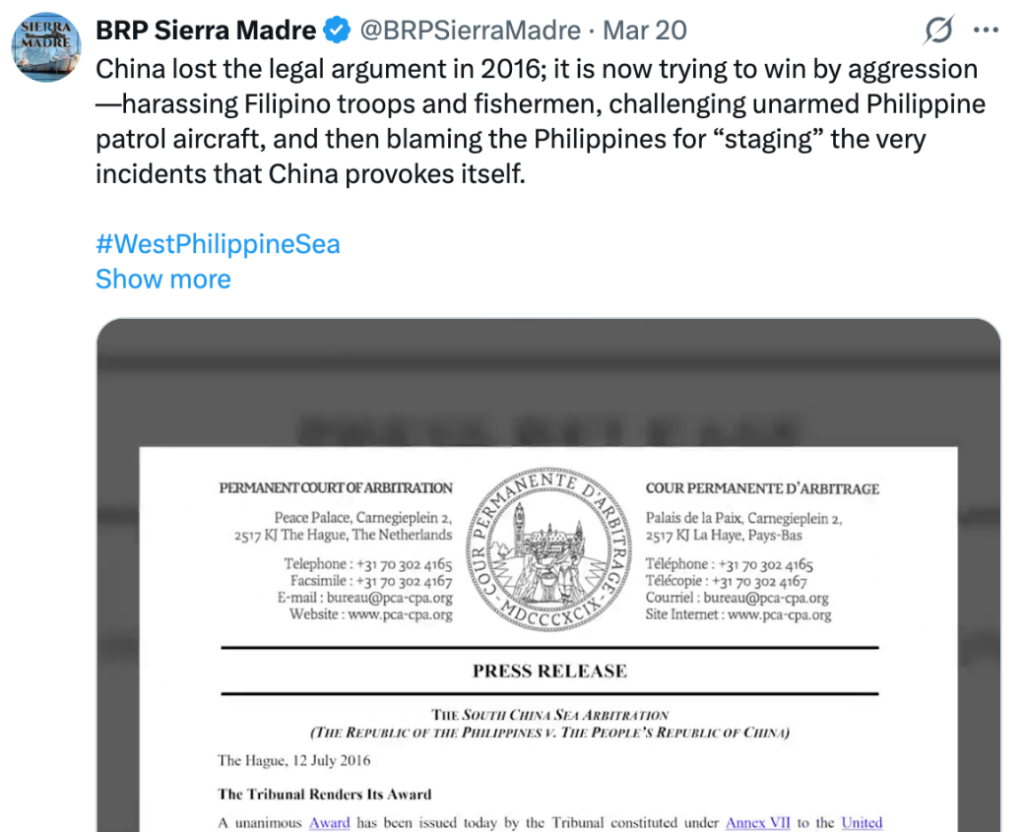
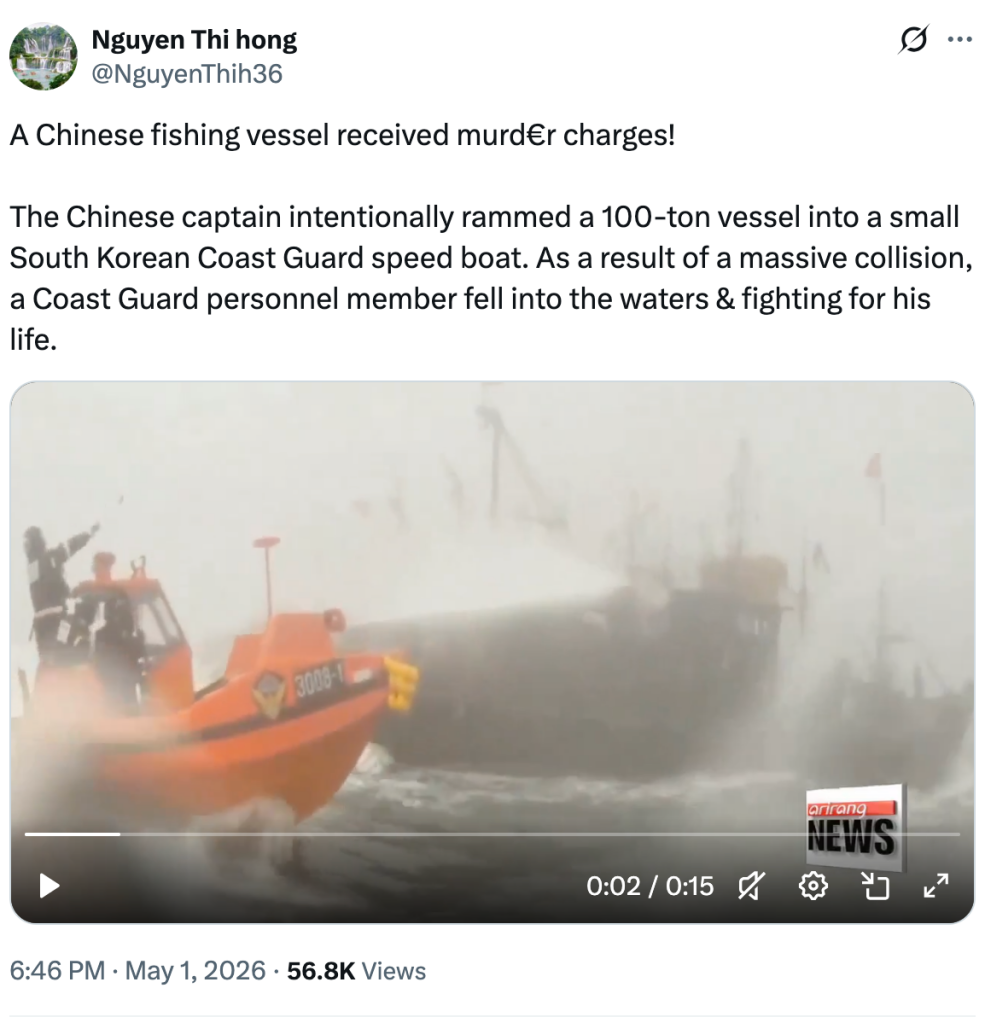
In addition to aggregate-level similarity, certain individual accounts exhibit content reuse patterns. For example, @MinhDr18 and @GloriaRosa202 publish posts that share identical or near-identical images or videos alongside similar narrative structures. The content of both accounts centers on claims that China has unlawfully entered other countries’ maritime areas or that its maritime activities have caused harm to neighboring states.
Figures 7–10: Posts with High Content Homogeneity Across Accounts
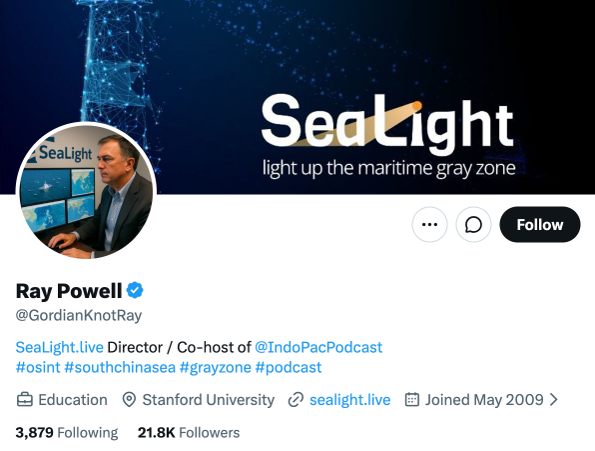
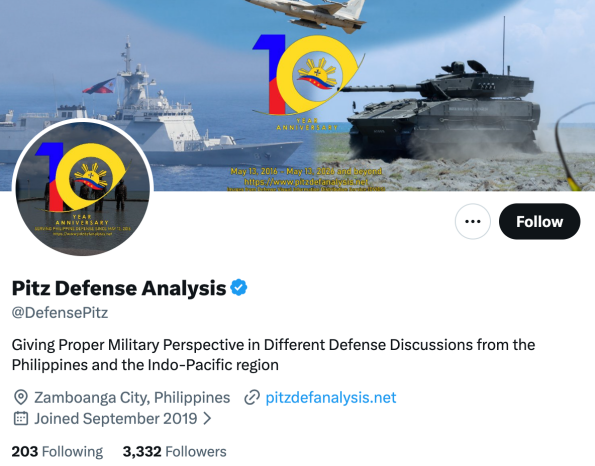
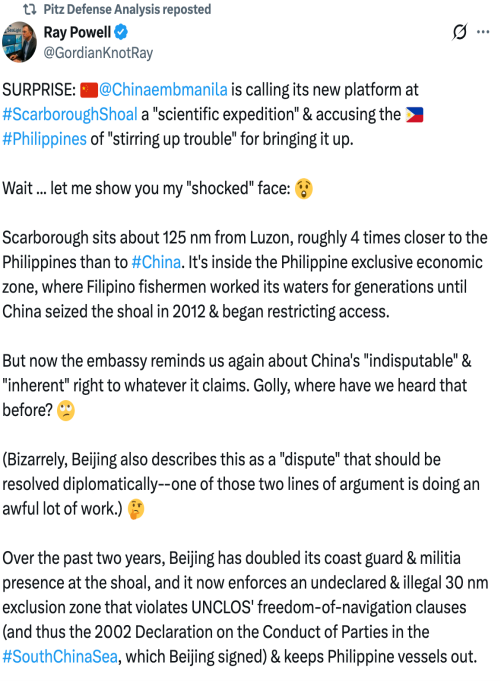
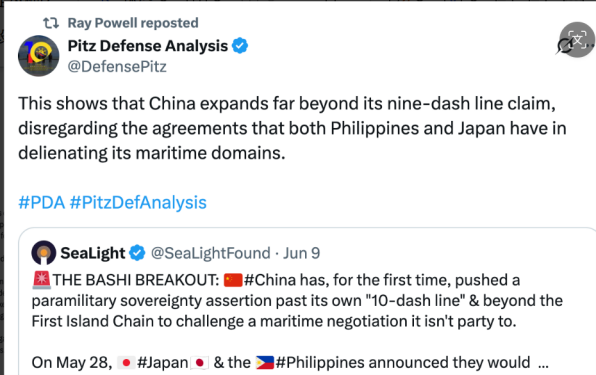
Beyond content-level similarity, certain accounts engage with each other’s posts through reposting and quoting behavior. For example, @DefensePitz presents itself as a platform providing military analysis and perspectives on defense issues in the Philippines and the broader Indo-Pacific region, while @GordianKnotray identifies as the director of “SeaLight,” a project described as focused on maritime “gray zone” activities. The two accounts reposted and quoted each other’s content on multiple occasions during the observation period, which contributed to the volume of posts on this topic.
Figures 11–12: X Profiles of @GordianKnotray and @DefensePitz
Figures 13–14: Mutual Reposting Between Institutionally Connected Accounts
3. What Language Do These Posts Use?
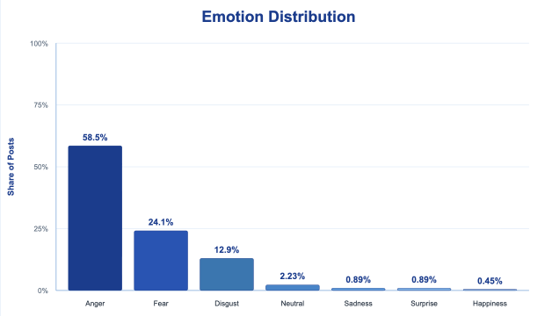
Emotional framing is an important feature in the dissemination of South China Sea-related narrative. As shown in Figure 15, many sampled posts combine descriptions of maritime incidents with evaluative wording.
Figure 15 shows the emotional distribution of the sampled posts from 224 identified accounts. Among the emotional categories, anger accounted for the largest share, at 58.5%, followed by fear at 24.1% and disgust at 12.9%. By contrast, neutral posts represented only 2.23% of the sample, while sadness and surprise each accounted for 0.89%, and happiness accounted for 0.45%.
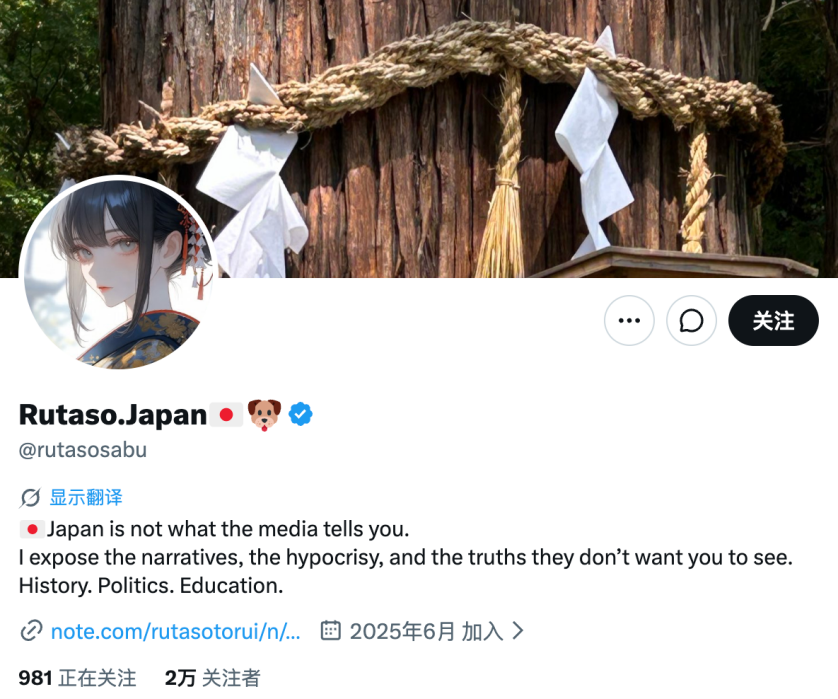
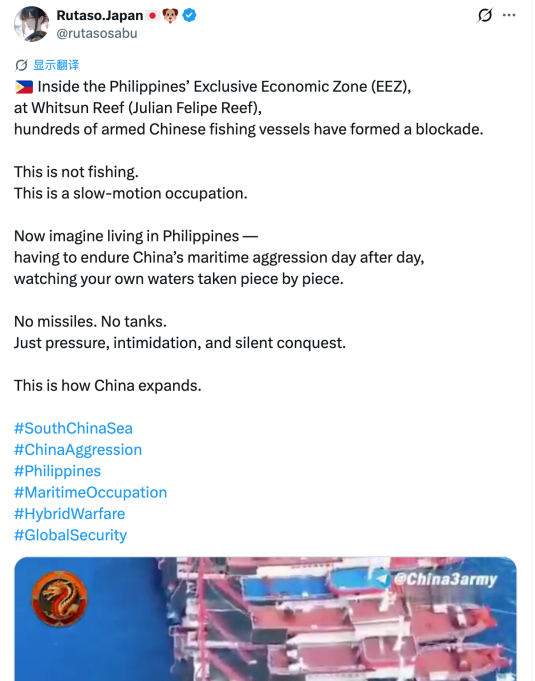
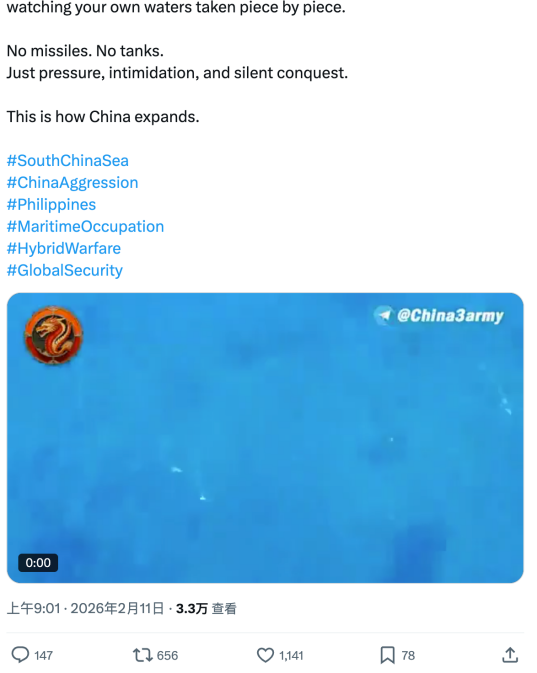
Such wording may increase the salience of the content and prompt users to respond, comment, or repost before fully verifying the underlying facts. For instance, @rutasosabu employs militarized vocabulary—including “armed,” “blockade,” “occupation,” “aggression,” and “intimidation”—to frame maritime activities in its posts. According to platform data, one such post received 33,000 views and 1,141 likes.
Figure 17-18: The post evoking high-arousal negative emotions and its virality
4. When Were These Posts Published?
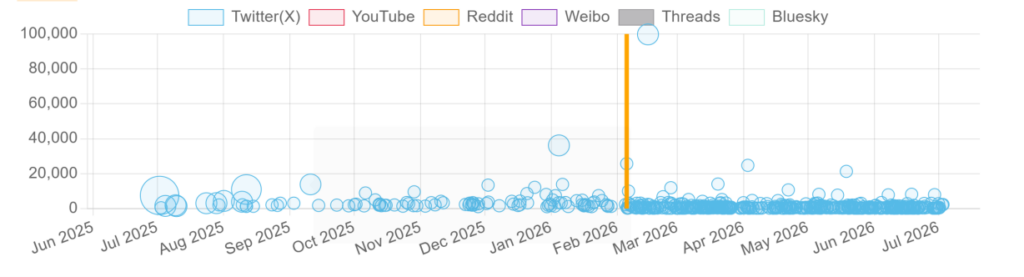
An analysis of the initial 500 posts shows a change in the posting patterns of these accounts over time. Before February 2026, posting activity was concentrated on specific dates. After February 2026, the frequency of posting increased and became more consistent.
Before February 2026, posting activity was concentrated around specific dates. Each dissemination peak coincided with real-world South China Sea-related incidents, including the October 2025 Tiexian Jiao vessel collision, Japanese politician Sanae Takaichis November 2025 remarks on regional security, the Philippine Coast Guards Transparency Initiative, and China’s Discovery II research voyage in January 2026.
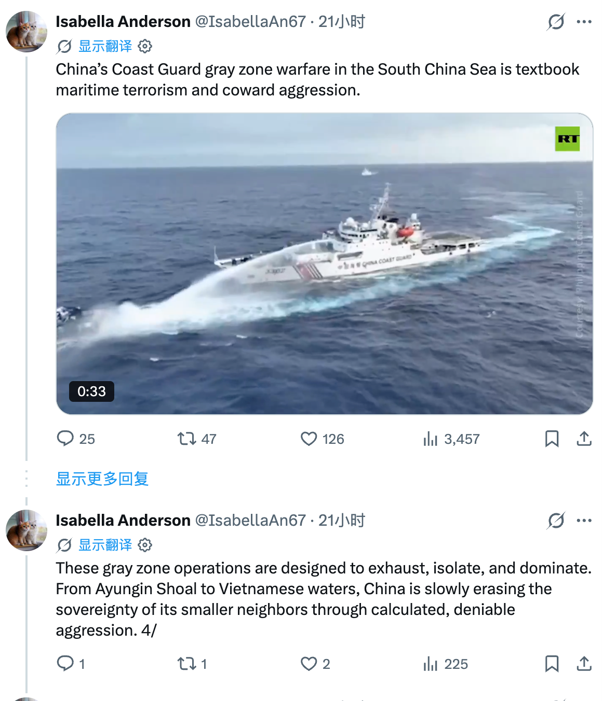
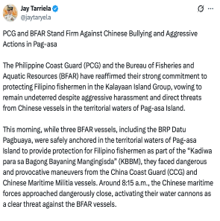
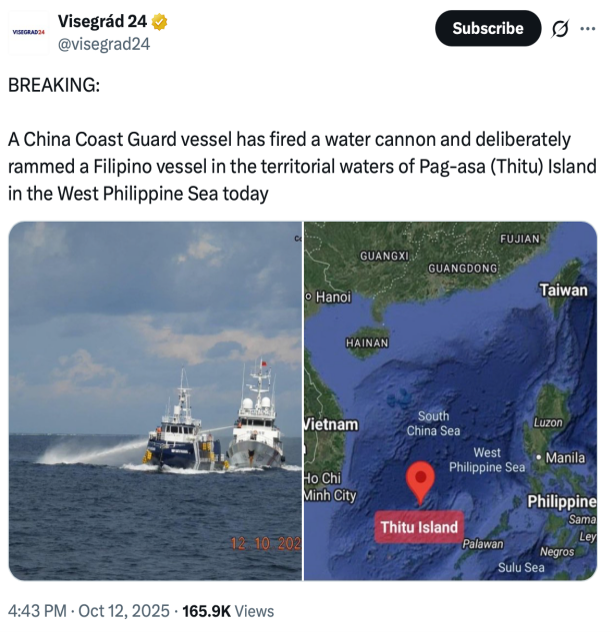
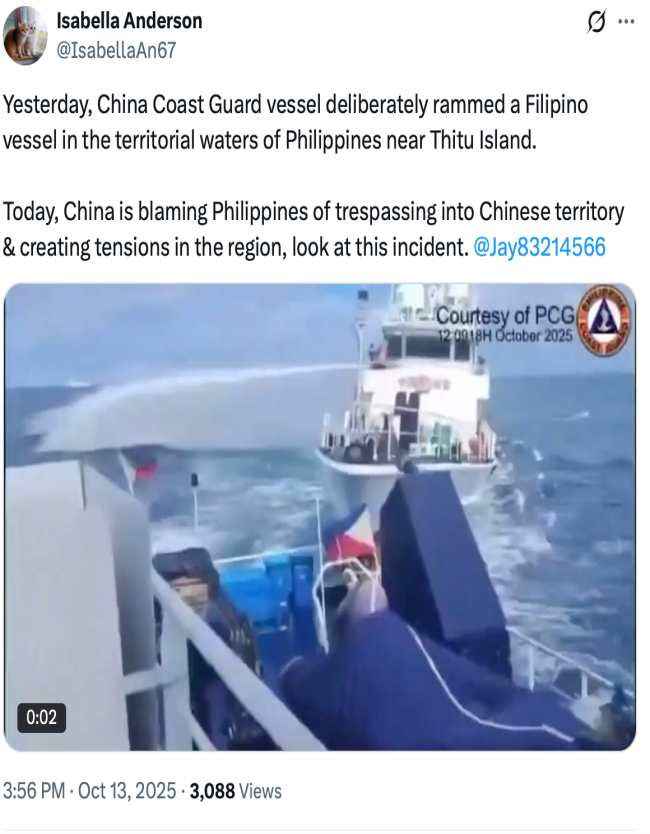
For example, following the October 2025 Tiexian Jiao vessel collision, the identified accounts published multiple posts on 12–13 October claiming that China had deliberately rammed a Philippine vessel (Figure 20-23). These posts also shared similar narratives and content.
Figure 20-23: Posts Related to the October 2025 Tiexian Jiao Vessel Collision
After February 2026, posting frequency increased, and posts appeared on a more regular basis(See Figure 19). The content of these posts centered on the following themes: responses to China’s positions on the South China Sea, China Coast Guard activities, Chinese fishing operations, territorial sovereignty in the South China Sea, and interpretations of international law. Although the number of highly viral posts remained relatively stable, a substantial increase in posting frequency enabled these topics to maintain continuous visibility through volumes of low- and medium-engagement content.
Verdict
Misleading
Conclusion
An analysis of posts from the 224 accounts identified through the 500-post selection from the past year shows that South China Sea-related contested claims circulated through recurring narratives, repeated wording, similar visual materials, cross-account references, and changing posting patterns. Some active accounts used professional or neutral self-descriptions, and some posts contained evaluative or legally framed wording. Textual similarity analysis found overlap in phrasing and narrative structure across sampled accounts. In some cases, similar materials were published as original posts rather than platform-native reposts. The temporal distribution shifted from event-driven posting peaks before February 2026 to more sustained posting activity afterward. Given the frequent circulation of unverified South China Sea-related information, the public should approach such information with caution, assess sources rationally, and verify individual cases through original materials, official statements, maritime evidence, and independent third-party sources.
Have a questionable video or claim? Submit it to Fact Hunter’s investigation team at [therealfacthunter@outlook.com].
First Fact Checker: Lin Jun, Xu Xinying, Chen Hiotong
Secondary Fact Checker: Tan Xinying, Chen Liang, Fu Lunrui