Fact Check: Viral Video Falsely Claiming “Trash River” in China Actually Filmed in Bangladesh

Fact Check: Viral Video Falsely Claiming “Trash River” in China Actually Filmed in Bangladesh

Last updated on July 10th, 2026
Editor's Note

Recently, a video showing a river channel covered with waste has circulated on X, Facebook, and other platforms. Some posts claim it is a “trash river in China” polluted by plastic and industrial waste. Verification shows that the video was not filmed in China. Given its wide reach and the serious allegations it carries, verifying its authenticity is critical. This report examines the video’s source, visual content, and dissemination chain, cross‑referencing publicly available imagery and news reports to determine its actual filming location and assess the accuracy of the online claims.

Claim

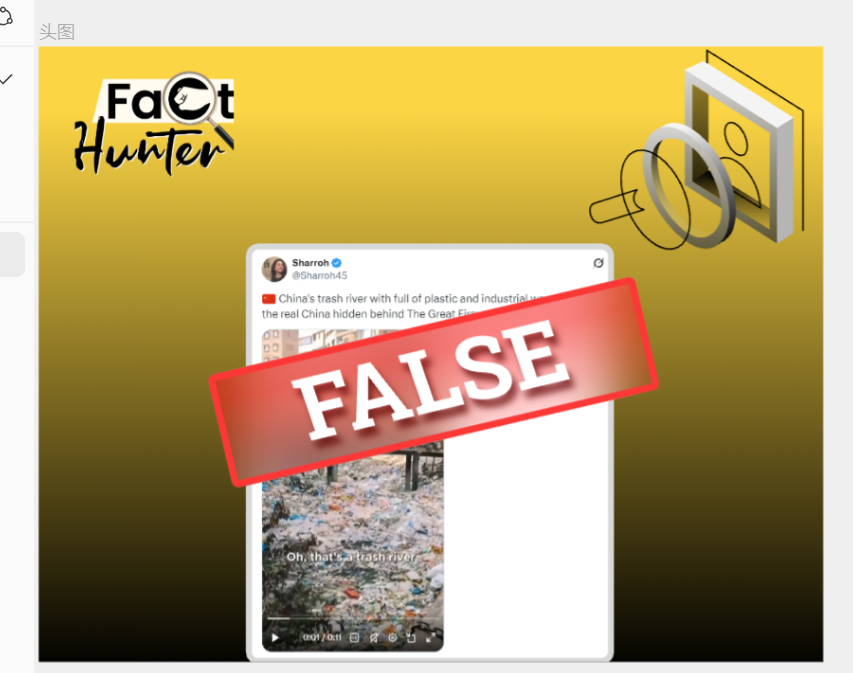
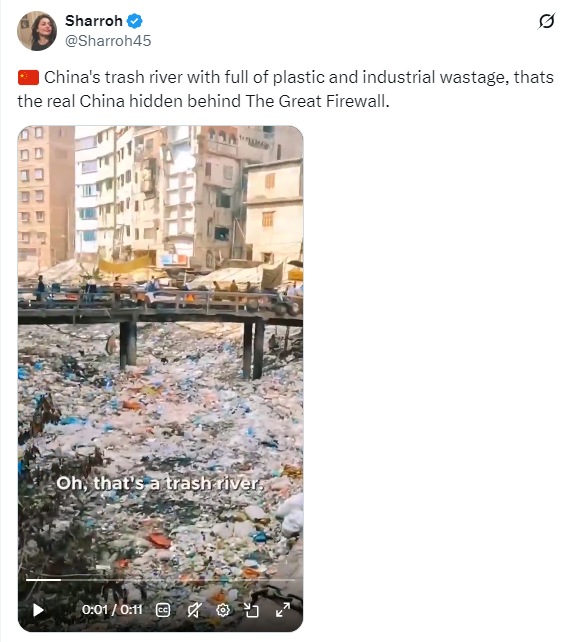
On June 22, 2026, the verified X account @Sharroh45 posted a video showing a river channel covered with waste. The caption stated: “China’s trash river with full of plastic and industrial wastage, that’s the real China hidden behind The Great Firewall.” The post claims that the footage shows a river in China heavily polluted by plastic waste and industrial waste. The post had received 34,000 views and more than 3,000 interactions.

Fact Check

1. Video Source Tracing

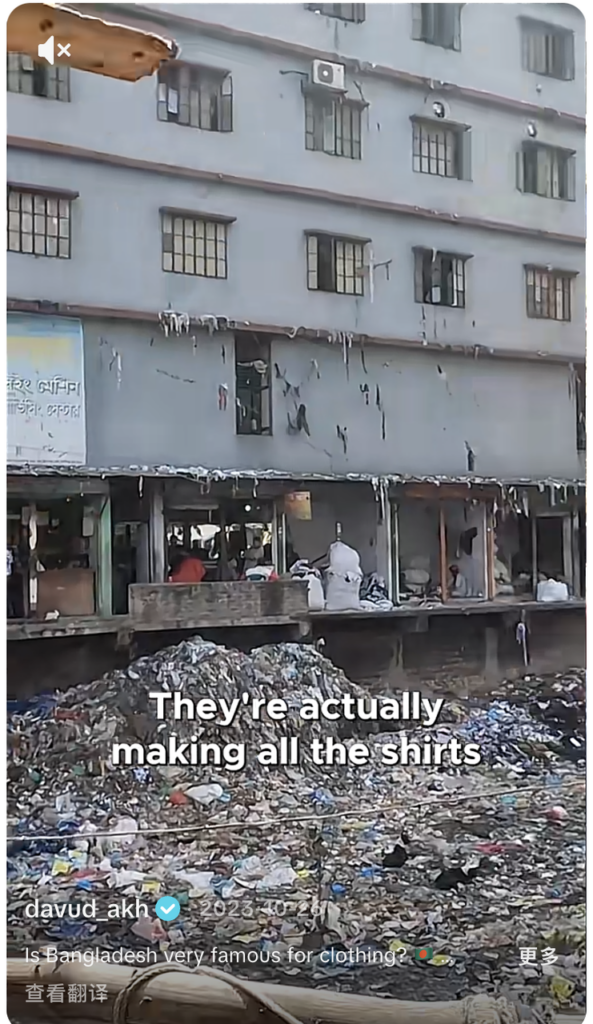
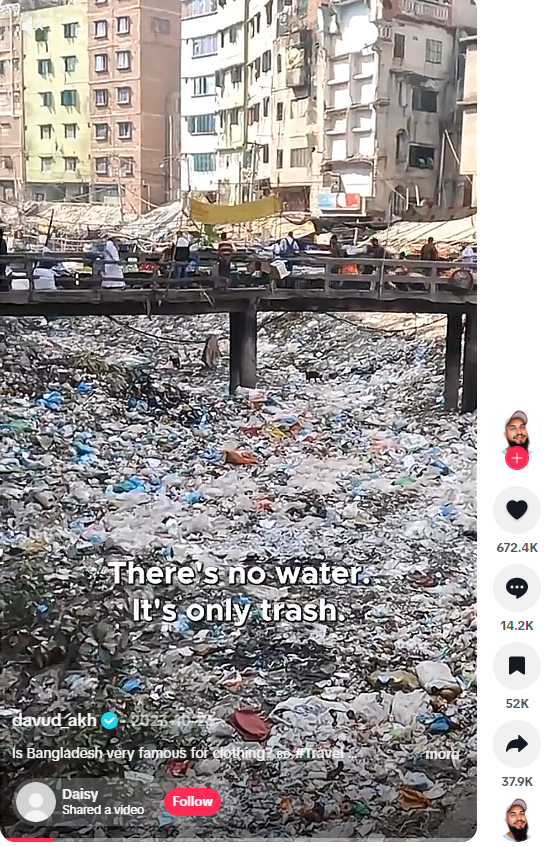
The video used in the X post comes from a longer vlog-style video posted on October 26, 2023. The original post was published by Tiktok user Davud Akhundzada(@davud_akh), a travel blogger.

Source: @davud_akh(TikTok)

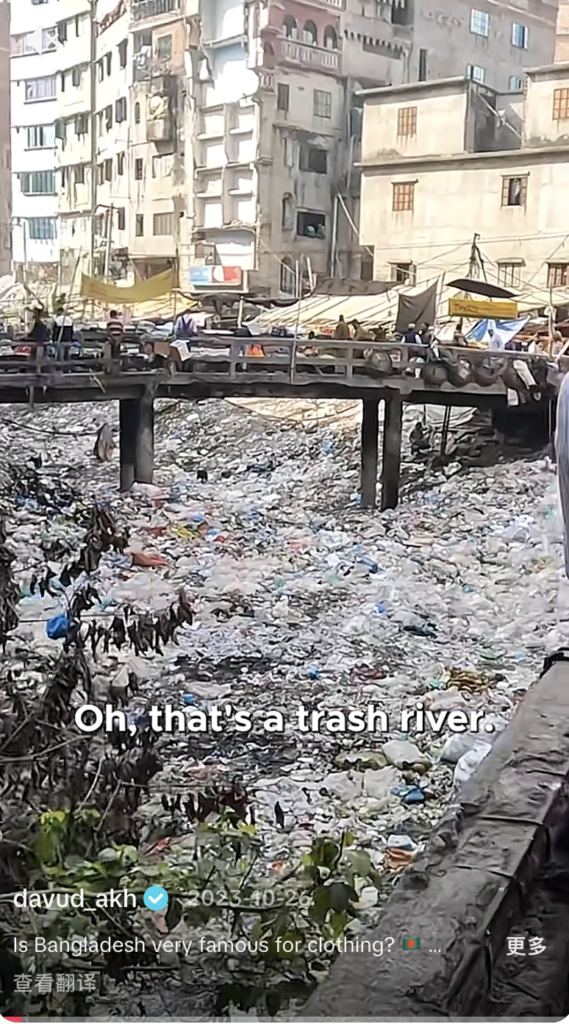
The original video is 39 seconds long. It shows the trash-filled river channel, a cleaner area on the other side of the channel, and the creator’s own commentary.

The video’s caption reads: “Discover the connection between Bangladesh’s clothing industry and its polluted rivers. Uncover the impact of textile production on the local environment.”

By contrast, the X post is 10 seconds long and uses the 00:02–00:12 segment of the original. This segment consists primarily of the waste-filled river scene, without the original narration or the caption text.

The 00:02–00:12 portion of the original video contains identical visuals to those posted by X user @Sharroh45.
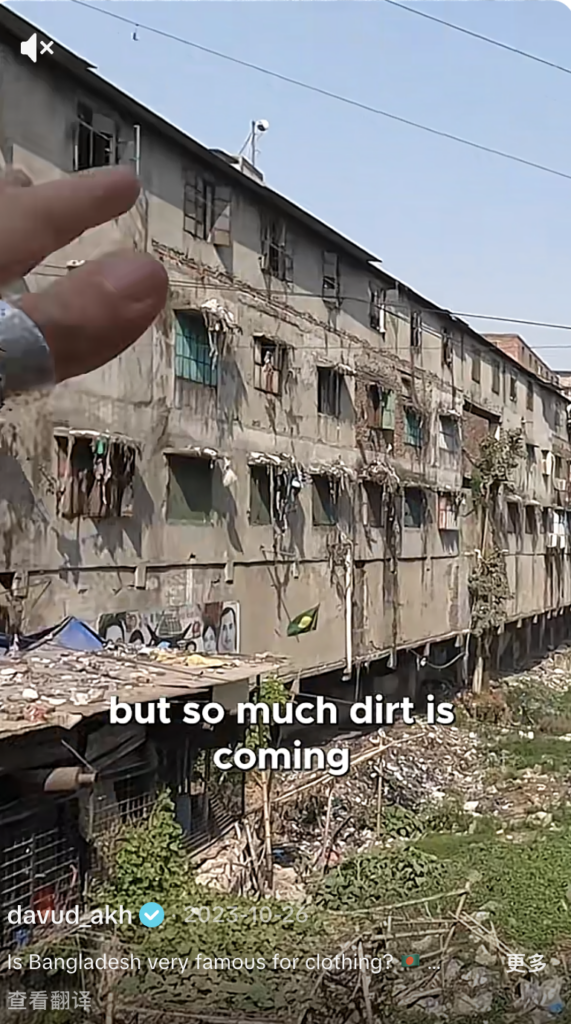
The 00:13–00:21 portion of the original video shows a cleaner area on the other side of the building.
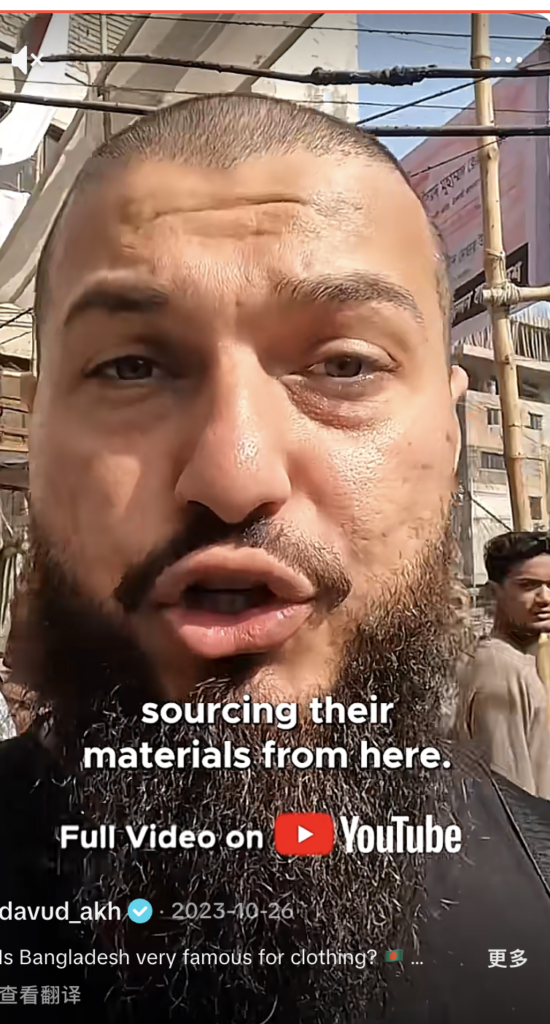
The 00:21–00:39 portion of the original video shows the creator’s commentary.

2. Analysis of Visual Details

(1) Clothing features

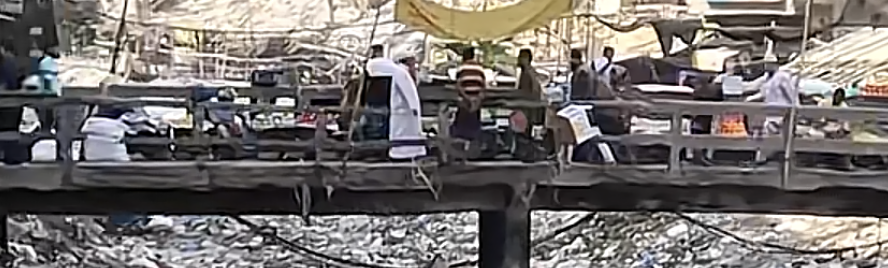
In the video, a person on the bridge is seen wearing a white robe and a white round cap. This style of dress is more commonly observed in South Asian countries such as Bangladesh, India, and Pakistan than in East Asian settings.

(2) Environmental features

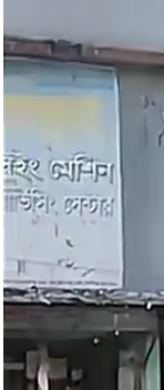
A sign visible in the video contains text written in Bengali, which is not used in China. The identifiable terms on the sign include:

  • মেশিন = machine
  • গাজীপুর = Gazipur
  • চন্দনা / চান্দনা = Chandana / Chandna, possibly a place name in or around Gazipur

The presence of Bengali script on the sign, particularly the reference to “Gazipur” — a well-known industrial district in Bangladesh — provides geolocation evidence consistent with the narrative that the video was filmed in Bangladesh. Gazipur, along with Dhaka, Narayanganj, and Chittagong, forms a major export-oriented garment production belt. This regional context aligns with the early dissemination framing of the video as a “Bangladesh trash river” associated with garment-industry pollution.

Early versions of the video connected the trash river with the garment industry pollution in Bangladesh

3. Geolocation of Visual Content

(1) Official reports and stock footage

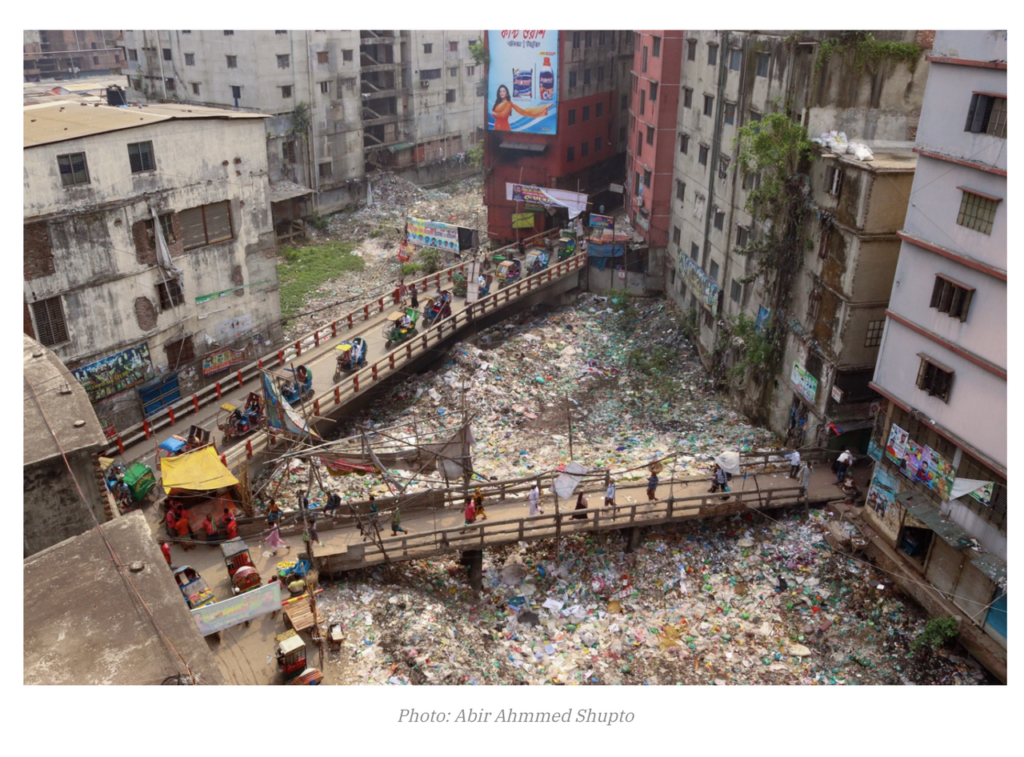
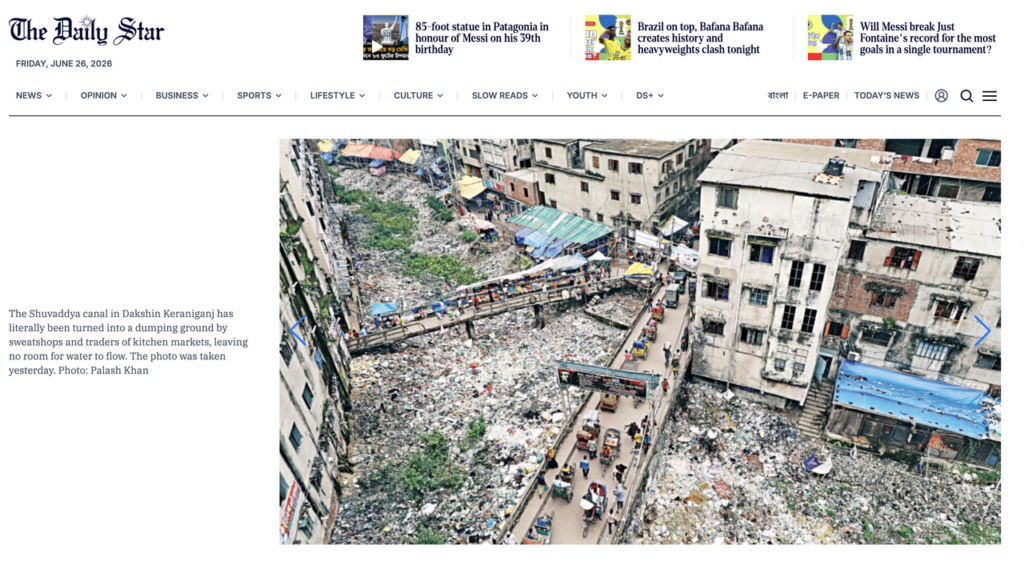
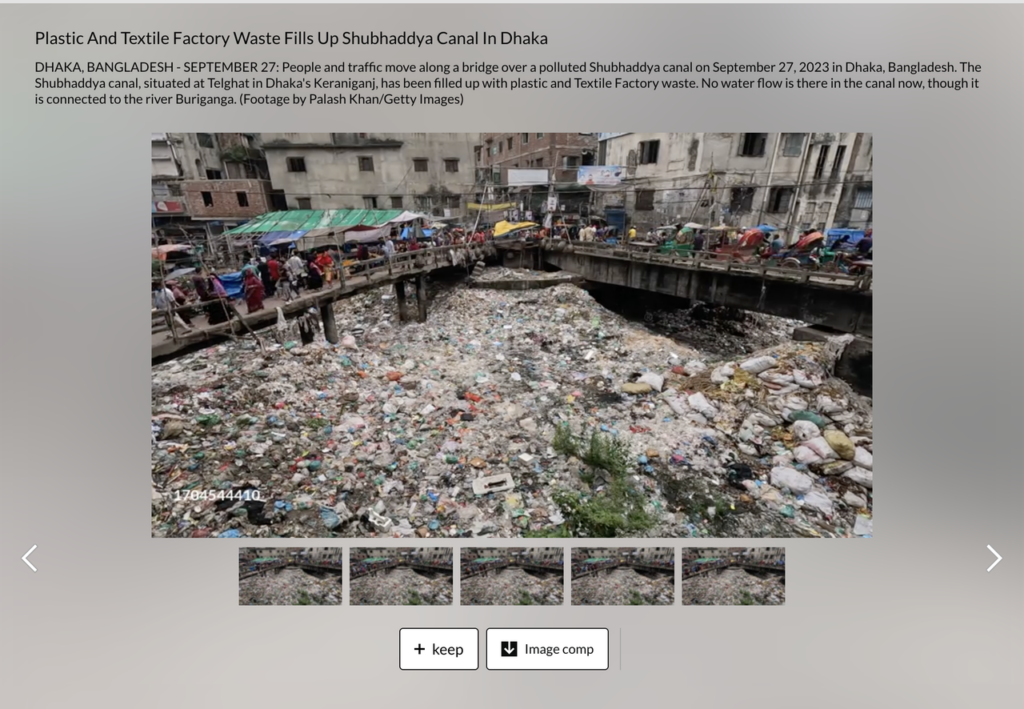
Official reports and stock footage provide additional reference points for locating the video. The canal, bridge, buildings, and market shown in the viral video are consistent with publicly available imagery of the Shubhaddya/Shuvaddya Canal in the Keraniganj/Telghat area of Dhaka, Bangladesh.

A photo report by Times of Bangladesh on April 6, 2026, describes the Shubhaddya Canal in Keraniganj as formerly connected to the Buriganga River. The images depict a narrow canal, buildings along the banks, bridge traffic, and waste accumulation—features consistent with those seen in the viral footage.

The Daily Star also published related images in its “Today’s Gallery” on September 28, 2023. The caption states that the Shuvaddya Canal in Dakshin Keraniganj is surrounded by sweatshops, kitchen markets, and bridge traffic. The image shows dense buildings on both sides of the canal, pedestrians and vehicles on a bridge, and a waterway covered with waste. These spatial features are similar to those seen in the viral video.

The same photographer also submitted footage to Getty Images, which identifies the location as Telghat, Keraniganj, Dhaka, and the date as September 27, 2023. The Getty clip shows the same bridge, canal, and surroundings visible in key frames of the viral video.

(2) Visual comparison

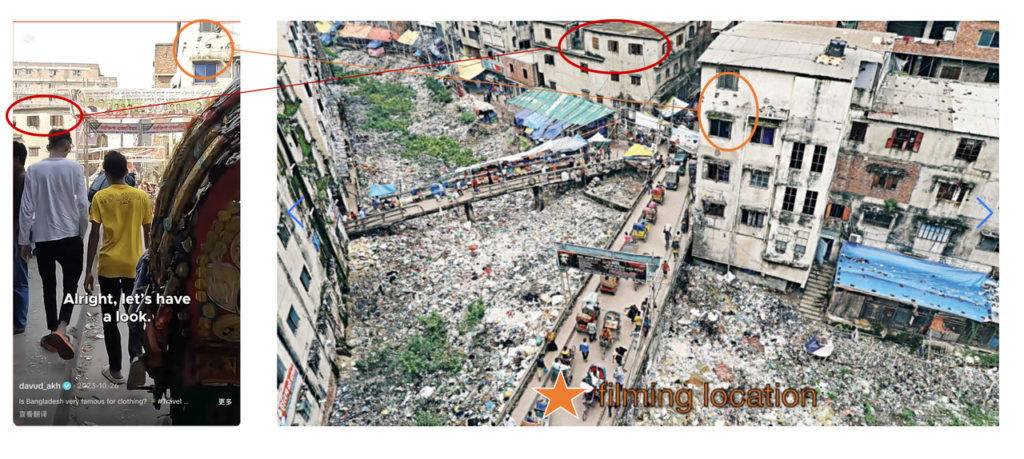
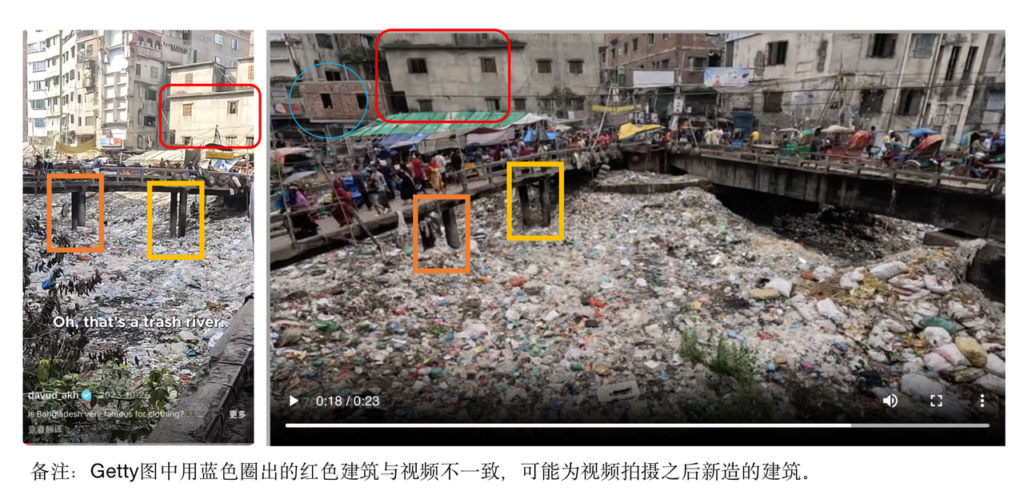
In the opening frames of the video, the buildings visible at the far end of the bridge are consistent with structures on the opposite bank of the Shuvaddya Canal. This alignment suggests the footage was likely recorded from one of the bridges spanning the canal.

In later frames, the bridge visible opposite the camera has a structural appearance similar to bridges shown in publicly available Shubhaddya Canal images. The windows and exterior shape of the buildings across the bridge also show similarities to those visible in the stock and news materials.(One slight discrepancy is that a red building visible in the Getty image does not appear in the video, which may be due to construction after the footage was filmed.)

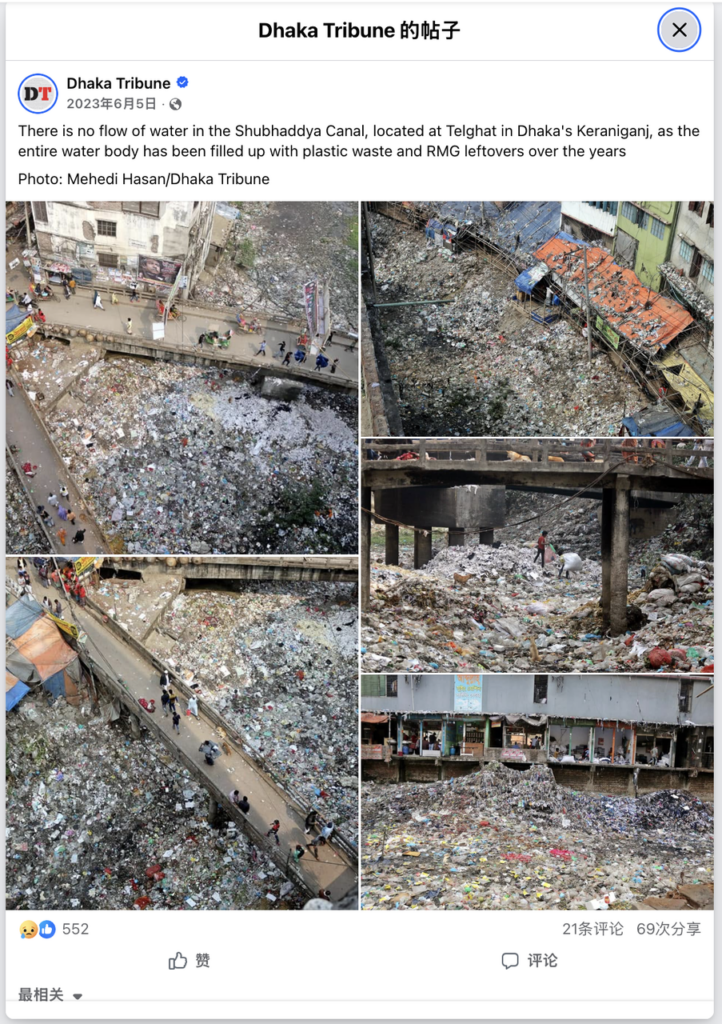
A Facebook post by Dhaka Tribune provides another visual reference for buildings in the Shubhaddya Canal area of Bangladesh.

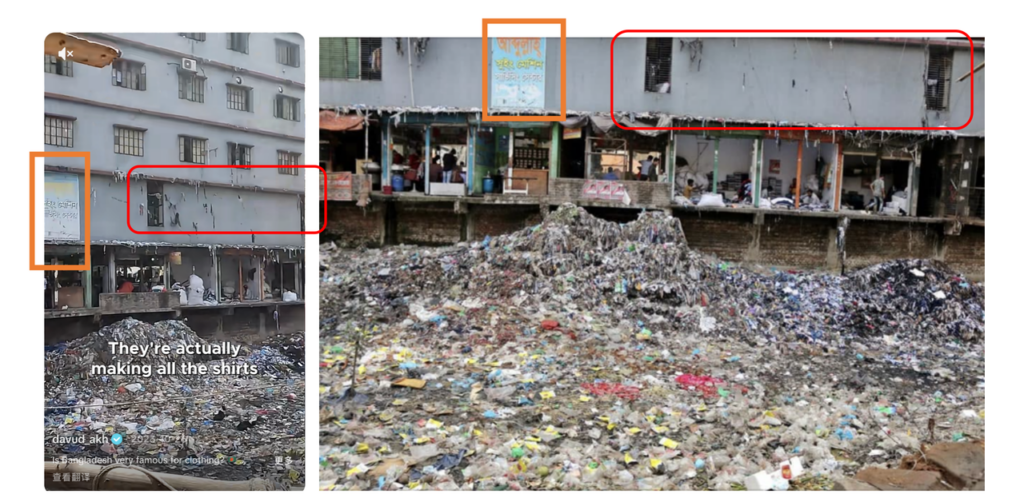
In the final image included in that post, the color of the building, the placement of posters, and the shape of the windows show similarities to buildings visible in the video.

Left: Screenshot from X user @Sharroh45; Right: Screenshot from Facebook user Dhaka Tribune

4. Account Analysis

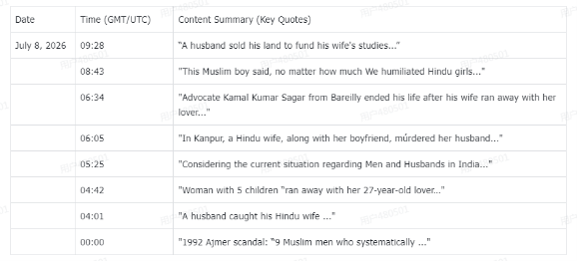
The video was posted by the X account Sharroh (@Sharroh45). According to the account profile visible in the screenshot, the account joined X in March 2025, follows 593 accounts, and has about 4,800 followers. On July 8, 2026, the account published 10 posts within roughly 10 hours, averaging about one per hour.

5. Dissemination Analysis

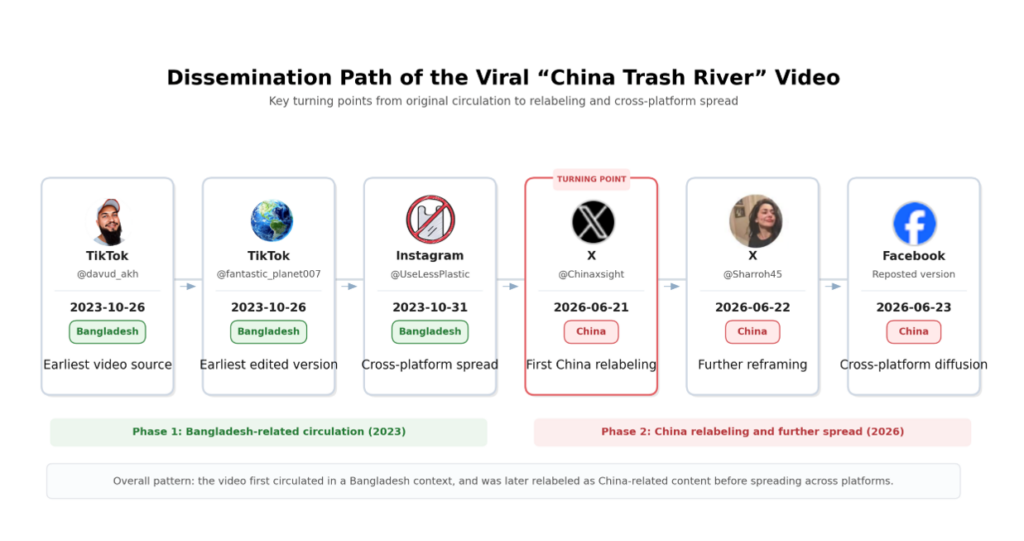
The dissemination of the video can be traced through the following timeline.

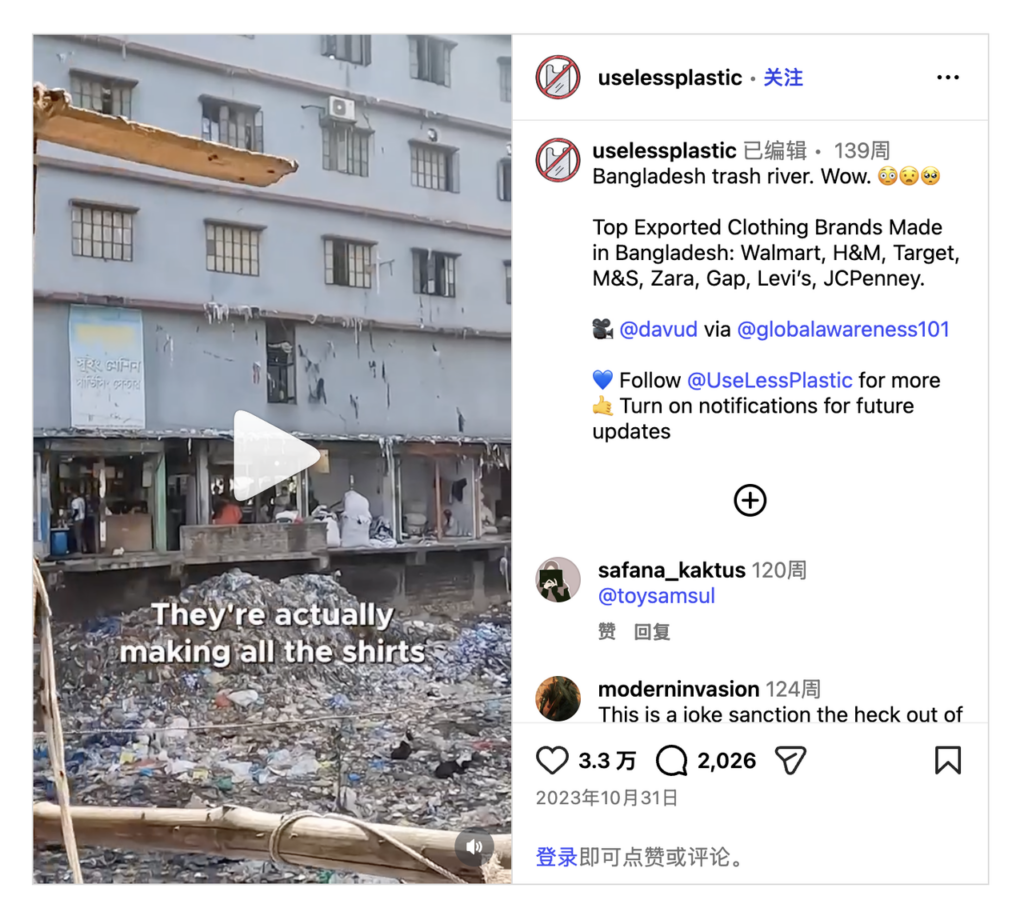
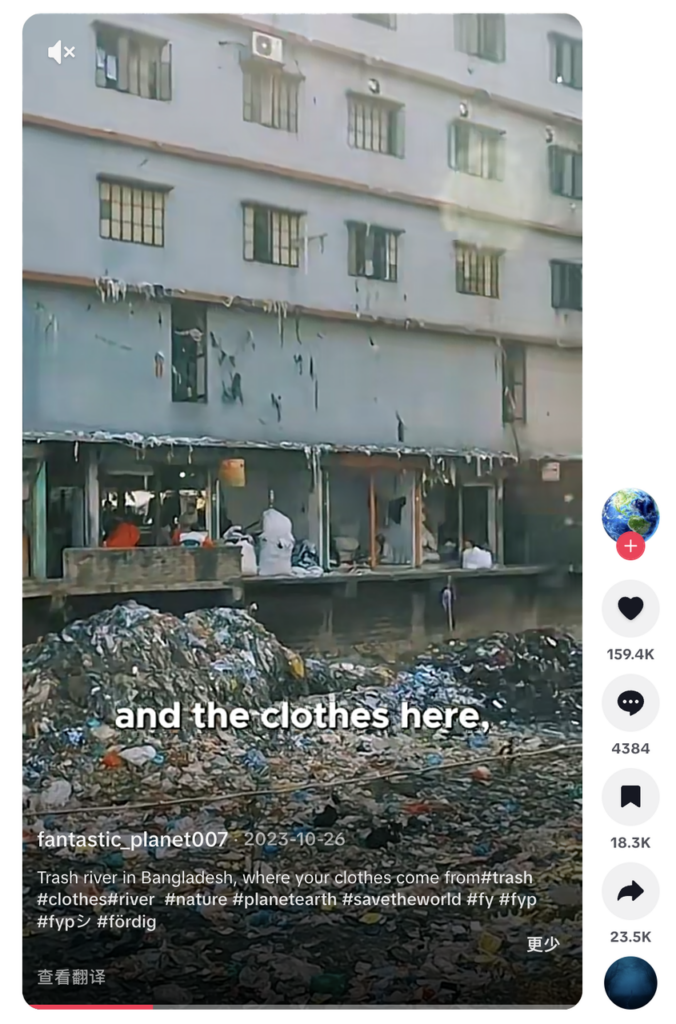
The first stage occurred around October 2023. Shortly after Davud posted his original video, TikTok user @fantastic_planet007 uploaded an edited version. Its caption read: “Trash river in Bangladesh, where your clothes come from.” — still locating the scene in Bangladesh. This version was later reposted on Instagram by @globalawareness101 and @UseLessPlastic. @UseLessPlastic captioned the post: “Bangladesh trash river. Wow,” and listed clothing brands including Walmart, H&M, Target, M&S, Zara, Gap, Levi’s, and JCPenney.

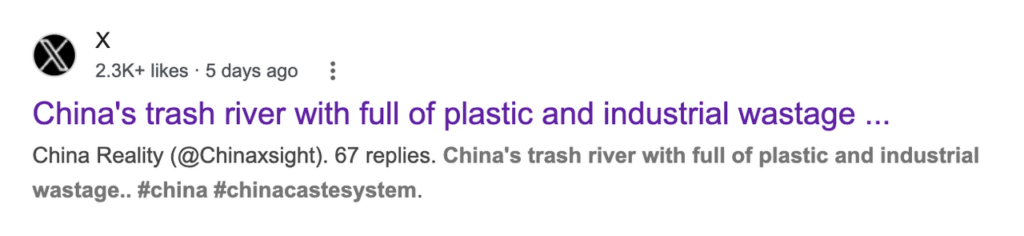
On June 21, 2026, X account @Chinaxsight posted a clip from the same footage with the caption: “China’s trash river with full of plastic and industrial wastage,” and added the hashtags #china and #chinacastesystem. The account appears to have been suspended, but search indexes still preserve the text of the post.

The screenshot was taken on June 25, 2026; based on the date shown in the search result, the post was likely published around June 21, 2026.

Subsequently, X accounts including @Maha_Periyavaa, @Sharroh45, @Mericancannon, and @darkstillalive shared the video with captions referencing China. @Sharroh45 added phrases such as “real China.” The footage, which had previously circulated in the context of environmental pollution in Bangladesh, was subsequently recirculated with a different location attribution. The video was later reposted on Facebook and other platforms.

Background:

Bangladesh is a leading garment exporter to Western and Asian markets, with the sector accounting for a large share of national exports. But industrial growth has also caused environmental strain around Dhaka, where textile factories contribute significantly to river pollution, according to the World Bank.

The Shuvaddya/Shubhaddya Canal in Keraniganj is a case in point: once connected to the Buriganga River, it is now heavily clogged with plastic and waste, as documented by local media including Times of Bangladesh.

Verdict:

False

Conclusion:

The claim that the viral video shows a “trash river in China” is not supported by the available evidence. Source tracing shows that the footage was first posted by TikTok creator Davud Akhundzada on October 26, 2023, in the context of Bangladesh’s garment industry and river pollution. Visual details—including Bengali signage, clothing, bridge structures, and surrounding architecture—are consistent with a South Asian, not Chinese, setting.Cross-referencing with materials from the Times of Bangladesh, The Daily Star, Dhaka Tribune, and Getty Images further corroborates the location as Bangladesh. When the video first circulated in 2023, it was consistently identified as being from Bangladesh. It was not until June 2026 that some X accounts relabeled it as a “trash river in China.”  Readers should exercise caution and verify the original context of reposted content.

Have a questionable video or claim? Submit it to Fact Hunter’s investigation team at [therealfacthunter@outlook.com].

Primary Fact Checker: Huang Yiting

Secondary Fact Checker: Qiu Qinglan

Show Comments (0) Hide Comments (0)
Leave a comment

Your email address will not be published. Required fields are marked *