
Last updated on May 29th, 2026
Editor’s Note
Recently, numerous orders for producing anti-China fake videos have emerged on Japan’s crowdsourcing platform CrowdWorks. These videos are mass-generated using AI tools, forming a commercialized rumor-mongering chain. According to an investigation by the Osaka-based newspaper Asahi Shimbun, the creators involved admitted that all content was entirely fabricated. A Japanese YouTube video claiming that the Canton Tower in south China’s Guangzhou City was built with “shoddy construction” in order to surpass the Tokyo Skytree emerged in this context. Without proper verification, such falsehoods risk distorting public understanding of infrastructure projects and cross-country comparisons. This fact-check examines the video’s claims through construction timelines, engineering records, AI detection, and channel source analysis.
Claim
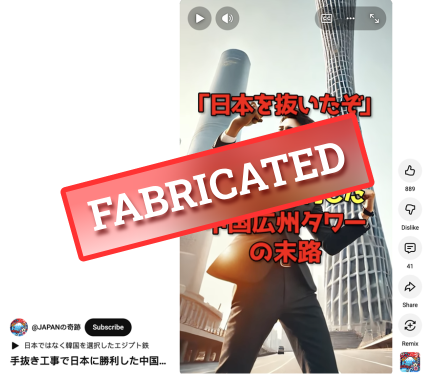
A Japanese YouTube video posted by the channel “JAPANの奇跡” claims that China built the Canton Tower to “surpass Japan” and that the tower overtook the Tokyo Skytree through “手抜き工事,” meaning shoddy construction methods or cutting corners. The video says the Canton Tower was completed in only four years, presenting its construction speed as suspicious, and claims that the area around the tower later experienced ground subsidence, tilted buildings, and large-scale road collapses. It further alleges that Chinese authorities dismissed these problems as minor while public anxiety increased. The video contrasts this with its portrayal of the Tokyo Skytree, claiming that Japanese construction technology is far superior to China’s and that Canton Tower’s “world No. 1” status was achieved by ignoring safety standards.
Fact Check
1. Construction timeline and height ranking
The video falsely implies that China built the Canton Tower in response to the Tokyo Skytree. However, the Canton Tower’s design competition had already taken place in 2004, with construction getting underway in November 2005 and being completed in September 2009. By contrast, the Tokyo Skytree did not begin construction until July 14, 2008, and was completed on February 29, 2012. Therefore, the video’s assertion that China had supposedly only began building the Canton Tower in response to the Tokyo Skytree is a completely inaccurate claim.
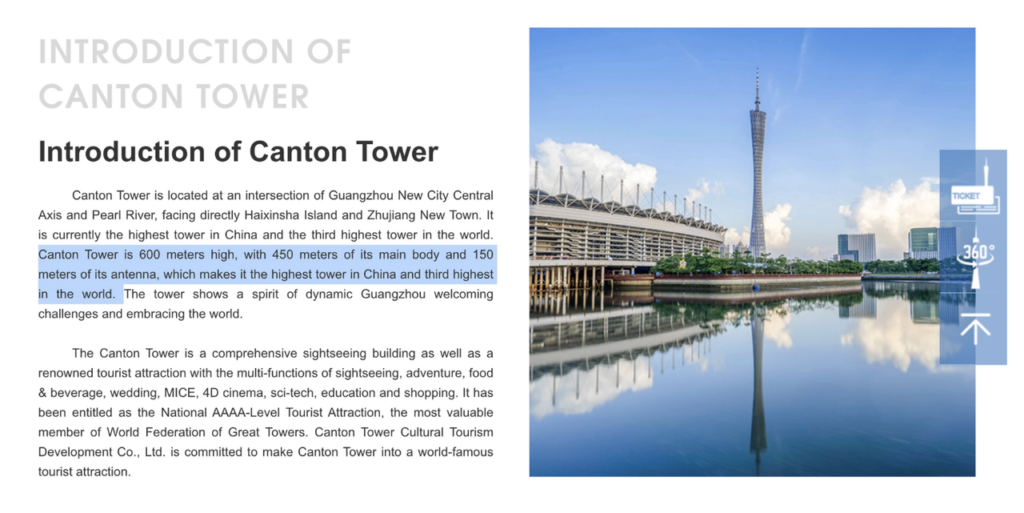
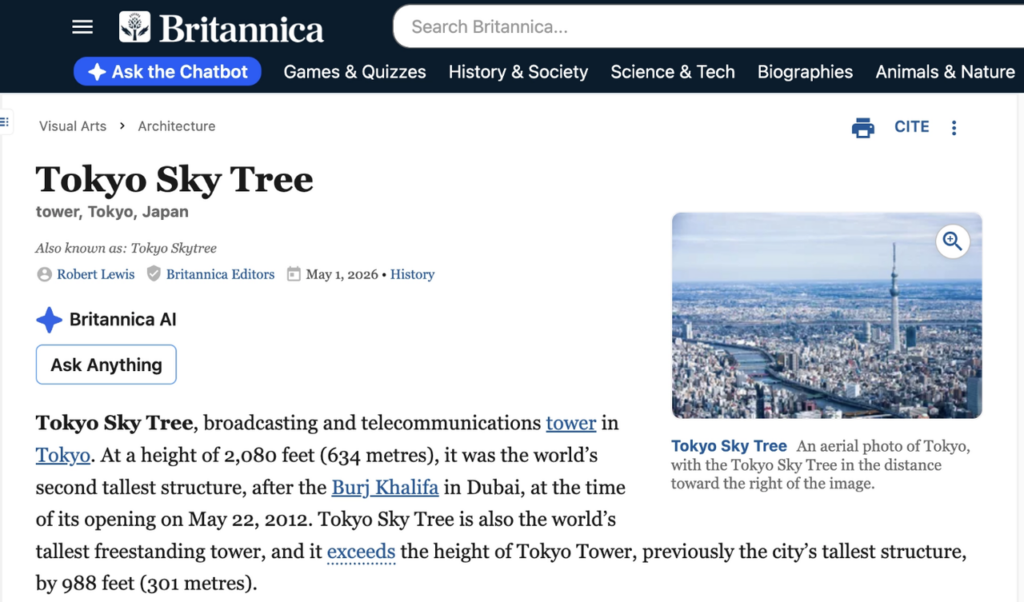
The video’s height-based “surpassing Japan” narrative is historically and logically flawed. When the Canton Tower was completed in 2009, topping out at 600 meters, it briefly held the title of the world’s tallest tower. The Tokyo Skytree (standing at 634 meters) was completed in 2012, surpassing the Canton Tower. Therefore, claiming that China built the Canton Tower to “defeat” a Japanese tower that did not even exist at the time is chronologically impossible.
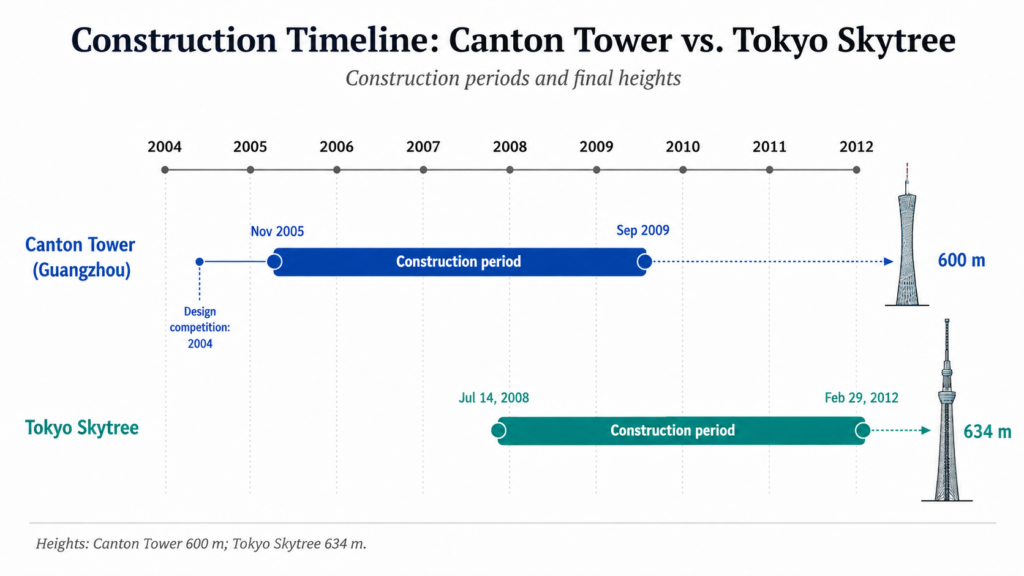
Taken together, the timeline and height records undermine the video’s central framing. The Canton Tower was not a later Chinese response to the Tokyo Skytree, nor does it surpass the Tokyo Skytree in overall height or tower ranking.
2. Quality control of Canton Tower
2.1 Construction Timeline
The video claims that the Canton Tower was “completed in only four short years”, implying that the tower was built at an unusually rushed pace.
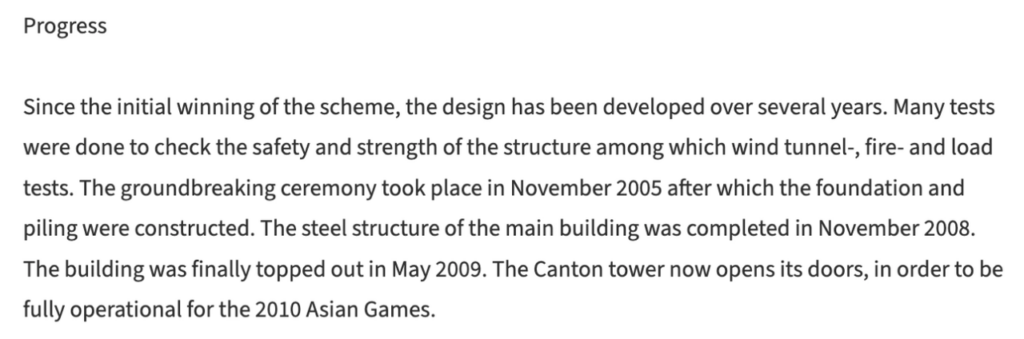
However, public records show that the Canton Tower project broke ground in November 2005, reached its final height in May 2009, and was completed in September 2009. By comparison, the Tokyo Skytree began construction on July 14, 2008 and was completed on February 29, 2012, meaning its entire construction period was roughly three years and seven months. The two projects therefore had broadly comparable construction timelines, so the claim that Canton Tower was completed at an abnormally fast speed lacks sufficient basis.
2.2 Engineering and Safety Testing
The project description published by the Information Based Architecture (IBA) firm states that safety testing, including wind tunnel tests, fire testing, and load testing, had been completed during the design and development process of the Canton Tower.
ArchDaily’s project profile also presents the Canton Tower as a completed architectural project designed by IBA, rather than as a failed or unsafe structure.
These sources contradict the video’s suggestion that the tower’s quality control was neglected.
2.3 Operational Status
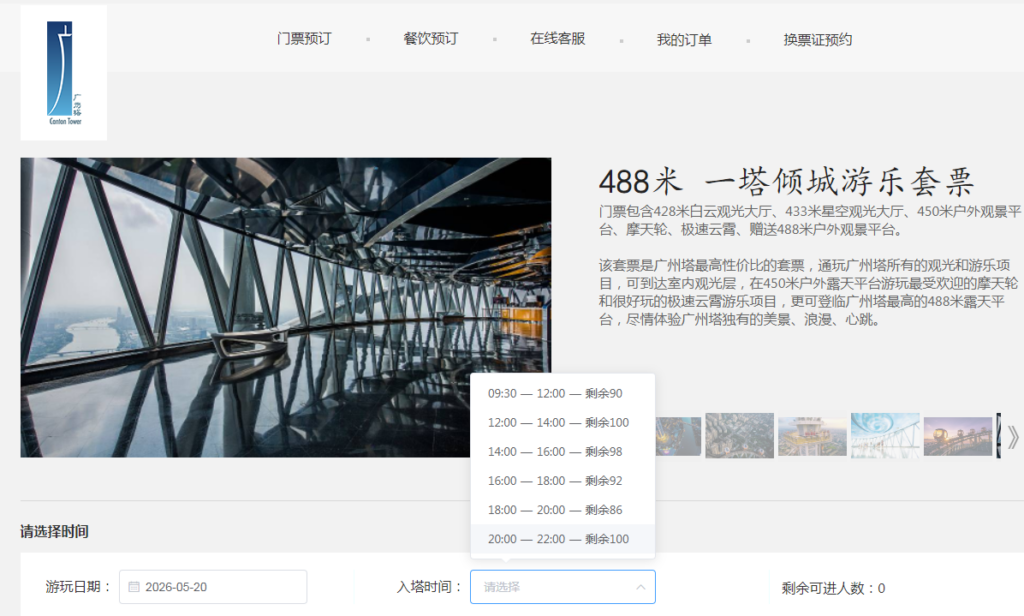
The Canton Tower’s official website currently lists regular business hours of 09:30–22:30, indicating that the tower continues to operate as a public tourist attraction. Fact Hunter did not find any official notice showing that the Canton Tower has been closed or that its surrounding area has suffered the kind of foundation-settlement problem described in the video. Therefore, the claim that the tower’s construction quality led to serious safety problems is not supported by any available evidence.
3. Visuals Analysis
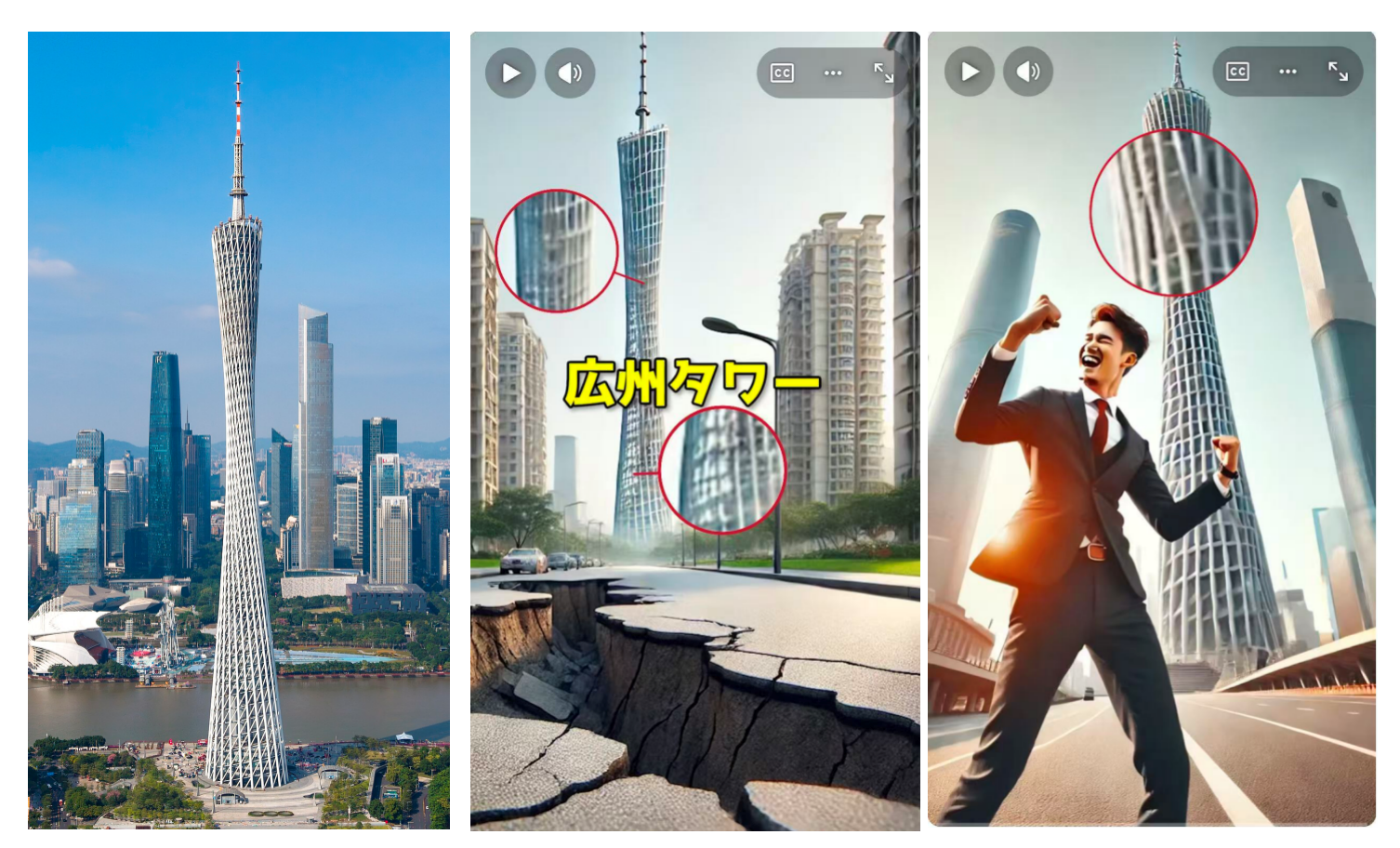
A manual comparison with real photographs of the Canton Tower further reveals additional inconsistencies between the video images and the tower’s actual appearance and surroundings.
3.1 Tower Structure Comparison
The depiction of the Canton Tower in the video itself is also inconsistent with real photographs. In authentic images, the tower has a clearly visible antenna mast at the top with red-and-white striped sections. However, in the video frames, this distinctive feature is either missing, blurred, or inaccurately rendered.
The tower’s distinctive lattice structure also appears to be distorted in several places: the white diagonal lines are uneven, some vertical elements bend unnaturally, and parts of the facade looks indistinguishably vague or even melted together.
These visual errors are especially noticeable in the enlarged sections of the screenshots.
3.2 Road and River Layout Comparison
The video also misrepresents the road and river layout around the Canton Tower.
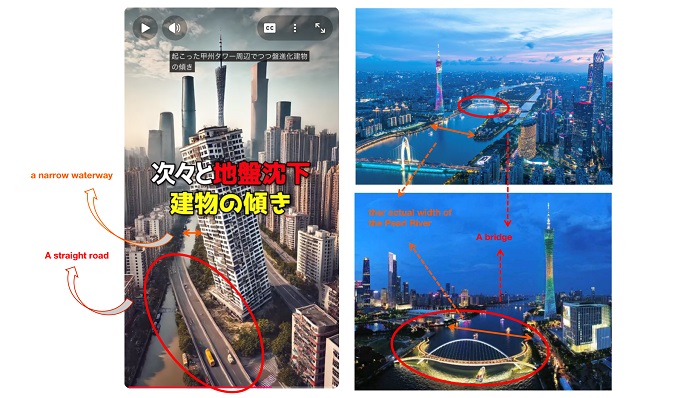
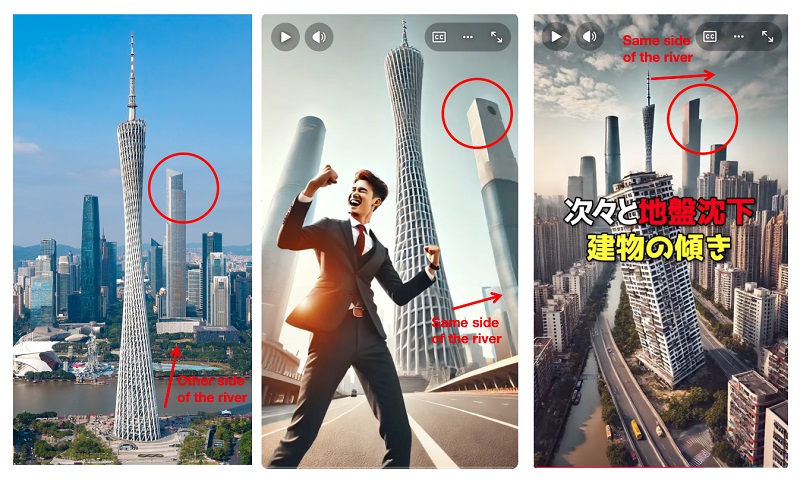
In the video, a straight road appears to run across a very narrow waterway next to the tower, creating the impression there is a road bridge or over-water roadway directly beside the allegedly tilted building. However, this road configuration could not be matched with the real surroundings of the Canton Tower. In actual photographs of the area, the closest comparable structure in the same general position is a bridge across the Pearl River, but its shape, scale, and location are clearly different from the road shown in the video.
Moreover, the Canton Tower stands beside the Pearl River, which is much wider than the narrow canal-like waterway depicted in the video. The video therefore compresses and distorts the actual riverside geography, further indicating that the scene is not an authentic image of the Canton Tower’s true surroundings.
3.3 Geographical Inconsistencies of Surroundings
In the real images, the circled building stands across the Pearl River from the Canton Tower. In the video, a similar-looking building appears on the same side as the tower, directly beside it — and with a different shape and facade.
Real images show the Canton Tower in an open riverside setting. The video instead places it inside a narrow street with dramatic road collapses — a clear geographic mismatch.
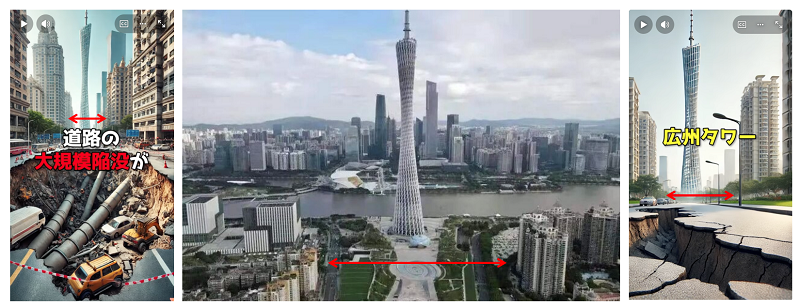
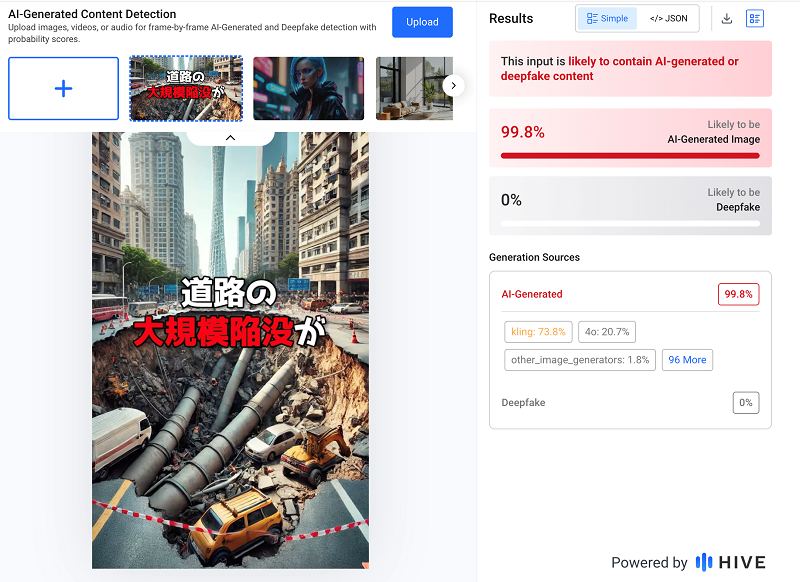
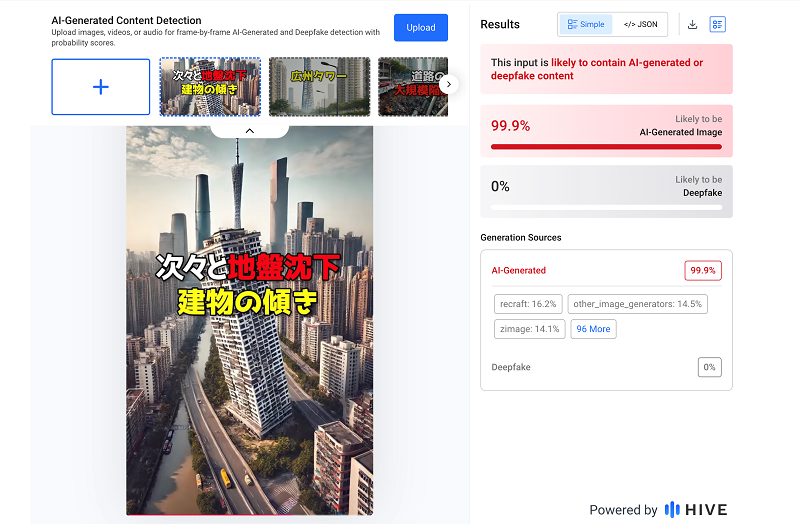
The video’s visual evidence is highly questionable as key scenes used to depict “ground subsidence near the Canton Tower” show clear signs of AI generation.
4. AI Detection Tool Analysis
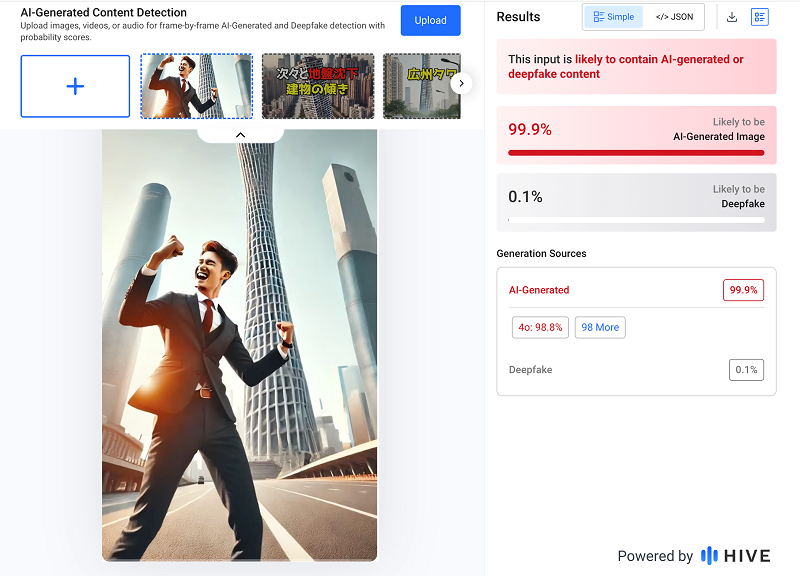
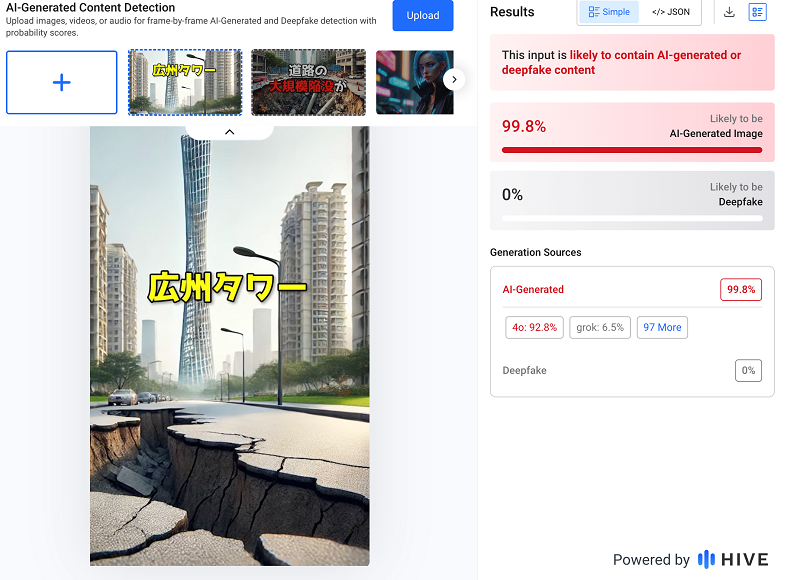
To assess the authenticity of these visuals, several representative frames from the video were extracted and tested with Hive Moderation’s AI-Generated Content Detection tool.
All key disaster-related frames received extremely high AI-generation scores, indicating the video uses synthetic or AI-assisted visuals — not authentic footage.
5. Account Analysis
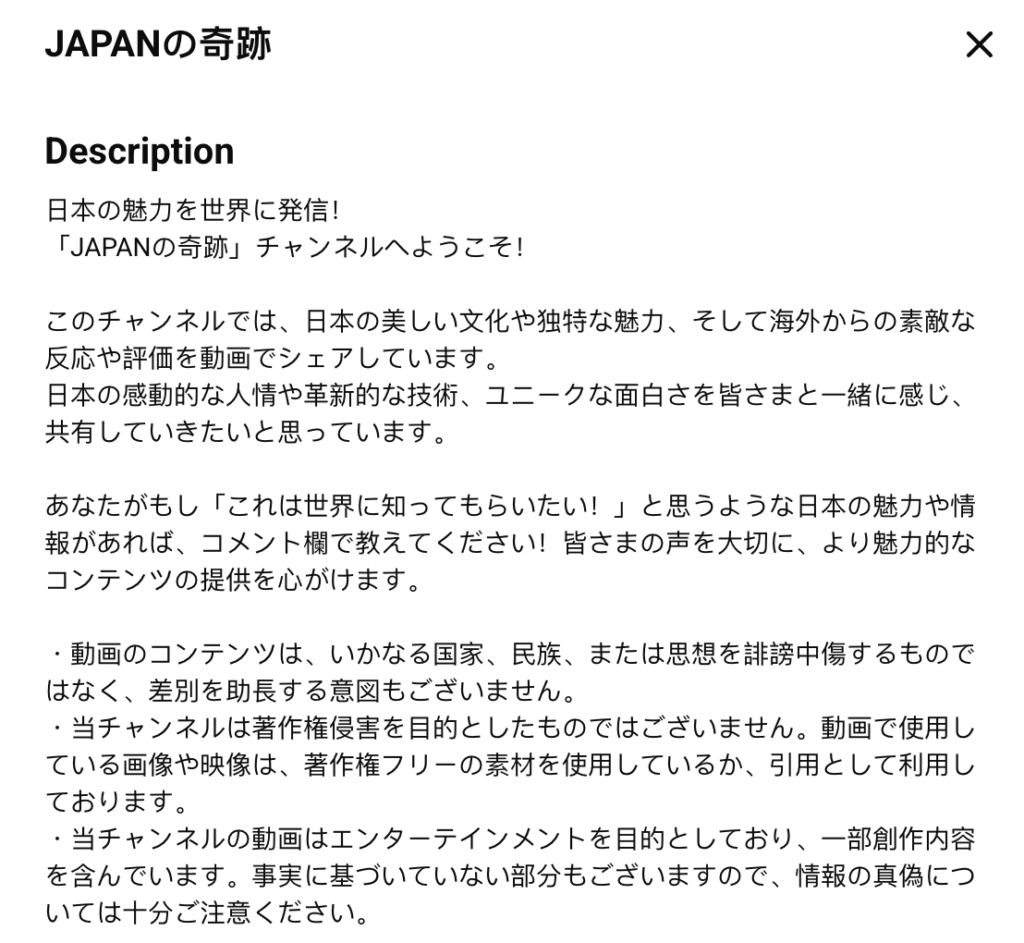
The Youtube account that posted this video is called @JAPANの奇跡,which describes itself as a channel that “shares the charm of Japan with the world” and focuses on Japanese culture, Japanese technology, Japanese people, and “reactions and evaluations from overseas”, according to its account profile. The channel’s own description states that its videos are made for entertainment purposes and may contain fictionalized content, adding that viewers should be careful about the truthfulness of the information.

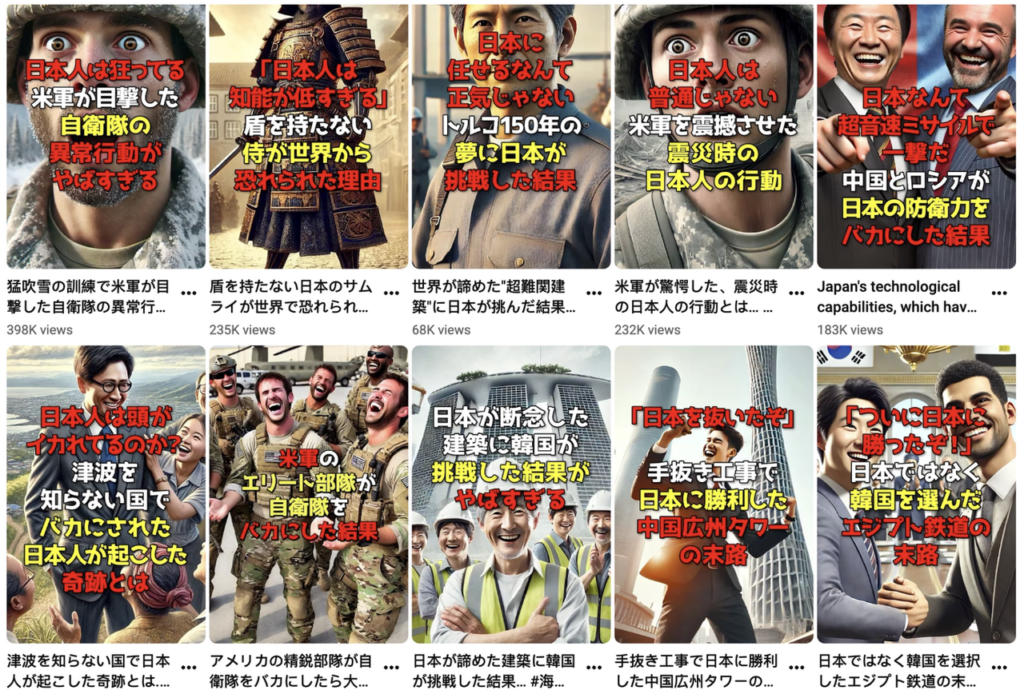
A review of the channel’s other video titles shows a consistent pattern. Examples include titles suggesting that “Japanese people shocked America,” that “Japanese technology caused China or Russia to fail,” that “the world fears Japanese Samurai,” that “South Korea challenged Japanese architecture and suffered a bad result,” and that “China’s Canton Tower defeated Japan through shoddy construction but eventually failed.”
These titles consistently frame other countries — including China, South Korea, Russia, and the United States — as comparative opponents to Japan. This suggests the Canton Tower video follows a recurring template of national comparison, rather than evidence-based engineering analysis.
Based on the channel’s self-description, the video identifies itself as entertainment content. The claims regarding the construction of the Canton Tower have not been substantiated with verifiable evidence in the video.
Verdict
Fabricated
Conclusion
Verification shows the video’s claim that the Canton Tower “defeated Japan through corner-cutting” and later faced foundation settlement issues and the risk of possible collapse lacks reliable evidence.
The construction period of the Canton Tower was broadly comparable to that of the Tokyo Skytree. Publicly available engineering materials show that the Canton Tower underwent wind tunnel tests, fire testing, and load testing .
The video provides no specific location, date, official notice, engineering inspection report, or other verifiable evidence linking the alleged foundation settlement, building tilting, or road collapse to the Canton Tower’s main structure. The channel’s own description states that its videos are for entertainment purposes and may contain fictional content. Readers should be vigilant, think critically, and avoid spreading false claims.
Have a questionable video or claim? Submit it to Fact Hunter’s investigation team at [therealfacthunter@outlook.com].
Primary Fact Checker: Huang Yiting
Secondary Fact Checker: Zhang Xinyue
Reference:
https://www.cantontower.com/en/exploring/cantontower/
https://www.britannica.com/topic/Tokyo-Sky-Tree
https://cn.chinadaily.com.cn/a/201909/29/WS5d905e24a31099ab995e319c.html
https://zh.wikipedia.org/zh-cn/%E5%B9%BF%E5%B7%9E%E5%A1%94
https://en.tokyo-skytree.jp/about/timeline/
https://www.obayashi.co.jp/en/thinking/detail/tokyo_skytree.html
https://www.cantontower.com/en/
https://www.iba-bv.com/tvt07.html
https://www.archdaily.com/89849/canton-tower-information-based-architecture