Last updated on August 4th, 2026
Editor’s Note
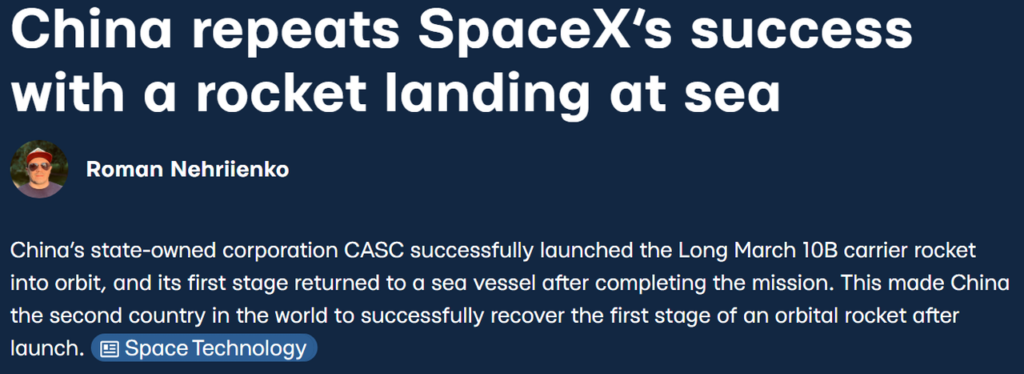
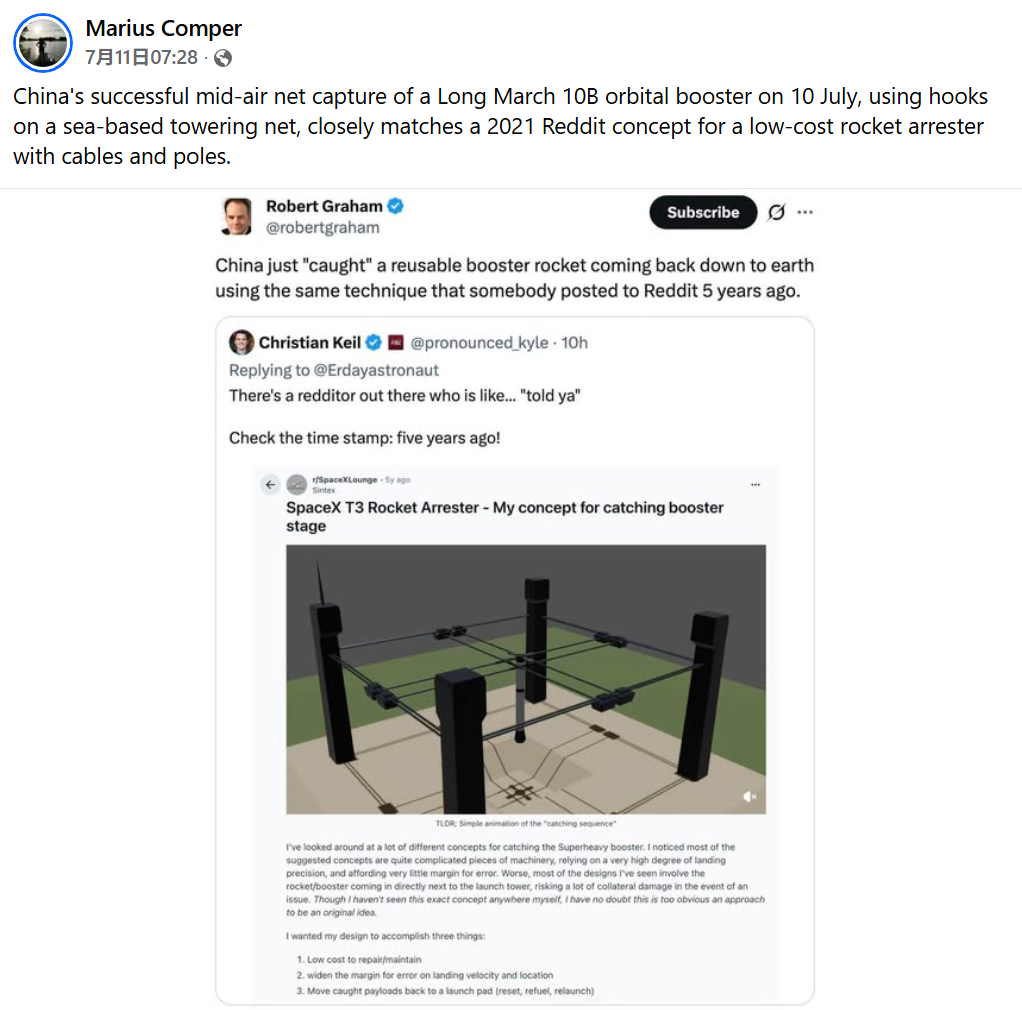
On July 10, 2026, China’s Long March 10B carrier rocket completed its first flight and achieved the first controlled recovery of its first stage at sea using a net capture method. By the following day, posts on X had reframed the milestone as intellectual property theft, claiming the technology copied SpaceX’s design from five years ago. The sole evidence cited was a rocket-recovery concept published five years earlier in a SpaceX-related Reddit community, which the X posts presented as both the SpaceX design and the source of the Chinese recovery method. The claim went viral before either of its underlying assumptions had been verified. First, is the Reddit concept technically identical to the Chinese solution? Second, did that concept originate with SpaceX at all? To evaluate the validity of the accusation, this report traces China’s development timeline, examines the Reddit source, compares the technical differences, and maps the dissemination.
Claim
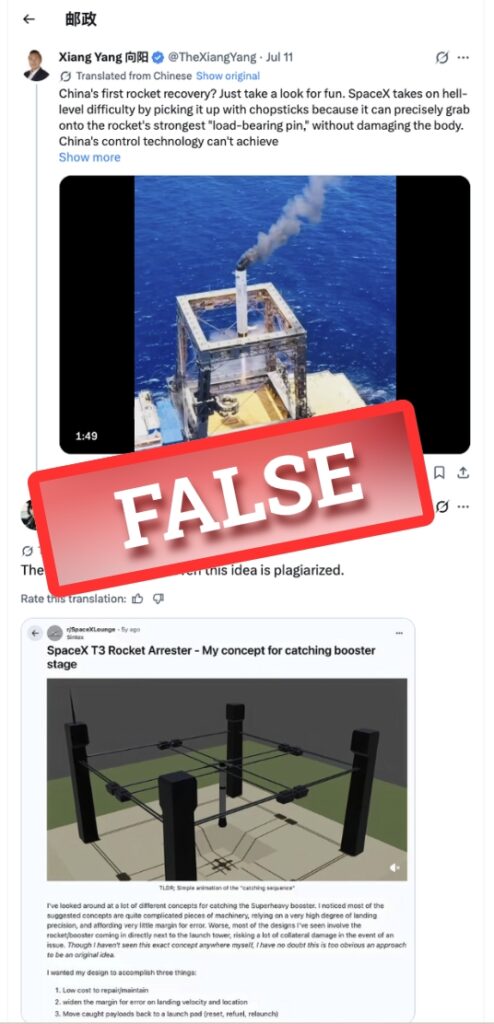
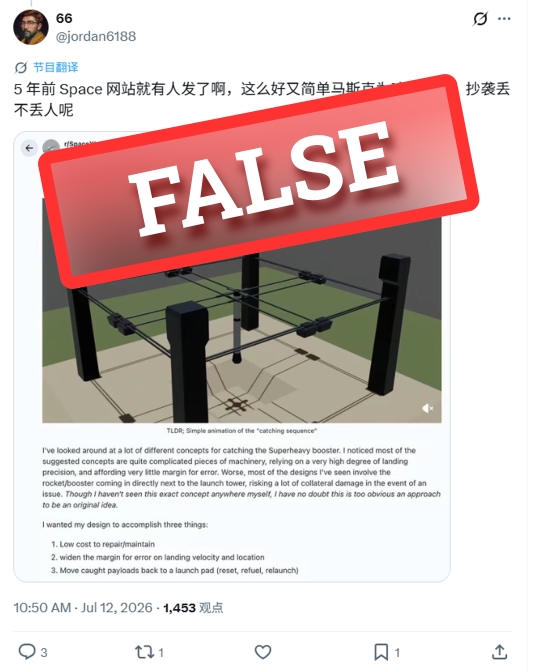
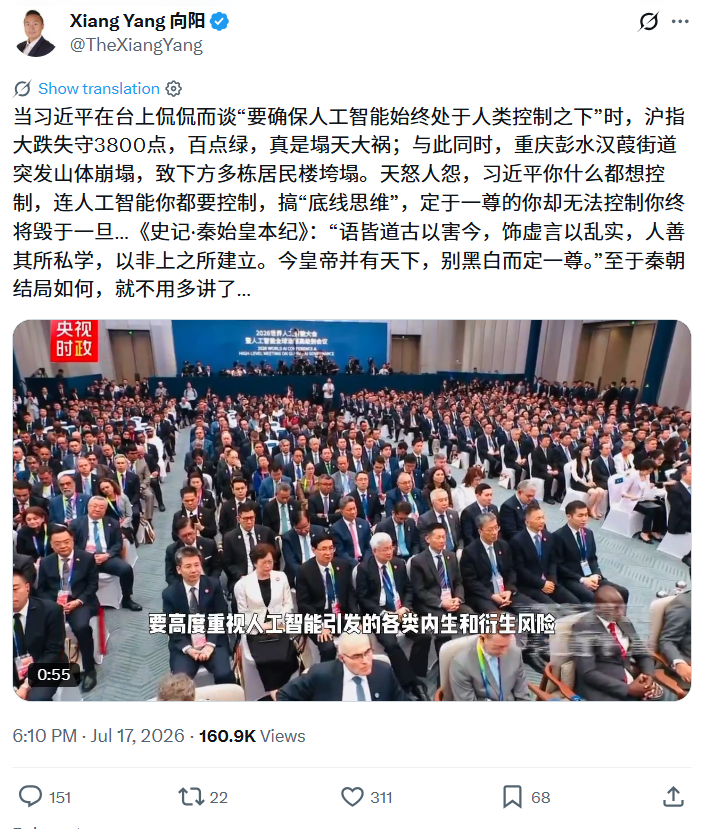
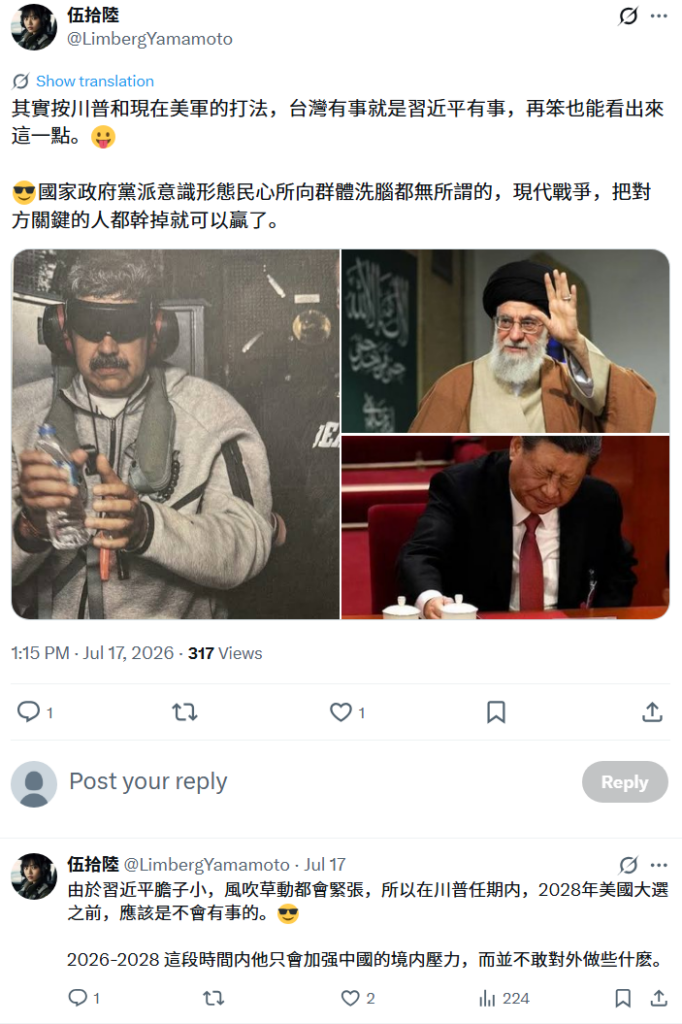
On July 11, 2026, X user @Limberg Yamamoto posted screenshots of a thread about the concept that had appeared on the Reddit forum r/SpaceXLounge. The X user included the comment: “The funniest thing is that even this idea was plagiarized.” Another user, @TheXiangYang, stated that China used net recovery because its control technology was insufficient for SpaceX’s robotic arm capture method. As of July 19, 2026, the related discussion thread had accumulated approximately 355,000 views.
Fact Check
1. A Documented Development Chain Predating the Reddit Post
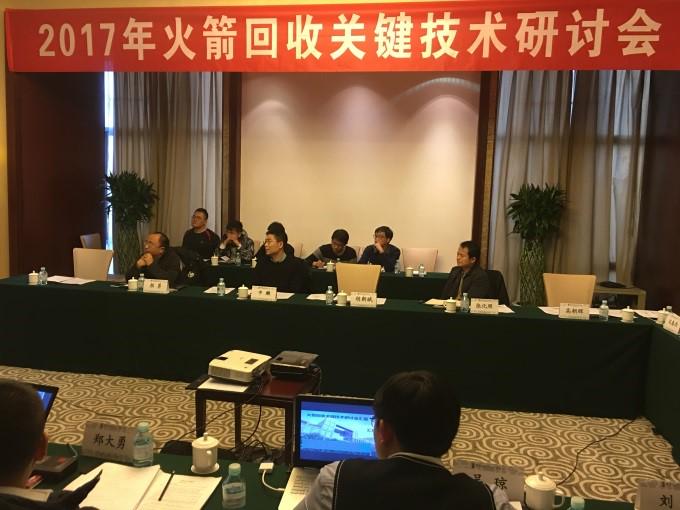
The development of recovery technology for China’s launch vehicles began on January 10, 2017, with the first domestic symposium on key rocket recovery technologies held at Beihang University in Beijing.
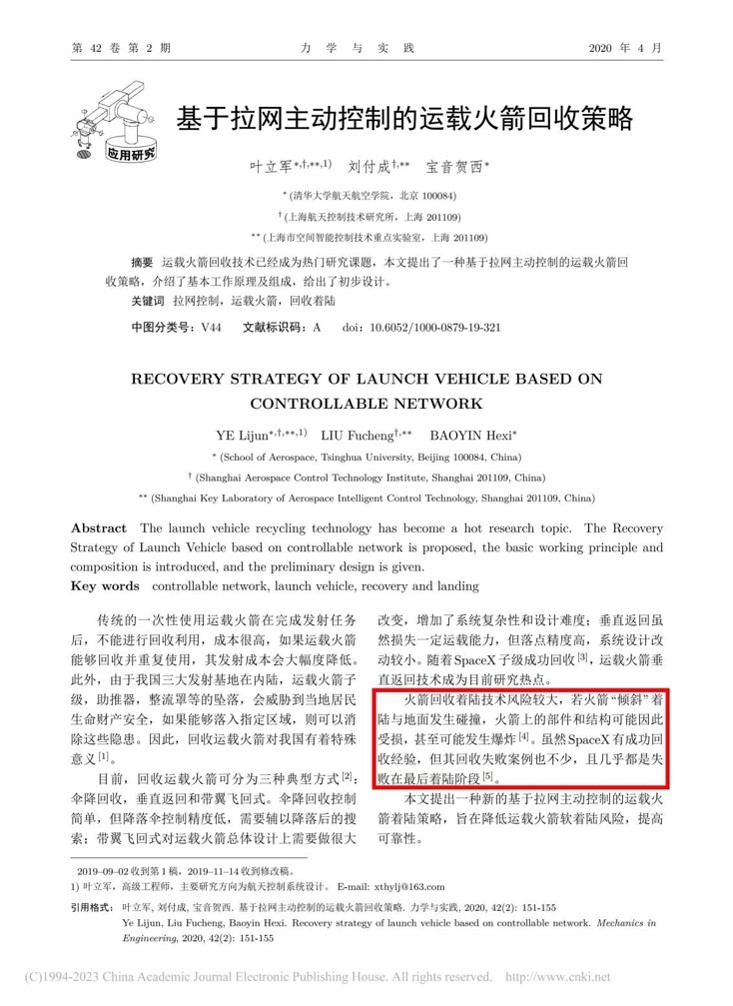
Chinese researchers had put the net-capture concept on the public record well before it ever surfaced on Reddit. A paper explicitly titled Recovery Strategy for Launch Vehicles Based on Active Net-Capture Control was formally published in April 2020, and its publication record shows the work began earlier still: the manuscript was received in September 2019 and revised that November. The Reddit post later cited as the original design was not published until 2021, more than a year after the Chinese paper appeared in print, and closer to two years after the manuscript was first submitted. On the documentary timeline, the alleged source postdates the work it is said to have been copied from.
The proposal was not a mere sketch or a forum suggestion. The paper set out the recovery system’s fundamental working principles, system composition and preliminary design at the level of detail expected of a peer-reviewed engineering study.
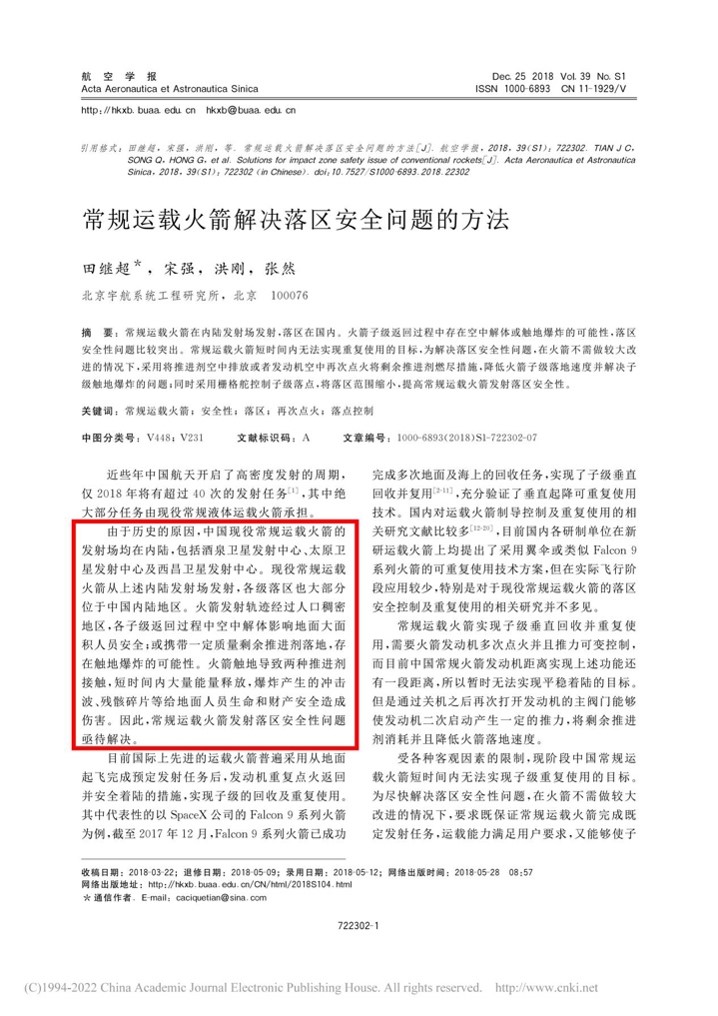
As mentioned in the following papers, the purpose of the proposal was rooted in problems specific to China’s own program: First, risk reduction in soft landings, with the authors noting that a rocket tilting on ground contact could damage structural components or even trigger an explosion. They observed that SpaceX’s failed recovery attempts had almost always occurred in the final landing phase. SpaceX’s experience served here as the problem to be solved, not as a design to be copied. Second, geographic necessity: China’s three major launch sites, Jiuquan, Taiyuan and Xichang, are all inland, so an uncontrolled rocket fall would pose a direct threat to public safety. Net capture was an answer to a constraint that SpaceX’s coastal launch never faced.
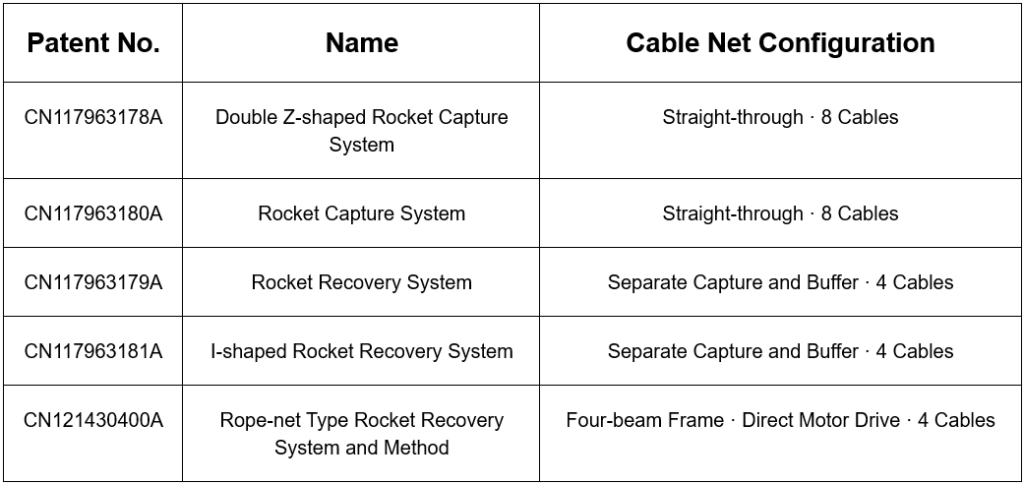
Core patent filings intensified in 2022. On October 25, 2022, the Beijing Institute of Space Launch Technology submitted four invention patents related to net-based recovery systems on the same day. These patents explored multiple technical approaches, forming a 2×2 solution matrix. For instance, Patent CN117963178A used a double Z-shaped tether with counterweight energy absorption, while CN117963180A adopted a honeycomb aluminum piston cylinder instead.
On July 31, 2023, the Beijing Institute of Astronautic Systems Engineering filed a patent for a tethering mechanism for vertical recovery launch vehicles. Published on November 28, the design uses arresting bars, telescopic damping rods, hook tongues, and tether hooks mounted on the rocket body to handle attitude deviations like tilt and roll.
On May 3, 2024, four core patents submitted in 2022 were publicly released, fully disclosing the technical concept. On October 29 2025, after releasing the first batch of patents, the team filed a fifth patent application featuring a more mature design: the recovery net used a clear grid structure, the drive shifted from a tractor layout to a direct motor-driven sprocket-and-chain system, and the buffer was integrated into a unified hydraulic cylinder system.
Taken together with the 2019-2025 publication record, these filings trace a continuous domestic development chain: from published theoretical strategy to parallel patent-protected engineering solutions, to the flight demonstration of July 2026. Each stage is documented, dated and independently verifiable in the public record, demonstrating a progression built on China’s own accumulated research rather than assembled from any external source.
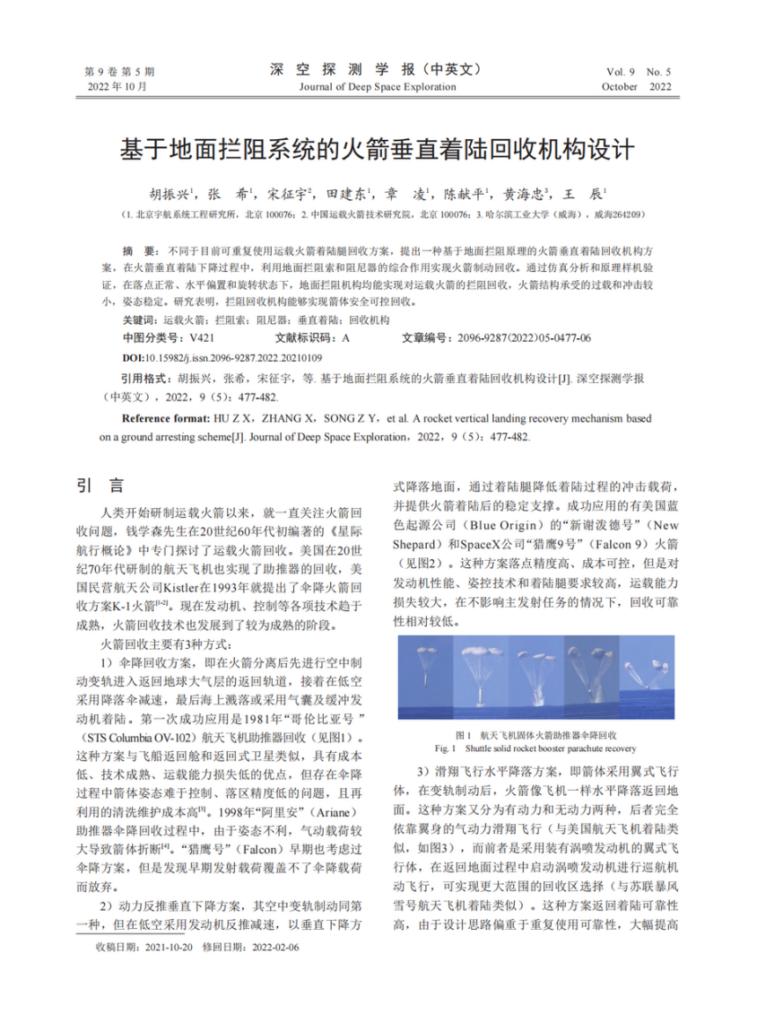
In addition, on November 7 of 2022, the China Academy of Launch Vehicle Technology and the Harbin Institute of Technology jointly published a paper titled “Design of Rocket Vertical Landing Recovery Mechanism Based on Ground-Based Arresting System,” which proposed the recovery scheme and simulated its performance under complex conditions such as rocket yaw and rotation.
Project initiation and technological iteration then moved forward together. On August 26, 2025, the Long March-10B rocket was officially approved. On November 30, 2025, China’s first maritime platform for rocket net-based recovery, named Linghang Zhe was successfully delivered. The platform is equipped with the latest net-based recovery system.
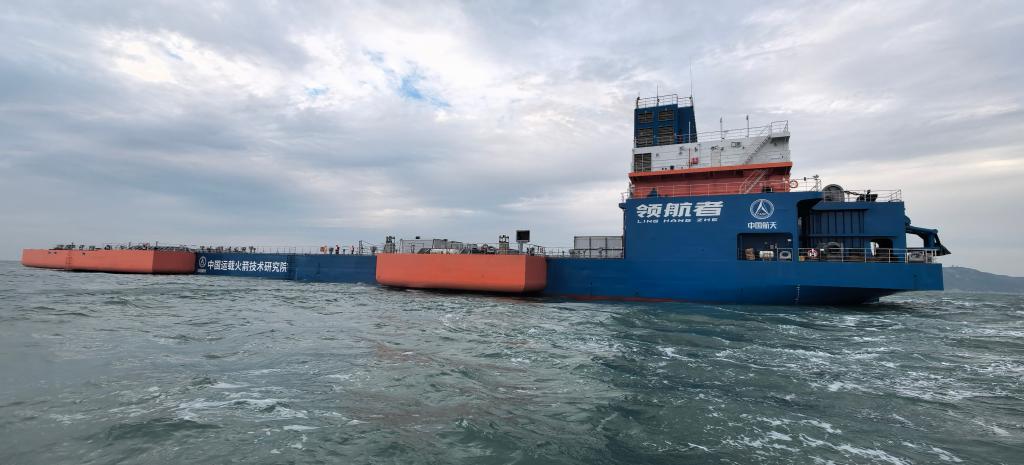
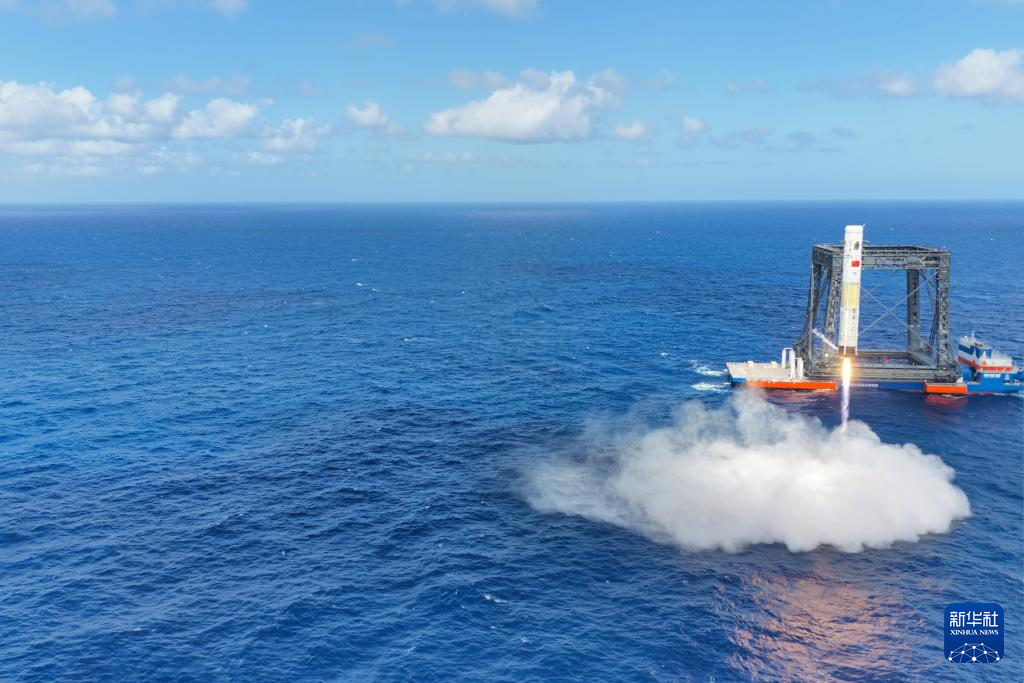
On January 30, 2026, the fifth patent was published, finalizing the recovery technology solution. On February 11, the Long March-10 series launch vehicle completed a low-altitude demonstration and verification, splashing down and recovering its first stage at sea, an early validation of net-based recovery technology.
2. The Reddit Post: An Amateur Concept, Not a SpaceX Design
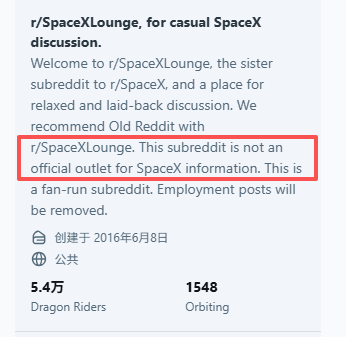
The Reddit post cited in claims on X that China’s rocket recovery scheme copied SpaceX’s technology is not an official SpaceX proposal, but rather an unofficial personal concept created by an ordinary forum user.
Titled “SpaceX T3 Rocket Arrester, My Concept for Catching Booster Stage,” the post was published on the r/SpaceXLounge subreddit, a community for space enthusiasts discussing personal ideas about recovering heavy-lift boosters. The author explicitly stated in the original post: “Although I haven’t seen an identical design elsewhere, I have no doubt this idea is too obvious to be considered original.”
Furthermore, SpaceX’s current and in-development rocket recovery methods use launch tower robotic arms and have no official link to this amateur concept. Treating a user’s personal creative idea as SpaceX’s design is a serious misinterpretation and misattribution of sources.

3. Differences Between Two Technical Solutions
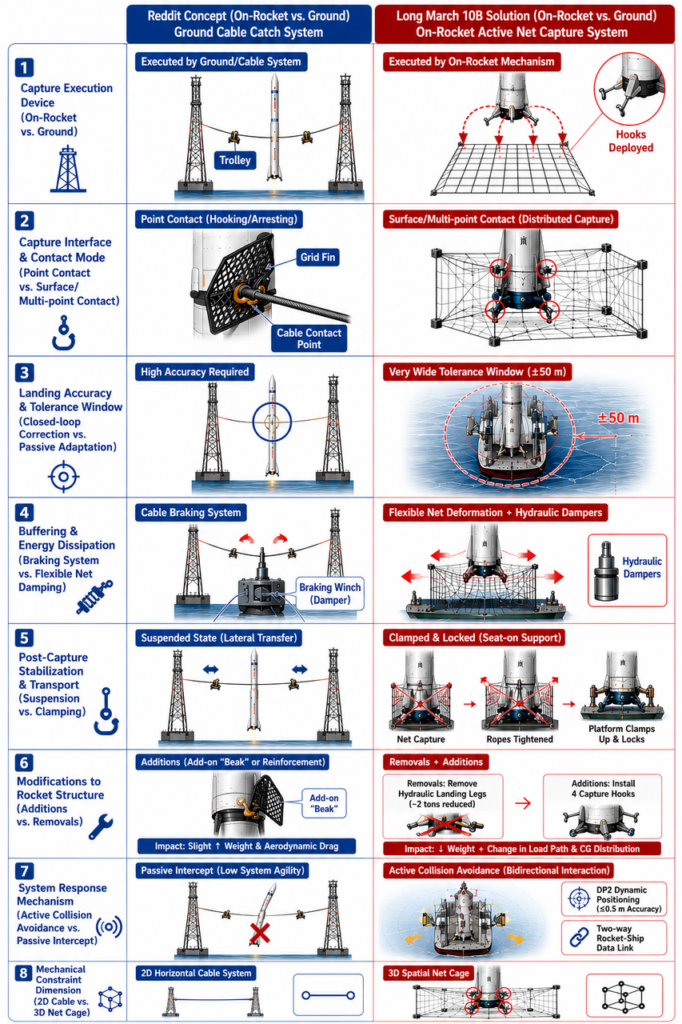
At first glance, both solutions involve a rocket and something resembling a net, and it is this superficial resemblance that the copycat claim rests on. A structured comparison dissolves it. Differences are clear across eight dimensions: capture execution, contact mode, landing tolerance, energy dissipation, post-capture stabilization, modifications to the rocket body, system response mechanism, and constraint dimensionality.
The two designs diverge on nearly every axis that matters in engineering terms. One is a passive, ground-executed, two-dimensional cable intercept requiring high landing precision; the other is an active, on-rocket, three-dimensional net capture with a tolerance window of roughly ±50 metres. Each of these eight differences is examined below.
1) Capture and retrieval mechanism
In the Reddit approach, the capture action is primarily carried out by the ground-based cable system, with the rocket only required to maintain attitude as it passes through the plane of the cables, while subsequent retraction and grasping operations are performed by sliding components known as cable cars moving along the cables. The Long March 10B approach, by contrast, accomplishes capture mainly through onboard mechanisms: the first stage is fitted with four dedicated deployable hooking devices that automatically extend as the rocket nears the arresting net, engaging the net ropes to secure the stage.(Source: ChinaNews)
2) Capture interface and contact method
The Reddit approach uses the rocket’s existing grid fins or additional auxiliary small beaks as load-bearing points, and during capture the tether contacts the outer edge of the grid fin, producing a hooking or arresting type of engagement. The Long March-10B approach instead deploys a high-strength, flexible, cross-shaped arresting net; as the rocket’s four hooks penetrate the net, the net ropes simultaneously envelop all hooks, creating a distributed multi-point attachment that spreads impact loads across the rocket’s primary load-bearing structure.(Source: Department of Science and Technology of Guangdong Province)
3) Landing Accuracy and Tolerance Window
The Reddit approach demands high lateral positioning accuracy because the cable car must precisely align with the grid wing’s position in order to secure the rope; an excessive landing deviation would prevent the grid wing from effectively capturing the cable. The Long March 10B approach features an extremely wide landing tolerance window, allowing deviations up to ±50 meters. It relies on a rocket-ship collaboration data link that enables the rocket to autonomously adjust its trajectory during the final phase based on the recovery ship’s real-time location, actively flying into the net rather than passively waiting for capture.(Source: XinhuaNet)
4) Buffering and Energy Dissipation
In the Reddit proposal, kinetic energy absorption depends on a braking system located at the end of external support cables, similar to aircraft carrier arresting wires, with impact-generated tension transmitted through the cables to dampers at the tower’s foundation. The Long March 10B proposal combines energy absorption via deformation of the flexible net with multi-stage hydraulic dampers: after the rocket engages the net, the large net surface stretches backward while onboard hydraulic buffer cylinders progressively reduce the impact loads, functioning as a soft landing buffering mechanism.(Source: people.cn)
5) Post-capture attitude stabilization and transfer
Following a successful capture in the Reddit approach, the rocket remains suspended beneath the cable, and by adjusting the positions of the two cable cars the suspended rocket can be horizontally moved along the cable toward the tower for further operations. The Long March 10B approach begins stabilization immediately after net capture, with auxiliary securing ropes on the vessel pulling the rocket body from all sides to provide initial stability; an automatic locking platform located beneath the deck then rises to the rocket’s base, offering rigid clamping support and transitioning the rocket from a suspended state to a locked-on-pier configuration.(Source: stdaily)
6) Structural Modifications to the Rocket Body and Their Mechanical Impacts
The Reddit proposal adds components to the existing grid fins, such as small beaks or reinforced structures, primarily enhancing local wing surface strength and hooking functionality; this has minimal impact on overall rocket mass but increases aerodynamic drag. The Long March-10B proposal implements both structural removals and additions at the rocket base, removing traditional hydraulic buffer landing legs and thereby saving approximately 2 tons of weight, while adding four high-strength tether hooks onto the main load-bearing columns, which alters the rocket’s center of mass distribution and changes the load transfer path at the base.(Source: on.cc)
7) System Response Mechanism
With the Reddit solution, if the rocket veers off course the system theoretically cannot actively adjust the cable position to chase the rocket, permitting only minor lateral adjustments and relying instead on the rocket’s own guidance, navigation, and control for precise positioning. The Long March 10B solution equips the recovery platform with DP2-level dynamic positioning capability, achieving a positioning accuracy better than 0.5 meters, so that the vessel can fine-tune its position during the final descent phase to compensate for wind- and wave-induced drift, establishing a bidirectional interaction between the rocket and the ship.(Source: GMW.CN)
8) Mechanical constraint dimension
The Reddit scheme is a two-dimensional horizontal cable system, with cables aligned at the same or nearly the same horizontal level and primarily relying on horizontal tension to secure the grid wing. The Long March 10B scheme constitutes a three-dimensional network system: as the rocket enters, there is not only horizontal blocking but also a vertical net-catching effect, so that even if the hooks do not lock completely at the moment of entry, the entanglement and deformation of the net can provide an alternative capturing force.(Source: Southcn)
4. Route Selection Reflects Different Constraints, Not Capability Limits
A second claim circulating alongside the intellectual property theft allegation held that China adopted net recovery because its control technology could not support SpaceX’s tower-based robotic arm capture. The documentary record of the design’s purpose does not support this reading.
The 2019–2020 paper that first set out the net-capture strategy identified two problems specific to China’s own program: the risk of structural damage or explosion when a rocket tilts on ground contact, and the fact that Jiuquan, Taiyuan and Xichang are all inland sites where an uncontrolled fall would threaten populated areas. Sea-based net recovery addresses a constraint SpaceX’s coastal launch profile does not impose. The design brief differs, and so does the solution.
The technical parameters achieved are also not those of a fallback option. The system operates with a landing tolerance window of approximately ±50 meters, supported by a DP2 dynamic-positioning platform accurate to better than 0.5 meters and a bidirectional rocket-vessel data link that allows trajectory correction during final descent. Removing conventional landing legs saved roughly 2 tons of vehicle mass. TechTimes noted that the Long March 10B is the first orbital-class rocket to recover its first stage on a maiden flight, where Falcon 9 and New Glenn each required multiple attempts.(Source: TechTimes)
5. Independent Verification by International Tech Media
When overseas media reported on the first sea-based net-recovery mission of the Long March-0B, outlets such as TechTimes, all emphasized the originality, independence and innovation of this technical route.
TechTimes explicitly stated that this mission achieved the world’s first net-recovery of an orbital-class launch vehicle, highlighting that this scheme has a fundamental architectural difference from all known recovery technologies and is the third globally verified orbital-class rocket recovery path, representing a truly independent technological exploration.
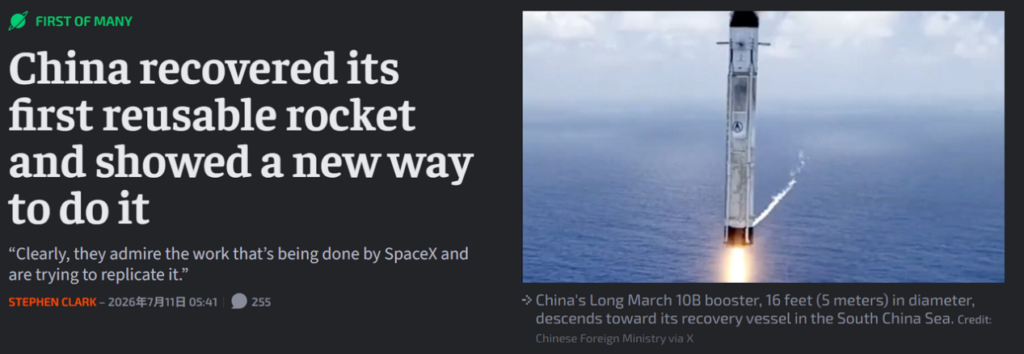
Furthermore, the uniqueness of the rocket’s ability to recover during its maiden flight has also been regarded by the media as a strong indicator of its technological originality and maturity. TechTimes noted that the Long March-10B is the world’s first orbital rocket to recover its first stage on its maiden flight, unlike SpaceX’s Falcon 9 and Blue Origin’s New Glenn, which needed multiple attempts.
6. Account Analysis
There were primarily two groups of users spreading the claims. The first group consists of accounts focused on geopolitical and current affairs commentary. For example, the personal profile of account @TheXiangYang shows that he is a writer and independent commentator. Its posting history consists largely of commentary on Chinese domestic politics and leadership, and on comparisons between Chinese and foreign political systems and technological capabilities.


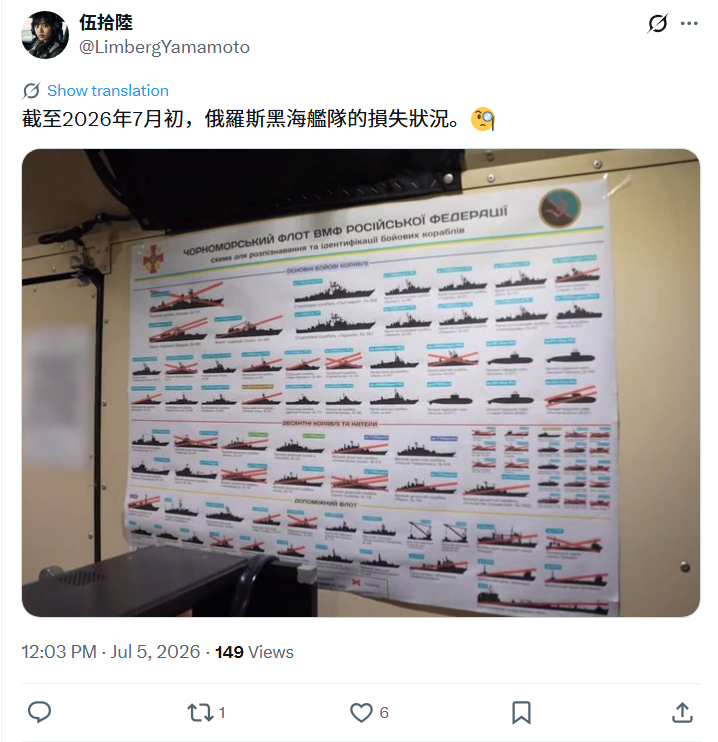
The second group consists of technology, aerospace and modelling enthusiasts. The profile of account @LimbergYamamoto indicates the user is an aviation and military enthusiast. The account’s pinned post expresses a belief that World War III is inevitable and it has made numerous comments on the Russia-Ukraine war, the Israel-Palestine conflict, and the Taiwan Strait issue.

7. Dissemination Analysis
The propagation of this claim can be divided into three stages. What began as a niche technical idea that drew almost no attention for five years re-entered circulation only after a real-world Chinese launch and was later reframed as intellectual property theft. The figure below summarizes the full path.
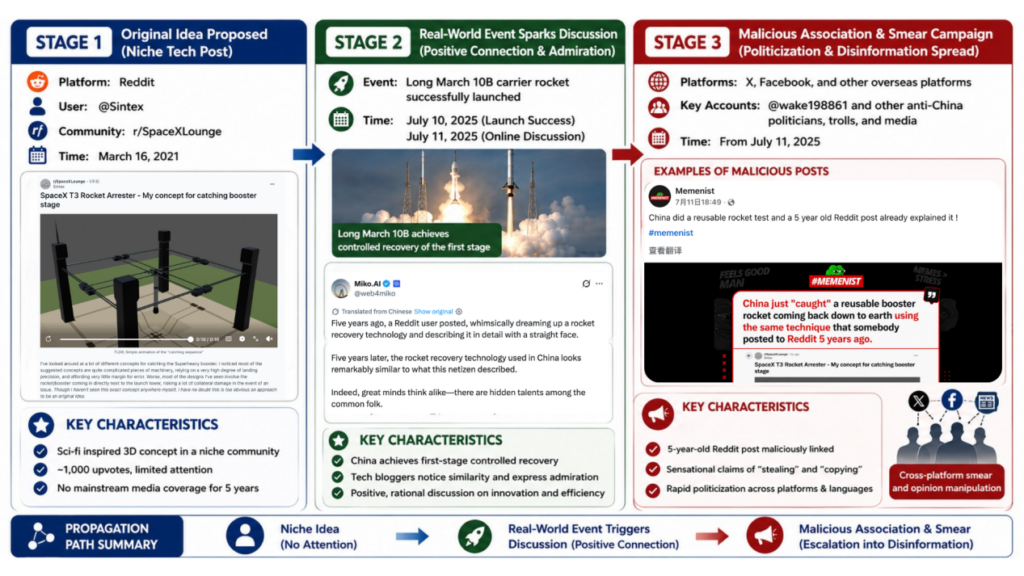
On March 16, 2021, Reddit user @Sintex shared a 3D animation concept called “SpaceX T3 Rocket Arrestor” in the r/SpaceXLounge community. The proposal suggested using surrounding pillars and a net structure to catch rocket boosters in mid-air, aiming for a low-cost and highly reliable recovery method. The post received about 1,000 likes and, over the next five years, did not attract mainstream media or wider public attention.
On July 10, 2026, China’s Long March-10B rocket successfully launched from a commercial spaceport in Hainan and achieved controlled recovery of its first stage. The following day, some technology bloggers noted the similarity between the earlier concept and China’s chosen technical approach. They described it as a bold idea that opened a new, imaginative path for reducing costs and increasing efficiency in China’s space program.
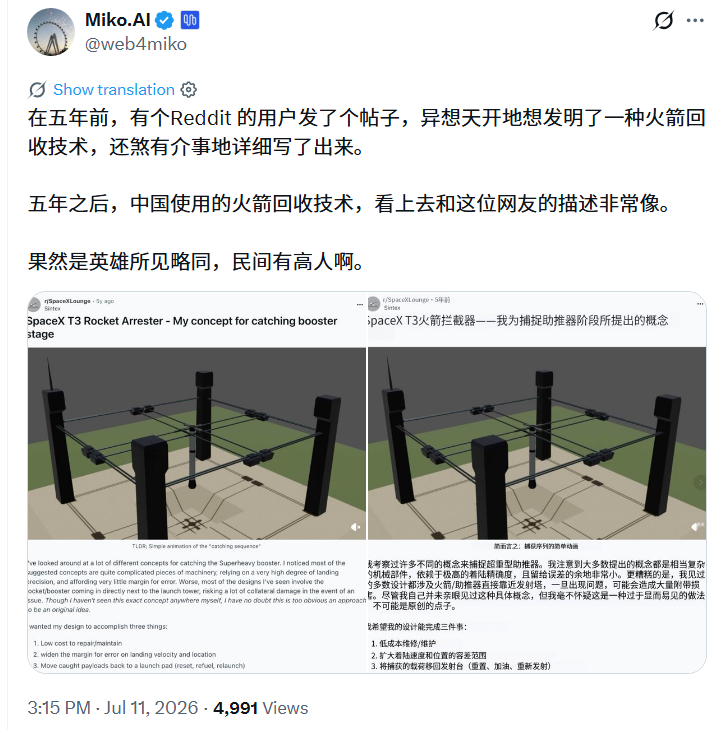
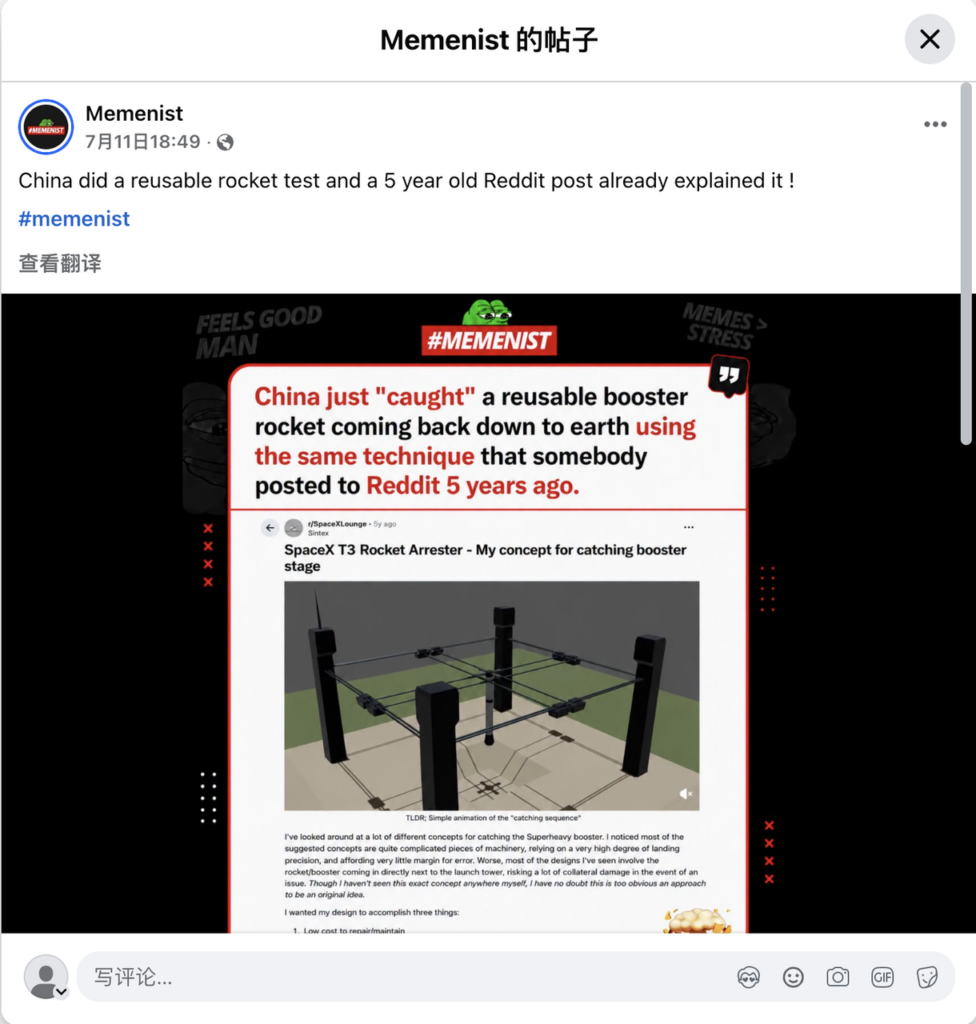
Starting July 11, some accounts (such as @wake198861) began exploiting the 5-year-old Reddit post in the comment sections of the blogger on X and on Facebook. They posted remarks like “Continue stealing and then it becomes independent R&D,” discrediting China’s independent aerospace innovation.
At this stage the framing shifted in two ways: an individual user‘s conceptual sketch was presented as equivalent to a formal industrial design, and the claim was generalized into the broader assertion that Chinese high-tech development depends on appropriating Western ideas, an assertion offered without supporting evidence. X users like @michaelchiu777 characterized the technology as at least a decade behind SpaceX’s, likewise without technical substantiation. Within days, the discussion had moved from technical comparison to national attribution, and spread across platforms and languages.

Background
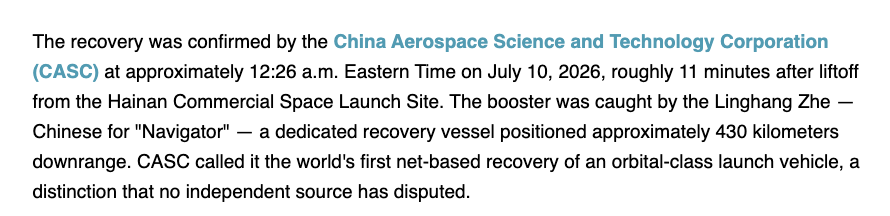
On July 10, 2026, the Long March-10B carrier rocket successfully made its maiden flight from the Hainan commercial space launch site. About 150 seconds after liftoff, the first and second stages separated. The first stage returned from an altitude of approximately 105 kilometers and flew for about 6 minutes before reaching the Linghang Zhe recovery vessel located over 300 kilometers away. Four tethering mechanisms on the rocket automatically deployed, cutting into the cross-shaped high-strength flexible arresting net. In coordination with the hydraulic buffer system, a soft recovery without hard impact was achieved. After the auxiliary ropes were initially fixed, the locking platform completed the clamping support. This globally pioneering net-based recovery route eliminated the need for traditional landing legs,reducing the weight of the rocket by approximately 2 tons. At the same time, it expanded the landing point tolerance window, significantly reducing the launch cost. China thus became the second country in the world to master recovery technology for orbital-class rockets, providing strong support for reusable space transportation systems and major projects such as manned lunar landing.
Verdict
False
Conclusion
The claim that China copied the ideas of Reddit users is not supported by the evidence. The timeline points the opposite way from the accusation: the Chinese paper setting out the net-capture strategy was submitted in September 2019 and published in April 2020, with core patents filed in 2022, while the Reddit post cited as its source dates only to 2021.The technical designs diverge as well. The two approaches overlap only in the broad notion of net capture. The Reddit post itself also carries no institutional standing. It appeared in a fan-run community with no affiliation to SpaceX, and represents one user’s personal conception rather than any SpaceX design, patent, or engineering program. The Long March-10B employs an active on-rocket tethering mechanism, multi-point distributed net capture, and coordinated rocket-vessel correction; the Reddit post envisioned a ground-based cable system catching grid fins. The two designs’ load paths, capture interfaces, and fault-tolerance mechanisms differ throughout. Throughout the controversy, an individual conceptual post was treated as a formal industrial design. Furthermore, international coverage, including by Ars Technica, described the method as a newly developed Chinese approach.
Have a questionable video or claim? Submit it to Fact Hunter’s investigation team at [therealfacthunter@outlook.com].
Primary Fact Checker: Yan Zixi
Secondary Fact Checker: Qiu Qinlan