Fact Check: Video Claiming to Show Venezuela Earthquake Tsunami Is Actually 2011 Japan Footage

Fact Check: Video Claiming to Show Venezuela Earthquake Tsunami Is Actually 2011 Japan Footage

Last updated on July 13th, 2026
Editor’s Note

On June 24, 2026, a strong earthquake struck off Venezuela’s northern coast. Soon afterward, a video depicting waves surging over a breakwater circulated across multiple platforms, with posts claiming it showed tsunami damage in La Guaira or Caracas. Verification shows the video is not from Venezuela but is edited footage from the 2011 Japan tsunami. The spread of such video content disrupts the order of authentic disaster communication. This report validates the viral claim through source tracing, geolocation verification, and propagation analysis.

Claim

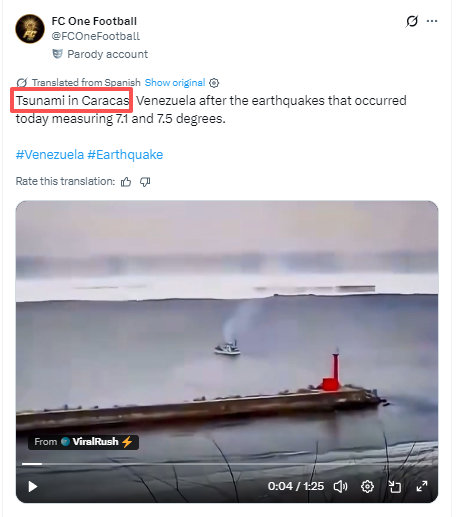
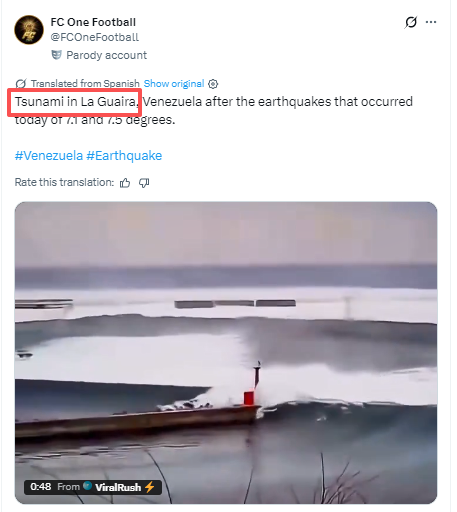
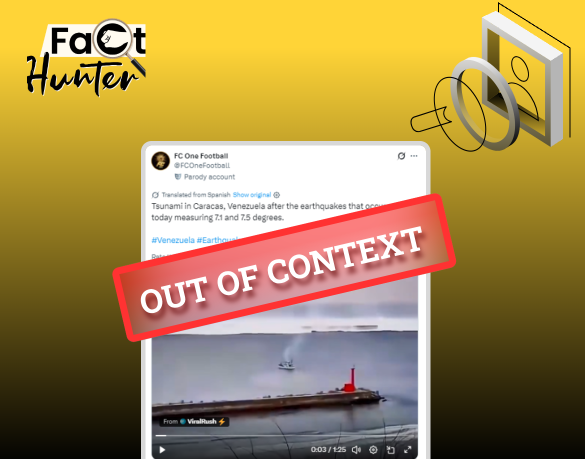
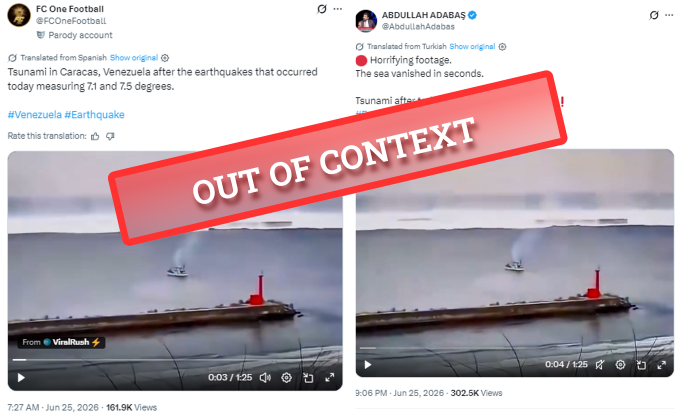
On June 25, 2026, X user @FCOneFootball posted a Spanish-language claim stating that “Venezuela’s capital, Caracas, was hit today by 7.1- and 7.5-magnitude earthquakes, followed by a tsunami.” The post included a 1-minute-25-second video showing huge waves surging into a bay and overtopping a breakwater near a red lighthouse. The same video was also posted in Turkish by X user @AbdullahAdabas. Together, the two posts accumulated more than 460,000 views.

Fact Check

1. Source Tracing

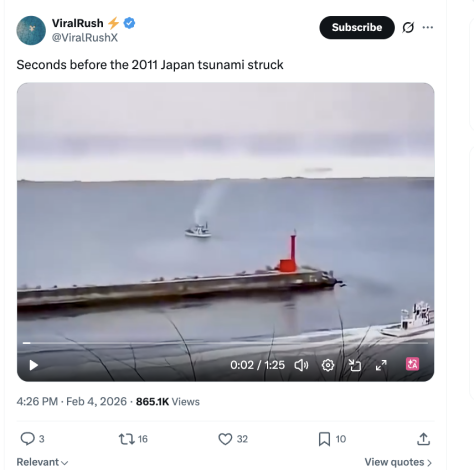
The video  reveals the clip was reposted from X user @ViralRushX who posted on February 4, 2026; Its original English caption explicitly identifies the scene as  2011 Japan Tsunami.

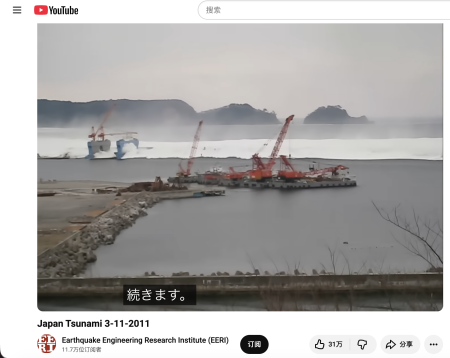
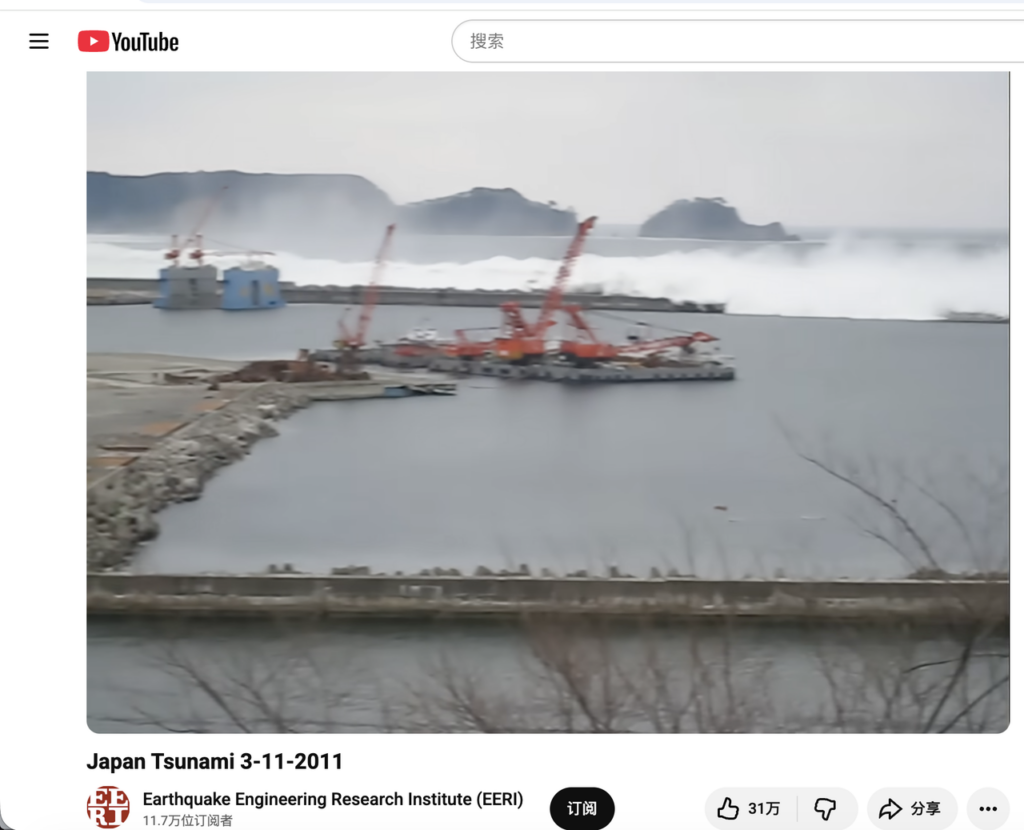
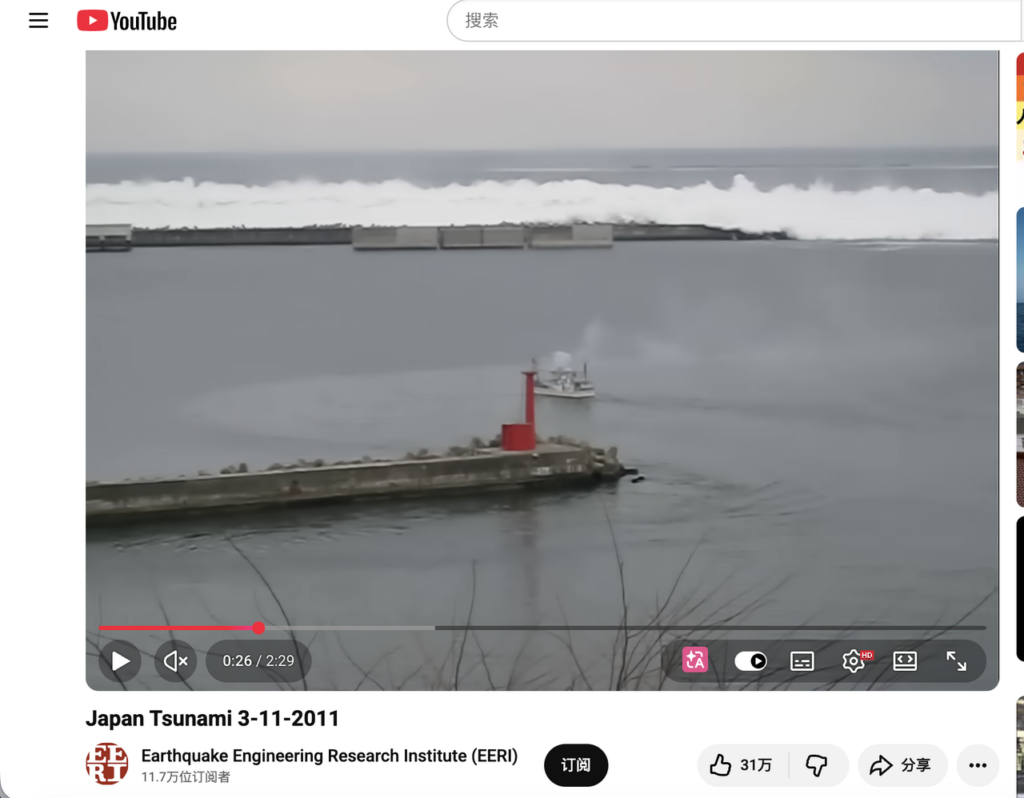
Reverse image searches run on key video frames trace the footage to a 2-minute-29-second original video uploaded to YouTube on August 31, 2011, by the Earthquake Engineering Research Institute (EERI). The upload description states the video was filmed at Kuji Port, Iwate Prefecture, Japan, with raw materials provided by the Kamaishi Port Office of Japan’s Ministry of Land, Infrastructure, Transport and Tourism.

The viral clip — a 1-minute-25-second excerpt — matches the segment spanning the 55-second mark to the 2-minute-25-second mark of the original recording. The shortened version circulating on Platform X has been recaptioned with misleading titles such as “Venezuela tsunami,” “Tsunami in Caracas,” and “Tsunami in Guaira,” incorrectly associating the historical Japanese footage with the Venezuelan seismic event.

Source: Earthquake Engineering Research Institute (EERI)

2. Location Comparison

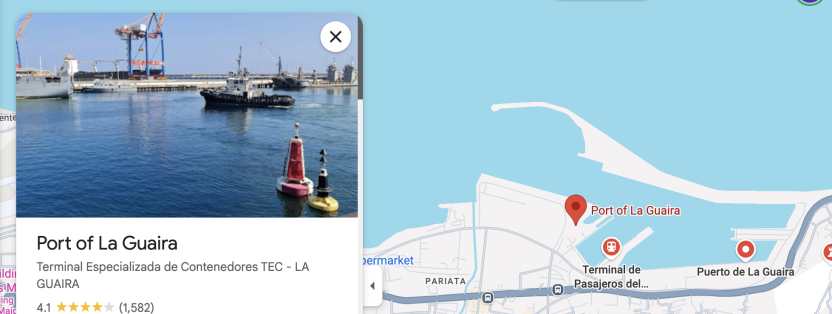
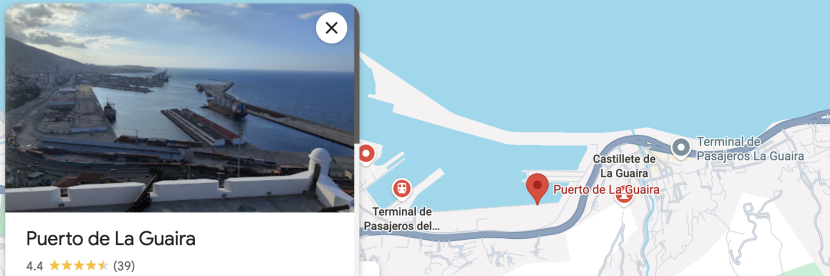
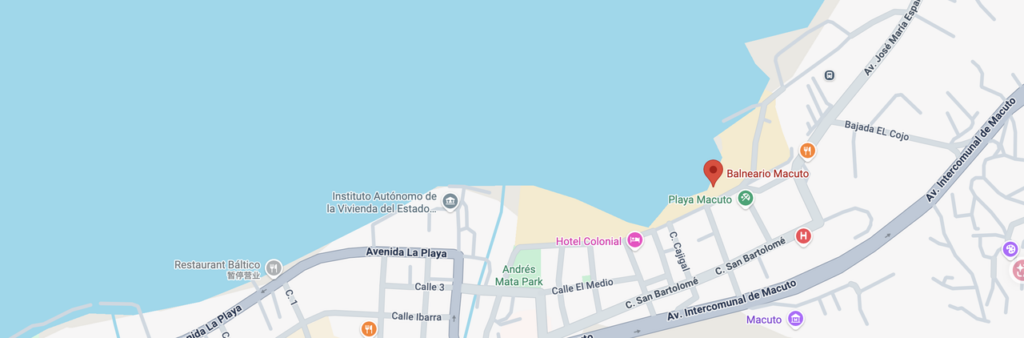
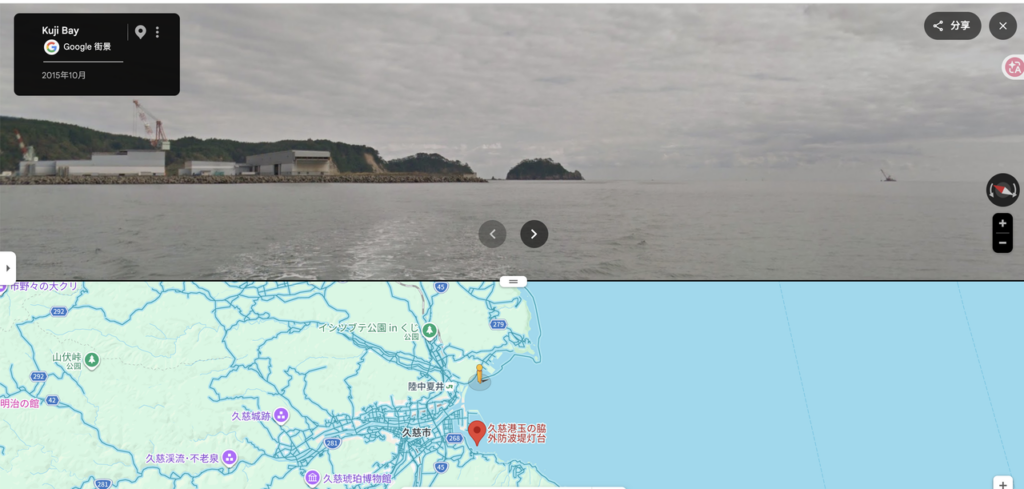
By observing the online video frame by frame, the red breakwater lighthouse, breakwater structure, small boats, port shoreline, and the distant mountain ridgelines. Comparing these features with the coastal landforms around La Guaira Port and Macuto Coast in Venezuela via Google Maps / Google Earth, preliminary comparison shows that the port structure, lighthouse location, and distant land contour in the online video cannot form a stable correspondence with La Guaira Port or its surrounding coast.

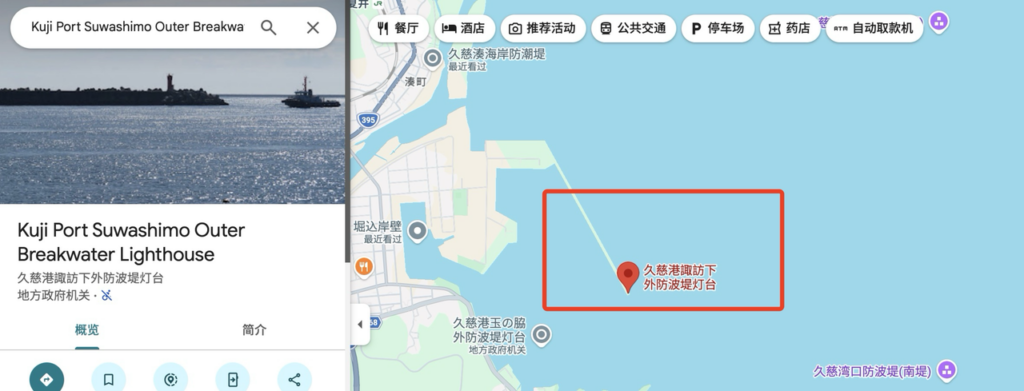
On the contrary, cross-verification of the video footage against satellite imagery of Kuji Port’s outer breakwater and surrounding terrain (guided by geographic markers from the original EERI video) demonstrates precise geographical consistency between the red breakwater lighthouse, local port topography, outer breakwater layout, and distant mountain contours seen in the clip and Kuji Port’s coastal landscape.

3. Location Labeling Review

X user @FCOneFootball applied inconsistent location labels to the same video — first labeling it “Tsunami in Caracas,” then later changing the location to La Guaira.

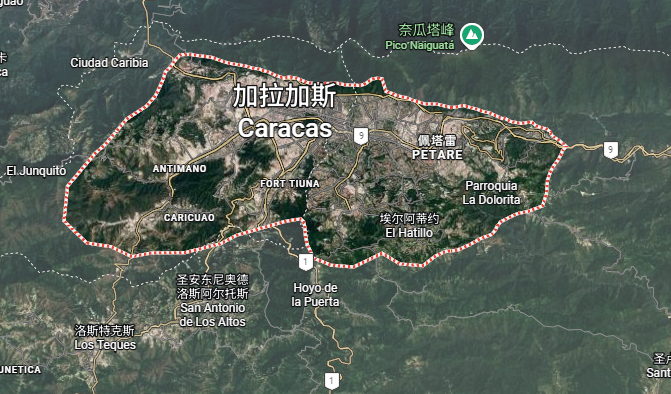
A check of geographic records shows that Caracas is situated in an inland valley, not on the coast. It has no port or breakwater facilities. The scene depicted in the video could not have occurred there.

Source: X user @FCOneFootball
Source: Google map

4. Tsunami Advisory Status

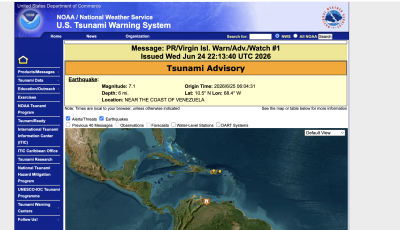
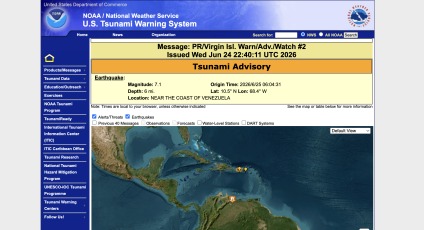
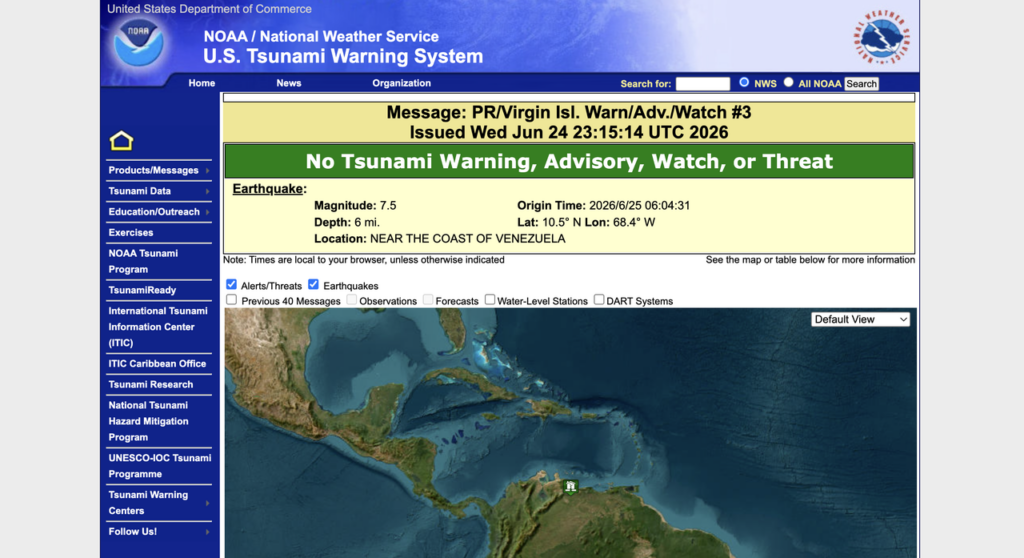
According to bulletins from the U.S. Tsunami Warning System, tsunami advisories or threat assessments were issued after the Venezuela earthquake based on parameters such as magnitude, depth and location. However, the subsequent No. 3 bulletin updated the event status to “No Tsunami Warning, Advisory, Watch, or Threat.”

Source: U.S. Tsunami Warning System

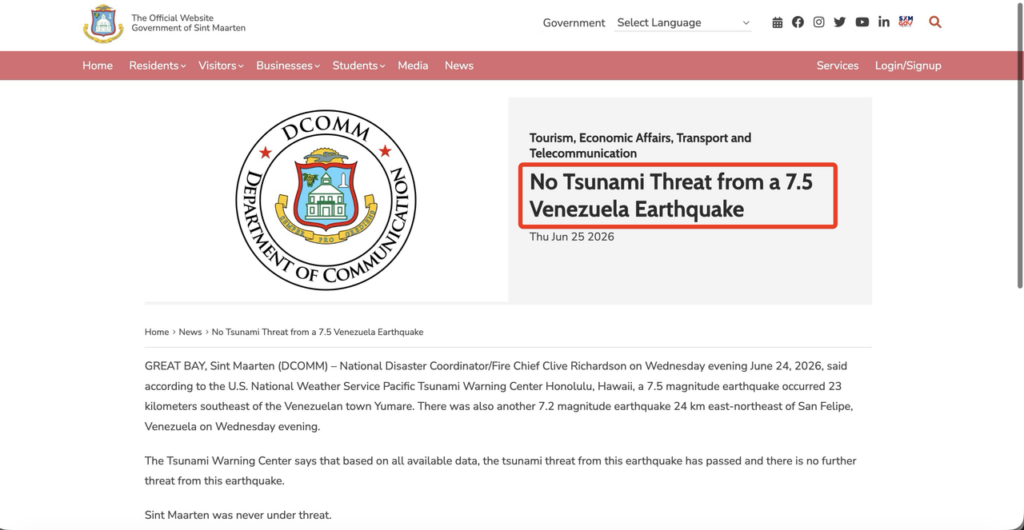
The Government of Sint Maarten also reported on the same day(June 24, 2026) that, according to the Tsunami Warning Center, the tsunami threat from the 7.5-magnitude Venezuela earthquake had passed based on all available data, and that Sint Maarten had never been under threat. This supports the timeline that a tsunami risk assessment was issued after the earthquake, but that the threat was later lifted.

Source: the Official Website of the Government of Sint Maarten

5. Disaster Reporting Review

BBC and CNN’s reports on the recent powerful earthquake in Venezuela focused on building collapses, casualties, airport closures, infrastructure damage, rescue operations, and the impact of aftershocks. However, none of these reports mentioned the occurrence of large-scale tsunami scenes matching the online videos in La Guaira or Caracas.

6. Account Analysis

User @FCOneFootball is a Parody account and Its profile introduction focuses on “Today in History” and European competitions. The account’s identity alone does not determine whether the video is authentic, but it does indicate that the post does not originate from an official news agency or emergency response authority.

7. Dissemination Analysis

This video is an edited version of old footage showing waves at Kuji Port in Japan. The original 2-minute-29-second clip contained Japanese dialogue and port scenes; circulating versions have been cut to 1 minute 25 seconds, with alarm sound effects added and original audio replaced. The footage has been repurposed as Venezuelan earthquake imagery through sound effects, subtitles, and location tags. Different accounts labeled the location differently (Venezuela/Caracas/La Guaira), and the video itself contains no verifiable geographical or temporal markers.

Background

On June 24, 2026, a series of powerful earthquakes occurred in northern Venezuela.The United States Geological Survey (USGS) recorded two major seismic events measuring M7.2 and M7.5. This earthquake caused building collapses, casualties, and infrastructure damage in areas such as Caracas and La Guaira, creating in a severe disaster. Given the epicenter’s proximity to the Caribbean coast, public concern over potential tsunami generation arose immediately following the seismic activity.

Verdict

Out of Context

Conclusion

Available evidence shows that the online video claiming to be a Venezuelan tsunami  recorded the tsunami at Kuji Port, Iwate Prefecture, Japan in 2011. After being edited to 1 minute and 25 seconds, the video was mislabeled as a Venezuelan tsunami. Consecutive bulletins from the US Tsunami Warning System indicate that a tsunami warning was issued after this earthquake but was subsequently lifted. Meanwhile, reports from international mainstream media on areas such as La Guaira and Caracas have focused on building collapses, casualties, and rescue operations, with no tsunami disaster situation matching the online video. When encountering disaster-related information, readers are advised to cross-check the source, time, and location against official updates before sharing.

Have a questionable video or claim? Submit it to Fact Hunter’s investigation team at [therealfacthunter@outlook.com].

Primary Fact Checker: Xu Xinying   

Secondary Fact Checker: Zhang Hanrong

Show Comments (0) Hide Comments (0)
Leave a comment

Your email address will not be published. Required fields are marked *